
In 1903, nine foreign nations established a joint International Settlement on a 1.87 square kilometre island off the coast of Xiamen. For the next four decades, the island of Gulangyu became one of Asia’s most cosmopolitan addresses — British consuls, American missionaries, Dutch merchants, and Japanese businessmen built mansions alongside the Fujian Chinese who had always called the island home.
Today, the island is car-free (electric carts and feet only), UNESCO World Heritage-listed since 2017 for its “International Settlement Historic District,” and famous for two things: extraordinary colonial architecture, and an extraordinary concentration of pianos — which gives it its nickname, Piano Island (琴岛).
Table of contents
Open Table of contents
Getting to Gulangyu
Gulangyu is reached by ferry from the Xiamen mainland:
The Two Ferry Routes
Tourist Ferry (旅游船): From Pier 3 (三丘田码头) near the Heron Hotel in Xiamen. This is the main tourist route with onboard commentary. Cost: ¥35 (day), ¥38 (night). Journey: 7 minutes.
Local Ferry (轮渡): From Xiamen Ferry Terminal (厦门轮渡码头), used primarily by residents and workers. Cheaper but less scenic departure point. Cost: ¥8. Journey: 5 minutes.
Return: Both routes run throughout the day from early morning to approximately 11:30 PM. Night ferries run less frequently.
Booking the tourist ferry: Popular during peak season and weekends — book a specific departure time to avoid long queues. Available through the official app, travel platforms, or at the pier.
Island Entry Ticket
The island charges an entry management fee:
- Day ticket: ¥35 (includes ferry on some pricing structures)
- The ticket is checked at the ferry terminal or at the island’s management checkpoints
Individual attraction tickets are separate.
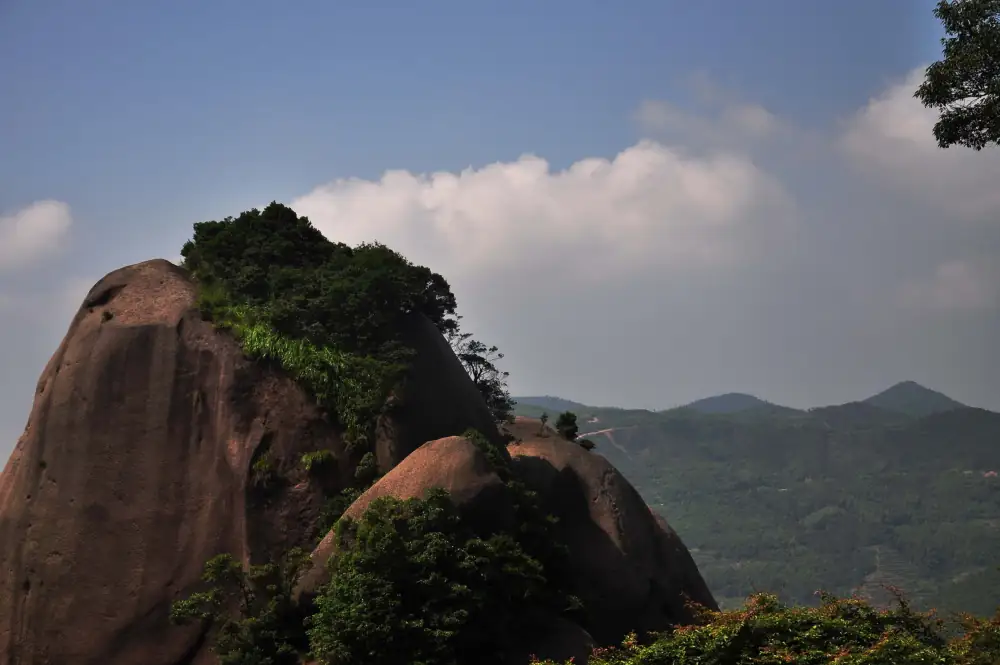
Sunlight Rock (日光岩) — The Island’s Highest Point
The summit of Gulangyu at 92.7 metres. The views from the top — Xiamen harbour, the city skyline, the surrounding islands, and the crystal-clear sea — are extraordinary and well worth the modest climb.
Entry: ¥75 (includes Shuzhuang Garden, see below)
What to see:
- The granite summit with its flag platform
- Cave carvings from historical visitors dating back to the Ming Dynasty
- Views across to Xiamen’s Huli district and the suspension bridges
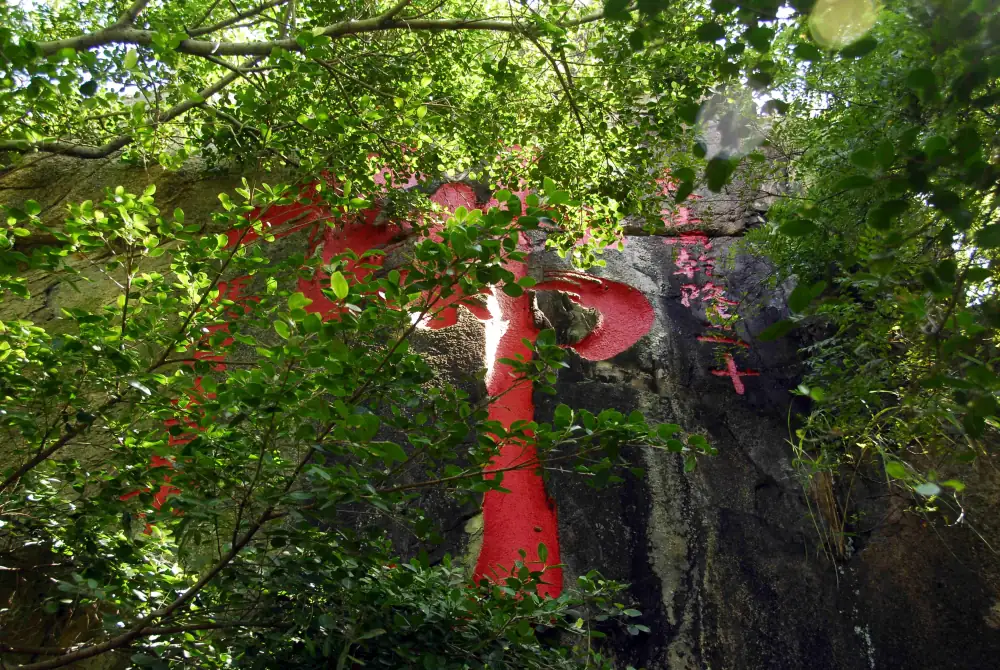
- The famous inscription carving “日光岩” (Sunlight Rock)
The climb: About 15 minutes from the base through winding paths and stone steps. Not difficult but involves a narrow final scramble section.
Shuzhuang Garden (菽庄花园)
Built in 1913 by a Fujian merchant as his private retreat, this UNESCO-listed garden extends over rocky coastal outcroppings in a design that masterfully integrates classical Chinese garden aesthetics with the harsh realities of a tidal sea wall.
The garden is divided into sections: a hidden garden (where walls and corridors conceal the sea until you emerge dramatically at the shore), a planted garden with flower corridors and pavilions, and the tidal section where the garden walkways extend directly over the rocks and sea.
The Piano Museum (钢琴博物馆) within Shuzhuang Garden houses the private collection of Gulangyu-born Australian Chinese music promoter Hu Youyi — over 100 antique pianos, including rare 19th-century instruments from Steinway & Sons, Erard (Paris), and Bösendorfer (Vienna). Several instruments are extraordinarily ornate. The oldest dates to 1702.
Entry (Sunlight Rock + Shuzhuang Garden): ¥75 combined ticket
The International Settlement Historic District
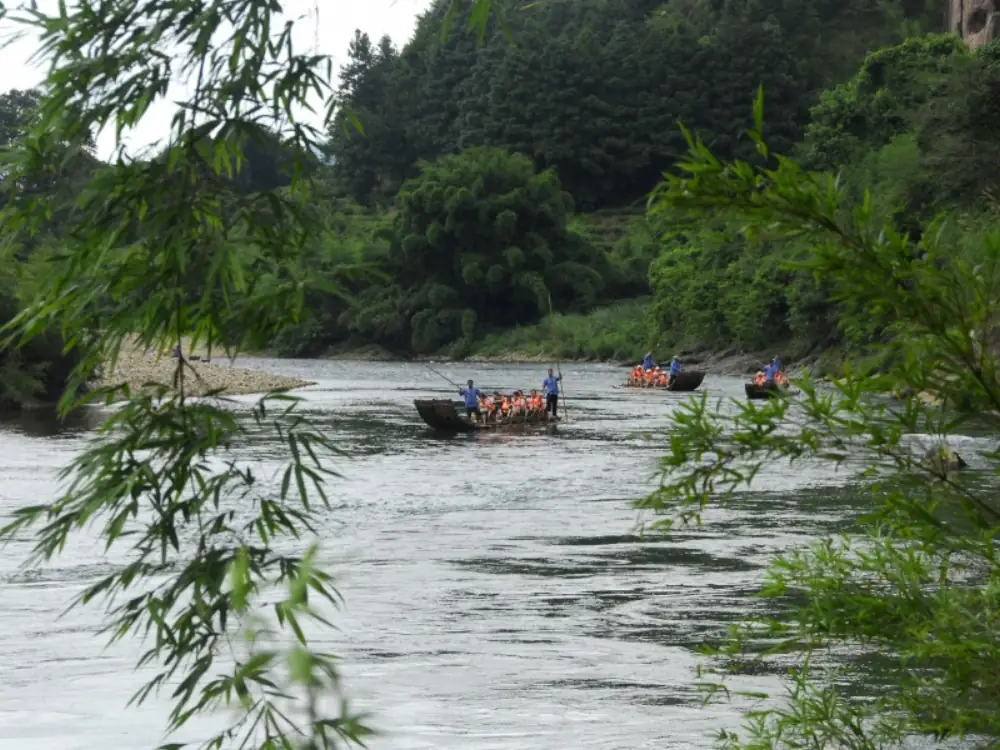
UNESCO’s designation of Gulangyu as a World Heritage Site focuses on the 2 km historic district containing over 1,000 historic buildings representing more than 20 architectural styles.
Walking the Historic Streets
The island has no cars — the only motor vehicles are small electric maintenance carts. All exploration is on foot. The maze of hilly lanes lined with historic buildings, bougainvillea, and small courtyard gardens rewards wandering without a fixed destination.
Key architectural highlights:
The Former British Consulate (now a luxury hotel): Elegant Neoclassical facade facing the harbour.
Haoyue Garden (皓月园): A coastal park at the eastern tip housing a large statue of Koxinga (Zheng Chenggong), the 17th-century Chinese naval commander who expelled the Dutch from Taiwan. The park has excellent views of Xiamen across the water.
Shengfu Church (圣福教堂, 1911): The Catholic church built by Filipino missionaries, in a distinctive white Spanish Baroque style.
Bagua Building (八卦楼): An imposing red-domed building resembling Guangzhou’s Chen Clan Academy but with distinct European influence. Now the Organ Museum (¥30).
Former Residence of Lin Juemin (林觉民故居): The childhood home of a young revolutionary who wrote a famous letter to his wife before his execution in 1911. A poignant historical house museum (¥20).
Food: Eating on Gulangyu
The main tourist street (Longtou Road / 龙头路) and its side streets are lined with food options. Quality ranges from excellent to tourist-trap.
Local Specialties to Find
With 5,326 likes, the most popular Gulangyu one-day guide notes: “Don’t let the tourists on the main street fool you — walk two minutes off the main drag and you’ll find the real Gulangyu food, at half the price and twice the quality.”
Shacha Noodles (沙茶面): Xiamen’s most famous noodle dish — thick egg noodles in a rich, slightly spicy peanut-based broth with pork blood cake, intestine, and squid. The combination sounds challenging; the reality is deeply flavourful. Available from small shops throughout the island.
Oyster Pancake (蚵仔煎, Oyster Omelette): The Fujian original — fresh oysters coated in a slightly gelatinous batter made with sweet potato starch and egg, pan-fried until crispy at the edges. Served with chili sauce and coriander. Significantly better from local shops than tourist-oriented restaurants.
Dried Squid (鱿鱼丝): A Gulangyu specialty snack — squid dried and sliced into crispy strips. Available from every other shop. The freshly grilled version on charcoal sticks is the best version.
Peanut Soup (花生汤): A Fujian sweet dessert served hot or warm. Whole peanuts in a light sweet broth — far more elegant than it sounds, and very refreshing after a hot afternoon of exploring.
Pineapple Cake (凤梨酥): The Taiwanese speciality has made its way to Gulangyu’s Fujian food culture. The best are made fresh in-store with visible pineapple jam filling.
Where to Eat
Avoid: The largest restaurants on Longtou Road facing the ferry pier — these cater to quick tourist turnover at elevated prices.
Do: Walk to the residential areas around Sunlight Rock and Haoyue Garden. Small family restaurants in these areas serve authentic local food at normal Xiamen prices (¥30–60 per person for a full meal).
Overnight Stay: The Best Gulangyu Experience
Most visitors do Gulangyu as a day trip. Those who stay overnight discover a different island: quieter, more atmospheric, and genuinely more beautiful after the day-trippers leave on the 6 PM and 8 PM ferries.
Evening: The colonial buildings illuminate at night. The harbourfront cafes that are impossibly crowded at 3 PM become peaceful at 9 PM. The sound of piano practice drifts from the music school.
Morning: Gulangyu before 9 AM belongs entirely to locals — residents walking dogs, grandparents and children in the small parks, cats sleeping in doorways. The tourist infrastructure doesn’t switch on until 9:30 AM.
Accommodation: Dozens of boutique guesthouses in converted historic buildings. Prices range from ¥200/night (small en-suite room in historic house) to ¥600–1,200 (designer heritage hotels with sea views). Book ahead for weekends.
Practical Information
Getting to Xiamen
By high-speed train:
- From Shanghai: 3 hours (Fuzhou connection) or 2.5 hours direct
- From Guangzhou: 2 hours
- From Beijing: 7–8 hours
- From Chengdu: 6 hours
By air: Xiamen Gaoqi International Airport (XMN) has extensive domestic connections and several international routes (Japan, South Korea, Southeast Asia, Middle East).
Xiamen City Highlights
Combining Gulangyu with Xiamen city makes for an excellent 2–3 day trip:
- South Putuo Temple (南普陀寺): Beautiful Buddhist temple at the base of Wulao Mountain. Free entry. Worth 2 hours.
- Xiamen University (厦门大学): One of China’s most beautiful university campuses, adjacent to South Putuo. Open to visitors.
- Zhongshan Road Pedestrian Street: Xiamen’s historic commercial centre with European-influenced shophouse architecture typical of Fujian coastal cities.
Best Time to Visit
Spring (March–May) and Autumn (October–November): Perfect temperatures (18–25°C), lower humidity, clear skies.
Avoid: Chinese national holidays — Gulangyu’s island capacity becomes overwhelmed. The ferry queues can exceed 3 hours during peak Golden Week periods.
Winter (December–February): Cool but pleasant (12–18°C). Far fewer tourists and the island’s residential character shines.
Gulangyu is one of China’s most unexpectedly beautiful experiences. The absence of cars, the extraordinary architectural legacy, and the deep-rooted local culture create an environment unlike anywhere else in China — a small island that managed to absorb multiple civilisations and remain distinctly itself.