
The Song Dynasty poet Su Dongpo compared West Lake to the legendary beauty Xi Shi: “If the lake were likened to Xi Shi, heavy or light makeup would both equally suit.” For the last thousand years, the comparison has stuck. West Lake is China’s most celebrated scenic body of water — a 6.5 square kilometre lake surrounded by hills, pagodas, gardens, and causeways that seems designed to be perfectly beautiful from every angle.
UNESCO recognised it as a World Heritage Site in 2011, noting it as “an exceptional example of a cultural landscape that has influenced garden design in the rest of China, Japan and Korea over the centuries.”
The lake itself is free to visit — a deliberate policy. Chinese emperors decreed it should remain accessible to all citizens, and this tradition continues.
Table of contents
Open Table of contents
The Ten Scenes of West Lake (西湖十景)
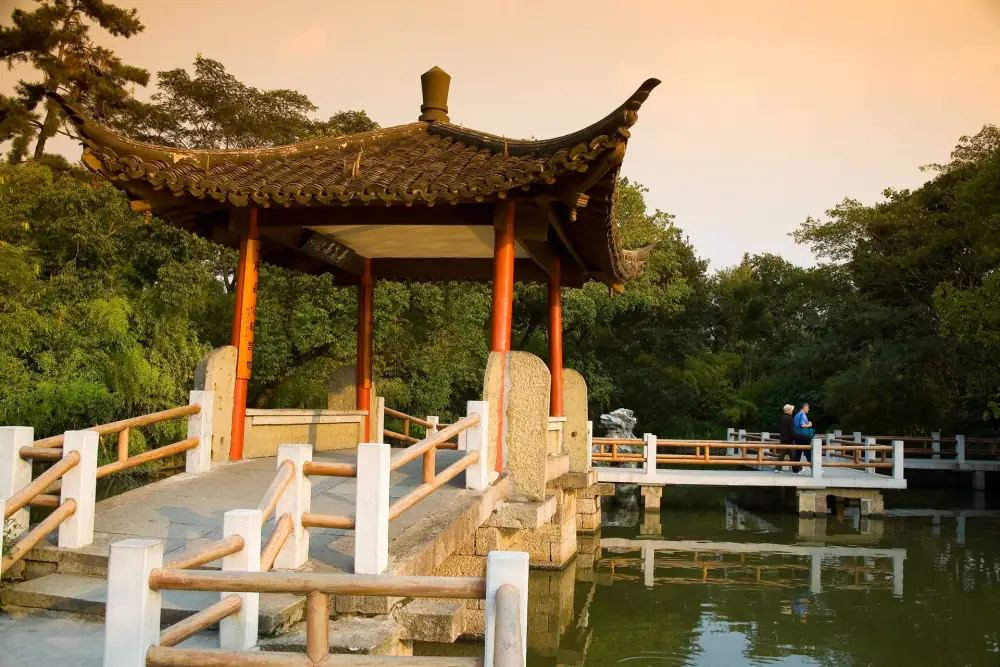
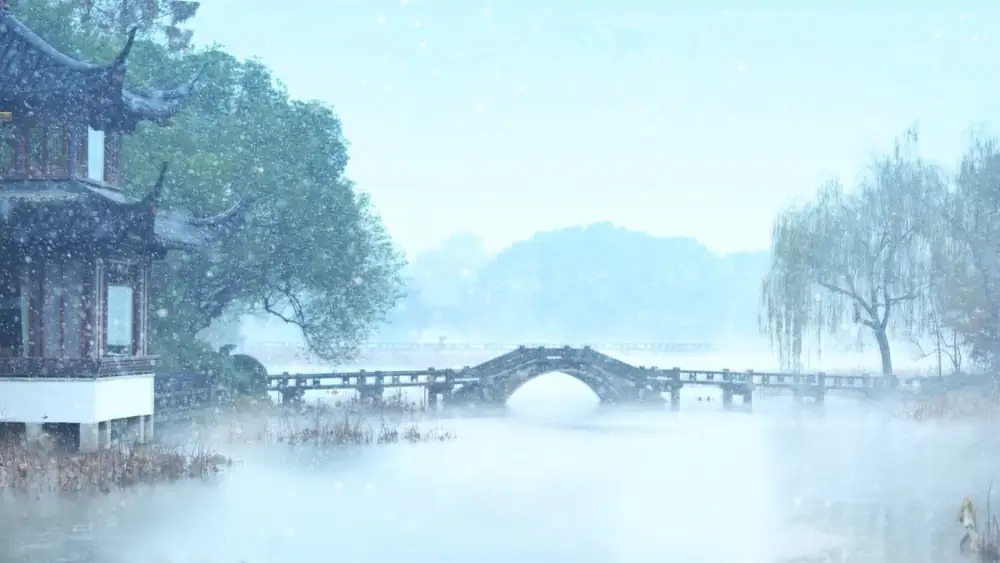
For 1,000+ years, the “Ten Scenes” have defined how Chinese people experience West Lake. Each scene represents the lake at its finest in particular conditions.
Su Causeway in Spring (苏堤春晓)
The 2.8 km embankment built by poet-official Su Dongpo in 1089 AD is the most beautiful walk in Hangzhou. Six arched stone bridges and dozens of varieties of weeping willows and peach trees line the path.
Best time: Late March to early April when both the peach blossoms (pink) and weeping willows (bright green) peak simultaneously. The morning light through the willows creates effects that painters have been attempting to capture for a millennium.
How to experience it: Walk or cycle the full length in one direction, take a boat across, and walk back along Bai Causeway.
Autumn Moon Over Calm Lake (平湖秋月)
The pavilion on the northeastern shore, built for the express purpose of viewing the full moon reflected in the still water.
Best time: Mid-Autumn Festival (中秋节, the 15th day of the 8th lunar month — September or October). Every year, thousands of people gather here to watch the moon rise over the lake and its reflection appear in the water. A genuinely moving traditional experience.
Lotus Breeze at Crooked Courtyard (曲院风荷)
An extensive lotus pond in the northwestern area of the lake.
Best time: July and August, when the white and pink lotus flowers bloom. The combination of the lotus canopy, their fragrance in morning air, and the distant pagoda silhouettes creates one of West Lake’s most enchanting moods.
Orioles Singing in the Willows (柳浪闻莺)
The large park area on the southeastern shore — flat, open, and beautifully maintained. This is where Hangzhou residents come for morning tai chi, badminton, and social exercise.
Best time: Early morning (7:00–9:00 AM) when the park is full of local life rather than tourists.
Twin Peaks Piercing the Clouds (双峰插云)
The North Peak and South Peak, rising above the hills surrounding the lake. The pagodas on each summit are visible on clear days.
Best time: October–November for crystal clear air after summer humidity departs.
The Two Causeways: Walking & Cycling
Su Causeway (苏堤)
2.8 km long. The best causeway for cycling — flat, tree-lined, with lake views on both sides and six bridges to pause at. Cycling time: 20–30 minutes.
Bike rental stations are located at each end (and at multiple points around the lake). The public Meituan and HelloBike bikeshare systems work throughout the West Lake scenic area. Cost: ¥5–8 per hour.
Bai Causeway (白堤)
1 km long, connecting the lake’s north shore to Gu Shan Island. Built when Tang Dynasty poet Bai Juyi governed Hangzhou (819–821 AD). The causeway offers views of both the North Inner Lake and the outer lake.
Combined route: Cycle Su Causeway from south to north → cross to Gu Shan Island (Zhejiang Provincial Museum, free; Sun Yat-sen’s plum garden) → cross Bai Causeway east to south bank → take a boat across to an island → return to starting point. A 3–4 hour circuit.
Boat Trips on West Lake
Several boat options allow you to experience the lake from the water:
Official tourist boats (共享游船): Passenger boats run continuous circuits stopping at Xiaoying Island and Ruan Gong Causeway. ¥70 per person for the standard circuit.
Rowboats (手划船): Rent a traditional wooden rowboat for a self-guided tour. ¥80–160 per hour depending on boat size. Available from the main dock near Yue Fei Temple.
Xiaoying Island (小瀛洲): The most famous West Lake island, reached only by boat. The island contains a “garden within a garden” — a smaller lake within the island surrounded by walkways, pavilions, and seasonal plantings. The Three Pools Mirroring the Moon (三潭印月) — stone pagodas in the water around the island — is the scene on the Chinese 1-yuan coin. ¥20 boat ticket required.
Dragon Well Tea (龙井茶): A Pilgrimage
Hangzhou produces Longjing (Dragon Well) tea, widely considered China’s finest green tea. The UNESCO-protected tea gardens in the hills 5 km west of the lake are part of the West Lake Cultural Landscape designation.
Dragon Well Village (龙井村)
The historic tea village at the heart of the Longjing growing area. Walking through the village between tea harvest terraces, with the smell of fresh-roasted leaves drifting from the tea houses, is a distinctly Hangzhou experience.
Visiting the gardens: Free to walk through the terraces at the village’s edges. Tea house tours with tasting sessions: ¥30–80 per person depending on how many teas you try.
Pick-your-own tea (April–May): During the spring harvest (March 20 – May 5), many tea gardens offer hands-on picking sessions. Visitors pick their own leaves, learn the hand-pressing roasting technique, and taste the fresh tea. Cost: ¥100–200. Book in advance — this is extremely popular and limited by the harvest schedule.
Buying tea: Buy directly from the village gardens for the freshest tea at the fairest price. Longjing grades range from premium Mingqian (pre-Qingming Festival harvest, March) at ¥500+/50g to standard grades at ¥80–200/50g. Be cautious of excessively cheap Longjing sold in tourist areas — it may not be authentic.
Getting there: Bus 27 from Yueyuntai Bus Station near the lake (30 min, ¥2). Or cycle from the lake’s western shore (45 min on flat roads, 25 min on an e-bike).
Lingyin Temple (灵隐寺)
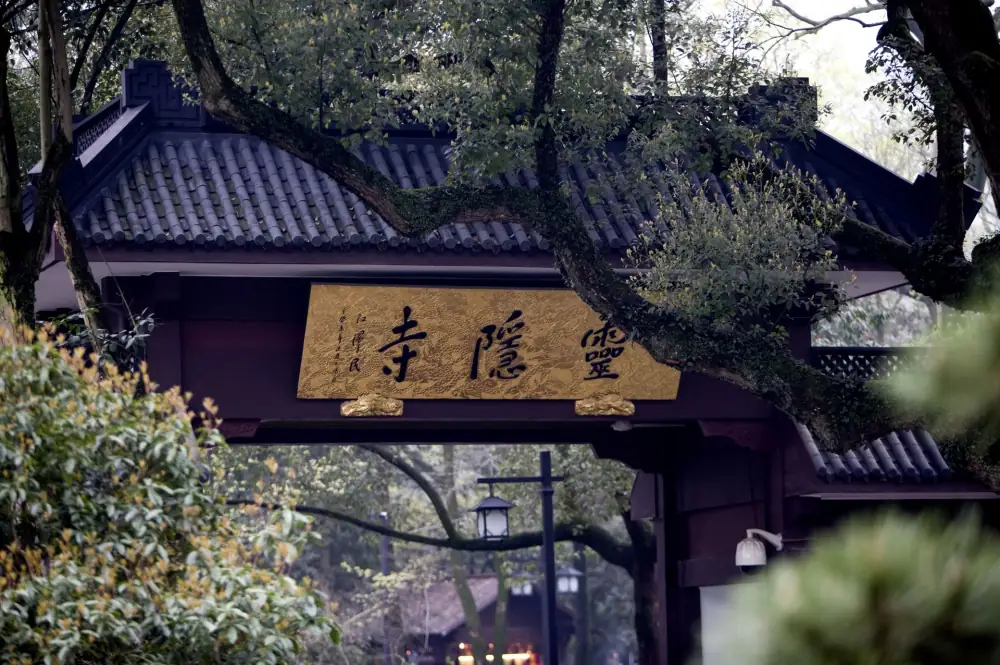
One of China’s largest and most beautiful Buddhist temple complexes, located in the forested hills 5 km northwest of West Lake. Founded in 326 AD, the current temple buildings date primarily to the Song and Qing dynasties.
What to see:
- Hall of the Mahavira (大雄宝殿): The main hall houses a 24.8-metre gilded Sakyamuni Buddha, one of China’s largest temple hall statues
- Feilai Feng (飞来峰): The cliff face opposite the temple covered with 345 Buddhist figures carved between the 10th–14th centuries. The 10th-century laughing Maitreya Buddha figure is particularly famous
- The forested approach: The road from the temple gate through the forest is one of Hangzhou’s most beautiful walks
Entrance: ¥45 (temple) + ¥45 (Feilai Feng). Combined ¥75 on some days.
Allow: 2–3 hours.
Getting there: Bus 7 from the lake western shore stops at the temple gate (30 min). Taxi from the lake: ¥25.
Qiantang River Tidal Bore (钱塘大潮)
A unique natural phenomenon that requires special timing: each September/October (around the Mid-Autumn Festival), the Qiantang River experiences a tidal bore — a wall of water 3–5 metres high moving upstream at 30+ km/h. Visible from the riverbank 15 km east of West Lake.
The optimal viewing point is Haining (海宁), 60 km east of Hangzhou by high-speed train (30 min). The specific day and time depend on lunar calendar — check exact viewing windows at least a month in advance.
Practical Information
Getting There
From Shanghai: High-speed train from Shanghai Hongqiao Station to Hangzhou East — 45 minutes, trains every 15–20 minutes. Cost: ¥73–88. This is one of China’s most convenient intercity connections.
By metro from train station: Metro Line 1 runs directly from Hangzhou East Station to the West Lake area (Dingan Road station), 25 minutes.
By rail from Beijing: 5–6 hours on high-speed train.
How Long to Stay
- 1 day (from Shanghai): Entirely feasible as a day trip — cycle the lake, visit Lingyin Temple
- 2 days (overnight): Above + Dragon Well Village tea experience + boat trip to Xiaoying Island
- 3–4 days: Deep exploration including Songcheng cultural show, Qiantang River bore (seasonal), and Xixi Wetlands
Best Time to Visit
Spring (March–May): Cherry blossoms along the causeways, Longjing tea harvest season, fresh greenery.
Autumn (October–November): Golden osmanthus flowers (桂花) fill the park areas with extraordinary fragrance in mid-October. Crystal clear skies and comfortable temperatures.
Avoid: Spring Festival and Golden Week — enormous crowds.
Within the Lake Area
Bikes: Public bikeshare (Meituan/Hello Bike) is widely available and the best way to explore. ¥5–8/hour.
Golf carts: Official scenic area electric carts run along some roads. For non-cyclists.
Metro: Line 1 (Longjinlu station for the tea village, Hubin for the eastern shore).
West Lake is where the Chinese idea of beauty was refined over a thousand years by poets, painters, emperors, and engineers into something near-perfect. Take the morning ferry, watch the willow reflections, smell the osmanthus in October, and drink a tea from the hills above. You’ll understand why people have been coming here for 1,000 years.