
Lijiang sits at 2,400 metres in the mountains of northwest Yunnan, where the ancient Tea Horse Road from Yunnan to Tibet passes through one of China’s most remarkably preserved ancient towns. The Naxi people who founded Lijiang created a town of extraordinary beauty: cobblestone streets channelling clear mountain streams, wooden architecture decorated with intricate carvings, and constant views of the 5,596-metre Jade Dragon Snow Mountain to the north.
This is a town that has existed continuously for 800 years. It is also one that has been discovered by tourism in the last two decades — requiring some navigation to find the authentic experience beneath the souvenir shops.
Table of contents
Open Table of contents
Lijiang Old Town (丽江古城 / 大研镇)
What Makes It Special
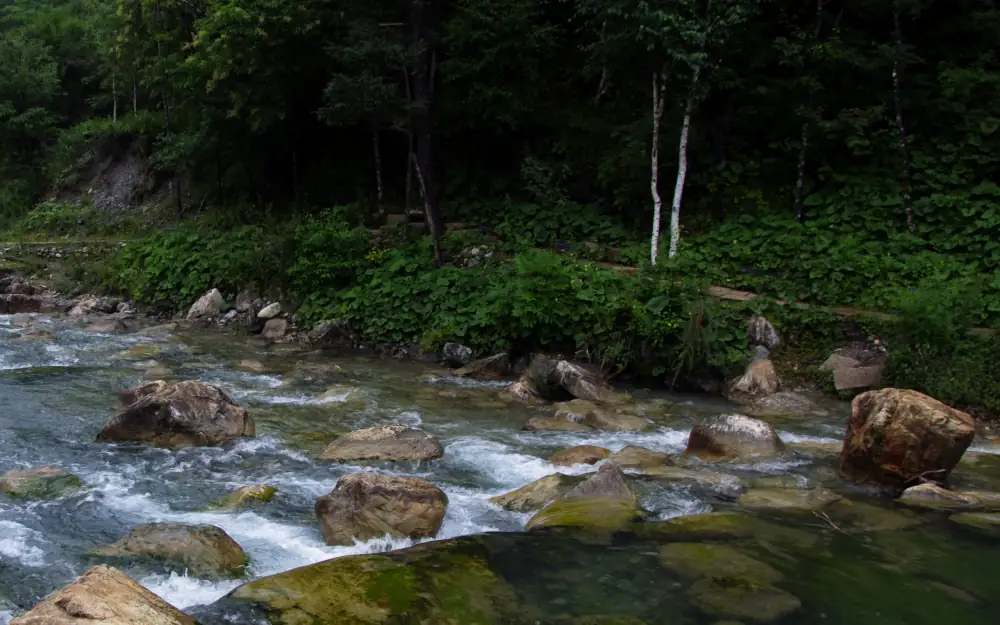
Lijiang’s old town (officially called Dayan) earned UNESCO World Heritage status in 1997 for two reasons: the remarkable preservation of its traditional Naxi architecture, and the extraordinary system of water channels running throughout the town (fed by the Yuquan Spring).
The town’s layout — designed without the rigid north-south grid of most Chinese cities, following instead the natural contours of the land — creates a maze of winding lanes, stone bridges, and canal-side walkways that is endlessly explorable.
The most widely shared tip from Chinese travelers (8,831 likes): “Don’t be a big fool in Lijiang! Local insider’s guide. The old town has layers — the tourist area and the real area. Walk 15 minutes east from Sifang Square and the crowds disappear entirely. That’s where Lijiang actually lives.”
The Five Districts of the Old Town
Dayan (大研): The main tourist district with Sifang Square at its heart. Most visitors spend all their time here — it is lively and photogenic but heavily commercialised.
Baisha (白沙): A village 8 km north, historically the original Naxi settlement predating Dayan. Less visited, more authentic, with extraordinary Naxi murals in the temple complex. Worth the 30-minute taxi ride.
Shuhe (束河): 4 km north of Dayan, a smaller ancient settlement that feels like Dayan did 15 years ago. More relaxed, fewer tourists, excellent cafés and guesthouses along the canal. Many experienced visitors prefer staying here.
Must-See Sights in Dayan
Sifang Square (四方街): The cobblestone marketplace at the heart of old town — the gathering point since the Tang Dynasty for trade between Yunnan, Tibet, and Sichuan. Early morning, Naxi women in traditional dress do their shopping here. Evening, it becomes a popular gathering spot with music and dancing.
Mu Fu (木府 / Mu Family Mansion): The former residence of the Naxi chief (Tusi), rebuilt after being destroyed in 1950. A sprawling Ming Dynasty complex with gardens, pavilions, and exhibits on Naxi governance and culture. Worth the ¥60 admission for the architecture alone.
Heilongtan Park (黑龙潭 / Black Dragon Pool): The most photographed location in Lijiang — a clear pool with a red pavilion, stone bridge, and beyond them, the full profile of Jade Dragon Snow Mountain reflected in the water. Free to enter. Particularly beautiful in early morning (7:00–9:00 AM) before tourists arrive.
Getting Oriented
Lijiang charges an entrance management fee of ¥80 per person — collected at the main entrances to the old town. Keep the receipt for re-entry checks. This fee has been controversial but funds the town’s maintenance infrastructure.
The old town is entirely pedestrian — no motorised vehicles. Streets are paved with traditional smooth stone that becomes slippery when wet. Comfortable shoes are essential.
Jade Dragon Snow Mountain (玉龙雪山)
Why It’s Worth It
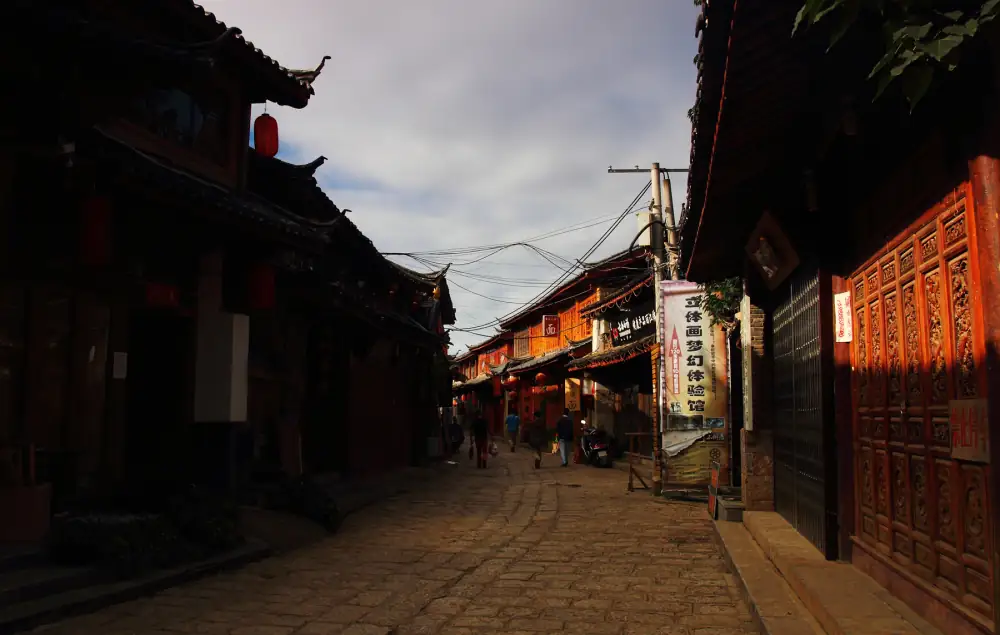
At 5,596 metres, Jade Dragon Snow Mountain is the southern terminus of the Tibetan Plateau’s eastern edge and the most accessible high-altitude glacier in China. The mountain has 13 peaks, all perpetually snow-covered, rising dramatically from the Lijiang valley just 15 km from the old town.
The cable car to Glacier Park (冰川公园) reaches 4,506 metres — close enough to the permanent glacier to feel its cold breath and see the ancient ice. For most visitors, this is an experience they’ve never had before and won’t forget.
The Cable Cars
Glacier Park Cable Car (大索道): The main attraction, rising to 4,506m. From the top terminus, a boardwalk leads 500m toward the glacier face, reaching approximately 4,680m. The views are extraordinary; the cold is genuine (bring warm clothes even in summer).
Yak Meadow Cable Car (牦牛坪): A less crowded option at 3,950m with extensive alpine meadow views. Beautiful and less touristy.
Spruce Meadow Cable Car (云杉坪): At 3,240m, the most accessible; connects to Spruce Meadow, a beautiful forest clearing. Lower altitude means less altitude sickness risk.
Altitude Sickness on the Mountain
The Glacier Park cable car top at 4,506m is genuinely high. The effects are real:
- Headache is extremely common, even for fit visitors
- Shortness of breath with any exertion
- Nausea occasionally
- Pulse ox monitors are available at the top
Oxygen: Small oxygen cylinders are available for rent/purchase at the top (¥10 for a small cylinder). Many visitors use them — there is no shame, and they make the experience much more comfortable.
The key rule: Walk slowly. Don’t rush. Allow yourself to acclimatise at the top before attempting the boardwalk.
If you’ve just flown into Lijiang: Spend your first day at valley level (2,400m) before going up the mountain. Going directly from sea level to 4,500m on your first day is asking for significant discomfort.
Tickets & Booking
Mountain entrance fee: ¥130
Cable car fees (additional to entrance):
- Glacier Park (大索道): ¥180 one way (the main attraction)
- Yak Meadow: ¥40 round trip
- Spruce Meadow: ¥40 round trip
Booking is essential: Daily capacity for the Glacier Park cable car is strictly limited. During peak season, same-day tickets are often unavailable. Book online at least 3–5 days in advance:
- Official website: ydsnow.com.cn
- Major travel platforms
Getting to the mountain:
- Bus from Lijiang old town bus station to mountain gate: ¥10 (30 min)
- Taxi: ¥50–60 (25 min)
Blue Moon Valley (蓝月谷)
At the base of the mountain, this series of five lakes fed by glacial meltwater is one of China’s most beautiful and underrated sights. The water is vivid turquoise to emerald, with the snow-capped peaks behind and green meadows alongside.
Included in the mountain entrance fee. The boardwalk through the valley takes 1–1.5 hours. Best in afternoon light (2:00–4:00 PM) when the sun is at an angle to reveal the underwater colours.
The Naxi Dongba Culture
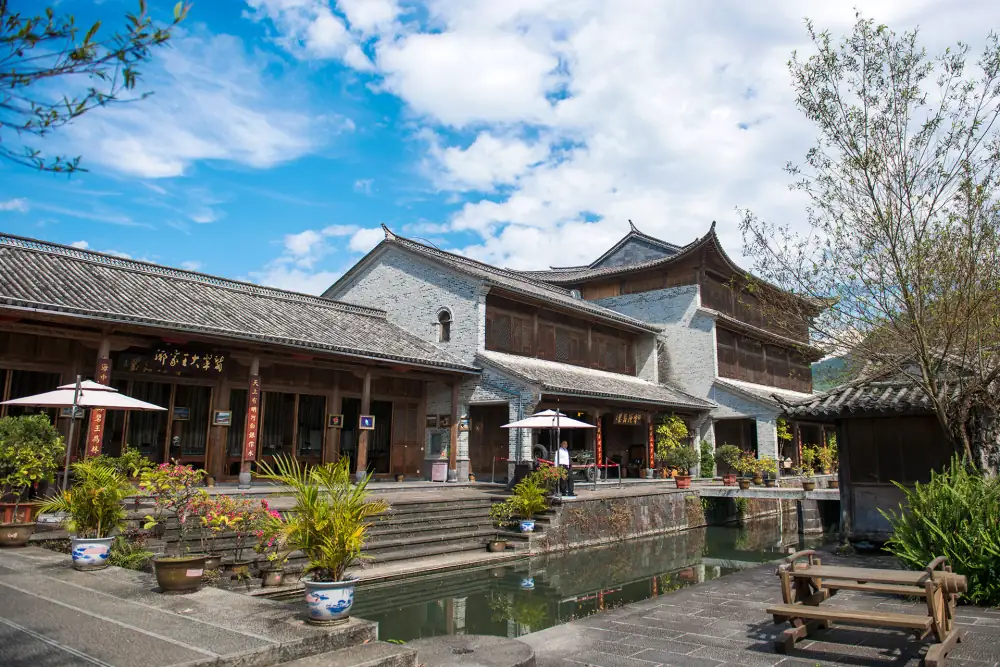
The Naxi people created one of the world’s only living pictographic writing systems — Dongba script, still used by Dongba priests (shamans/spiritual leaders) for religious ceremonies. More than 20,000 ancient Dongba manuscripts survive, covering medicine, astronomy, history, and religious ritual.
Where to learn more:
- Dongba Culture Museum (东巴文化博物馆): Near Heilongtan Park. Excellent introduction to Naxi history and Dongba manuscripts. Free with old town ticket.
- Lijiang Museum of Naxi Art (纳西东巴艺术博物馆): Baisha village. Traditional Naxi murals and artworks.
Ancient Music (纳西古乐)
The Naxi people preserved Tang and Song Dynasty Chinese classical music that died out in other parts of China. Lijiang’s Naxi Ancient Music Orchestra performs this ancient repertoire nightly — an extraordinary cultural experience of hearing music that has not been played elsewhere for 500+ years.
Performance tickets: ¥120–160 per person. Evening shows at 8:00 PM in venues near Sifang Square.
Practical Information
Getting to Lijiang
By air: Lijiang Sanyi Airport (LJG) is 28 km from the old town.
- From Kunming: 1 hour
- From Chengdu: 1.5 hours
- From Beijing/Shanghai: 3–3.5 hours (sometimes with connections)
By train: The new high-speed line to Lijiang (from Kunming: 4 hours) opened in 2023. This has significantly reduced travel time.
By bus from Dali: 4 hours on winding mountain roads, ¥60. Worth considering if you’re combining Dali and Lijiang (a classic Yunnan itinerary).
How Long to Stay
- 2 days (minimum): Old town + Jade Dragon Snow Mountain
- 4 days (recommended): Above + Baisha and Shuhe + one day trip to Tiger Leaping Gorge
- 6+ days: Add Shangri-La (Zhongdian), 4 hours north — the gateway to Tibet
Best Time to Visit
Spring (March–May): Rhododendrons bloom on Jade Dragon Snow Mountain. Clear skies and comfortable temperatures (15–22°C days).
Autumn (September–November): The clearest visibility for mountain views. Cool and dry.
Winter (December–February): Cold nights (-5°C) but spectacularly clear mountain views and significantly fewer tourists. The mountain is at its most dramatic.
Avoid: Chinese Golden Week (early October) and Spring Festival — accommodation doubles in price and the old town becomes uncomfortably crowded.
Lijiang is simultaneously one of China’s most visited towns and one of its most beautiful. Navigate past the tourist surface layer — walk east, go north to Shuhe, visit Baisha — and you’ll find the extraordinary 800-year-old Naxi town that was always there, waiting for those who looked.