
There are skylines and then there is Shanghai. The view from the Bund at night — 52 colonial-era buildings lit in gold facing across the Huangpu River at the glass-and-steel towers of Pudong — creates an architectural contrast found nowhere else on earth. It is a view that makes every other city skyline feel slightly less impressive.
The Bund (外滩, pronounced “Wàitān”) runs for 1.5 km along the western bank of the Huangpu River. The 52 buildings facing the water were constructed between 1850 and 1940 by British, French, American, and Japanese banks and trading firms, representing an extraordinary range of architectural styles from Gothic and Romanesque to Art Deco and Beaux-Arts.
Table of contents
Open Table of contents
The ¥2 Ferry: Shanghai’s Best Kept Secret
Before anything else, you need to know about the Jinling Road Ferry (金陵路渡轮).
For ¥2 (less than 30 US cents), you can take a 3-minute ferry crossing across the Huangpu River between the Bund and Pudong. The ferry has been operating since 1917 and is used primarily by local commuters.
This is the single most viral piece of Shanghai travel content in China, garnering nearly 20,000 likes from one note alone. The advice: “Take the ¥2 Jinling Road ferry. You get a full frontal view of the Bund from the water — the same perspective you see in every professional photograph. It’s the best ¥2 you’ll spend in Shanghai.”
How to use it:
- The Bund-side ferry terminal is on Zhongshan East 2nd Road, near Jinling East Road
- Purchase a paper ticket at the small booth (¥2)
- The ferry runs approximately every 15–20 minutes during daylight hours
- The crossing takes about 3 minutes
- You arrive in Pudong’s Lujiazui district, directly at the base of the three towers
The view from the ferry deck as you cross is spectacular — particularly at dusk when the buildings on the Bund are beginning to light up.
Best Viewpoints
The Bund Promenade (Puxi Side)
The 1.5 km elevated promenade along the Puxi (western) bank is the classic vantage point for the Pudong skyline. The best section runs from Nanjing Road intersection northward to Waibaidu Bridge — this stretch offers the widest view of the Pudong towers and the broadest array of colonial buildings behind you.
For photography: position yourself facing east, with the promenade railing in the foreground and the Oriental Pearl Tower and Shanghai Tower as the centrepiece. The widest angle from the promenade’s centre offers the best depth.
Lujiazui Riverside Park (Pudong Side)
The reverse view — looking west from Pudong back at the Bund’s colonial architecture — is technically the more famous photograph. The curved line of classical buildings across the river, best photographed with a telephoto lens, is the image that appears in books and galleries.
Access via the ¥2 ferry or Metro Line 2 to Lujiazui station.
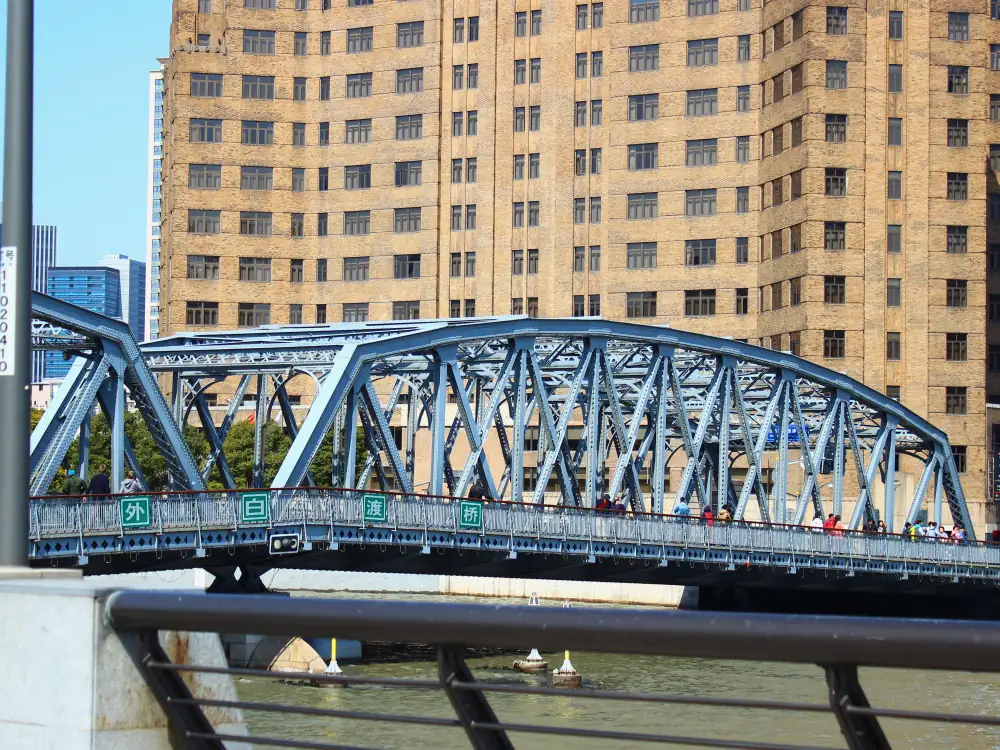
The Bund’s North End: Waibaidu Bridge (外白渡桥)
The 1907 all-steel bridge at the northern end of the Bund is architecturally distinctive and offers an angular view of both the colonial buildings to the south and the Pudong skyline to the east. Best at dusk when the bridge and buildings reflect in the river.
From the Water: Huangpu River Cruise
Several companies run evening cruises on the Huangpu River departing from near the Bund. The view from water level, with both skylines rising on either side, is extraordinary.
- Standard cruise (1 hour): ¥60–120 depending on company and boat type
- Premium dinner cruise: ¥300–600
- Departure times for the most popular light show: 8:00 PM–9:00 PM
- Bookable via hotel concierge or major travel platforms
Night Views: Timing is Everything
The Bund’s night views operate on a specific schedule that locals have mapped carefully.
The blue hour (sunset + 30–60 minutes): The most photographed window. As daylight fades, the buildings illuminate progressively — first the colonial buildings, then the Pudong towers — against a deepening blue sky. The colour balance during this hour makes every photograph look professional.
Full night (8:00–10:00 PM): Both skylines are at full illumination. River reflections are most vivid when the water is calm (typically weekday evenings with less river traffic).
Practical timing by season:
- Summer (June–August): Blue hour begins around 7:30 PM
- Spring/Autumn: Blue hour begins around 6:00–6:30 PM
- Winter: Blue hour begins around 5:00–5:30 PM
Special nights: During major Chinese holidays (National Day in October, Spring Festival), additional light shows are projected onto the Bund buildings — spectacular but crowds are enormous.
The Colonial Architecture: A Walking Guide
The 52 historic buildings along the Bund represent what was, in the 1920s–1930s, the most expensive real estate in Asia. Each has a distinct architectural character:
No. 1: McBain Building (1913) — Baroque Renaissance No. 3: Union Insurance Building (1916) — now a luxury shopping complex (Three on the Bund) No. 5: Nisshin Navigation Company (1921) — Renaissance No. 12: HSBC Building (1923) — “the finest building east of the Suez Canal” when built; now the Shanghai Pudong Development Bank No. 13: The Customs House (1927) — with Big Ben-inspired clock tower still chiming hourly No. 17: North China Daily News Building (1921) — Neoclassical No. 19: Palace Hotel (1906) — Victorian Gothic; now the Swatch Art Peace Hotel’s heritage wing No. 20: The Peace Hotel (和平饭店, 1929) — Art Deco masterpiece; the Jazz Bar in the basement has live jazz nightly performed by musicians in their 70s and 80s who have played here for decades
Nearby: East Nanjing Road (南京东路)
Shanghai’s premier pedestrian shopping street runs 1.2 km westward from the Bund. The section nearest the Bund is lined with flagship stores, while the middle section has more local character.
Best at night: The neon signs and shopfront illumination create a classic Shanghai atmosphere. Less expensive than the Bund restaurants but equally atmospheric.
Yu Garden (豫园) Area
A 15-minute walk south from the Bund, the Yu Garden (¥40) is a classical Ming Dynasty garden built in 1559 — one of Shanghai’s most beautiful historic sites. The surrounding old city bazaar is chaotic and touristy but the small-food stalls around the central lake serve excellent xiaolongbao (soup dumplings) at reasonable prices.
Best time: Mornings when the garden itself is quieter.
Where to Eat Near the Bund
The Bund itself has numerous high-end restaurants in the converted historic buildings (Michelin-starred options at Nos. 3, 5, and 18), with outdoor terraces offering river views. Budget for ¥400–800+ per person.
South Bund Old Street (老码头): 10-minute walk south along the waterfront, a redeveloped warehouse complex with a range of mid-range restaurants, cafes, and bars with river views at less elevated prices.
East Nanjing Road food street: Numerous mid-range Shanghainese restaurants with all the classics — braised pork belly (红烧肉), crispy-skinned duck, steamed hairy crab (seasonal, September–November), and red-bean pastries.
Getting Around the Bund Area
Metro:
- Line 2: Nanjing East Road (南京东路) station, Exit 6 — 5-minute walk to the promenade
- Line 10: Yuyuan Garden (豫园) station — for the southern Bund and Yu Garden
On foot: The entire Bund promenade + Nanjing Road pedestrian street can be walked in a single 3–4 hour evening.
To Pudong (Shanghai Tower, etc.): Metro Line 2 from Nanjing East Road to Lujiazui takes 10 minutes. Or take the scenic ¥2 ferry.
Combining the Bund with Pudong
For the complete Shanghai skyline experience, plan a half-day itinerary:
- Morning: Walk the Bund promenade from north to south; coffee at one of the café terraces in the historic buildings
- Afternoon: Cross to Pudong via Metro or ferry; visit the Lujiazui riverside park for the reverse view
- Optional: Ascend the Shanghai Tower observation deck (118th floor, ¥180) for the aerial perspective of both skylines
- Evening: Return to the Bund by ferry at sunset; walk north to south along the illuminated promenade; dinner at Old Street or Nanjing Road
The Bund is Shanghai’s opening statement — the point where the city explains itself. Come at dusk on a clear evening, take the ¥2 ferry across, and look back. You’ll understand immediately why Shanghai calls itself the City Above all Cities.