
There is nowhere quite like Tibet. The Tibetan Plateau — the world’s highest at an average 4,500 metres — is a place of physical extremes and spiritual intensity. Lhasa, the regional capital, sits at 3,656 metres; the city’s air has 30% less oxygen than at sea level. Potala Palace rises above the city like a fortress built by gods. The Jokhang Temple fills daily with pilgrims prostrating themselves in devotion along Barkhor Street.
Tibet is accessible to foreign nationals but requires careful preparation — both for the bureaucratic requirements and for the physiological challenges of travelling at altitude.
Table of contents
Open Table of contents
Tibet Travel Permits: What You Need
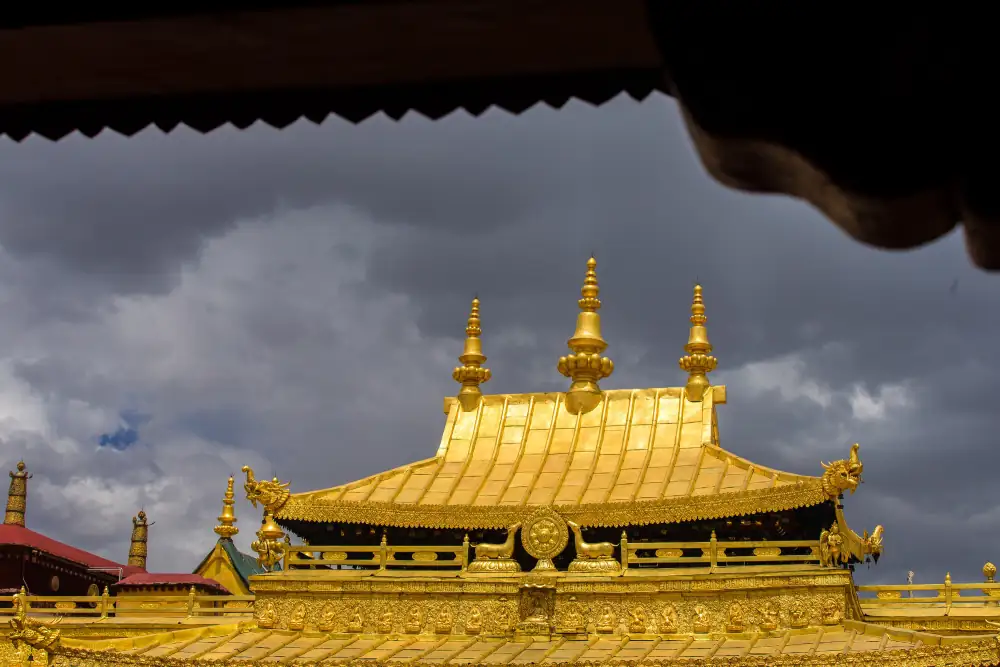
The Mandatory Permit
All foreign nationals (including visitors from Hong Kong, Macau, and Taiwan) require a Tibet Travel Permit (TTB/TTP) in addition to a valid China visa. Without this permit, you cannot board a flight or train to Tibet, or enter the Tibet Autonomous Region at any overland border.
The permit is arranged through a licensed Tibet travel agency. Individual travel (without a registered tour guide and tour agency) is not permitted in Tibet for foreign nationals. This is a legal requirement, not a suggestion.
How to Get the Permit
-
Select a licensed Tibet travel agency. There are hundreds of registered agencies in Lhasa and around China. Many reputable operators have English-language websites. Prices vary; shop around and read reviews.
-
Provide your passport details and China visa information. The agency handles the permit application on your behalf.
-
Apply at least 3–4 weeks in advance for peak season (May–October). The permit processing typically takes 5–10 business days.
-
The permit is mailed to you before departure or provided at a designated pickup point in a gateway city (Chengdu, Xi’an, Beijing).
Permit cost: Usually included in tour package prices. The permit fee itself is approximately ¥200–300.
Sensitive Period Closures
Tibet periodically closes to foreign visitors during politically sensitive periods:
- March (entire month): Tibet typically closes to all foreign visitors in March, the anniversary of the 1959 uprising
- Other closures: Occasionally around major Chinese national events
Check the current status before booking. Even confirmed permits can be revoked if Tibet closes unexpectedly.
Aliens’ Travel Permit (外国人旅行证)
To visit areas outside Lhasa (including Shigatse, Nam Tso Lake, Everest Base Camp), an additional Aliens’ Travel Permit is required. This is obtained in Lhasa through your tour agency. Budget 1–2 days for the permit process at the start of your trip.
Altitude Acclimatisation: Critical Information
Understanding the Risk
Lhasa at 3,656 metres is above the altitude where most people begin to feel effects. Most visitors experience at least some symptoms: headache, fatigue, breathlessness on exertion, difficulty sleeping.
Acute Mountain Sickness (AMS) affects roughly 50–70% of visitors in the first 24–48 hours. In most cases it is manageable. However, it can progress to life-threatening conditions if warning signs are ignored.
Warning signs requiring immediate medical attention:
- Severe headache not responsive to ibuprofen/paracetamol
- Confusion or difficulty thinking clearly
- Loss of coordination or difficulty walking straight
- Shortness of breath at rest
- Persistent vomiting
Acclimatisation Protocol
Day 1 in Lhasa (most important):
- Rest. Do not climb stairs quickly. Do not run.
- Short, flat walks only — no more than 1–2 km
- Drink 3–4 litres of water throughout the day
- No alcohol on day one (it significantly worsens altitude sickness)
- Sleep at the hotel; do not take tours
Day 2:
- If feeling well, take a relaxed walking tour of Barkhor Street and Jokhang Temple (mostly flat)
- Avoid climbing to high viewpoints
Day 3+:
- If well acclimatised, you can begin normal touring including climbing to Potala Palace
Medication: Acetazolamide (Diamox, 125–250 mg twice daily starting 24 hours before arrival) is proven to significantly reduce altitude sickness symptoms. Consult your doctor before travel.
Potala Palace (布达拉宫)
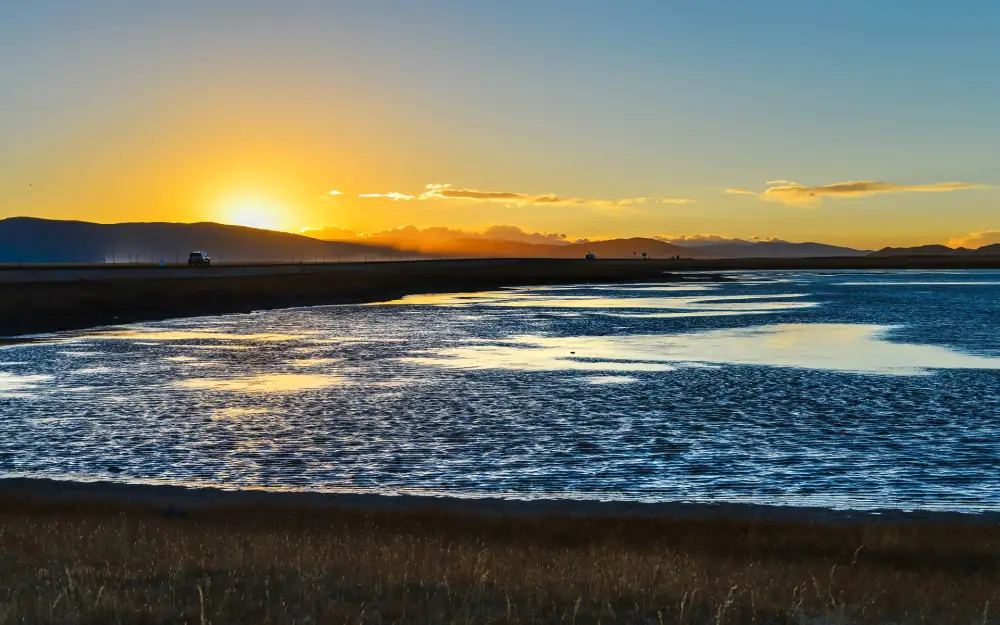
The Most Photographed Building in Asia
Potala Palace is the defining image of Tibet — a 13-storey whitewashed and red-walled fortress-palace rising from Marpo Ri (Red Hill) above Lhasa, visible from nearly anywhere in the city. For centuries it was the home and governing seat of the Dalai Lamas.
It remains the spiritual symbol of Tibet and Tibetan Buddhism, and its silhouette against the blue sky (or against the early-morning dark before dawn prayers) is one of the world’s iconic sights.
With 871 likes, the top-rated Potala Palace content from Chinese travelers says: “I’ve compiled an extremely detailed Potala Palace guide. The most important advice: buy tickets weeks in advance, start early (the plaza is best at 7 AM before the day heats up), and do NOT try to rush the interior — you have maximum 1 hour inside and should make it count.”
Visiting Potala Palace
Tickets: ¥200 per person (peak season), ¥100 (off-season December–February). Strictly limited to 2,300 visitors per day.
Booking: Through your Tibet travel agency (essential — they have quota allocations) or through the official platform. Same-day tickets are virtually never available.
The visit:
- The exterior plaza and stairs are freely walkable
- The interior tour lasts 1 hour maximum (strictly enforced)
- Photography inside the palace is prohibited. Outside views of the exterior are spectacular.
- A guide is required for the interior sections
What you’ll see inside:
- The White Palace (Potrang Karpo): The Dalai Lama’s official residence and administrative quarters; includes a small audience hall
- The Red Palace (Potrang Marpo): The religious heart of the building; the Dalai Lamas’ tombs (stupas of pure gold encrusted with gems), thousands of Buddhist murals covering every surface, and chapels containing priceless statues
The climb: From the palace’s main lower entrance to the top is approximately 1,000 steps over 178 metres of elevation. At altitude, this is demanding. Take it slowly. Rest at the multiple terraces along the way.
Potala Square and Surroundings
The public plaza at the palace’s southern base is enormous and designed for scale. The palace looks most impressive from the far end of the square in the early morning light.
Photography: The classic shot is from Potala Square at dawn, when the palace is illuminated against the pink sky. Many photographers set up around 5:30–6:30 AM.
Jokhang Temple (大昭寺)
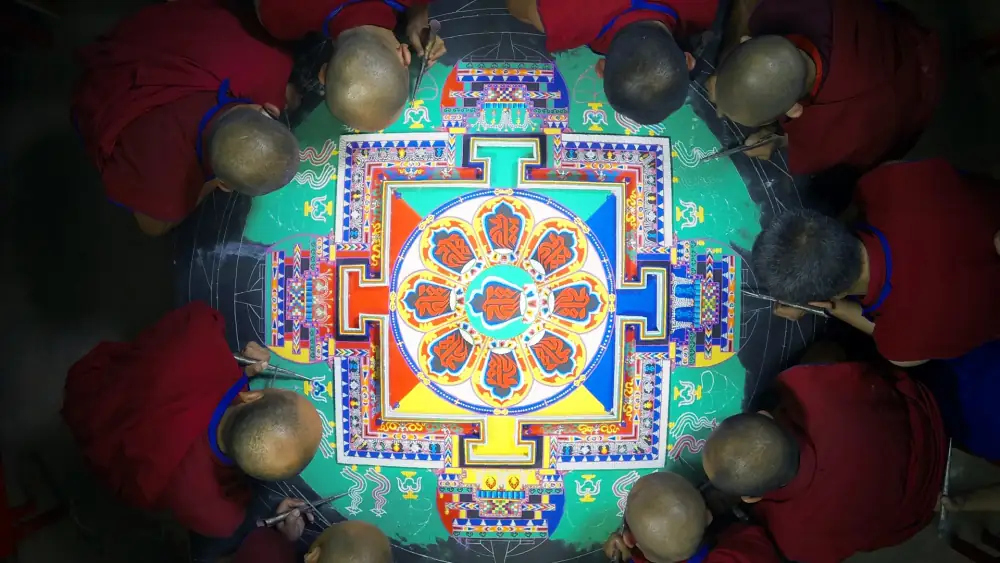
The most sacred temple in Tibetan Buddhism — more spiritually important to many Tibetans than Potala Palace. Founded in the 7th century by King Songtsen Gampo, the temple’s inner sanctum houses a famous statue of Jowo Rinpoche (the 12-year-old Buddha) brought from China as part of a royal marriage alliance.
Daily from early morning, pilgrims circumnavigate the temple on Barkhor Street (the outer kora circuit), spinning prayer wheels and murmuring mantras. This is living religion — ancient devotional practice that has continued uninterrupted for 1,400 years.
Entry: ¥85. The inner temple is open morning and afternoon (specific hours change seasonally).
Barkhor Street (八廊街): The circular market street around the temple is traditionally a pilgrimage circuit. Today it is also ringed with vendors selling thangka paintings, prayer flags, dorje implements, turquoise jewellery, and yak butter. Wandering it early morning (7:00–9:00 AM) when pilgrims outnumber tourists provides the most authentic experience.
Other Lhasa Highlights
Sera Monastery (色拉寺, ¥55)
Famous for the Monk Debate Sessions held in the monastery’s courtyard every afternoon from approximately 3:00–5:00 PM (except Sundays). Monks in debate pairs argue Buddhist philosophy, using dramatic hand clapping gestures to emphasise points. The passion and theatricality of the debates is extraordinary — one of Tibet’s most memorable cultural spectacles.
Drepung Monastery (哲蚌寺, ¥55)
Once the world’s largest monastery (over 10,000 monks at its peak). The vast complex of whitewashed buildings cascading down a hillside 8 km west of Lhasa is extraordinary in scale. The morning light on the white walls and gold-roofed assembly halls creates exceptional photography conditions.
Nam Tso Lake (纳木错)
4,718 metres above sea level, 190 km from Lhasa. The world’s highest saltwater lake, surrounded by snow-capped peaks. The turquoise water and the sky — larger and bluer at altitude than anywhere else — create a visual experience of extraordinary spaciousness.
Requires: Aliens’ Travel Permit (obtained in Lhasa) + tour with guide. Day trip: ¥400–600 per person by jeep with guide. Allow 8–10 hours.
Getting to Lhasa
By air: Direct flights to Lhasa Gongar Airport (LXA) from Chengdu (2 hrs), Beijing (4.5 hrs), Shanghai (5 hrs), Xi’an (3 hrs), Chongqing (2.5 hrs). The airport is 60 km from central Lhasa (1 hour by shuttle bus or taxi).
Qinghai-Tibet Railway (青藏铁路): One of the world’s most spectacular train journeys. The train from Beijing, Shanghai, Chengdu, or Xi’an takes 24–44 hours, crossing the Tibetan Plateau at altitudes up to 5,072 metres. The train is pressurised and has oxygen supply, making the gradual ascent easier on the body than flying. Sleeper tickets required; book well in advance.
Upon arrival: Regardless of transport, plan a full rest day before beginning any sightseeing.
Tibet demands respect — for its altitude, for its culture, and for its permit system. Prepare carefully, go slowly, and approach with an open spirit. What awaits — the scale of the plateau, the depth of the Buddhist culture, the physical reality of standing at the roof of the world — is unlike anywhere else on earth.