
Chengdu is the city everyone falls for. It has a reputation within China as the most 休闲 (relaxed, leisure-loving) of China’s major cities — a place where locals have elevated the afternoon tea break, the all-night hotpot session, and the gentle wander through a park into a philosophy of living. Foreigners who intended to stay two days often stay two weeks.
It is also, practically speaking, the gateway to Sichuan’s extraordinary natural landscapes — Jiuzhaigou, Emei Shan, Leshan — and the departure point for Tibet.
Table of contents
Open Table of contents
Top Things to See and Do
Giant Panda Base (大熊猫繁育研究基地)
The Chengdu Research Base of Giant Panda Breeding is the world’s foremost panda conservation facility and home to over 200 giant and red pandas. It is, by a wide margin, the best place in the world to see pandas up close.
- When to visit: arrive when the gates open at 7:30am. Pandas are most active in the morning (feeding time) and retreat to sleep by mid-morning.
- Highlights: the nursery (babies!), the red panda enclosure (more active than the giants), and the adult panda outdoor enclosures.
- Hours: 7:30am–6:00pm
- Tickets: ¥55; book in advance on the official app or WeChat mini-programme — they sell out on peak days
- Getting there: Bus 87 from city centre (
40 min), or DiDi (¥30)
Leshan Giant Buddha (乐山大佛)
The world’s largest stone Buddha, carved into a cliff face at the confluence of three rivers in the 8th century. At 71 metres tall, it is taller than the Statue of Liberty. Take the boat tour for the full-frontal view, or walk the steep carved staircase down and up the cliff face.
- 2.5 hours from Chengdu by high-speed train or 2 hours by tourist bus
- Hours: 7:30am–6:30pm; tickets ¥80
Jinli Ancient Street (锦里)
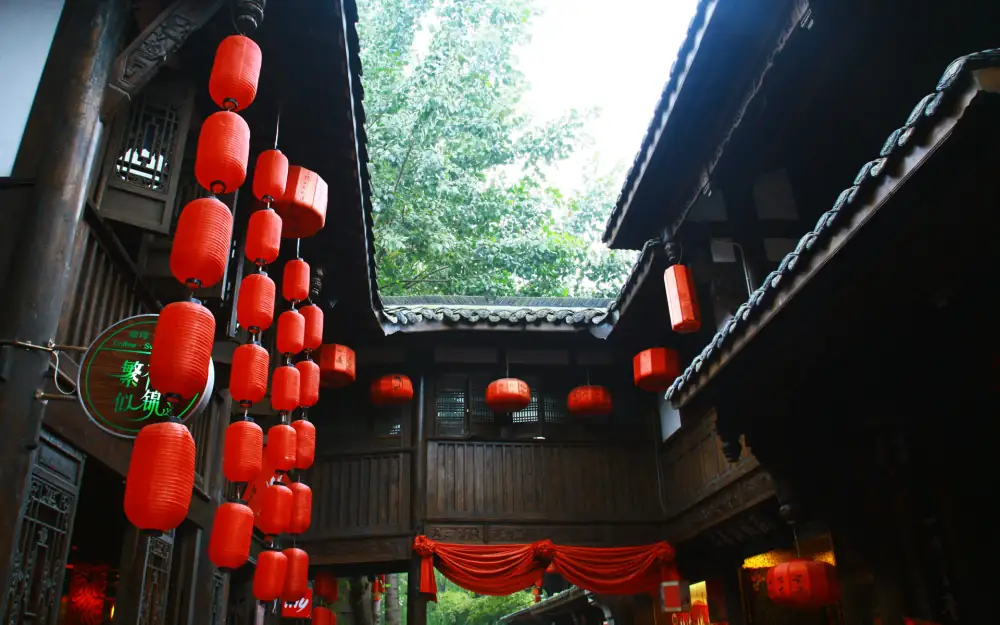
A beautifully restored Qing-dynasty commercial street beside the Wuhou Shrine (a memorial to the heroes of the Three Kingdoms era). Full of snack stalls, teahouses, souvenir shops, and shadow puppet performances. Touristy but genuinely pretty, especially at night when the red lanterns are lit.
Kuanzhai Alley (宽窄巷子)
Two parallel historic alleys (“Wide Alley” and “Narrow Alley”) preserved from the Qing dynasty. Lined with teahouses, boutique hotels, art galleries, and restaurants in traditional courtyard buildings. Best in the early morning before tour groups arrive.
The Teahouse Culture
Sipping tea in a Chengdu teahouse for two or three hours while watching street entertainers, getting your ears cleaned by a roving ear-cleaner, or playing mahjong is a genuine local pastime — not a tourist experience. The teahouse gardens of Renmin Park (人民公园) are the most authentic setting.
Where to Eat: Sichuan Cuisine
Sichuan food is famous worldwide for its use of Sichuan peppercorn (花椒, huājiāo) — the spice that creates a numbing, tingly sensation (called 麻辣, málà) quite unlike chilli heat — combined with dried red chillies for genuine fire.
Sichuan Hotpot (四川火锅)
The definitive Chengdu dining experience. A split-pot with one side fiery red oil broth and one side mild broth; you cook your own sliced meats, tofu, lotus root, and vegetables at the table.
- Haidilao (海底捞): The national chain, famous for theatrical service (noodle-dancing waiters, free manicures while you wait). Consistent, friendly to foreigners, English menus.
- Xiaolongkan (小龙坎): More local favourite; intense, authentic broth.
- Tip: order the sesame dipping sauce, add garlic and fresh coriander.
Mapo Tofu (麻婆豆腐)
Silken tofu in a deeply spiced sauce of minced pork, fermented black beans, and Sichuan peppercorn. The dish was invented in a Chengdu restaurant in the 19th century. Chen Mapo Tofu (陈麻婆豆腐), near the original location, is the pilgrimage address.
Dan Dan Noodles (担担面)
Thin wheat noodles topped with a sauce of preserved vegetables, ground pork, sesame paste, and chilli oil. Street food at its finest — look for local noodle shops selling small bowls for ¥10–¥15.
Rabbit Head (兔头)
A Chengdu peculiarity: braised rabbit heads split and eaten as a snack, particularly popular in teahouses and night markets. Not for the faint-hearted, but very much the local thing to try.
Day Trips and Side Adventures
| Destination | Travel | Highlight |
|---|---|---|
| Leshan | 2.5 hrs by train | World’s largest stone Buddha |
| Emei Shan | 2 hrs by train | Sacred Buddhist mountain; monkeys |
| Jiuzhaigou | 1 hr by plane or 6 hrs by bus | UNESCO multi-coloured lakes |
| Qingcheng Mountain | 1 hr by train + bus | Taoist mountain; misty forests |
Practical Information
| Detail | Info |
|---|---|
| Best time to visit | Spring (Mar–Apr) or Autumn (Sep–Oct); summers are hot & humid |
| Getting to Chengdu | High-speed rail from Xi’an (~3 hrs), Chongqing (1 hr), Kunming (~4.5 hrs) |
| Airport | Chengdu Tianfu International Airport (TFU) — one of China’s newest; metro to city |
| City transport | Metro well-developed; DiDi recommended for panda base and outskirts |
Last updated: May 2026