
The hutong (胡同) alleyways of Beijing’s inner city represent an urban form that has been home to the capital’s residents for over 700 years — a street-level democratic counterpart to the imperial scale of the Forbidden City just blocks away. Walking the hutong is walking through a different Beijing: human-scaled, neighborhood-structured, full of small commerce, bicycle traffic, wisteria hanging over old walls, and the sound of mahjong tiles from behind a half-open door.
What Hutong Are
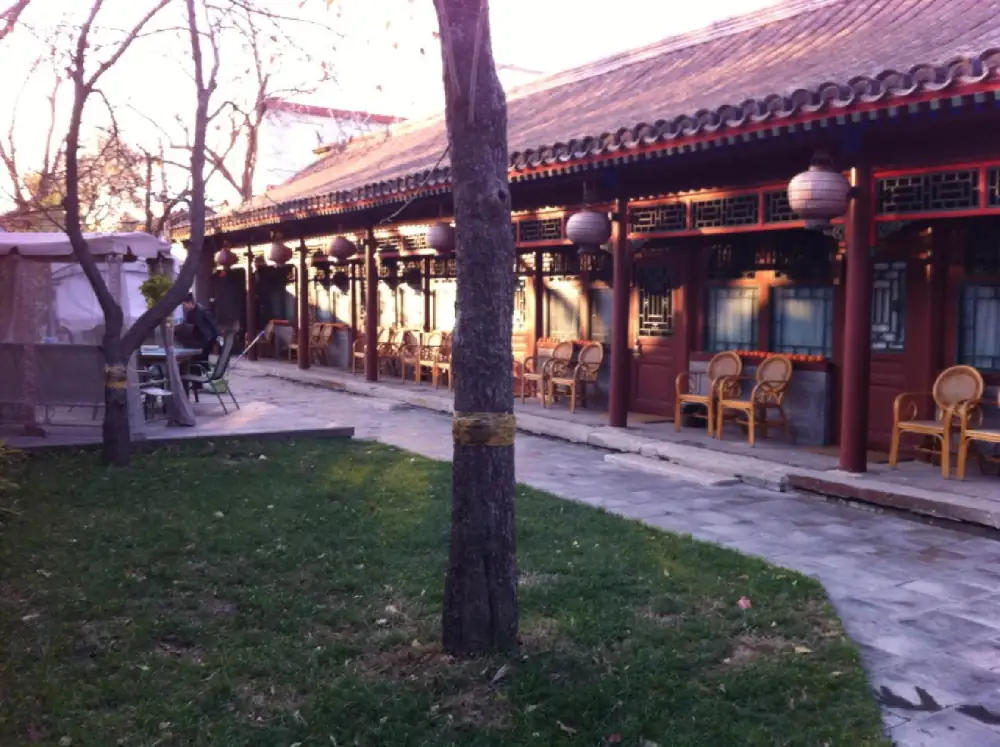
Hutong are the narrow lanes that connect the residential compounds of old Beijing. The character 胡同 (hú tòng) originated from the Mongolian word for “water well” — the Yuan dynasty (Mongol) city that preceded Ming Beijing organized residential districts around shared wells. The lanes between compounds were functional, not decorative.
The standard residential unit along a hutong is the siheyuan (四合院, sì hé yuàn) — a “four-sided courtyard house” with buildings on all four sides enclosing a central courtyard. The principal family lived in the north building (facing south, best sunlight); guest rooms in the east; servant quarters and kitchen in the west and south. Large compounds had three or more nested courtyards.
The Best Hutong Areas
Nanluoguxiang (南锣鼓巷)
The most famous hutong strip in Beijing — 787 meters long, with a dozen adjacent cross-lanes — has been heavily commercialized since the mid-2000s. Today it’s lined with cafes, craft beer bars, snack stalls and boutiques. It’s a social space rather than a living neighborhood, and the original residential character is largely gone. Worth a quick walk but not representative of authentic hutong life.
Cross-lanes worth exploring: Banchang (板厂) and Mao’er (帽儿) lanes, to the east of the main strip, retain more genuine residential character.
Xicheng District Hutong (西城区)
The western part of the old city (Xicheng) has arguably the finest surviving hutong:
Shijia Hutong (史家胡同): A long east-west lane with many intact siheyuan compounds, including the former residences of famous cultural figures.
Fangzhuanchang (方砖厂) area: Beautiful brick facades; one of the better-preserved sections.
Around Shi Cha Hai Lakes (什刹海): The three connected lakes north of the Forbidden City are surrounded by hutong that were traditionally home to the Qing dynasty nobility. The lanes around Silver Ingot Bridge (银锭桥) are particularly evocative.
The area near the Drum Tower (鼓楼 and 钟楼)
A cluster of hutong between the Drum Tower and the southern shore of Houhai Lake has become Beijing’s most interesting neighborhood for food and drink within a traditional setting — not the tourist commercialism of Nanluoguxiang, but independently run cafes and restaurants within hutong compounds.
Courtyard Hotel Stays
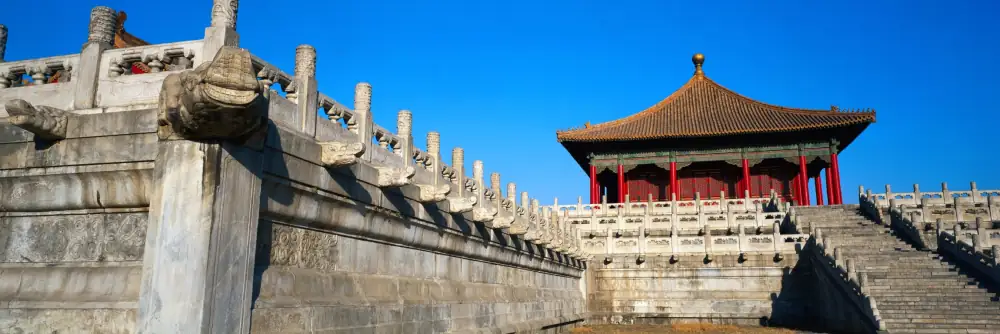
Staying in a converted siheyuan courtyard hotel is one of the most distinctive accommodation experiences in Beijing. The category ranges from simple guesthouses (¥200–400/night for a courtyard room) to luxury properties (¥1,500–5,000/night for a full private courtyard):
Mid-range options: Several excellent converted siheyuan guesthouses operate around the Drum Tower and Houhai area. Look for properties with preserved original architecture (original gray tile roofs, painted eaves, stone drum doorstep).
What to look for: A genuine siheyuan has courtyard views from the room windows; the central courtyard has a tree or planted garden; the gray brick walls are original rather than concrete reconstruction. Ask to see the courtyard before booking.
Luxury: Hotels like The Orchid, The Emperor, and several boutique properties have converted entire multi-courtyard complexes into genuine five-star experiences within 500-year-old structures.
Food in the Hutong
The best eating in old Beijing is in the hutong:
Douzhi and Jiaoquan (豆汁 and 焦圈): Fermented mung bean juice with crispy ring pastry — the classic Beijing breakfast of the hutong generation. Acquired taste (the douzhi is quite sour). Look for the old state-run snack shops in Xicheng district.
Lu Zhu Huo Shao (卤煮火烧): Slow-braised pork intestine and lung with thick flatbread in a rich brown broth; sold from large copper pots. The ultimate Beijing working-class lunch.
Huguosi Xiaochi (护国寺小吃): A row of small restaurants near Huguosi Street (Line 4, Ping’anli station) specializing in traditional Beijing snacks — pea jelly (豌豆黄), tang hulu (糖葫芦, candied hawthorn), salty soy milk soup.
Xiuhua (修化) area restaurants: The lanes around Shichahai have excellent Sichuan and Yunnan restaurants that have moved into hutong settings — often better quality and better value than tourist-facing equivalents.
What to Notice Architecturally
The gate: The entrance gate to a siheyuan tells you about the owner’s social status. Officials’ gates have elaborate carved wooden lintels and rank stone drums; common people’s gates are simpler.
Screen walls (照壁, zhàobì): Just inside the gate, a decorative wall blocks direct view into the courtyard. The wall’s carving and decoration also indicated wealth.
The eaves: Beijing’s gray tile roofs have characteristic upturned eave corners and painted decorative beams (苏式彩画, Suzhou-style painted eaves). The colors — greens, blues, reds — were regulated by rank.
The hutong width: Traditional building codes specified minimum lane widths. Wider hutong indicate more prestigious neighborhoods; the narrowest lanes (some only 70 cm wide — squeeze-through lanes) served the poorest residents.
The Disappearing Hutong
At peak density, Beijing had approximately 3,000 hutong. By 2026, fewer than 1,000 remain in any recognizable form. The others were demolished from the 1950s onward as the city modernized. The pace of demolition slowed after heritage protection laws in the 2000s, but continues in reduced form.
The remaining hutong are simultaneously tourist attractions, heritage districts under protection, and neighborhoods where real people live and age in substandard housing (most siheyuan lacked modern plumbing and were subdivided into multiple cramped units during the socialist period). The tension between preservation, gentrification, and the rights of residents is unresolved and ongoing.
Walking the hutong with this knowledge changes the experience: the beautiful old walls shelter present-day complexity, and the gray brick that looks so timeless in photographs represents a living question about how cities preserve what made them great.