
Chongqing has one of the most distinctive food cultures in China — and that is a genuinely high bar to clear. The city that gave the world its most celebrated style of hotpot is also the place where street food reaches a level of spice, complexity, and ambition that can stop conversations mid-sentence.
This guide is for travellers who want to eat in Chongqing the way locals do: at small family restaurants in neighbourhoods that don’t appear on tour itineraries, ordering by pointing confidently at what the next table has, and understanding why a pot of boiling red oil is actually a sophisticated culinary tradition rather than an endurance test.
Table of contents
Open Table of contents
Why Chongqing Food is Different
Chongqing cuisine is technically part of the broader Sichuan culinary tradition but has evolved separately enough to warrant its own category. The city’s signature is má là (麻辣) — the combination of numbing Sichuan peppercorn (má, which activates a tingling nerve response rather than a burn) and chilli heat (là). Together, they create a sensation that is intense but curiously addictive: you feel your mouth go slightly numb, then the flavour complexity of whatever you are eating rushes in behind.
This is not cuisine for the timid — but the spice level in restaurants is adjustable, and many dishes exist in mild versions that still carry all the flavour depth.
Three factors distinguish Chongqing food from other Chinese regional cuisines:
-
The hotpot culture is communal and hours-long. A hotpot meal in Chongqing is a social event, not a quick dinner. The expectation is to sit for two to three hours, ordering continuous rounds of ingredients, emptying local beer, and generating an impressive pile of used napkins.
-
Street food operates as a parallel meal system. Chongqing residents eat on the street at all hours. Morning noodles, afternoon skewers, late-night small dishes — the street is as important as any restaurant.
-
The geography shapes the food. Chongqing is built on cliffs and river valleys. Delivery systems, neighbourhood logistics, and even hotpot stall locations are determined by the city’s extraordinary vertical topography.
The Essential Dishes
Chongqing Hotpot (重庆火锅)
The canonical version uses a broth made from dried chillies, Sichuan peppercorns, broad bean paste, fermented black beans, beef tallow, and aromatics. The broth is brick-red, visibly oily, and fragrant before anything is cooked in it.
How to order:
- Choose your ingredients from a menu or refrigerated display (point and gesture work fine)
- Must-order: tripe (毛肚 máodù) — the classic hotpot ingredient, dipped for 7 seconds in the boiling broth for optimal texture; duck intestine (鸭肠 yā cháng), briefly dipped for 3–4 seconds; beef (肥牛 féi niú); lotus root slices; potato slices; enoki mushrooms
- Tell them your spice preference at the start: 微辣 (wēi là) = mild; 中辣 (zhōng là) = medium; 特辣 (tè là) = very spicy
- The sesame oil dipping sauce is your friend — a small bowl of sesame oil with garlic reduces the intensity of each bite
Where to eat it:
- Old Chongqing Hotpot (老重庆火锅) — multiple locations, reliable and tourist-accessible
- Lao Wang Hotpot (老王火锅) in the Shapingba district — neighbourhood institution, almost no English, but a standard ordering gesture process works
- Hongyadong area — touristy but the views from the cliff-side restaurants compensate
- Avoid hotel hotpot restaurants — they are designed for cautious palates and miss the point
What a hotpot meal costs: ¥80–180 per person, including drinks, in a good local restaurant. Tourist-area restaurants charge significantly more.
Xiaomian Noodles (小面)
Chongqing’s other great contribution to Chinese food: spicy noodles served in a broth flavoured with sesame paste, chilli oil, Sichuan peppercorn, fermented black beans, garlic, and dried shrimp. The dish looks simple — a bowl of wheat noodles in red sauce — but the flavour complexity is remarkable.
Locals eat xiaomian for breakfast. A bowl costs ¥8–15. Most xiaomian restaurants operate from very early morning until mid-afternoon.
How to order: Point at the menu or say “yi wan xiaomian” (一碗小面) — one bowl of small noodles. Add “jia ji dan” (加鸡蛋) for a boiled egg. The noodles arrive almost immediately — they are always fresh-cooked.
Best xiaomian neighbourhoods: Yuzhong (the main peninsula), Shapingba near the university area, Jiulongpo. Look for small shop fronts with a queue.
Maocai (冒菜)
Maocai is often described as “solo hotpot” — a single-serving pot of meat and vegetables cooked in a spiced broth, then served in a bowl with the cooking broth poured over. Popular as a lunch option.
How to order: Pick ingredients from the display (glass cases of raw vegetables, tofu, meat), hand them to the cook, specify your spice level. The whole process takes about 5 minutes. Cost: ¥15–35.
Ciqikou Street Snacks (磁器口)
The ancient town of Ciqikou at the western end of the city is Chongqing’s best street food destination for visitors. The 1,000-year-old stone-paved street is lined with small shops serving:
- Stinky tofu (臭豆腐) — fermented, crispy-fried, served with chilli sauce. The smell is intense; the taste is nothing like it
- Peanut candy (花生糖) — traditional sweet, hand-pulled by stall vendors in dramatic fashion
- Zhong water dumplings (钟水饺) — served in sweet chilli oil, a Chongqing classic
- Grilled fish (烤鱼) — whole fish grilled over charcoal, topped with a mountain of dried chillies and garnishes
Grilled Fish (重庆烤鱼)
A dish that has spread from Chongqing across China: a whole fish (typically carp or catfish) charcoal-grilled, then served in a metal tray with a burner underneath, surrounded by a sauce of dried chillies, Sichuan peppercorn, celery, bean sprouts, and onion.
The fish is moist inside, slightly charred outside, and the sauce is deeply flavoured. Standard size serves 2–3 people. Cost: ¥60–120 depending on the fish size.
Best area: Nanbin Road along the south bank of the Yangtze has a concentration of grilled fish restaurants with river views.
Chongqing-Style Mala Tang (麻辣烫)
Similar to maocai but served cold or at room temperature — raw ingredients skewered, cooked in spiced broth, and served in a bowl. The street variant is a common afternoon snack. Cost: ¥15–25.
Neighbourhood Restaurant Guide
Jiefangbei (解放碑) — Central Business District
The most accessible area for visitors but also the most commercial. Still has quality options:
- Baonu Hotpot — high-end version of the local style, English menu available
- Miss Fresh dumpling restaurant near the Raffles hotel — excellent for a pre-hotpot starter meal
Nanbin Road (南滨路) — South Bank
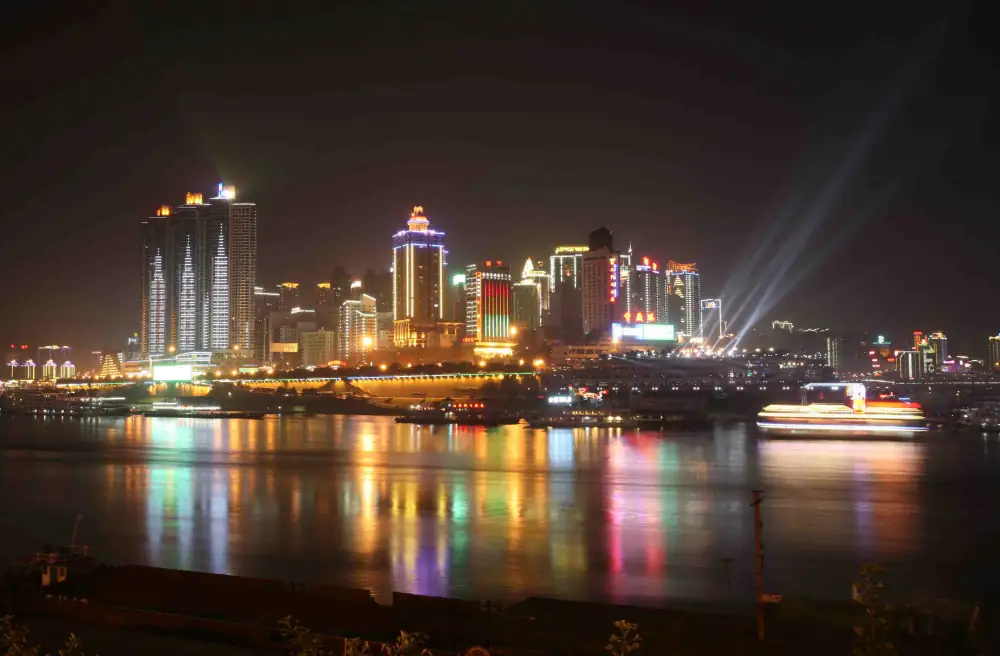
The restaurant strip along the south bank of the Yangtze has the best evening dining scenery in Chongqing. The view of the cliff-side city across the river is extraordinary at night.
Concentrated options:
- Grilled fish restaurants (cheaper toward the western end)
- Cantonese-style restaurants (for visitors wanting a break from spice)
- River crab restaurants in autumn
Shapingba (沙坪坝) — University District
Less visited by tourists but home to some of the most authentic street-level eating. The Sandaoguan area has dense xiaomian, maocai, and skewer shops frequented by students and residents rather than visitors.
Hongyadong (洪崖洞)
The most photographed location in Chongqing — 11-story cliff-side building complex with hanging facades. The restaurants inside are primarily aimed at tourists and charge accordingly, but the upper floors have local fast food options at normal prices. The view of the building from the bridge over the Jialing River at night is one of China’s most shared photographs.
How to Order Without Chinese

A practical guide to menu negotiation:
-
Look at what the table next to you is eating. Point at it and say “zhè gè” (这个, “this one”). This works at 90% of Chinese restaurants.
-
The photo menu. Many Chongqing restaurants have photo menus at the table — simply point and nod.
-
Translation apps. Hold your phone camera over the menu for instant translation — Google Translate (on a VPN) and WeChat Scan work for this purpose.
-
Chilli icons. Some menus use 🌶️ icons to indicate spice level. Zero chillies = mild, three chillies = intense.
-
Key phrases:
- 不要太辣 (bù yào tài là) = not too spicy
- 多少钱? (duōshao qián?) = how much?
- 买单 (mǎi dān) = the bill
- 好吃!(hǎo chī!) = delicious — say this and watch faces light up
Dietary Considerations
Vegetarians: Chongqing is challenging for strict vegetarians. The hotpot broth base contains beef tallow; even “vegetable” dishes are sometimes cooked in lard. Dedicated vegetarian restaurants (素食馆 sùshí guǎn) exist in the city — search the term in Amap for locations near you.
Halal options: Chongqing has a small but established Muslim community. Look for the Arabic crescent sign (清真 qīng zhēn) on restaurant fronts near the Jiefangbei mosque area.
Gluten intolerance: Soy sauce is ubiquitous and contains wheat. Indicating “I cannot eat soy sauce” (我不能吃酱油 wǒ bù néng chī jiàng yóu) reduces but does not eliminate the risk in complex dishes.
Practical Food Tips for Chongqing
Eat your main meal late. Locals eat dinner between 7pm and 9pm. Hotpot restaurants are busiest from 7:30pm. If you arrive at 6pm, you will have your choice of tables and faster service.
Water, not ice. Chinese restaurants typically serve hot tea rather than cold water — this is standard and has nothing to do with the kitchen. Ask for water (水 shuǐ) and expect room-temperature or hot. Bottled cold water can be ordered separately.
Napkins are abundant. Chongqing hotpot restaurants provide stacks of thin napkins — you will use them. This is not excessive; it is practically necessary.
Budget per meal:
- Xiaomian or maocai breakfast/lunch: ¥8–25 per person
- Neighbourhood restaurant dinner: ¥40–80 per person
- Hotpot dinner at a good local restaurant: ¥80–180 per person
- Tourist-area restaurants: 30–50% more for the same food
Getting to the Food Districts
From Jiefangbei: Walk or DiDi to most central options. The Light Rail (LRT) lines 1, 3, and 6 converge at Jiefangbei station.
To Ciqikou: Metro Line 1 to Ciqikou station, then 5-minute walk.
To Nanbin Road: Yangtze River cable car from Xinhua Road on the north bank (¥10, a notable experience in itself) or DiDi.
To Hongyadong: Metro Line 6 to Linjiangmen station, 10-minute walk.
Related guides: Chongqing Complete Travel Guide | China Food Guide: 30 Must-Try Dishes | Sichuan Cuisine and Chengdu Food Guide