
Wuhan is the city that connects China’s geography — sitting at the confluence of the Yangtze and Han rivers in the heart of the country, with excellent high-speed rail access in every direction. For international visitors, it tends to appear on itineraries as a stopover on the way between Beijing or Xi’an and Chengdu or Shanghai. Those who stay longer discover one of China’s most underrated urban destinations: a genuinely liveable city with excellent food, significant history, beautiful spring cherry blossoms, and the intellectual energy of over a million university students.
Table of contents
Open Table of contents
Essential Background
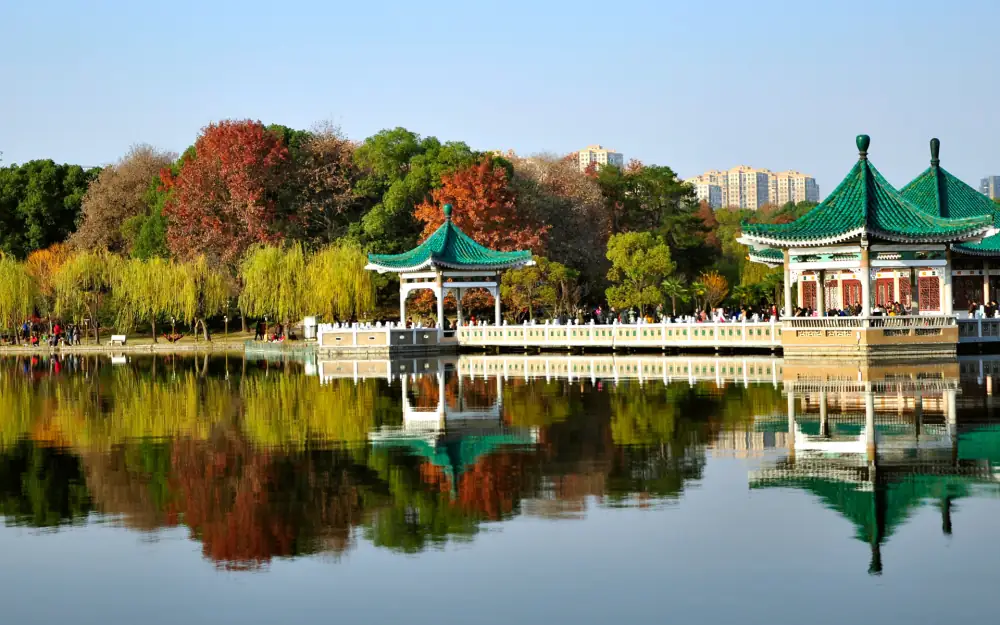
Location: Wuhan sits at the convergence of the Yangtze and Han rivers in Hubei Province, central China. Population: approximately 12 million. It is the political and economic capital of central China.
The three towns: Wuhan is technically three cities merged in 1927 — Wuchang (east of the Yangtze), Hankou (north of the Han River), and Hanyang (between the two rivers). Each has a distinct character: Wuchang for universities and historical sights; Hankou for street life, colonial architecture, and food; Hanyang for industry and the quieter residential life.
Why visit: Cherry blossoms (February–March), the Yellow Crane Tower, East Lake (largest urban lake in China), the city’s exceptional street food culture, and Wuhan’s position as a natural gateway to the Three Gorges.
Top Sights
Yellow Crane Tower (黄鹤楼 Huánghè Lóu)
The most iconic building in Wuhan and one of the most celebrated towers in Chinese poetry. The original Tang dynasty tower was destroyed and rebuilt multiple times; the current structure is a 1985 reconstruction in traditional style. For many visitors, the approach and setting — elevated on Snake Hill above the Yangtze, visible from considerable distance — is more affecting than the interior.
The tower has been the subject of Chinese poetry for 1,200 years. The most celebrated is by Cui Hao (Tang dynasty): “On the yellow crane tower, the immortal was gone / Now only the yellow crane is left / Once gone, the yellow crane never returns / White clouds drift aimlessly for a thousand years.” The poem is displayed throughout the site and sets an atmospheric tone that rewards pausing.
Practical: Open daily 7:30am–6pm. Tickets ¥80. The view from the top extends over the Yangtze and its bridges. Arrive early or late afternoon to avoid the peak crowd density.
Wuhan University Cherry Blossoms (武汉大学樱花)
Wuhan University’s campus contains over 1,000 cherry trees, many planted during the Japanese occupation in the 1930s, forming one of the most beautiful and accessible cherry blossom viewing sites in China. The trees line the main architectural axis of the campus — a series of significant traditional buildings on hilltop terraces — in a combination of natural beauty and architectural grandeur.
The cherry blossom season typically runs mid-February to mid-March, varying by 2–3 weeks depending on the winter temperatures. At peak bloom (usually last week of February to first week of March), queues to enter the campus can be 2–3 hours. Go on a weekday morning.
Practical: The university campus is free to enter during most of the year. During peak cherry blossom season, access is managed with timed entry tickets issued online. Check the university’s official notification (shared widely on Chinese social media) for the exact booking procedure.
East Lake (东湖 Dōng Hú)
At 88 square kilometres, East Lake is the largest urban lake inside a city in China (exceeding Hangzhou’s West Lake by over three times in area). The lakeside park system — 33 km of cycling and walking paths — is where Wuhan residents spend their weekends.
For visitors:
- The East Lake Greenway cycling path is one of China’s best urban cycling routes. Bikes are available for rental at multiple points (scan a QR code on a shared bike or rent at the main park entrance). A 15–20km circuit takes about 2 hours at leisure.
- Meihu (Plum Blossom Lake) area of East Lake is best in late January–February when the plum trees bloom.
- East Lake Peach Blossom Garden adds to the spring bloom sequence in March–April.
- East Lake Scenic Area also contains a botanical garden, a museum of Hubei Provincial history, and Chu Culture Park (featuring the culture of the Zhou dynasty state of Chu, which ruled from modern-day Hubei).
Han Street (汉街 Hàn Jiē) and Chu River Han Street
A 1.5km pedestrian shopping and food street built along a canal in the Wuchang district. The scale is impressive — it is deliberately designed to impress — and the canal-side restaurants and cafes make for good evening dining.
More interesting for food than architecture: Han Street is where you find concentrated versions of Wuhan’s street food, including the Duck Neck shops (鸭脖 yā bó) that are one of Wuhan’s most characteristic food exports, and hot dry noodle shops catering to the late-evening crowd.
The Yangtze River
Wuhan has more bridges across the Yangtze than any other city — including the historic Wuhan Yangtze River Bridge, completed in 1957, which was the first permanent bridge across the Yangtze and an enormous engineering and political achievement for early Communist China.
For visitors:
- Walk or cycle the Wuhan Yangtze River Bridge on its pedestrian path — views in both directions across the wide river
- Take the Yangtze River ferry between Wuchang and Hankou (¥2, about 10 minutes) — a practical cross-river journey that also gives a good perspective of the city from the water
- The Yangtze River Cable Car at Wuhan (a separate installation from the ferry) provides an elevated view of the river and bridge infrastructure
Wuhan Food — The Local Obsession
Wuhan is one of China’s great street food cities, with a tradition of eating outside that differs in character from both the spice-forward cultures of Sichuan and the elegance of Jiangnan cuisine.
Hot Dry Noodles (热干面 Rè Gān Miàn)
Wuhan’s defining dish: thick wheat noodles pre-cooked and dried, then quickly blanched, tossed with sesame paste, garlic, chilli oil, and spring onions. The result is dense, nutty, and very satisfying. Wuhan residents eat it for breakfast, often standing at street-side stalls.
A bowl costs ¥6–12. The quality varies considerably between stalls — look for those with a queue of locals rather than a handwritten sign aimed at tourists.
Best areas: Hu Bu Alley (户部巷) in Wuchang — the most famous breakfast snack street in Wuhan, with dozens of stalls serving hot dry noodles and other local breakfasts. Arrive 7–9am for peak service.
Duck Neck (周黑鸭 / 鸭脖)
Wuhan’s most internationally travelled food export: chilli-and-spice braised duck necks, sold cold from specialist shops. The two major brands — Zhou Hei Ya (周黑鸭) and Jiu Jiu Ya (久久鸭) — have national chains, but the original Wuhan shops have the best product.
Duck necks are a beer snack, not a meal. Buy them cold from a shop, find a riverside spot, and eat them with cold beer while watching the Yangtze.
Steamed Wuchang Fish (清蒸武昌鱼)
A Hubei classic — mild-flavoured fresh water fish steamed with ginger, spring onions, and light soy sauce. The dish is famously associated with Mao Zedong, who wrote a poem referencing eating this fish at the Yangtze’s edge. The fish itself (bream, technically) has a clean sweet flavour completely different from the spiced dishes of neighbouring Sichuan.
Hu Bu Alley (户部巷) Breakfast Culture
Hu Bu Alley is to Wuhan what Chengdu’s Wide and Narrow Alley is to Sichuan — a preserved historic street turned into a concentrated food experience, this time focused entirely on the Wuhan breakfast tradition. Dishes available:
- Hot dry noodles (multiple variations and styles)
- Cai Juan (菜煎饼) — vegetable-filled crispy pancakes
- Mi Fen (米粉) — rice noodle soup with various toppings
- Egg and green onion pancakes (鸡蛋饼)
- Tofu custard (豆腐脑)
Arrive hungry. Eat everything for under ¥50.
Day Trips from Wuhan
Wudang Mountain (武当山) — 3.5 Hours
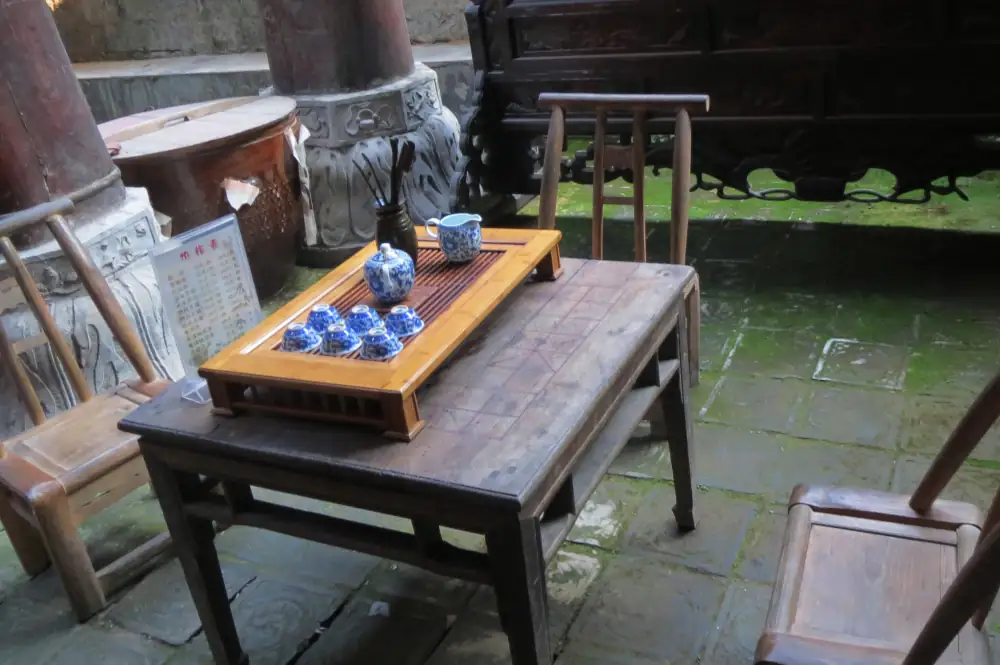
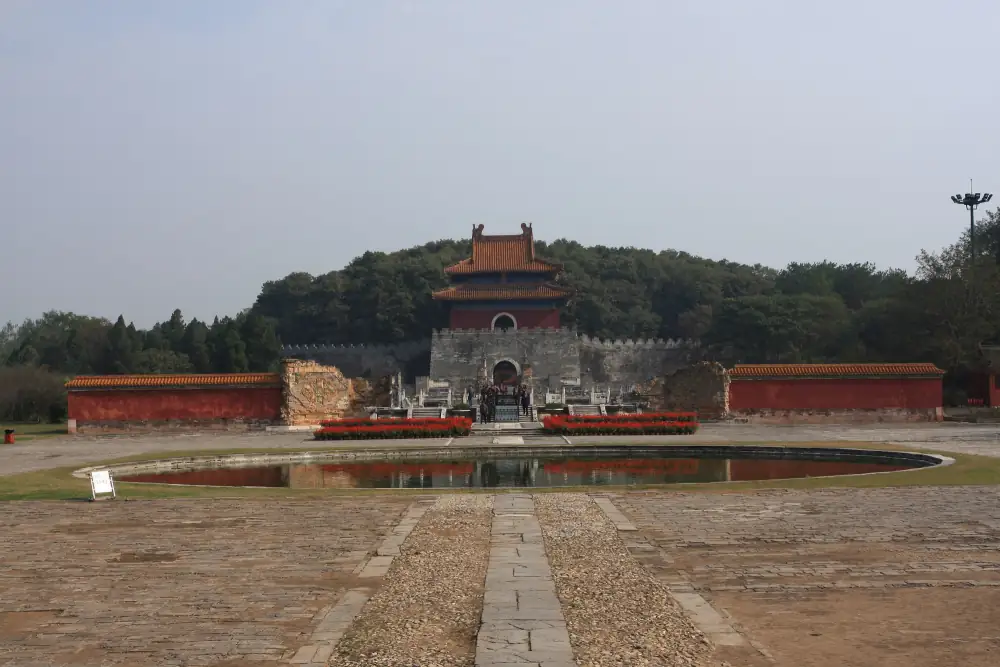
One of China’s sacred Taoist mountain ranges and a UNESCO World Heritage Site. The complex of temples and monasteries climbing the mountain has been associated with Taoist practice for over 1,000 years. The setting — hanging monasteries on cliff faces, ancient stone paths through forest — is more dramatically beautiful than more famous mountain destinations. High-speed train to Wudang Mountain station (about 2 hours).
Three Gorges — 2 Days Minimum
Yichang, 2 hours from Wuhan by high-speed train, is the gateway to the Three Gorges river section. Yangtze River cruises of 3–5 days operate downstream from Yichang through the three famous gorges (Qutang, Wu, and Xiling). See our Yangtze River cruise guide for full details.
Getting to Wuhan
Wuhan’s position at China’s geographical centre makes it one of the best-connected cities in the country.
From Beijing: High-speed train (G trains), approximately 4.5 hours. Departures from Beijing West Station.
From Shanghai: High-speed train, approximately 4.5–5 hours. Departures from Shanghai Hongqiao.
From Xi’an: High-speed train, approximately 4–5 hours.
From Chengdu: High-speed train, approximately 5–6 hours.
International flights: Wuhan Tianhe International Airport (WUH) has direct flights to several Asian hubs and limited European connections.
Getting Around Wuhan
Metro: Wuhan’s Metro system has 10+ lines covering all major sights. The app interface in Chinese, but Amap (English) shows all metro routes and connections. MetroMan app also has an English Wuhan interface.
Yangtze ferries: For cross-river travel between Wuchang and Hankou, the public ferry (¥2) is slower than the metro tunnel but a more atmospheric experience.
DiDi: Available and reliable throughout the city.
When to Visit Wuhan
| Period | What to expect | Notes |
|---|---|---|
| February–March | Cherry blossoms at peak | Book accommodation 2+ weeks ahead during peak bloom |
| April–May | Spring flowers, pleasant temperatures | Best all-round weather for sightseeing |
| June–August | Very hot and humid, “stove city” reputation | Not recommended unless comfortable with heat above 35°C |
| September–October | Autumn colours, ideal temperatures | Best balance of weather and lower crowds |
| November–January | Cold, some grey days | Lower prices, East Lake less scenic |
Wuhan’s cherry blossom window is narrow — follow the official Wuhan University announcement (usually released in January) to time your visit.
Where to Stay
In Wuchang (for sights):
- Wuhan Marriott Hotel Wuchang — near the Yellow Crane Tower and river
- Ibis Wuhan Wuchang station — budget option, practical location
In Hankou (for food and street life):
- Hilton Wuhan Riverside — Yangtze views from upper floors
- Local boutique hotels near Jianghan Road
Practical: Book in advance during cherry blossom season (mid-February to mid-March) — the city receives enormous numbers of visitors during this 3-week window and hotel prices double.
Practical Information
Currency and payment: Alipay and WeChat Pay are the primary payment methods. See China payment guide.
Language: Limited English outside tourist sites and international hotels. Amap navigates all public transport in English.
Visa: Wuhan is included in China’s 15-day visa-free program for eligible nationalities. See China visa guide.