
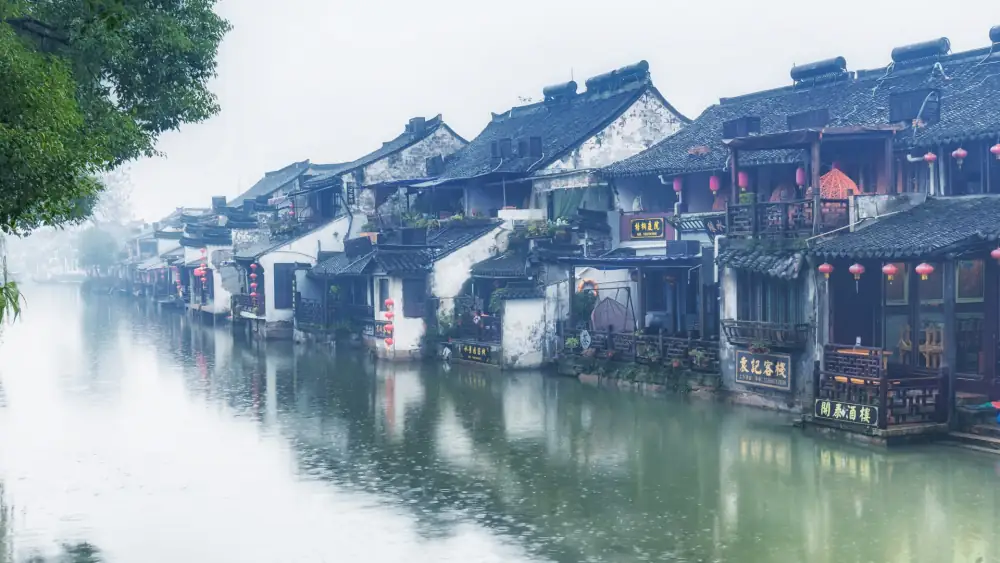
The water towns of Zhejiang Province — intersected by ancient canals, lined with whitewashed walls and curved black-tiled roofs — are among the most distinctive architectural landscapes in China. Wuzhen and Xitang are the two most visited, both within easy reach of Shanghai and Hangzhou, and both beloved by photographers for the play of mist and reflections in the canal water at dawn.
Overview: Wuzhen vs Xitang
Before diving in, the essential comparison:
| Wuzhen | Xitang | |
|---|---|---|
| Size | Larger | More compact |
| Preservation | Excellent (managed by operator) | Good but more lived-in |
| Atmosphere | Themed, manicured | More authentic street life |
| Night scene | Spectacular (lanterns) | Very good (fewer crowds) |
| Day trip or overnight | Both; overnight recommended | Day trip fine; overnight better |
| Distance from Shanghai | 1.5h | 1h |
| International tourism | Higher | Lower |
| Price | ¥120–150 for full two-sector ticket | ¥100 |
Verdict: Wuzhen is more beautiful and better-preserved but more commercialized. Xitang feels more authentic with real residents and real life alongside the tourism. Many travelers do both.
Wuzhen (乌镇)
Overview
Wuzhen was transformed in the early 2000s by a major restoration and management project that turned it into one of China’s most visited ancient water towns. Both sectors (Dongzha East Gate and Xizha West Gate) have been comprehensively preserved with functioning traditional crafts, museums, residences and food.
Dongzha (East Gate) vs Xizha (West Gate)
Dongzha: The original tourist area; more compact, easily walked in 2–3 hours. Artisan workshops for dyeing (the indigo blue-black cloth is Wuzhen’s signature), silk making, leather carving.
Xizha: The newer, larger sector that was developed for higher-end tourism. Hotels and guesthouses are integrated into the ancient buildings. Accessible only to overnight guests and those who pay the full entry. The night scene here — with lanterns reflecting in the canals and the entire quarter closed to day tourists — is extraordinary.
Best Experience: Stay Overnight in Xizha
Wuzhen Xizha night is genuinely one of the most beautiful things in the Yangtze Delta region. Book a guesthouse inside the Xizha zone (prices: ¥500–2,000/night depending on canal-view room vs standard). After 17:30 when day tourists leave, the lantern-lit canal network becomes quiet and magical.
Photography
Best shots: Dongzha canal from the old stone bridge at dawn, or Xizha at dusk from any canal-side balcony. The morning mist off the water between 06:00–08:00 creates the iconic Wuzhen image.
Getting There
From Shanghai: High-speed train to Tongxiang Station (45 minutes, ¥50); then bus or taxi to Wuzhen (30 minutes, ¥15 bus or ¥60 taxi). Total: approximately 1.5 hours.
From Hangzhou: Bus from Hangzhou Qianjiang Bus Terminal direct to Wuzhen; 1.5 hours, ¥45.
Organized day tours: From both Shanghai and Hangzhou, many operators run day trips to Wuzhen. Convenient but you lose the magical early morning and evening atmosphere.
Entry Fees
- Dongzha only: ¥60
- Full ticket (Dongzha + Xizha): ¥120
- Xizha night entry: Additional ¥100 (or included with overnight stay)
Xitang (西塘)
Overview
Xitang (“Western Pond”) is slightly smaller than Wuzhen and has kept more of its living community. Real families still live in the canal-side houses; small local businesses operate alongside tourist shops. This duality — touristification alongside real life — is either charming or frustrating depending on your perspective, but it does create more organic encounters with actual residents.
Key Features
Nine-bend pavilion corridor (烟雨长廊): A 1-km covered walkway along the canal, with shops and small restaurants under the roof. Unique among the water towns.
Night lanterns: Like Wuzhen, Xitang’s canal-side lanterns at night are beautiful. Xitang’s night scene is less managed and often feels more spontaneous.
Huyuan Residence (胡愿宅): The most elaborate private residence in the town; displays Qing dynasty furniture and artifacts.
Yaochi Caifang (药材铺): Traditional herb medicine shop operating continuously for generations.
Getting There
From Shanghai: High-speed train to Jiaxing South (35 minutes, ¥45); then taxi or bus to Xitang (30 minutes, ¥25 bus or ¥70 taxi). Or direct bus from Shanghai Hongqiao Bus Terminal (1.5 hours, ¥40).
Entry: ¥100 per person, covers all attractions within the town.
Other Notable Water Towns Nearby
Tongli (同里, Jiangsu): 30 minutes from Suzhou. More elegant than bustling; the Tuisi Garden (Retreat and Reflection Garden) is a UNESCO-listed classical garden set on the canal. Less commercially developed than Wuzhen.
Nanxun (南浔, Zhejiang): Between Hangzhou and Shanghai. Quieter than the others; known for silk merchant mansions (the massive Xiaolian Village of the Liu family is extraordinary). Less international tourism.
Zhouzhuang (周庄, Jiangsu): The first of these towns to be developed for tourism (1980s); now quite commercialized. Worth visiting for Shuang Qiao (Double Bridges) — the most photographed image in Chinese water town photography.
Practical Tips for All Water Towns
Timing: Visit on a weekday to avoid Chinese weekend crowds. Spring (March–May) and autumn (September–November) have the best weather. Summer is hot and humid but the evening light is beautiful.
Photography golden hour: Arrive before the gates open if possible — walking the main canal streets in the hour before 09:00, as boats begin moving and morning mist sits on the water, produces images unavailable at any other time of day.
Canal boat rides: All the major towns offer gondola-style boat rides along the canals (¥60–100 per person, 20–30 minutes). Worth doing once; the boat provides perspectives impossible from the paths.
Food: Water town food specialties include rice wine (黄酒), crayfish, freshwater crab (in autumn), and sweet glutinous rice snacks. Avoid tourist-facing restaurants on the main promenades; eat at small family places one alley back.
Scams: “Art exhibition” invitations and “free tea” offers that lead to expensive purchases exist here as in other Chinese tourist areas. Be politely firm.
The water towns distill a particular Jiangnan aesthetic — elegance, wetness, antiquity and the gentle decay of canal walls — that has shaped Chinese poetry and painting for a thousand years. Even briefly, they give access to a landscape that exists almost nowhere else in the world.