
Xi’an is a natural base for two of Shaanxi Province’s most compelling experiences: the Hua Qing Palace hot springs complex with its imperial romance and a legendary 1936 political kidnapping, and the vertical cliffs of Mount Hua (华山, one of China’s five sacred mountains) with its terrifying plank walk on chains across a sheer granite face. Both are within 90 minutes of Xi’an city.
Hua Qing Palace (华清宫)
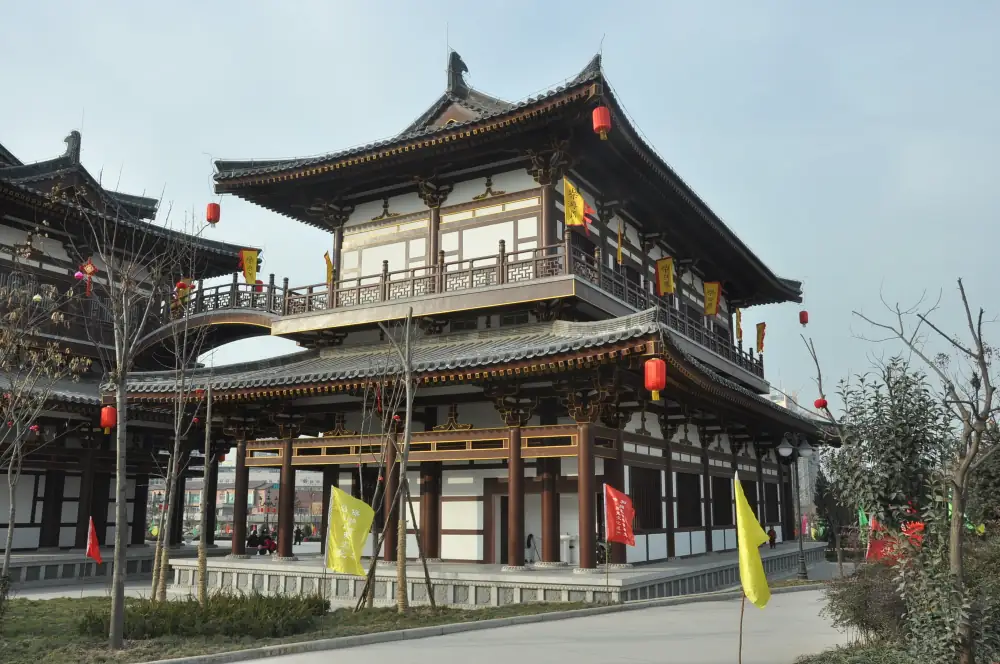
Location: Lintong District, 30 km east of Xi’an; adjacent to Mount Li (骊山)
The Imperial Hot Springs
The natural hot springs at the foot of Mount Li have been used since at least the Western Zhou Dynasty (3,000 years ago). Tang Emperor Xuanzong (reigned 712–756 AD) spent his winters here with his celebrated consort Yang Guifei (杨贵妃), who became the subject of the most famous love poem in Chinese history (Bai Juyi’s “Song of Everlasting Regret,” 长恨歌). The Tang court’s elaborate spring bathing halls and pleasure palaces were partly excavated in the 1980s; the Lotus Pool (莲花池) and Nine Dragon Pool (九龙汤) are among the most impressive archaeological remains.
The 1936 Xi’an Incident: A second layer of historical interest. In December 1936, Nationalist leader Chiang Kai-shek was captured here by his own generals (Zhang Xueliang and Yang Hucheng) in an act designed to force him to form a united front with the Communists against the Japanese invasion. Chiang barely escaped through a window of his villa before the generals arrived — the window and his abandoned clothing are preserved in a small museum. This event is considered pivotal in Chinese history.
Visiting Today
The site is organized as a large park with multiple zones:
- Archaeological hot spring bath ruins (authentic Tang dynasty excavations)
- Reconstructed Tang palace buildings (performance venue for the “Song of Eternal Regret” drama)
- Museum of the Xi’an Incident with original 1936 buildings
Best experience: Visit in the morning when the archaeological section is less crowded; allow 3–4 hours for the full complex.
Evening drama performance: “Song of Eternal Regret” (长恨歌) is performed nightly in an outdoor theatre using the mountain hot springs, floating dancers and atmospheric lighting. Tickets ¥200–400; the 70-minute performance is widely considered one of China’s best outdoor shows.
Entry: ¥150 (day visit); extra for evening performance
Getting there: Bus 306 from Xi’an Railway Station or Linglong Road (1 hour, ¥7–10); or Didi (¥50–70).
Mount Hua (华山)
Mount Hua is one of the Five Sacred Mountains of Daoism and one of the steepest, most dramatic mountain landscapes in China. Its five peaks rise from a single granite mass to the highest summit at 2,154m, and the paths connecting them traverse sheer faces using chain railings, wooden walkways bolted to cliff faces, and stone steps cut directly into vertical granite.
The North Peak Cable Car Route (Recommended for Day Visitors)
Most visitors take the North Peak Cable Car from the west entrance area:
- Cable car to North Peak (北峰): 10 minutes, ¥180 round trip
- From North Peak, trails connect all five main peaks
Walking time between peaks: North → East Peak (东峰): 2–3 hours; North → South Peak (南峰, highest): 3–4 hours. Full five-peak circuit: 6–8 hours walking.
The Plank Walk (长空栈道)
On the southern cliff face between South Peak and the Zhengfan Cliff, a series of wooden planks bolted to the cliff on iron brackets form a narrow walkway. The planks are 30–40 cm wide; the cliff drops vertically beneath. You hold the chain railings and shuffle sideways, back to the cliff.
Adrenaline level: Extreme. Many visitors freeze mid-section. People turn back. People cry. People also complete it and feel extraordinary afterward.
Safety: The chain railing is secured and the bolts are regularly inspected. People have fallen over the decades (hence the harness requirement), but with harness attached, the actual risk is very low. The psychological experience is genuinely extreme.
Harness rental: ¥10 at the plank walk start; mandatory before entry.
Time: 30–40 minutes for the full section.
The Overnight Strategy (Best Approach)
The reason to stay overnight on Mount Hua:
- Sunset: The mountain commands views of the Wei River valley and the Qin Mountains.
- Avoiding crowds: 90% of visitors are day-trippers via cable car. Overnight hikers who complete the classical hiking path (starting from the east base station at night, 6–8 hours to reach the peaks) arrive at East Peak before dawn.
- Sunrise at East Peak (朝阳台): Watching the sun rise from the East Peak is one of the most celebrated natural spectacles in Chinese cultural history. On clear days, the light spreads over the red cliff faces and the valley below.
Overnight accommodation: Simple mountain guesthouses on the summit area (South Peak and North Peak). Dormitory beds ¥100–200; heated rooms ¥300–600. Book in advance for weekends and peak season (April–October).
Night hiking route: Classic entrance at the East Road (东山门), starting at Huashan Village. The path ascends through a narrow gorge (千尺幢 and 百尺峡 — terrifying sections even in darkness) to the ridge and then to the peaks. Headlamp essential. This route is very different from the cable car approach — more demanding, more atmospheric, more rewarding.
Practical Information
Address: Huayin City, Weinan (渭南市华阴市)
Getting there from Xi’an:
- High-speed train: Xi’an North (西安北) to Huashan North (华山北) station: 30 minutes, ¥30–50. Then bus or Didi to the mountain entrance (20 minutes, ¥10–20).
- Tourist bus: Various operators run direct buses from Xi’an’s main attractions area.
Entry fee: ¥160 (mountain); cable car ¥180 round trip extra.
Best combination: Day 1: Hua Qing Palace day visit + evening drama performance (stay in Lintong or return to Xi’an); Day 2: Mount Hua overnight (check in to mountain guesthouse, watch sunset, sleep, watch sunrise, descend by cable car).
The plank walk on Mount Hua is the most honestly terrifying tourist experience in China. The Tang dynasty hot springs and imperial romance of Hua Qing Palace is among the most graceful. Together they represent the range of Shaanxi’s offerings beyond the already extraordinary Terracotta Warriors.