
Shaanxi (陕西) is most famous for Xi’an and the Terracotta Warriors — but the province extends from the Qinling-Daba mountains in the south to the Loess Plateau in the north, containing landscapes and heritage sites that most visitors in Xi’an never reach.
Table of contents
Open Table of contents
Huashan (华山): China’s Most Dangerous Hike
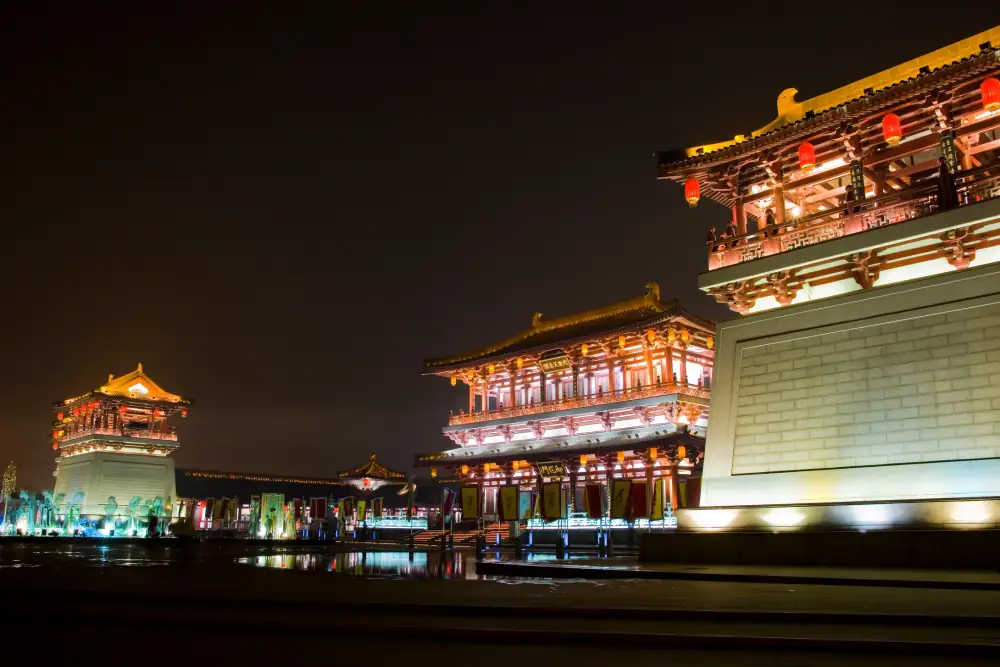
100 km east of Xi’an — one of China’s five sacred Daoist mountains, and unquestionably the most physically frightening mountain trail in China.
The terrain: Huashan is composed of a single enormous granite monolith, its vertical faces carved with steps and equipped with chain handrails. The most extreme section is the Plank Walk (长空栈道) — a series of wooden planks bolted directly into a vertical cliff face, traversed sideways with a chain to hold and a 2,000-metre drop below.
Serious statistics: The plank walk is approximately 3 metres wide (actually wider than it looks when you’re on it), 30 metres long. The fear is entirely psychological — the chain and harness are secure. But the combination of the cliff above you, the void below, and the visual of your feet on wooden boards with nothing beneath is genuinely extreme.
Other sections:
- Tianxia Qianjian (天下第一险): “The most dangerous place under heaven” — a near-vertical staircase carved directly into the cliff face, ascending approximately 60° for 50 metres, with chains on both sides. Used by both ascent and descent simultaneously.
- Eagle Turning Back (苍龙岭): The narrow granite ridge path between North and South Peaks — open on both sides, with the valley visible 1,000 metres below.
The full mountain: Four accessible peaks (East, South, West, North — 2,160 m max). Night ascent + sunrise from the East Peak is the classic experience — take the cable car up, walk between peaks, camp or stay in a mountain guesthouse at the South Peak.
Ticket: ¥180. Cable car: ¥100 one-way. Open year-round but icy in winter.
Hanzhong (汉中): The Spring Rapeseed Valley
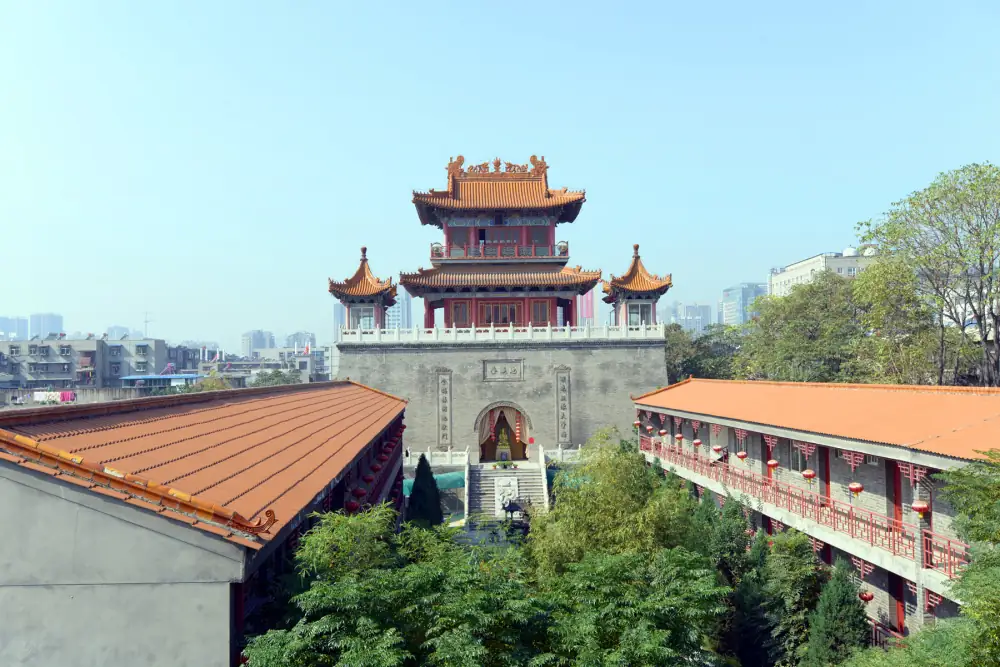
400 km south of Xi’an via the Qinling Mountains — a subtropical valley with distinctly southern climate that grows the most spectacular spring rapeseed landscape in northern China.
The rapeseed season: Late February–March. The Han River (汉江) valley floor turns completely yellow with simultaneous bloom of oil rape fields. The combination of a southern landscape (mild temperatures, green hills, water systems) with northern Chinese village architecture creates a visual unusual in China.
Why Hanzhong is culturally significant: Hanzhong was where Liu Bang assembled his forces in 206 BC before reconquering China and founding the Han Dynasty. The name “Han” (汉), used today for the Chinese ethnic majority and the Chinese language, derives from the Han River that runs through Hanzhong. This is the birthplace of the cultural identity that defines Chinese civilisation.
The Han Dynasty ruins: The Wumenlou Site (五门楼遗址) marks Liu Bang’s original headquarters; the Zhang Liang Temple (张良庙) in the Liuba mountains commemorates Liu Bang’s chief strategist.
Maoling Mausoleum (茂陵)
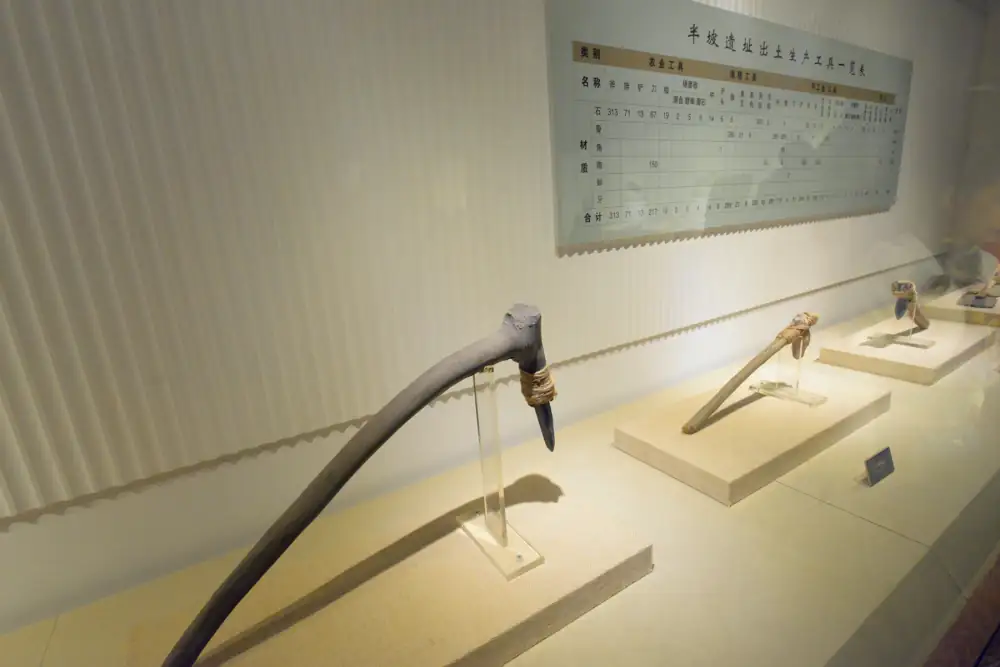
50 km west of Xi’an — the largest of the Han Dynasty imperial tombs, burial site of Emperor Wu (汉武帝, 156–87 BC) — the emperor who expanded the Han Empire to Central Asia and established the Silk Road as a military and commercial route.
The tomb: An earth mound 46 metres high, base 240 metres on each side — the largest imperial burial mound in China. The adjacent Huo Qubing tomb (霍去病墓) has the extraordinary stone animal sculptures carved in the 2nd century BC — monumental rough-hewn sculptures of horses, tigers, elephants, and fish in a style quite different from later dynasties.
Ticket: ¥45. Getting there: 1 hour by bus from Xi’an.
Practical Tips
Huashan from Xi’an: Direct bus or high-speed rail to Huayin station (40 min), then bus to mountain entrance.
Hanzhong access: High-speed rail from Xi’an through the Qinling Tunnel (2 hrs) — the tunnel crosses the main Qinling ridge and emerges in the subtropical valley.
Last updated: May 2026