
Xi’an is most visitors’ starting point for the Shaanxi experience, but the city’s immediate surroundings — the Guanzhong plain that served as China’s political heartland for over a thousand years — contain more major historical sites than most people realise. Within 120km of Xi’an lies one of the densest concentrations of imperial tombs, palaces, and mountain temples anywhere in the world. The challenge is not finding things to see but deciding which to prioritise and how to combine them efficiently.
Table of contents
Open Table of contents
Huaqing Palace & the Xi’an Incident
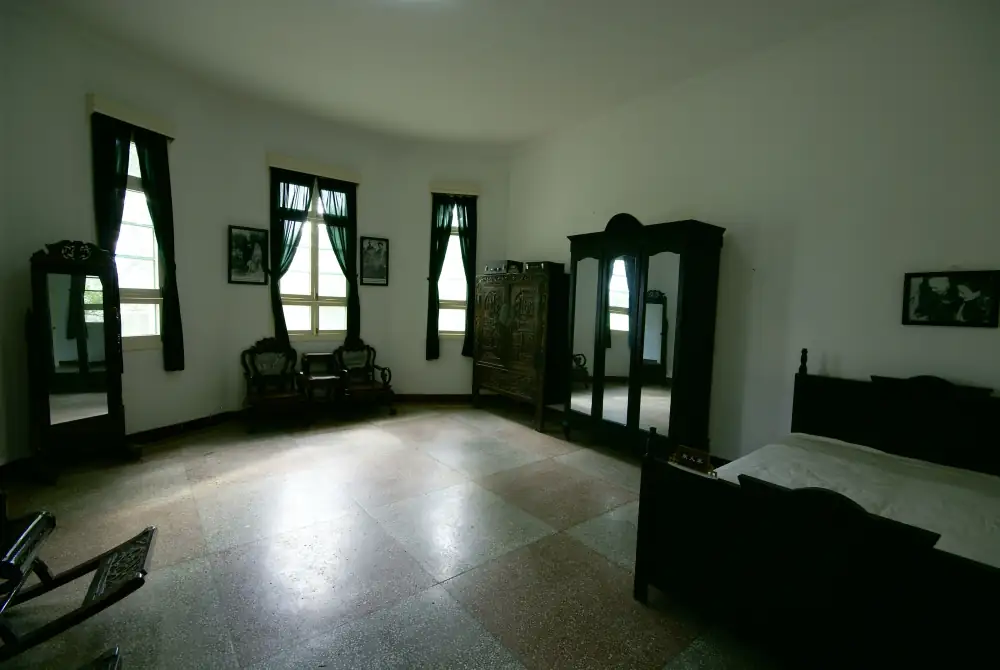
Huaqing Palace (华清宫) is 30km east of Xi’an at the foot of Lishan Mountain (骊山). The site has two completely distinct historical layers that make it more interesting than a single-era heritage site.
The Tang Dynasty Hot Springs: The palace complex was the favourite retreat of the Tang Emperor Xuanzong and his famous consort Yang Guifei. The natural hot springs here were developed into an imperial bathing complex with elaborate pools and pavilions in the 8th century. The reconstructed Nine Dragon Lake, the bathing pavilions, and the gardens are pleasant rather than spectacular, but the historical weight of the place — this is where the An Lushan Rebellion was effectively launched, where Yang Guifei died, and where some of the most romanticised events in Chinese imperial history occurred — gives it real depth.
The Xi’an Incident (1936): The same site where Tang emperors bathed is where Chiang Kai-shek was captured in December 1936 by his own generals Zhang Xueliang and Yang Hucheng, who forced him to agree to a United Front with the Communists against Japanese invasion. The incident changed the course of the Sino-Japanese War and, many historians argue, determined the outcome of the Chinese Civil War. The “Five-Room Pavilion” (五间厅) where Chiang slept and the cliff path where he fled in his nightclothes (leaving behind a boot) are preserved and marked with explanatory signs. The boot story is both historically verified and deeply human — the most powerful man in China running barefoot up a mountain in his pyjamas.
Admission ¥150, including the night show (an extravagant sound-and-light performance that runs on selected evenings). 30km from Xi’an on Bus Line Tour 1 (¥7, 40 minutes) or taxi (¥70-100 one way).
Qianling Mausoleum: Wu Zetian’s Tomb
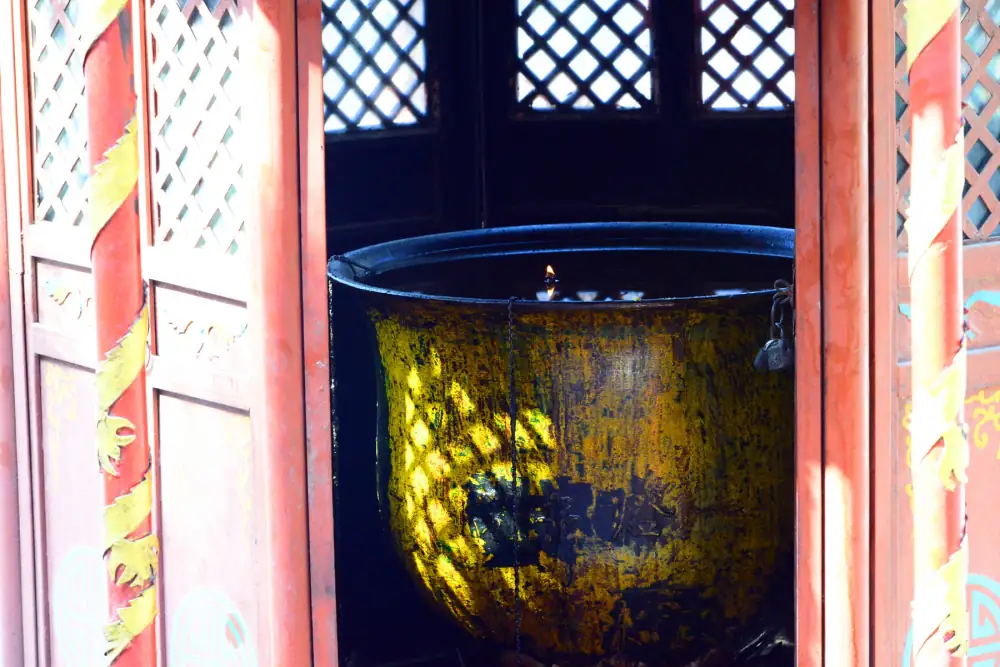
The Qianling Mausoleum (乾陵) 80km west of Xi’an is the joint tomb of Tang Emperor Gaozong and Empress Wu Zetian (武则天) — China’s only female emperor, who ruled as emperor in her own name from 690 to 705 AD. The burial mound itself has never been excavated and remains sealed. What is accessible is the enormous sacred way (神道) leading to the tomb: a kilometre-long avenue flanked by pairs of stone guardian figures, foreign ambassadors, winged horses, and ostriches — the last representing the extraordinary reach of Tang Dynasty trade relationships.
At the head of the sacred way stands the “Wordless Stele” (无字碑) — a massive stone tablet erected by Wu Zetian for her own monument, left deliberately blank. The interpretations of this blank stone range from her arrogance (no words could adequately describe her) to her humility (she left posterity to judge her) to her pragmatism (no praise written in her lifetime could survive the verdict of history). Whatever the intention, it remains one of the most haunting monuments in China.
The associated Qianling Museum has some of the best Tang Dynasty wall paintings and grave goods from the subsidiary tombs, including the tomb of Princess Yongtai whose murder at age 17 on Wu Zetian’s orders is documented in the excavation records. ¥122 admission. Bus from Xi’an South Gate about 90 minutes.
Han Yang Ling Mausoleum Museum
The most technically impressive museum in the Xi’an area is also one of the least visited by international tourists. Han Yang Ling (汉阳陵) is the tomb of Han Emperor Jing (景帝), who ruled from 157-141 BC — the generation before the famous Emperor Wu who created the Silk Road. The mausoleum museum was built directly over the excavated burial pits, allowing visitors to walk on glass floors above the pits, looking down at the thousands of miniature terracotta figures that accompanied the emperor in death.
Unlike the Terracotta Warriors — which are impressive in scale — the Yang Ling figures are remarkable for their delicacy and humanity. Standing only 60cm tall, many were originally dressed in silk clothing and carried wooden weapons, both long since decayed. The figurines include not just soldiers but also naked male and female figures, animals (pigs, sheep, cattle), and officials. The contrast with the Terracotta Warriors’ martial grandeur is striking — this is a more domestic vision of the afterlife.
The underground museum building maintains controlled temperature and humidity to protect the excavations. Admission ¥90. Near Xi’an Xianyang International Airport — easily combined with an early flight departure or arrival.
Mount Huashan
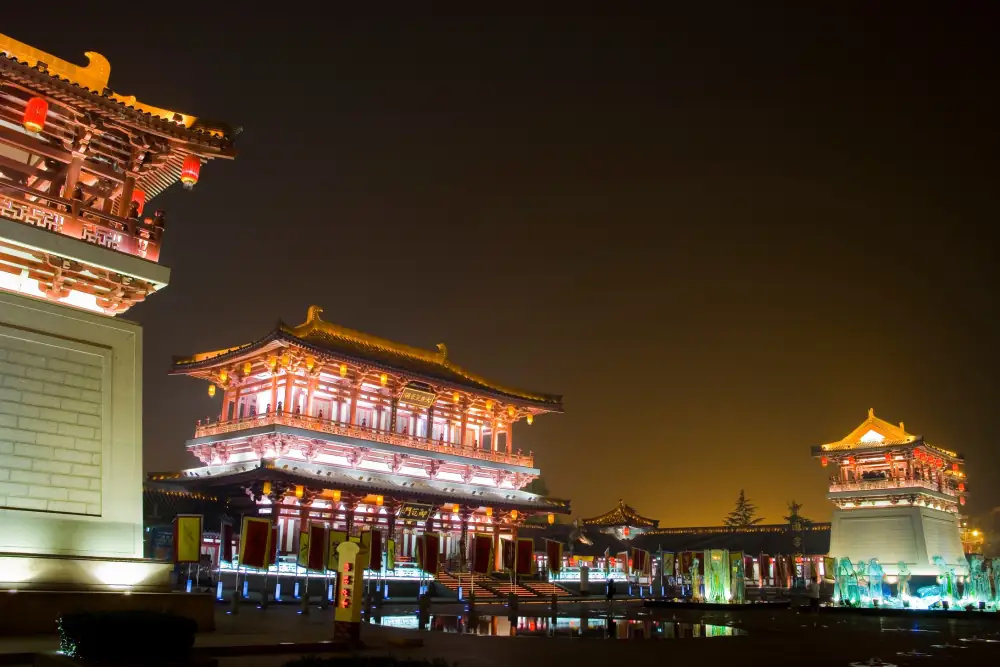
Huashan (华山) 120km east of Xi’an is one of China’s Five Sacred Mountains and the most dramatic. The mountain has five peaks connected by narrow ridge paths, and the routes between them include passages cut into sheer cliff faces, vertical iron chain ascents, and the notorious “plank walk” — a wooden boardwalk on wooden pegs hammered into a vertical cliff face with a safety harness as the only protection from a 1,000-metre drop.
The plank walk at Huashan (华山长空栈道) has become one of China’s most famous extreme tourist attractions. It is genuinely dangerous by the standards of most tourist experiences — the harnesses are rated to international standards and guides are mandatory, but the path requires traversing a narrow wooden plank around a cliff face while clinging to a steel chain. The experience costs ¥200 and takes 30-60 minutes. It is not appropriate for anyone with a fear of heights or uncertain physical condition.
The mountain is also perfectly enjoyable without the extreme elements — the regular hiking paths connect the peaks through remarkable limestone scenery and Taoist temple complexes. The north peak cable car (¥150 one way) provides easy access to the main peak cluster.
Getting there: High-speed train from Xi’an North Station to Huashan North Station (40 minutes, ¥35-50). Then shuttle bus or taxi to the mountain base (15 minutes). Overnight stays on the summit are possible (¥300-600 for very basic accommodation) and provide access to sunrise and evening views.
Combining Day Trips
With limited days in Xi’an, the combinations that work best:
- Day 1: Terracotta Warriors + Yang Ling Mausoleum (both east of Xi’an, same direction)
- Day 2: Huaqing Palace + Huashan (both accessible east on the same train line)
- Day 3: Qianling Mausoleum (west of Xi’an, full day with surrounding countryside)
With 5+ days based in Xi’an, all of the above are comfortable at an unhurried pace. The Guanzhong plain rewards exploration — each site adds a different layer to the extraordinary 1,500-year story of Chinese imperial civilisation at its most concentrated.