
The landscape around Guilin is one of the most recognized natural images in the world — those steep limestone karst peaks rising abruptly from flat river plains, reflected in the Li River. It appears on the back of the Chinese 20-yuan note. It has featured in countless Chinese paintings, films, and tourism advertisements for decades. It also exists exactly as advertised, which is unusual.
The important thing to understand before visiting is that Guilin city itself is largely a transit hub. The extraordinary scenery is along the Li River between Guilin and Yangshuo — particularly the 83km section that the classic cruise covers — and in the surrounding hills and villages. Guilin proper has some attractions but spending more than a night or two in the city itself is time that could be better used along the river.
Table of contents
Open Table of contents
The Li River Cruise (漓江游船)
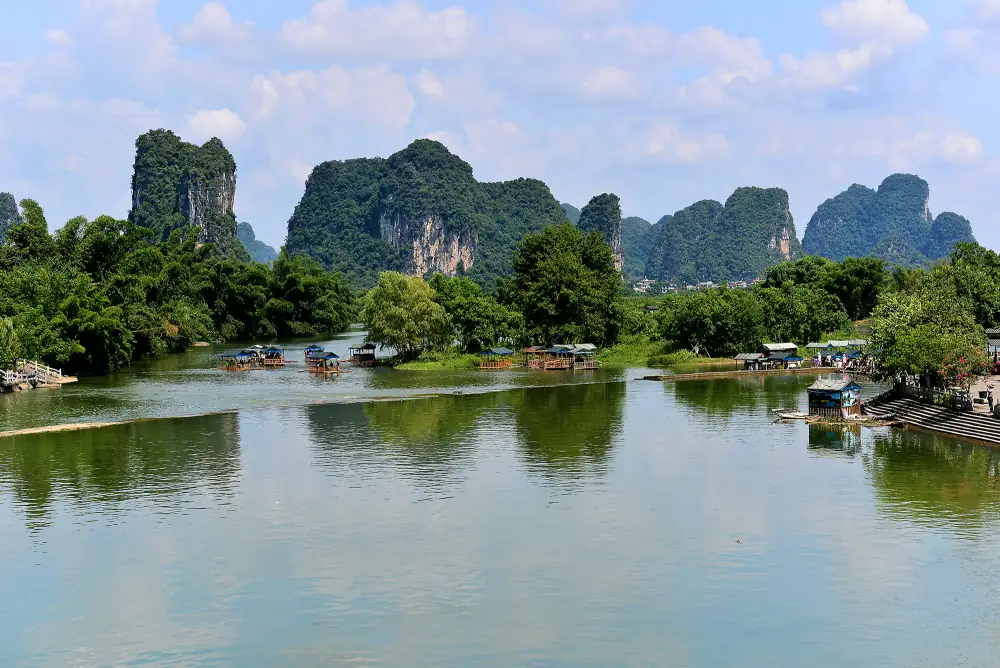
The Li River cruise from Guilin to Yangshuo is one of the genuinely non-overrated “classic” experiences in Chinese tourism. The 4-hour journey passes through 83km of karst scenery that escalates in drama as you move downstream — the peaks become taller and more isolated, the reflections in the river clearer, the light increasingly theatrical.
Tickets:
- Official tourist cruise: ¥210–470 per person depending on cabin class; books up quickly in peak season
- Book in advance: Essential for the April–November peak season. Same-day tickets are sometimes available but not reliable.
- Departure: From Zhujiang Pier (竹江码头), about 25km south of Guilin; shuttle buses from the main hotels
Duration: 4–4.5 hours, arriving at Yangshuo Pier
What to expect: The boat is a flat-bottomed river vessel with outdoor deck seating (most valuable) and air-conditioned interior. Lunch is served on board — included in higher ticket tiers, ¥50–80 extra for budget tickets.
The highlights of the journey:
-
The Yellow Cloth Shoal (黄布滩): The most-photographed section, about 2 hours into the journey. Seven karst peaks reflected in a shallow section of the river; in the right light conditions, the reflection is nearly perfect.
-
Nine Horses Fresco Hill (九马画山): A cliff face with rock patterns that, with imagination, look like horses in various poses. The guide will point out how many horses you should be able to see (traditionally nine; most people can find about five).
-
The Snail Hill (螺蛳山): A nearly perfectly conical karst peak that has been compared in shape to a snail shell.
Private bamboo raft option: For a different experience, private bamboo raft operators (slower, lower, more intimate) run the lower section of the river from Xingping village to Yangshuo. About 3 hours, ¥150–200 per person. Less comfortable but more direct contact with the scenery.
Longji Rice Terraces (龙脊梯田)
About 100km north of Guilin (2 hours by bus), the Longji terraces (“Dragon’s Backbone”) are extensive agricultural terraces carved into steep mountain slopes by the Zhuang and Yao ethnic minorities over 700 years.
Two main areas:
Ping’an Zhuang Village (平安壮寨): The more accessible and most photographed section. The viewpoints above the village give the classic “layers of terraces” panorama. Entry ¥80.
Dazhai Yao Village (大寨尧族村): Slightly further, home to the Red Yao people — women wear their hair in distinctive styles and wear bright red embroidered costume. The scenery here is slightly more dramatic and the village more authentically inhabited. Entry ¥80.
Best seasons:
- April–May: Fresh green rice shoots in water-filled terraces — the mirror reflection effect
- June–September: Full green terraces at various growth stages
- October: Golden harvest season — the most photogenic
Getting there: Buses from Guilin Bus Station (桂林汽车站) to Longsheng (龙胜), then connections to the terrace areas. About 2.5 hours total. Many hotels also run tours (¥200–350 including transport and guide).
Reed Flute Cave (芦笛岩)
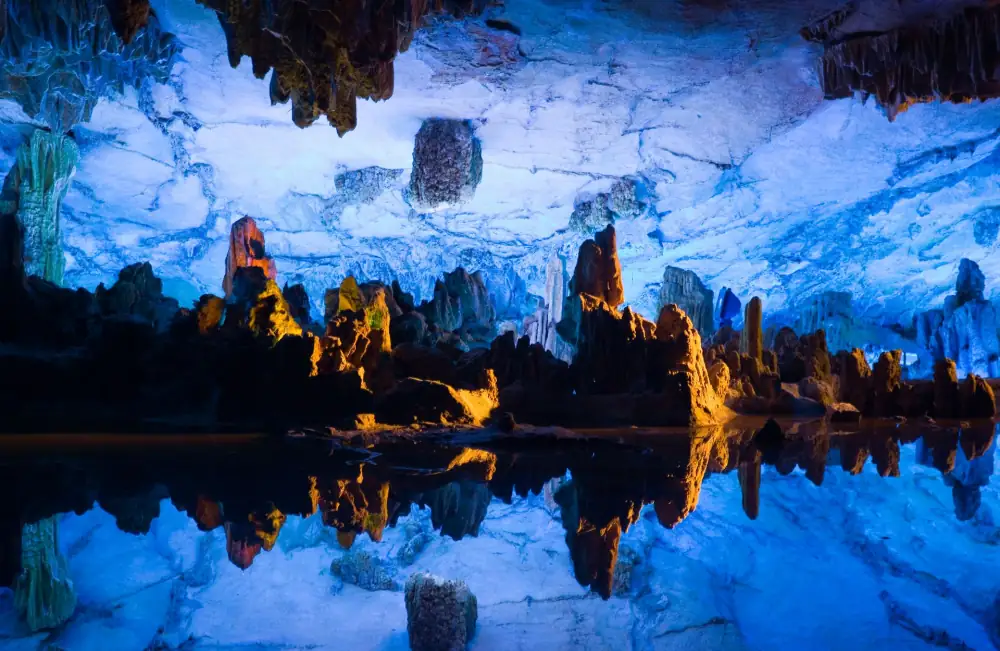
The Reed Flute Cave is Guilin’s most visited geological attraction — a large limestone cavern with stalactite and stalagmite formations illuminated by coloured lighting.
Opening hours: 8:00am–5:30pm
Entry fee: ¥130 per person
Location: 5km northwest of city centre; Bus 3 or taxi (¥20–25)
The cave is about 500 metres long and has been decorated with multicoloured lighting that is either atmospheric or garish depending on your taste. The geological formations themselves are excellent — the “Crystal Palace” section at the far end of the cave is genuinely impressive.
Alternative: The less-visited Seven Star Cave (七星岩) in Seven Star Park (七星公园) is larger and slightly less illuminated; entry ¥75 for the park, ¥50 more for the cave.
Two Rivers and Four Lakes Night Show (两江四湖)
Guilin’s city centre has been developed around a scenic water circuit — the Li River, Peach Blossom River, and four interconnected lakes — with evening illuminations and boat rides.
Evening cruise: ¥150–250 per person for the illuminated circuit cruise; boats depart from various dock points around the lake system. Duration about 1.5 hours.
The show: The illuminations are professional — lit bridges, pagodas, and occasional light-and-music performances at key points. A pleasant evening activity.
Elephant Trunk Hill (象鼻山)
The most-photographed karst peak within Guilin city itself: a rock formation that has eroded into the shape of an elephant drinking from the river. It’s modest by the standards of the surrounding countryside scenery, but its position in the city and its recognizability as a symbol make it an obligatory photo stop.
Entry fee: ¥75 per person (park and hill)
Location: Central Guilin at the confluence of the Tao Hua River and Li River
Guilin vs Yangshuo: Where to Base
This is the key strategic question for most visitors.
Base in Guilin if:
- You’re doing multiple day trips in different directions (Longji, various caves)
- You prefer urban infrastructure and more hotel options
- You’re coming or going by high-speed train (Guilin North Station is a major hub)
Base in Yangshuo if:
- The Li River scenery is your primary draw
- You want to do cycling, rock climbing, kayaking
- You prefer a smaller, more village-like atmosphere
The honest answer: Most visitors benefit from spending 1–2 nights in Guilin and 2–3 nights in Yangshuo, with the Li River cruise connecting them (arriving in Yangshuo by boat, returning to Guilin by bus or taxi for departure).
Getting to Guilin
By air: Guilin Liangjiang International Airport (KWL) has direct flights from most major Chinese cities (Shanghai 2 hours, Beijing 2.5 hours, Shenzhen 1 hour). Excellent connections.
By high-speed train: Guilin North Station (桂林北站) on the Guiyang-Guangzhou line:
- From Guangzhou South: About 2.5 hours, ¥160–210
- From Guiyang: About 2.5 hours, ¥150–200
- From Shanghai: About 4–5 hours via various routes
From Guilin North Station to city centre: Taxi (¥30–45, 30 minutes) or Bus 100.
Getting Around Guilin
Guilin’s main attractions are spread out — a combination of city buses, taxis, and day tour vehicles is the practical approach. Didi operates throughout the city.
The Two Rivers and Four Lakes system is best navigated on foot and by boat. The main cave sites require bus or taxi.
Where to Stay in Guilin
Central area (near Elephant Trunk Hill and the lakes): Most atmospheric; walking distance to the river and lake circuit. Hotels ¥250–600/night for mid-range options; international chains (Shangri-La, Wanda) from ¥600–1,200.
Near Guilin North Station: Practical for HSR connections; limited character; ¥200–400/night.
Budget: Hostels in the central area; ¥80–200/night, including some excellent well-reviewed places near the Li River.
When to Visit
April–June: Spring, mist and rain, river at good level, green scenery. The mist adds atmosphere but can reduce visibility.
July–August: Peak season, hot (32–36°C), most humid, highest crowds.
September–October: Best season — post-monsoon clear skies, comfortable temperatures, lower crowds than summer.
Winter (December–February): Cooler (8–18°C), minimal tourists, occasional mist. The karst peaks with early morning mist in winter is one of the great landscape photographs.