
China is a vast playground for curious young minds. Imagine your children tracing ancient Silk Road murals in Dunhuang, descending into a giant sinkhole in Guangxi, or sleeping under a canopy of stars in the Tengger Desert. These are not just holidays—they are immersive educational adventures that blend geology, ecology, history, and culture into unforgettable family memories.
From the cave systems of Guizhou to the wildlife-rich forests of Guangxi, and from the desert star hotels of Ningxia to the living museums of Gansu, China offers a wealth of destinations where learning happens naturally. This guide brings together the best family-friendly educational tours, with practical advice on timing, transport, costs, and what to expect.
Table of contents
Open Table of contents
Top Destinations for Family Educational Tours
Gansu: The Silk Road Classroom
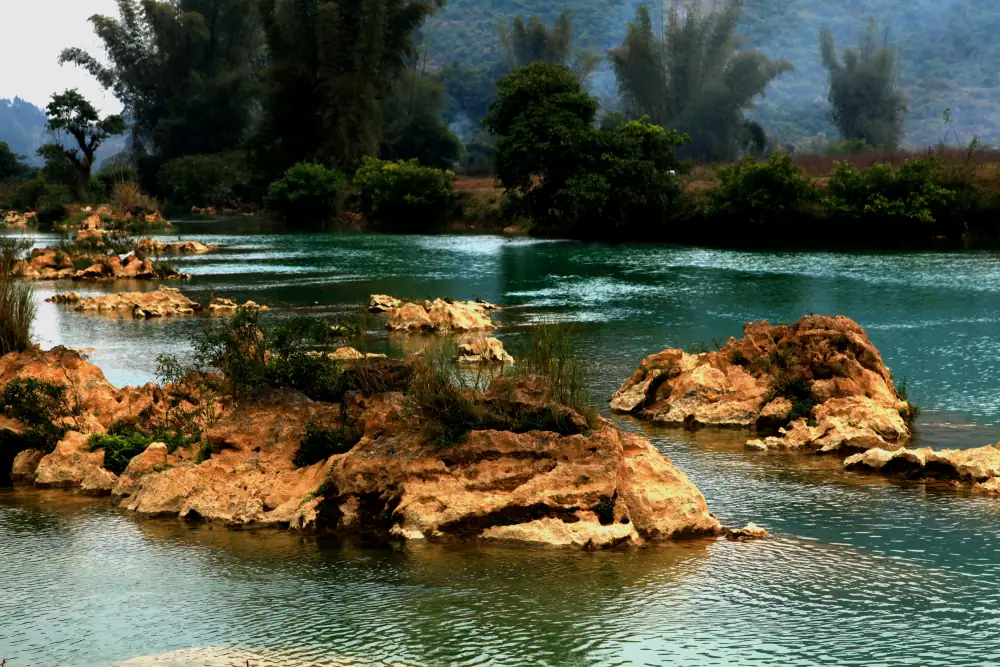
Gansu Province (甘肃, Gān Sù) is a living history book. The Hexi Corridor, a narrow passage flanked by the Qilian Mountains and deserts, was the lifeline of the ancient Silk Road. For families, it offers a perfect mix of natural wonders and cultural treasures.
Highlights:
- Zhangye Danxia National Geopark – Walk among rainbow-colored rock layers formed over 24 million years. Kids can learn how wind and water sculpted these “fairyland” hills.
- Jiayuguan Pass – The western end of the Ming Great Wall. Climb the ramparts and imagine guarding the empire against nomadic tribes.
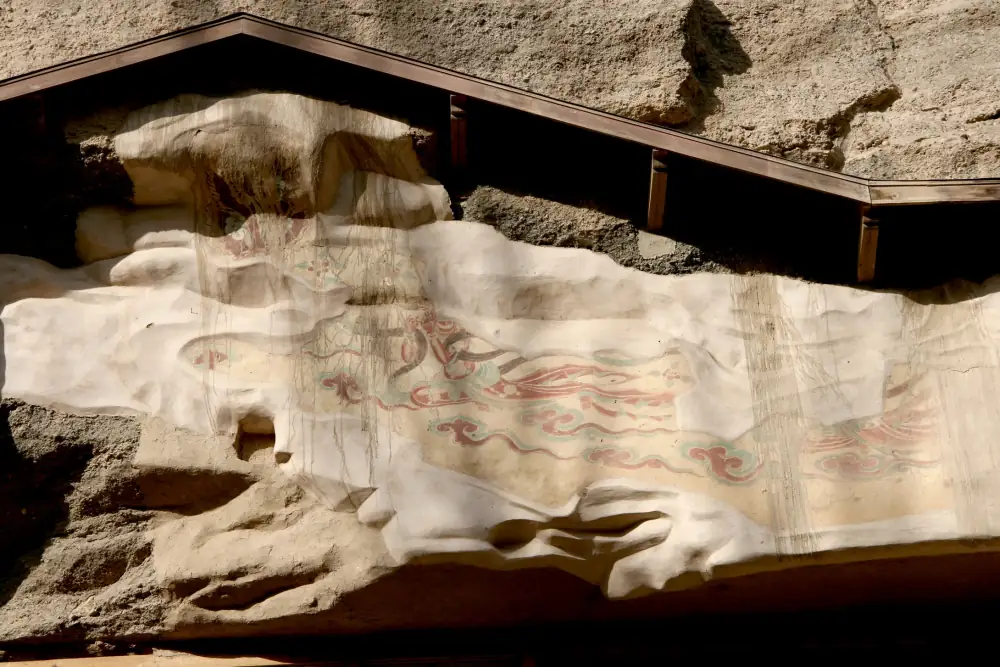
- Mogao Caves (Dunhuang) – A UNESCO World Heritage site with over 1,000 years of Buddhist art. Many tours offer hands-on fresco painting workshops—children can try their hand at recreating ancient murals.
- Yadan National Geopark – Explore “ghost city” rock formations and learn about desert erosion.
- Desert Science – Participate in sand-fixing projects using straw grids, a real-world lesson in combating desertification.
Best for ages: 9–16 (many programmes have dedicated youth groups)
Guangxi: Karst Caves and Rare Wildlife
Guangxi (广西, Guǎng Xī) is a natural laboratory for geology and biology. Its dramatic karst landscape hides vast cave systems, while its forests and coast teem with unique species.
Highlights:
- Leye Tiankeng – Descend into one of the world’s largest sinkholes using rappelling techniques. A professional cave team ensures safety while kids learn about underground rivers and cave formations.
- Cave Biology – Search for blind fish and colourless insects that have adapted to total darkness. Discuss why evolution makes some features disappear.
- Chongzuo Karst Forest – Trek to spot the white-headed langur, a critically endangered primate found only in China. Conduct food-source surveys and understand conservation efforts.
- Beibu Gulf – Take a boat trip to see Chinese white dolphins (pink when adult!) and learn about marine mammals’ return to the sea.
- Mangrove Boardwalk – Explore the intertidal zone, home to fiddler crabs and migratory birds. Explain how mangroves protect coastlines and store carbon.
Best for ages: 9–16
Ningxia: Desert Stars and Silk Road Echoes
Ningxia (宁夏, Níng Xià) is often overlooked, but its blend of desert luxury and ancient history makes it a top choice for families. The Desert Star Hotel in the Tengger Desert is a destination in itself.
Highlights:
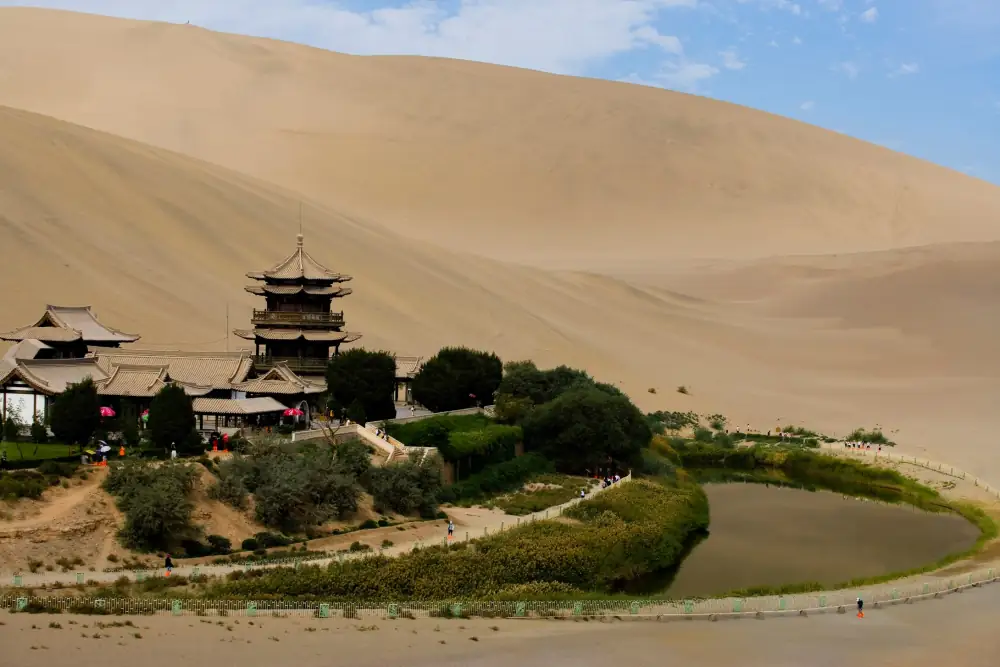
- Desert Star Hotel – Sleep in a five-star-shaped building or wooden cabins on the dunes. Enjoy star-gazing sessions, sandboarding, and a pool in the desert.
- Shapotou – Ride camels, slide down giant sand slopes, and raft on the Yellow River with sheepskin rafts.
- Western Xia Imperial Tombs – Explore the ruins of a vanished empire. Kids can learn about the mysterious Tangut script.
- Helan Mountain Rock Art – See ancient petroglyphs depicting hunting and rituals.
Best for ages: 5–12 (hotel activities cater to younger children)
Guizhou: Ethnic Villages and Mountain Crafts
Guizhou (贵州, Guì Zhōu) is a mosaic of minority cultures. The region’s misty mountains hide villages where traditions like batik and embroidery are still alive.
Highlights:
- Kaili – Visit the ethnic museum and the “Embroidery Market” where Miao women sell heirloom pieces. Learn to identify different stitch types.
- Danzhai – Try your hand at wax-resist dyeing (batik) with local artists. Create your own cloth to take home.
- Leigongshan – Hike to remote Miao villages, taste homemade rice wine, and see terraced rice fields.
- Sandu – Visit the only Shui ethnic museum, home to thousands of horsetail embroidery pieces.
Best for ages: 8–16
Suggested Itineraries
7-Day Gansu Silk Road Explorer (Ages 9–16)
| Day | Activity | Learning Focus |
|---|---|---|
| 1 | Arrive Zhangye, welcome dinner | Introduction to Silk Road geography |
| 2 | Zhangye Danxia & desert sand-fixing | Geology of colourful hills, desertification |
| 3 | Jiayuguan Pass & Great Wall first pier | Ming military architecture, border defence |
| 4 | Yumen old town & oil field | Industrial archaeology, modern Gansu |
| 5 | Yulin Caves & solar thermal plant | Buddhist art, renewable energy technology |
| 6 | Mogao Caves & painting workshop | Fresco techniques, cultural preservation |
| 7 | Depart Dunhuang | Reflection & certificate ceremony |
7-Day Guangxi Nature & Adventure (Ages 9–16)
| Day | Activity | Learning Focus |
|---|---|---|
| 1 | Arrive Nanning, orientation | Karst landscape overview |
| 2 | Leye: cave rappelling & exploration | Cave formation, underground ecosystems |
| 3 | Leye: tiankeng descent & forest trek | Sinkhole geology, karst forest ecology |
| 4 | Chongzuo: white-headed langur trek | Primate behaviour, conservation biology |
| 5 | Beibu Gulf: dolphin watching | Marine mammal evolution, cetacean biology |
| 6 | Mangrove boardwalk & return to Nanning | Blue carbon ecosystems, intertidal life |
| 7 | Depart Nanning | Project presentation & certificate |
6-Day Ningxia Desert & Culture (Ages 5–12)
| Day | Activity | Learning Focus |
|---|---|---|
| 1 | Arrive Yinchuan, visit Western Xia tombs | Lost civilisation, Tangut script |
| 2 | Helan Mountain rock art & vineyard | Petroglyphs, arid agriculture |
| 3 | Shapotou: camel ride & sand sliding | Desert landforms, Yellow River culture |
| 4 | Desert Star Hotel: sandboarding & pool | Astronomy, desert adaptation |
| 5 | Star-gazing workshop & free play | Constellations, light pollution |
| 6 | Depart Yinchuan | Souvenir-making from sand |
Getting There & Around
- International flights arrive at major hubs: Beijing, Shanghai, Guangzhou. Connect to regional airports (Zhangye, Nanning, Yinchuan) via domestic flights (1.5–3 hours).
- High-speed rail is excellent for families: Beijing to Zhangye (5.5 hours), Guangzhou to Nanning (2.5 hours). Book tickets via Trip.com or 12306 app.
- Local transport is usually included in organised tours—minibuses with air conditioning. For independent travel, hire a private driver (¥500–800/day) or use DiDi (Chinese Uber).
- Mobile payment is essential: set up Alipay or WeChat Pay before arrival. Link your international credit card. Carry some cash (¥200–500) for small vendors.
Where to Stay
- Gansu: Zhangye, Jiayuguan, and Dunhuang have comfortable business hotels (¥300–600/night). For a unique experience, stay in a desert camp near Dunhuang (¥800–1,200).
- Guangxi: Nanning offers international chains (¥400–800). In Leye, choose eco-lodges near the tiankeng (¥500–700).
- Ningxia: The Desert Star Hotel is the highlight (¥2,000–4,000/night in peak season). Book well in advance. Yinchuan has mid-range hotels (¥300–500).
- Guizhou: Kaili and Danzhai have boutique guesthouses (¥400–600). Mountain villages offer simple homestays (¥200–300).
Food: What Kids Will Love
- Gansu: Lanzhou beef noodles (¥15–25), lamb skewers (¥5–10 each), and sweet apricot water.
- Guangxi: Rice noodles (¥10–20), steamed fish, and tropical fruits like mango and dragon fruit.
- Ningxia: Hand-pulled lamb (¥60–80), goji berry dishes, and yogurt. The Desert Star Hotel offers buffet with Western options.
- Guizhou: Sour soup fish (¥80–120), sticky rice, and grilled tofu. Most dishes can be made mild for kids.
Tip: Carry snacks from home, as rural areas have limited Western food. Bottled water is safe.
Best Time to Visit
- Gansu: May–October (summer is warm but dry; July–August peak).
- Guangxi: April–October (summer is hot and humid; June–August has frequent rain but lush scenery).
- Ningxia: May–October (summer averages 22°C, perfect for desert activities).
- Guizhou: June–September (cool mountain climate, ideal for hiking).
Avoid Chinese public holidays (Spring Festival, National Day) when domestic tourists crowd attractions.
Costs
| Item | Budget (¥) | Mid-range (¥) | Luxury (¥) |
|---|---|---|---|
| Accommodation (per night) | 200–400 | 400–800 | 800–2,000+ |
| Meals (per person per day) | 80–150 | 150–300 | 300–500 |
| Transport (per day) | 100–200 | 200–400 | 400–800 |
| Activities (per person) | 100–300 | 300–600 | 600–1,500 |
Organised tours like China National Geography’s youth camps cost ¥9,000–10,500 per person (all-inclusive). Independent travel for a family of four can range from ¥15,000–30,000 for a 7-day trip.
Practical Tips
- Visa: Most nationalities need a tourist (L) visa. Apply at a Chinese embassy 1–2 months before travel. The 144-hour transit visa is available in some cities (e.g., Beijing, Shanghai) but not for overland travel.
- Health: No mandatory vaccinations. Pack sunscreen, insect repellent, and a basic first-aid kit. Altitude is not an issue in these destinations.
- Language: English is limited outside hotels. Download a translation app (e.g., Pleco, Google Translate). Carry a card with your hotel address in Chinese.
- Etiquette: Respect ethnic customs—ask before photographing people. In temples, dress modestly and avoid pointing at statues.
- Safety: China is very safe for families. Keep an eye on children near cliffs, caves, and water. Organised tours provide professional guides and equipment.
For more family-friendly itineraries, check out our China itineraries and nature adventures guides.
FAQ
Q: What is the minimum age for cave rappelling in Guangxi? A: Most programmes accept children aged 9 and above. Professional guides and safety equipment are provided. Younger children can explore shallow caves on foot.
Q: Do I need to speak Chinese to join these tours? A: No. Organised tours have English-speaking guides. For independent travel, use translation apps and pre-book English-speaking drivers.
Q: Is the Desert Star Hotel suitable for toddlers? A: Yes, the hotel offers a pool, sand play areas, and family rooms. However, the star-gazing activities may be too late for very young children.
Q: Can I pay with credit cards in rural areas? A: No. Use Alipay or WeChat Pay (linked to your card) or carry cash. Most hotels and tour operators accept mobile payment.
Q: What should I pack for a summer trip? A: Lightweight clothing, a warm jacket (deserts cool at night), comfortable walking shoes, sun hat, sunscreen, swimwear, and a reusable water bottle.
Q: Are these tours wheelchair accessible? A: Generally not, due to uneven terrain and cave environments. Contact tour operators for specific accessibility options.