
China’s ancient architecture is a testament to millennia of ingenuity, spirituality, and aesthetic mastery. From towering wooden pagodas that defy earthquakes to serene lakeside temples that embody Zen tranquility, these structures offer a window into the country’s rich cultural heritage. This guide takes you to three remarkable sites: the Yingxian Wooden Pagoda (应县木塔, Yìng Xiàn Mù Tǎ) in Shanxi, the Chongyuan Temple (重元寺, Chóng Yuán Sì) in Suzhou, and the Old Summer Palace (圆明园, Yuán Míng Yuán) in Beijing. Each represents a distinct facet of Chinese architectural brilliance, blending nature, history, and spirituality.
Table of contents
Open Table of contents
Yingxian Wooden Pagoda: A Millennia-Old Marvel
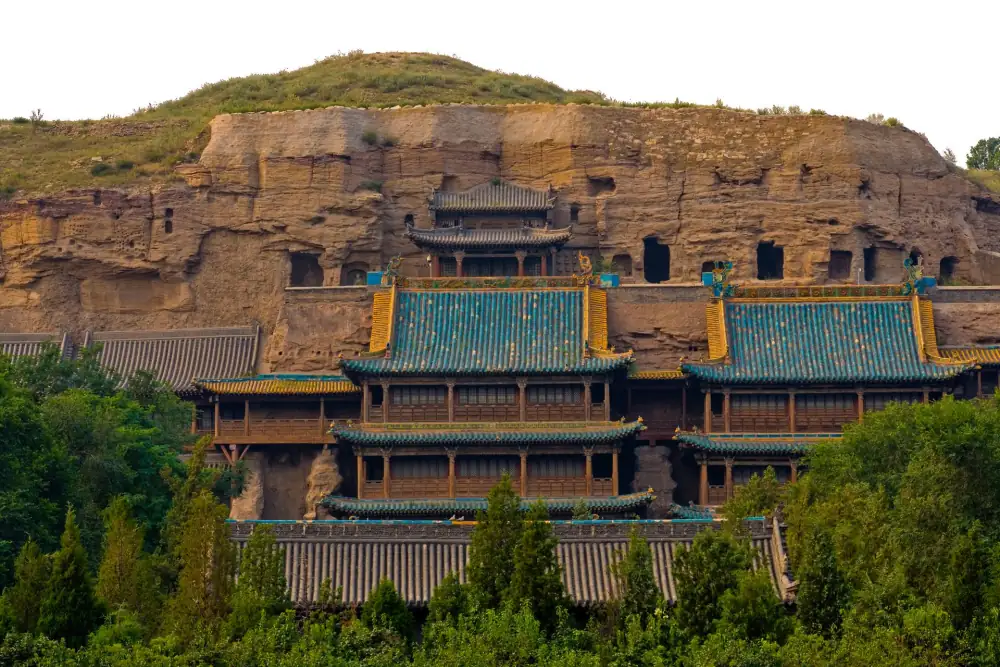
Standing in the heart of Shanxi Province, the Yingxian Wooden Pagoda is the world’s oldest and tallest fully wooden pagoda. Built in 1056 during the Liao Dynasty, it rises 67 meters (220 feet) using 3,000 cubic meters of red pine, all joined without a single nail — a masterpiece of interlocking brackets (斗拱, dǒugǒng).
Why It’s Extraordinary
- Earthquake-resistant: The pagoda has survived over a dozen major earthquakes, including a 6.5-magnitude quake in 1976, thanks to its flexible wooden joints.
- War survivor: It endured artillery shelling during the 20th century, with one shell lodged in its structure (since removed).
- Architectural complexity: Five visible stories and four hidden interior levels create nine structural layers, with over 50 types of brackets.
Visiting Tips
- Location: Yingxian County, Shuozhou, Shanxi. About 80 km south of Datong.
- Getting there: Take a high-speed train from Beijing to Datong (about 2 hours), then a bus or taxi to Yingxian (1 hour). Alternatively, direct buses from Datong.
- Best time: April to October for pleasant weather. Avoid winter as the site can be cold and windy.
- Tickets: Around ¥50 (check current prices online). The pagoda is now closed to climbing to preserve it, but you can walk around the base and enter the first floor.
- Mobile payment: Alipay and WeChat Pay are widely accepted at ticket counters and nearby shops.
For more ancient wonders, explore our cultural heritage guides.
Chongyuan Temple: A Jiangnan Watercolor
On the shores of Yangcheng Lake in Suzhou, Jiangsu, Chongyuan Temple (also known as Chongxuan Temple) dates back to 503 AD during the Southern Liang Dynasty. Originally a private residence, it became a Buddhist monastery that has been rebuilt over centuries. Its most enchanting aspect is the seamless integration of architecture with water and gardens.
The Rainy Season Charm
- Rain transforms the temple: The “smoke and rain” (烟雨, yānyǔ) of the Jiangnan region creates a dreamlike atmosphere. The temple’s gray tiles and vermilion columns appear more vivid against the overcast sky.
- Lotus ponds: In summer, the temple’s vast lotus ponds (荷塘, hétáng) bloom with pink and white flowers, their leaves catching raindrops like jade plates.
- Zen ambiance: The sound of rain on the lake and the sight of birds flying over the main hall evoke a sense of peace.
Visiting Tips
- Location: Yangchenghuan Lake, Suzhou Industrial Park, Suzhou, Jiangsu.
- Getting there: Take metro Line 1 to Times Square station, then bus 106 or taxi. Alternatively, a 30-minute drive from Suzhou city center.
- Best time: Early summer (June-July) for lotus blooms and misty rain. Autumn also offers pleasant weather.
- Tickets: About ¥20. Free admission on certain Buddhist holidays.
- Etiquette: Dress modestly (cover shoulders and knees). Photography is allowed in most areas but avoid flash inside halls.
- Mobile payment: Accepted at ticket office and temple shops.
Pair this visit with other Jiangnan water towns — see our east China itineraries.
Yuanmingyuan: The Garden of Gardens
Yuanmingyuan, or the Old Summer Palace, was once a vast imperial garden complex built during the Qing Dynasty (18th century). Known as the “Garden of Gardens,” it combined Chinese landscaping with European-style palaces and fountains. Destroyed by Anglo-French forces in 1860, its ruins now stand as a poignant historical site.
The Lotus Connection
- Summer lotus display: Yuanmingyuan’s lakes are famous for their water lilies (睡莲, shuìlián), which bloom from June to August. The flowers range from pale yellow to deep purple, creating a “watercolor palette” effect.
- Historical contrast: The delicate blooms juxtapose with the broken marble columns, offering a poignant reminder of beauty amid destruction.
Visiting Tips
- Location: Haidian District, northwest Beijing. About 30 minutes from the city center by metro.
- Getting there: Take metro Line 4 to Yuanmingyuan Station (Exit B). The park is a 5-minute walk.
- Best time: May to September for lush greenery and lotus flowers. Early morning or late afternoon for fewer crowds.
- Tickets: ¥10 for the park, ¥10 extra for the Western-style ruins area (total ¥20). Book via WeChat mini-program “圆明园门票” or at the gate.
- Mobile payment: Alipay/WeChat Pay accepted for tickets and on-site purchases.
- Visa: Yuanmingyuan is within Beijing’s 144-hour visa-free transit area for eligible nationalities.
For more historical sites in Beijing, check our Beijing travel guides.
Practical Tips for Visiting Ancient Sites
Best Time to Visit
- Spring (March-May) and Autumn (September-November) offer mild temperatures and clear skies, ideal for outdoor exploration.
- Summer can be hot and rainy, but it’s the best time for lotus viewing at temples and gardens.
- Winter is cold but less crowded; some sites may have reduced hours.
Getting Around
- High-speed rail: Connects major cities like Beijing, Datong, and Suzhou. Book tickets via the official 12306 app (English version available) or at stations.
- Metro: Available in Beijing and Suzhou. Use Alipay’s transport feature or buy a physical transit card.
- Taxis and ride-hailing: Didi (Chinese Uber) is convenient; the app has an English interface.
Money and Payment
- Alipay and WeChat Pay are essential. Link your international credit card (Visa, Mastercard) to these apps before your trip.
- Cash: Still useful for small vendors, but most attractions accept digital payments.
- ATMs: Widely available in cities; withdraw local currency (CNY) with your bank card.
Etiquette
- Dress modestly at religious sites: cover shoulders and knees.
- Remove shoes before entering certain temple halls (look for signs).
- No loud talking or disruptive behavior.
- Photography: Usually allowed, but avoid flash in dark halls with ancient murals or statues.
Cultural Significance
These sites are not just tourist attractions; they are living repositories of Chinese philosophy, art, and history. The wooden pagoda exemplifies Confucian harmony with nature, the temple reflects Buddhist detachment, and the ruined palace embodies the fragility of empire. Understanding this context deepens your experience.
For more on Chinese history and culture, see our history articles.
Suggested Itinerary
If you have 10-14 days, combine these sites in a loop:
- Day 1-3: Beijing — explore Yuanmingyuan, Forbidden City, and Great Wall.
- Day 4-5: Take high-speed train to Datong (2 hours) — visit Yungang Grottoes and Hanging Temple, then bus to Yingxian for the wooden pagoda.
- Day 6-8: Fly or take train to Shanghai (2-hour flight from Datong), then high-speed train to Suzhou (30 minutes) — explore Chongyuan Temple and classical gardens.
- Day 9-10: Return to Shanghai for departure.
FAQ
- Q: Are these sites accessible for wheelchair users?
A: Yuanmingyuan has paved paths and is mostly accessible. Chongyuan Temple has some uneven stone paths but is manageable. The Yingxian Wooden Pagoda area is flat, but the pagoda interior is not wheelchair accessible. - Q: Can I take photos inside the temples?
A: Photography is generally allowed in courtyards and gardens. Inside halls, check for signs; many prohibit flash to protect murals and statues. - Q: Do I need to book tickets in advance?
A: For Yuanmingyuan, booking via WeChat mini-program is recommended during peak season. For Chongyuan Temple and Yingxian Pagoda, you can usually buy on-site, but advance booking is safer. - Q: Is there food nearby?
A: Yes. Yuanmingyuan has snack stalls and nearby restaurants. Chongyuan Temple is near Suzhou’s gourmet area. Yingxian town has local noodle shops. - Q: What is the best time to see lotus flowers?
A: Late June to mid-August. The flowers bloom in the morning and close by late afternoon. - Q: Are English audio guides available?
A: Yuanmingyuan offers English audio guides. Chongyuan Temple and Yingxian Pagoda may have limited English signage; consider hiring a guide or using a translation app.