
Beijing has two extraordinary imperial garden complexes 2km apart in the northwestern suburbs — the Summer Palace (颐和园) and the Old Summer Palace / Yuanmingyuan (圆明园). They represent China’s imperial garden tradition at its most ambitious, and the gap between them encapsulates one of the most significant events in Chinese history.
The Summer Palace (颐和园)
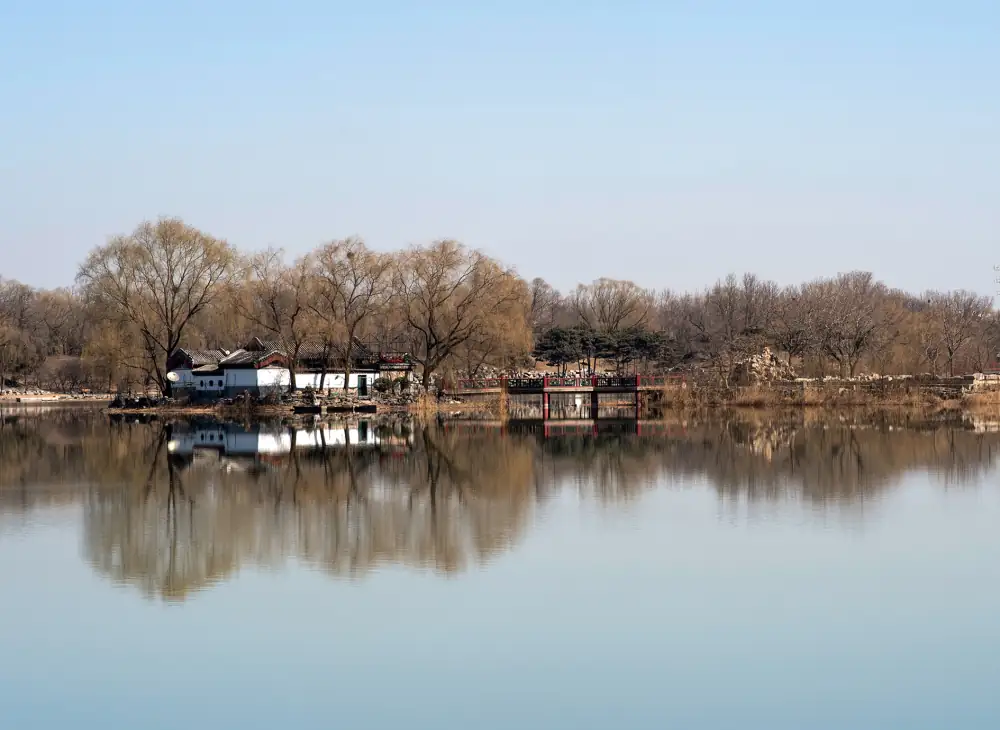
The Summer Palace is the largest and best-preserved classical Chinese imperial garden — 290 hectares of forested hills, a 220-hectare artificial lake (Kunming Lake), marble bridges, covered walkways, temples, and pavilions created primarily under Emperor Qianlong in the 18th century and rebuilt by Empress Dowager Cixi in the 1880s.
What to See
The Long Corridor (长廊): 728 metres of covered walkway along the northern lake shore, with 14,000 painted panels depicting scenes from Chinese history, mythology, and landscape — every panel different. Walking the full corridor takes 40 minutes; it’s one of the world’s great painted spaces.
Marble Boat (石舫): A 36-metre marble boat platform on the lake shore, famously built by Empress Dowager Cixi using funds appropriated from the navy modernisation budget. An ironic monument to mismanagement — and a rather beautiful one.
Tower of Buddhist Incense (佛香阁): The dominant visual element on Longevity Hill — an octagonal tower on a massive stone base, accessible by steep staircase, with views over the lake and Beijing’s distant towers.
Seventeen-Arch Bridge (十七孔桥): The bridge connecting the lake island to the eastern shore. 150 marble balustrades with differently carved lions (544 total, none the same). In winter, the “golden light bridge” phenomenon occurs when the low winter sun aligns to illuminate all 17 arches simultaneously — a photograph occasion.
Suzhou Street (苏州街): A recreated Qing dynasty water market street built for Qianlong’s personal exploration — he could walk along canals lined with shops staffed by court attendants in merchant costumes. Now a tourist commercial area but architecturally interesting.
Practical
Entry: ¥30 (garden), ¥60 (garden + main buildings). Allow 3–4 hours minimum.
Getting there: Metro Line 4, Xiyuan or Beigongmen stations.
The Old Summer Palace (圆明园, Yuanmingyuan)
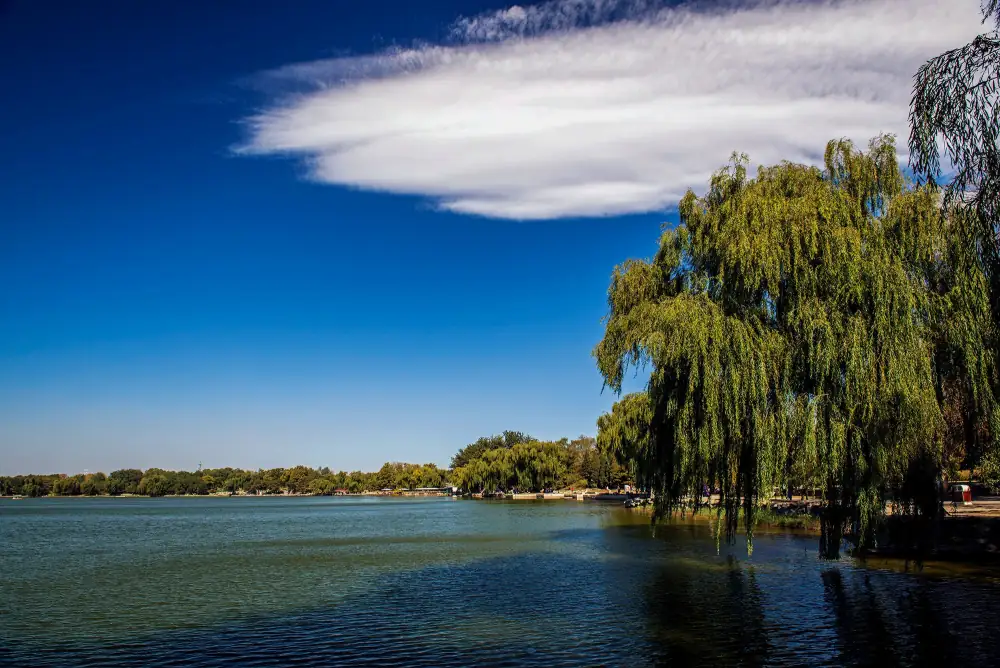
Yuanmingyuan (“Garden of Perfect Brightness”) was the largest and most magnificent imperial garden complex in Chinese history — 350 hectares containing dozens of palace complexes built over 150 years by the Qianlong, Jiaqing, and Daoguang emperors. The Western Mansions section contained baroque palaces designed by Jesuit missionaries.
On October 6–18, 1860, British and French troops looted and burned Yuanmingyuan as punishment for the Qing court’s detention of foreign diplomats. Three thousand rooms worth of art, artefacts, and architectural materials were destroyed or removed.
The ruins today: The Western Mansions section (欧式楼遗址) preserves the most photogenic ruins — broken marble colonnades, fountain bases, and stone arches standing among overgrown landscaping. The contrast of European baroque stonework in a Chinese imperial garden setting is extraordinary.
The cultural resonance: Yuanmingyuan’s destruction is a defining national trauma narrative in modern China — the “Century of Humiliation” (百年屈辱) begins symbolically with these ruins. Visiting Chinese students often have emotional responses at the site.
The rest of the park: Beyond the ruins, the original Chinese garden areas are being reconstructed. Some sections have been rebuilt; others remain as landscape with reconstructed labels indicating original buildings.
Combining Both Sites
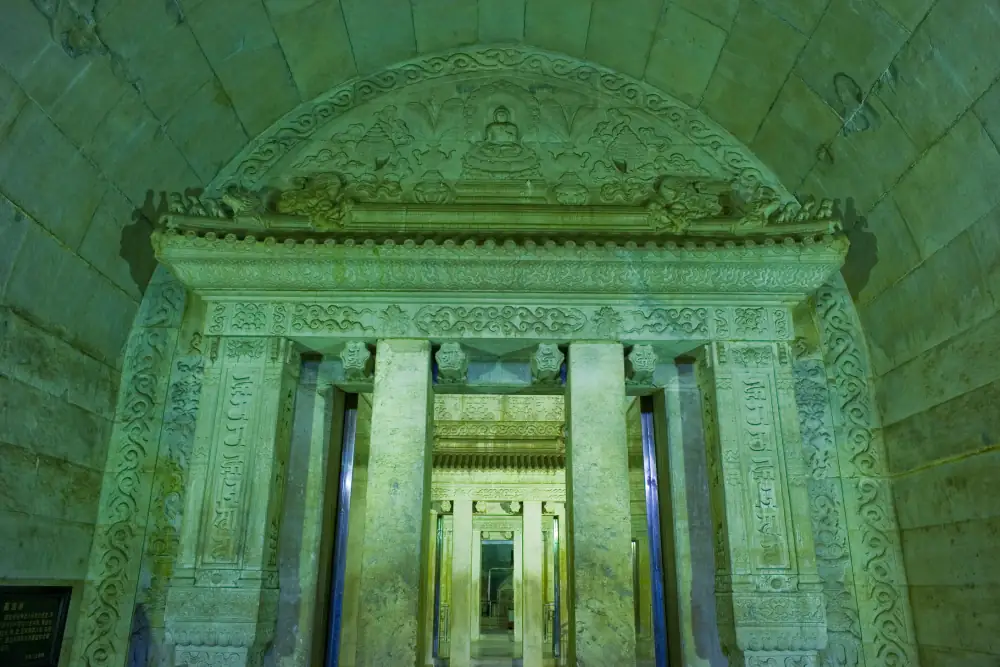
One full day circuit: Start at Yuanmingyuan (morning, 9am–12pm) — enter from the west gate, walk to the Western Mansions ruins, then through the Chinese garden sections. Lunch near the north gate. Walk south 1.5km to the Summer Palace north gate (Beigongmen). Spend the afternoon (2–5pm) doing the Long Corridor and lake shore, ending at the sunset from the Longevity Hill.
Entry cost combined: Approximately ¥60–80.
Also see: Beijing Day Trips Guide | Beijing 3-Day Itinerary | Beijing Hutong Forbidden City Guide