
Beijing’s position at the edge of the North China Plain means day trip options extend in three very different directions: north and east into the mountains (Great Wall sections, valley towns), northeast to the imperial resort city of Chengde, and east to Tianjin’s coastal colonial city. Each direction offers something unavailable in the capital itself.
North: Great Wall Variations
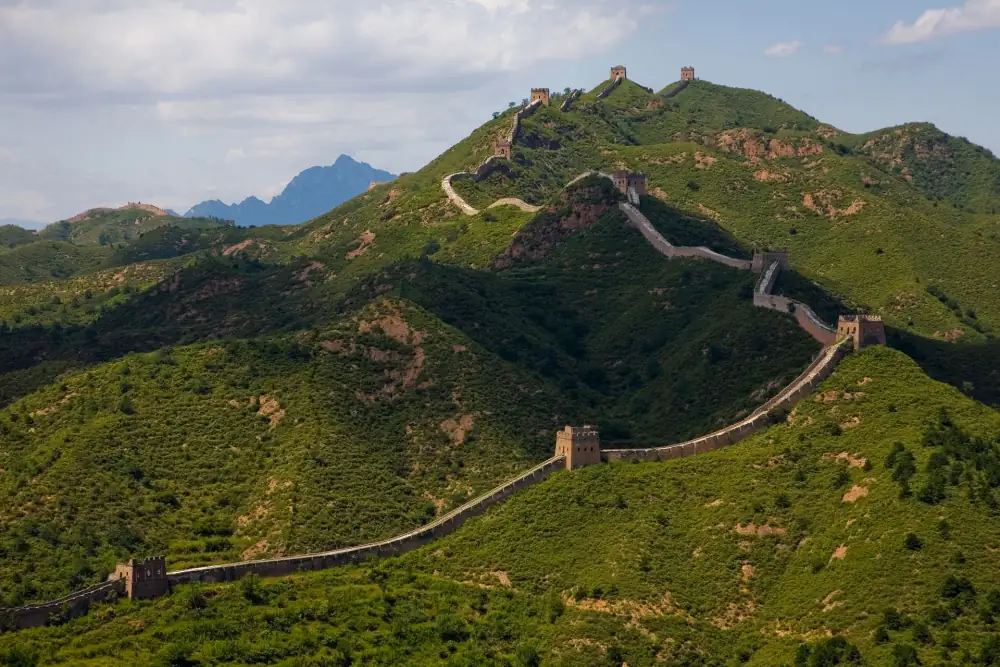
Jiankou (箭扣) — Wild and Dramatic
Distance: 90km north | Travel time: 2 hours by private car from Beijing Character: Unrestored, steep, dramatic, requiring proper hiking
Jiankou’s Great Wall perches on a knife-edge ridge — the Wall literally follows the sharpest point of the mountain crest. It’s the Wall that appears in virtually every aerial photograph of the “dramatic section.” The most photogenic viewpoints are toward the “Owl Looking at the Moon” (猫头鹰楼) section.
Route: Jiankou village base → ascend to Wall (40 min) → traverse east to Mutianyu (8km, 5–6 hours) → descend by cable car at Mutianyu.
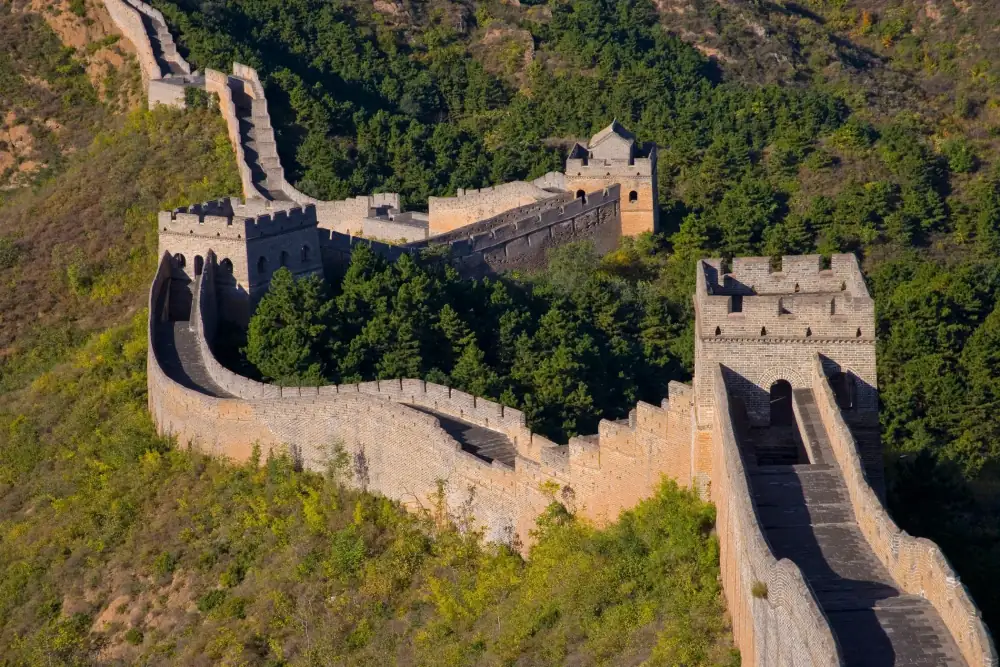
Simatai (司马台) — Night Wall Experience
Distance: 120km | Travel time: 2 hours by private car or tour bus Character: Partially restored, night visiting allowed (unique in China), steep eastern towers
Simatai offers two distinct experiences: daytime hiking on the steeper unrestored section (technical in places, requires good fitness), and evening visiting of the western restored section, which is lit dramatically at night. The Gubei Water Town resort at the base provides upscale accommodation if staying overnight.
Shanhaiguan (山海关) — Where the Wall Meets the Sea
Distance: 300km east | Travel time: 2 hours by HSR from Beijing South Character: The eastern terminus of the Ming dynasty Great Wall, where it enters the sea at “Old Dragon’s Head” (老龙头)
The Wall plunging into the Bohai Sea at Shanhaiguan is the logical endpoint of any Great Wall narrative — and far fewer visitors make it here than to the main Beijing sections. The First Pass Under Heaven (天下第一关) gate tower is one of the most historically significant Wall structures. Old Dragon’s Head beach is pleasant.
Shanhaiguan can be combined with Beidaihe resort beach (20 minutes away) for those who want the coast.
Northeast: Chengde Imperial Summer Resort (承德)
Distance: 230km | Travel time: 2 hours by HSR or fast train Character: Qing dynasty imperial mountain resort, Tibetan Buddhist temples, extraordinary summer scenery
Chengde’s Mountain Resort (避暑山庄) was the summer palace and diplomatic reception venue of the Qing dynasty emperors — a 5.6 sq km walled imperial park with forested mountains, lakes, and dozens of palace buildings. The surrounding Eight Outer Temples — built to receive Mongolian, Tibetan, and Central Asian delegations — include the Puning Temple (普宁寺) with its 27-metre Thousand-Armed Guanyin sculpture, the most impressive surviving Buddhist sculpture in northern China.
Chengde warrants 2 days (overnight stay) to see both the main resort and the key temples properly. Full Chengde guide.
East: Tianjin Colonial Architecture (天津)
Distance: 130km | Travel time: 35 minutes by HSR from Beijing South
Tianjin was a treaty port from 1860 onwards, and its concession zones — British, French, German, Italian, Japanese, Belgian, Russian — left behind extraordinary colonial architecture that was never demolished. The Five Avenues (五大道) residential district has hundreds of European villas from the 1920s–1930s; the Italian Style Block (意式风情区) is a preserved and restored Italian concession streetscape.
Tianjin also has excellent food: Goubuli steamed buns (狗不理包子, one of China’s “Three Famous Flavours of Tianjin”), jianbing (煎饼, crepe breakfast), and mahua (麻花, fried dough twist).
Day trip from Beijing is easy (35 min each way). Full Tianjin guide.
North: Yanqing Valley and Longqing Gorge
Distance: 75km north | Travel time: 1.5 hours by subway (Line 6 to Yanqing) or private car
Yanqing was the 2022 Winter Olympics venue — the alpine skiing and bobsled facilities are now partially accessible for tourist experiences. The surrounding valley has excellent hiking and the Longqing Gorge (龙庆峡) reservoir with spectacular cliff scenery.
Ice Lantern Festival at Longqing Gorge (January–February): One of the best outside Harbin — ice sculptures lit at night in the enclosed gorge. Much less crowded than the Harbin equivalents.
Also see: Beijing 3-Day Itinerary | Great Wall Guide | Tianjin Travel Guide