
Mutianyu (慕田峪) is the Great Wall section that most experienced China visitors recommend over the more famous Badaling. Both sections are fully restored and accessible, but Mutianyu has more attractive scenery, better hiking variety, the famous toboggan descent, and fewer tour-bus crowds.
The combination of cable car up and toboggan (metal sled track) down makes it the most family-friendly Great Wall experience — but the ridgeline walk and the extended hike east to Jiankou section are the best experiences for visitors wanting more depth.
Getting There Independently
By bus from Dongzhimen Bus Station (Line H1, runs 7:30am–12pm on weekends, ¥40, 2 hours). This is the cheapest option.
By car hire / hired driver: The most practical option for 2–4 people. The round trip fare for a private car from central Beijing is approximately ¥400–600. Ask your hotel to book; or use the DiDi premium car service.
Group tours: Booked through hostels, hotels, or online tour operators (¥200–350/person including transport, cable car). Convenient but you’re locked to the group schedule.
Tour bus from Beijing: Buses from Wangfujing or Dongzhimen depart at 8–8:30am. Cost: ¥60–80 per person each way.
Avoid unmarked “tour vans” outside subway stations or near tourist sites — these are the source of many scam experiences.
At the Wall: What to Do
Cable Car vs. Hiking Up
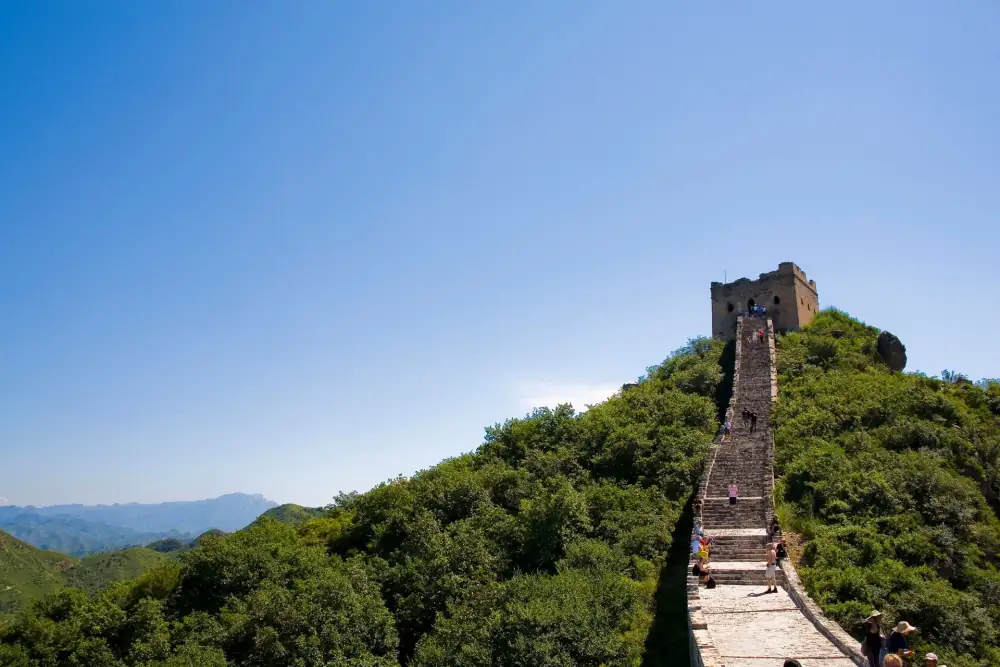
Cable car (索道): ¥80 up. The gondola cable car ascends to the middle section of the wall (Tower 6 area) in 7 minutes.
Chairlift (缆椅): ¥60 up. Open chairs, no protection from weather, more exposed.
Walking up: From the lower visitor centre, the path up to the wall takes 15–20 minutes. Manageable but saves little vs. cable car for the physical effort.
The Wall Route
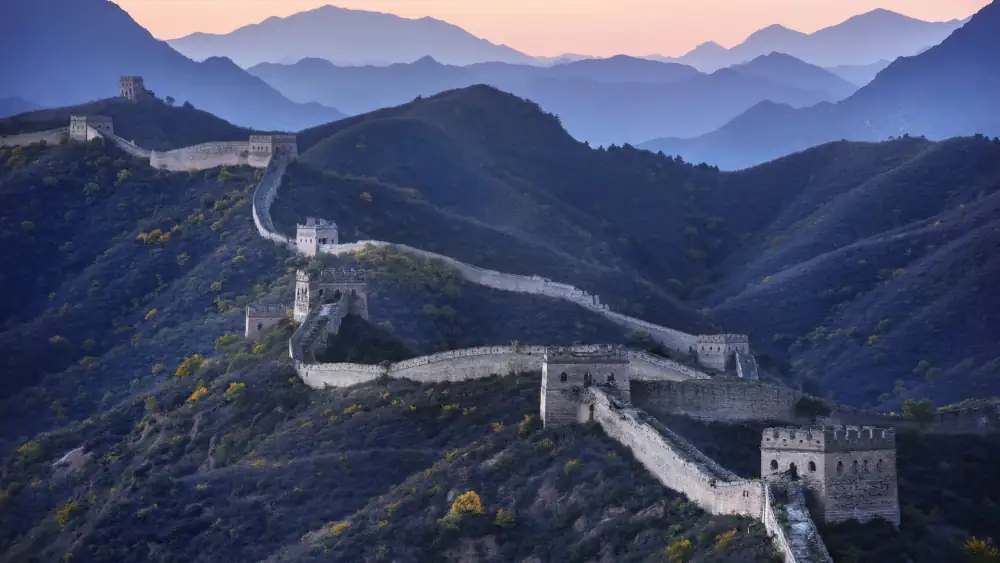
The accessible restored section runs from Tower 6 (cable car arrival) westward to Tower 2 (the most dramatically positioned tower) and eastward to Tower 23 (the highest point in the restored section).
Recommended route: Take cable car to Tower 6. Walk west to Tower 2 (views over the valley in both directions; the wall’s zig-zag across the ridgeline is most visible here). Return east past Tower 6, continue to Tower 14 (views east toward the unrestored wild wall section). Return to Tower 6 area.
Time: This full route takes 2–3 hours at a comfortable pace including photography stops.
The Toboggan (滑道)
The toboggan — a metal sled on a stainless steel track running down the mountain — is genuinely fun and one of the more surreal Great Wall experiences. The sled has a hand-brake; you control your speed. Faster riders are clearly a source of great amusement to the slower riders (and vice versa). ¥60 down.
Note: The toboggan is one-way down only. Buy a cable car UP ticket separately.
Seasonal Considerations
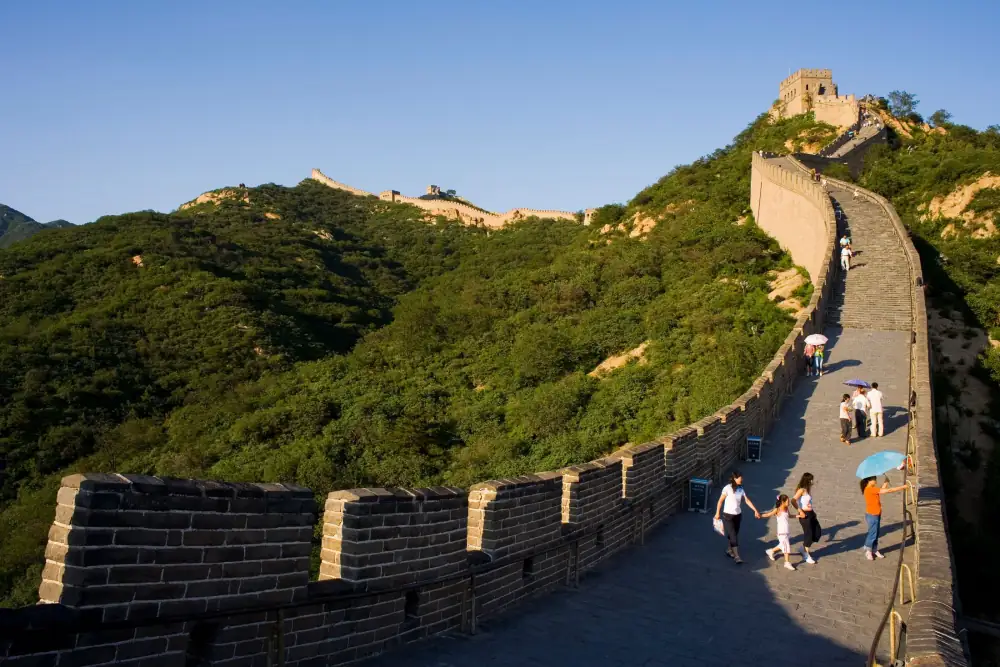
October–November: The most spectacular. Mutianyu’s ridgeline forests turn yellow, orange, and red — the Great Wall among autumn foliage is the definitive photograph. Busy but not as overwhelmed as Badaling.
March–April: Spring blossom (flowering cherry, forsythia) on the slopes below the wall. Light and clear air.
Winter: Snow on the wall creates extraordinary conditions. Fewer visitors. The wall itself is more exposed — dress warmly.
Summer: Green and lush, but humid and occasionally obscured by haze. The heaviest visitor season.
Jiankou Section (Wild Wall)
3km east of Mutianyu’s eastern terminal tower, the unrestored Jiankou section begins. This is the dramatic, dangerous, knife-edge wall that appears in most “extreme Great Wall” photography. Access requires proper hiking equipment and physical fitness. No facilities, no safety infrastructure. Start with a guide for the first visit.
Also see: Beijing Day Trips Guide | Beijing 3-Day Itinerary | China Hiking Guide