
Huangshan (黄山, Yellow Mountain) is to Chinese landscape painting what the Eiffel Tower is to French postcards — the definitive image of a cultural tradition. The twisted granite peaks emerging from a sea of cloud, the ancient pine trees clinging to cliff edges, the mist-filtered light: this is the landscape that 3,000 years of Chinese painting has been working from.
For photographers, Huangshan is extraordinary. For travellers visiting without photography focus, it’s still one of China’s most beautiful physical experiences. This guide covers both.
The Overnight Stay for Sunrise
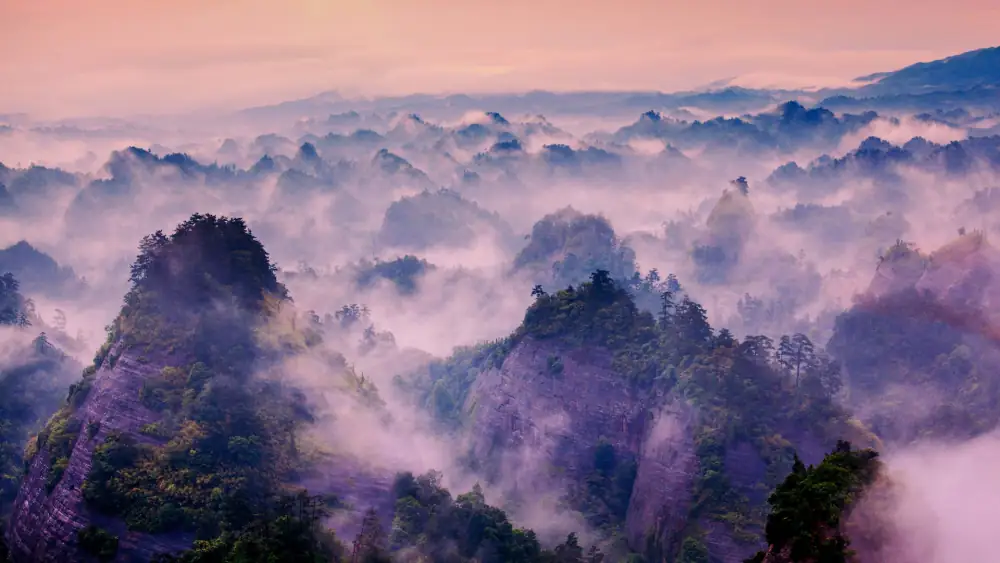
The single most important Huangshan decision is whether to do a day trip or stay overnight at the summit.
Day trip: Cable car up, see the main views, cable car down. The mountain is genuinely beautiful. But you miss the specific qualities that make Huangshan famous in classical Chinese art.
Overnight: The classic experience. Cable car up, walk to the summit area (the West Sea Grand Canyon area is the most dramatic). Sleep at one of the summit hotels. Wake at 4:30–5am, walk to the sunrise viewpoint. Watch the sea of clouds form and the light hit the twisted pines. Walk back for breakfast. Cable car down.
The sea of clouds (云海): Only visible when the right weather pattern creates cloud at the valley level while the peaks remain above — most common in autumn and spring (October–November and March–May). Summer has significant cloud but also rain; winter has cloud but very cold conditions. The probability of seeing the cloud sea on any given day is roughly 30–40%.
The Best Viewpoints
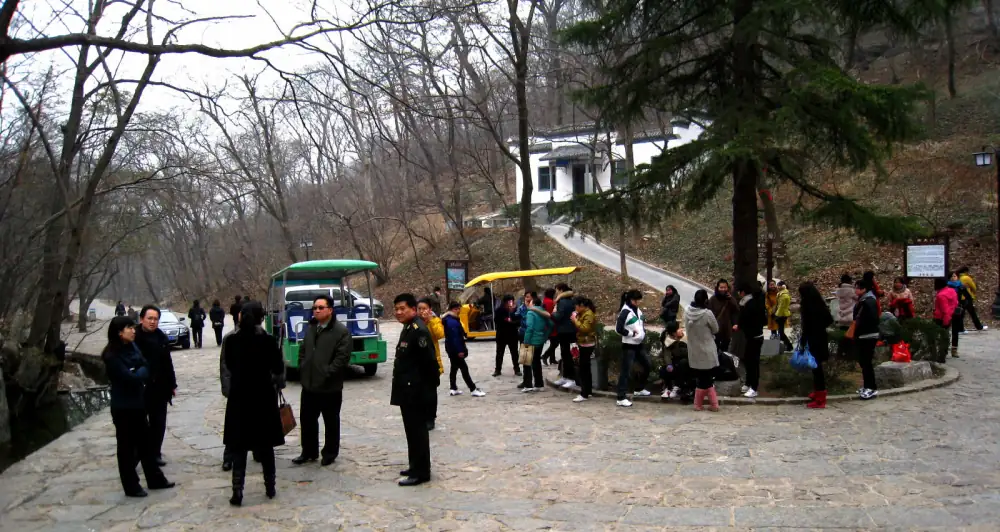
Lion Peak (狮子峰)
The primary sunrise viewpoint. The “Refreshingly Cool Terrace” (清凉台) at the peak provides the most photographed view — an elevated platform looking east over a sea of peaks and cloud. The pre-dawn walk (15–20 minutes from the summit hotels) is through darkness; bring a headlamp.
Composition: The layered peaks receding to the horizon provide depth. Sunrise light enters from the right side, gradually illuminating the peaks from top to bottom as the sun clears the horizon.
Flying-Over Stones Peak (飞来石)
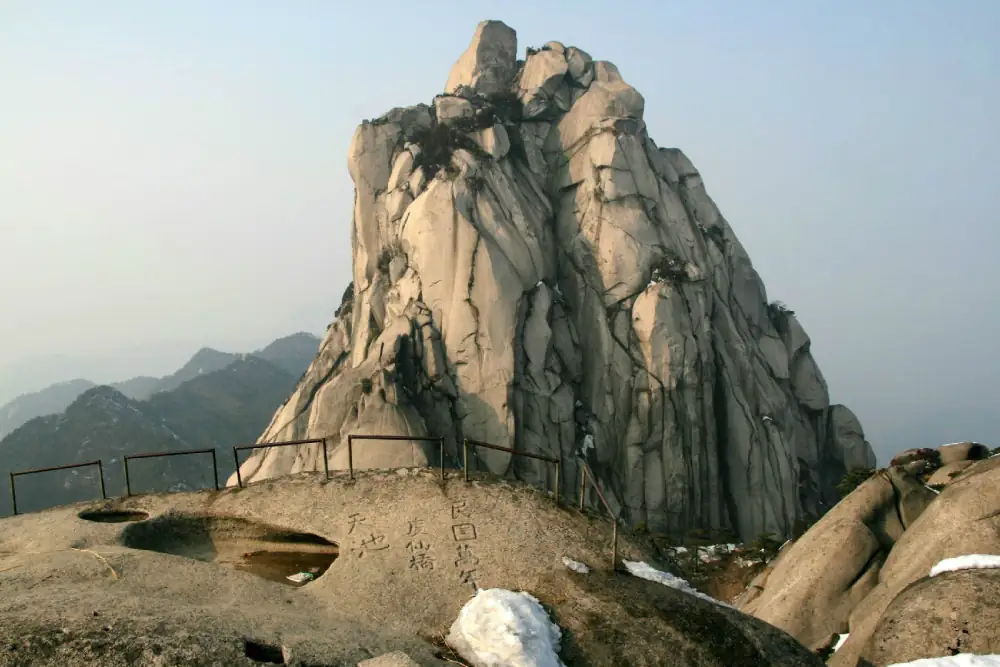
A massive balanced granite boulder balanced on a ridge — the most dramatic isolated rock formation on the mountain. Best in late afternoon when backlit against the sky.
West Sea Grand Canyon (西海大峡谷)
The canyon section provides the most vertigo-inducing walking on the mountain — a path cut into the cliff face with cable railings, looking straight down into the canyon where pine trees grow from vertical rock faces. The cable car in the canyon (¥80) descends into the canyon floor for a view from below looking up at the cliff-face pines.
Seasonal Photography Conditions
October–November: The most photographed season. Autumn colour on the lower slopes, frequent sea of clouds, clear air. Busy but not as intense as Golden Week.
March–April: Spring cloud formation season. New pine growth. Cherry-like plum blossoms at the base. Often very good sea of clouds.
December–February: Snow on the peaks creates entirely different visual conditions. The black pine needles against white snow and grey rock is a different photographic palette. Cold (-5 to -10°C at summit in January).
July–August: Most rain. The mountain has a different quality — close-range shots in mist, moss on rocks — but dramatic cloud views are less common.
Practical Logistics
Entry: ¥190 high season (March–November), ¥150 low season. Cable cars extra (¥80 each way).
Summit accommodation: 4 summit hotels (Beihai Hotel, Shilin Hotel, Paiyun Hotel, Xihai Hotel). Prices are 3–4x equivalent quality valley hotels. Book 2–4 weeks in advance for October.
What to bring for overnight: Warm layer even in summer (summit temperatures 10–15°C colder than base), headlamp, camera tripod (if serious photographer), rain cover for gear.
Also see: Huangshan Complete Guide | Anhui Hongcun Village Guide | China Photography Destinations Guide