
China’s vast and varied landscape is a treasure trove of natural wonders that will leave any photographer breathless. From the thundering waters of the Yellow River to the surreal, Mars-like terrain of Qinghai’s ‘Saturn Rings’, this guide takes you to the most spectacular geological landmarks across the country. Whether you’re chasing the perfect sunrise over a sea of clouds or capturing the stark beauty of a desert, China offers an unparalleled canvas. Let’s dive into the must-see natural landmarks and how to experience them like a pro.
Table of contents
Open Table of contents
Top Natural Landmarks at a Glance
China’s geography is defined by dramatic contrasts: soaring peaks, vast deserts, winding rivers, and mystical cloud seas. Here are the highlights you shouldn’t miss.
The Yellow River’s Grandeur: Xiaolangdi Dam
Located near Luoyang in Henan Province, the Xiaolangdi Dam (小浪底, Xiǎo Làng Dǐ) is often called the ‘master switch’ of the Yellow River. During the annual water-sediment regulation period (typically late June to early July), the dam opens its floodgates, unleashing a torrent of muddy water that roars through the canyon. The sight is nothing short of epic: water thunders out with a deafening roar, creating a mist that often forms rainbows. It’s a photographer’s dream for capturing raw power.
- Best time to visit: Late June to early July for the water release. Check official announcements as dates vary slightly each year.
- Getting there: Take a high-speed train to Luoyang, then a bus or taxi to the dam (about 1 hour).
- Tips: Use a wide-angle lens to capture the full scale. A polarizing filter helps cut through the mist.
The ‘Outer Space’ Landscapes of Mangya, Qinghai
In the far west of Qinghai Province, the Mangya (茫崖, Máng Yá) region looks like another planet. Here, wind and time have sculpted the desert into bizarre formations: the ‘Saturn Rings’ (土星环, Tǔxīng Huán) are concentric circles of rock that stretch for kilometres, while the Black Solo Mountain (黑独山, Hēi Dú Shān) is coated in a dark ‘desert varnish’ that makes it appear utterly alien. Nearby, Yan Zhi Shan (胭脂山, Yānzhī Shān) glows in soft reds and pinks.
- Best time to visit: May to October, when temperatures are milder. Avoid winter (temperatures can drop below -20°C).
- Getting there: Fly to Golmud or Dunhuang, then drive 4-6 hours to Mangya. Renting a 4WD is essential.
- Photography tips: Use a telephoto lens to compress the layers of the ‘Saturn Rings’. Shoot at golden hour for dramatic shadows.
- Note: This area is remote; bring plenty of water, snacks, and fuel. Mobile signal is patchy.
The ‘Rain City’ and ‘Rain Capital’: Ya’an and Medog
For lovers of mist and moody landscapes, Ya’an (雅安, Yǎ’ān) in Sichuan and Medog (墨脱, Mòtuō) in Tibet are unmatched. Ya’an is known as the ‘Rain City’, with over 230 rainy days a year. The constant drizzle creates a dreamy, green landscape perfect for atmospheric shots. Medog, on the other hand, is Tibet’s ‘Rain Capital’, receiving over 2,000 mm of rainfall annually. The Yarlung Tsangpo Grand Canyon here features the stunning Gogtong Waterfall (果果塘大拐弯), a 180-degree bend in the river.
- Best time to visit: Ya’an is good year-round; Medog is best from May to October.
- Getting there: Ya’an is 1.5 hours from Chengdu by high-speed train. Medog requires a permit and a 4WD from Nyingchi.
- Photography tips: Embrace the rain! Use a waterproof camera or housing. The mist adds depth to forest scenes.
The Hottest and Driest: Flaming Mountain, Turpan
In Xinjiang, the Flaming Mountain (火焰山, Huǒyàn Shān) lives up to its name. Summer temperatures can hit 47°C, and the surface can reach 80°C – hot enough to fry an egg on the rocks! This red sandstone ridge stretches for 100 km and is a key stop on the ancient Silk Road. Nearby, Turpan is also one of the driest places in China, with annual rainfall of just 16 mm.
- Best time to visit: Spring (April-May) or autumn (September-October) to avoid extreme heat.
- Getting there: Take a high-speed train from Urumqi to Turpan (about 1 hour), then a local bus or taxi.
- Tips: Visit early morning or late afternoon for better light and cooler temperatures. The giant thermometer at the entrance makes a fun photo.
The Coldest Place: Genhe, Inner Mongolia
While Mohe in Heilongjiang is famous as China’s ‘North Pole’, the actual coldest spot is Genhe (根河, Gēn Hé) in Inner Mongolia. Temperatures have plunged to -58°C here. The landscape transforms into a winter wonderland with rime ice and snow-covered forests. It’s a paradise for winter photography.
- Best time to visit: December to February for extreme cold and snow.
- Getting there: Fly to Hulunbuir (Hailar), then drive 3-4 hours to Genhe.
- Tips: Dress in layers with thermal underwear, a down jacket, and insulated boots. Camera batteries drain quickly; keep spares warm.
The Sea of Clouds: Dongtou, Zhejiang
Off the coast of Wenzhou, the Dongtou Islands (洞头, Dòngtóu) offer a different kind of magic. In summer, warm, moist air meets cool sea breezes, creating a sea of clouds that drifts over the 302 islands. The scene resembles a traditional Chinese ink painting, with peaks and pagodas emerging from the mist.
- Best time to visit: June to August, especially early morning.
- Getting there: Take a bus from Wenzhou to Dongtou (about 1.5 hours). Ferries connect the main islands.
- Photography tips: Use a tripod for long exposures. A drone can capture the scale of the cloud sea, but check local regulations.
Suggested Itinerary: 10-Day Natural Wonders Tour
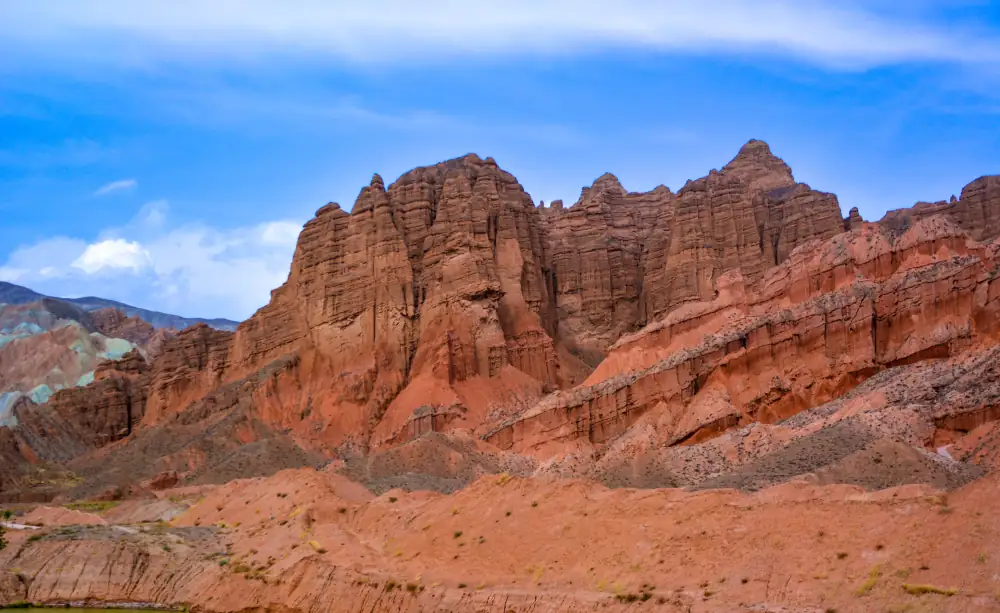
For international travellers with limited time, here’s a route that covers three distinct landscapes.
Day 1-3: Beijing & the North
- Start in Beijing. Visit the National Botanical Garden to see the 40°N latitude marker (a fun photo op).
- Take a day trip to the Yellow River Xiaolangdi Dam (high-speed train to Luoyang, 3 hours).
Day 4-6: Qinghai’s Otherworldly Desert
- Fly from Beijing to Golmud (2.5 hours).
- Drive to Mangya (4-5 hours). Spend two days exploring the ‘Saturn Rings’, Black Solo Mountain, and the Yardang (wind-eroded) landscapes.
Day 7-10: Sichuan’s Rainy Mountains
- Fly from Golmud to Chengdu (2 hours).
- Take a high-speed train to Ya’an (1 hour). Explore the Bifengxia Valley and its misty forests.
- Optional: Continue to Mount Emei (2 hours by bus) for a classic cloud-sea sunrise.
Getting Around & Practical Tips
- High-Speed Trains: China’s rail network connects major cities efficiently. Book tickets via 12306 (official app, available in English) or through travel agents. For foreigners, a passport is required for purchase.
- Flights: Domestic flights are affordable. Use Ctrip or Flighs.com for booking.
- Car Rental: For remote areas like Mangya, renting a 4WD with a driver is recommended. International driving permits are not recognised in China; you’ll need a Chinese driver’s license or hire a local driver.
- Mobile Payment: Alipay and WeChat Pay are widely used. Set these up before your trip with an international credit card. Cash is still useful in remote areas.
- Visa: Most travellers need a tourist visa (L-visa). The 144-hour transit visa is available for citizens of 53 countries if you’re transiting through major cities like Beijing, Shanghai, or Guangzhou. Check the latest rules.
Where to Stay
- Luoyang: Choose a hotel near the old town for easy access to the dam. Budget: ¥200-400/night; mid-range: ¥400-800.
- Mangya: Options are limited. The Mangya Hotel is basic but clean. Expect to pay ¥150-300/night. Book in advance.
- Ya’an: Many guesthouses near the scenic area. Prices start at ¥150/night.
Best Time to Visit
- Spring (March-May): Mild temperatures, blooming flowers. Good for Turpan and Ya’an.
- Summer (June-August): Best for Xiaolangdi water release, cloud seas in Dongtou, and high-altitude areas like Qinghai. Avoid Turpan due to extreme heat.
- Autumn (September-November): Clear skies, pleasant weather everywhere. Ideal for photography.
- Winter (December-February): Best for Genhe’s snowscapes. Many high-altitude areas are inaccessible.
Costs & Budget
- Transport: High-speed trains ¥100-500 per trip; domestic flights ¥500-1500.
- Accommodation: Budget ¥150-300/night; mid-range ¥400-800.
- Food: Street meals ¥20-50; restaurant meals ¥50-150.
- Entrance Fees: Most scenic areas charge ¥50-200. Xiaolangdi Dam charges around ¥50 during water release.
Photography Gear Checklist
- Camera: DSLR or mirrorless with weather sealing (for rain and dust).
- Lenses: Wide-angle (16-35mm) for landscapes; telephoto (70-200mm) for compressed shots.
- Filters: Polarizer for reducing glare; neutral density for long exposures.
- Tripod: Essential for low light and cloud seas.
- Extras: Extra batteries (cold drains them fast), lens cleaning kit, waterproof bag.
FAQ
- Q: Do I need a special permit to visit remote areas like Mangya or Medog?
A: Yes. For Medog (Tibet), you need a Tibet Travel Permit, which must be arranged through a tour operator. For Mangya (Qinghai), no special permit is needed, but you should register with local police if staying overnight. - Q: Is it safe to travel to these remote natural sites alone?
A: Generally yes, but it’s recommended to join a tour or hire a driver for remote areas like Mangya and Medog. Always inform someone of your itinerary. - Q: Can I use my credit card in these areas?
A: In major cities, yes. In remote areas, cash and mobile payment (Alipay/WeChat Pay) are preferred. Carry enough cash for a few days. - Q: What’s the best way to get high-quality photos without a drone?
A: Use a wide-angle lens and find elevated viewpoints. For cloud seas, shoot from a high vantage point like a mountain peak or a tall building. - Q: Are there English-speaking guides available?
A: In major tourist spots, yes. For remote areas, it’s best to book through an agency that provides English-speaking guides.
For more inspiration, check out our nature destinations and photography tips. If you’re planning a longer trip, see our China itineraries for multi-week adventures. And don’t miss our guide to northwest China for more desert and mountain landscapes.