
China is vast, and while iconic sites like the Great Wall and the Forbidden City rightfully draw millions, some of the country’s most enchanting experiences lie far from the tourist trail. These lesser-known destinations offer a deeper, more authentic connection to China’s diverse landscapes, cultures, and histories. From a border town where you can taste Vietnam without a passport to a former mining city that inspired a novel, here are five underrated Chinese destinations that deserve a spot on your itinerary.
Table of contents
Open Table of contents
- 1. Jingxi (靖西, Jìngxī): Guangxi’s Cool, Cross-Border Oasis
- 2. Haiyan (海晏, Hǎiyàn): Qinghai’s Hot Spring Haven
- 3. Yibao (怡保, Yíbǎo): Malaysia’s Chinese Heritage Town (Bonus Cross-Border Pick)
- 4. Geleshan (鹅岭, Élǐng): Chongqing’s Layered History
- 5. Pingjiang Road (平江路, Píngjiāng Lù): Suzhou’s Living Song Dynasty Map
- Final Thoughts
1. Jingxi (靖西, Jìngxī): Guangxi’s Cool, Cross-Border Oasis
Nestled in the southwestern corner of Guangxi Zhuang Autonomous Region, Jingxi is a county-level city that feels like a secret whispered among travelers. Known as “Little Guilin” for its karst scenery and “Little Kunming” for its mild climate, Jingxi boasts an average annual temperature of just 19.1°C (66.4°F), making it a perfect summer escape. But what truly sets it apart is its location: it shares a 152.5 km border with Vietnam, offering a unique blend of Chinese and Southeast Asian cultures.
Top Sights
- Goose Spring (鹅泉, É Quán): One of China’s three famous springs, this crystal-clear pool is fed by an underground river. The scene of a 15-arch Qing dynasty bridge reflected in the water, with locals herding water buffalo, is pure idyll.
- Tongling Grand Canyon (通灵大峡谷, Tōnglíng Dà Xiágǔ): A dramatic 3.8 km canyon plunging 300 meters deep, home to the Tongling Waterfall, one of Asia’s highest single-drop falls at 188.6 meters. The canyon is a botanical wonderland with over 2,300 plant species, including the dinosaur-era fern tree fern.
- Quyang Lake (渠洋湖, Qúyáng Hú): A sprawling karst lake at 800 meters elevation, perfect for a boat ride among limestone peaks. The water changes color with the weather, from emerald to deep blue.
- Jiuzhou Ancient Town (旧州古城, Jiùzhōu Gǔchéng): A thousand-year-old town known as the “Hometown of Chinese Embroidered Balls” and the birthplace of Madame Wa, a Ming dynasty female general who led 6,800 troops against Japanese pirates.
Cross-Border Flavors
At Longbang Port (龙邦口岸, Lóngbāng Kǒu’àn), you can stroll through a border market without a visa. The “Durian Street” in Hulong Village is lined with stalls selling Vietnamese specialties: crispy spring rolls, pho, and of course, durian. For the adventurous, try “qu tou dan” (fertilized duck egg) or the local specialty “fan ji du” (sweet potato cake). Don’t miss Jingxi’s own breakfast staple: rolled rice noodles (卷筒粉) with a tangy yellow plum sauce.
Practical Tips
- Getting there: Take a high-speed train to Baise (百色), then a bus or taxi (about 2 hours) to Jingxi. Alternatively, direct buses run from Nanning (about 4 hours).
- Best time to visit: April to October, with July and August being the coolest months.
- Accommodation: Stay in the county town for easy access to sights; budget hotels start around ¥150 per night.
- Etiquette: When visiting local villages, greet people with a nod and smile. Photography of people should be done with permission.
2. Haiyan (海晏, Hǎiyàn): Qinghai’s Hot Spring Haven
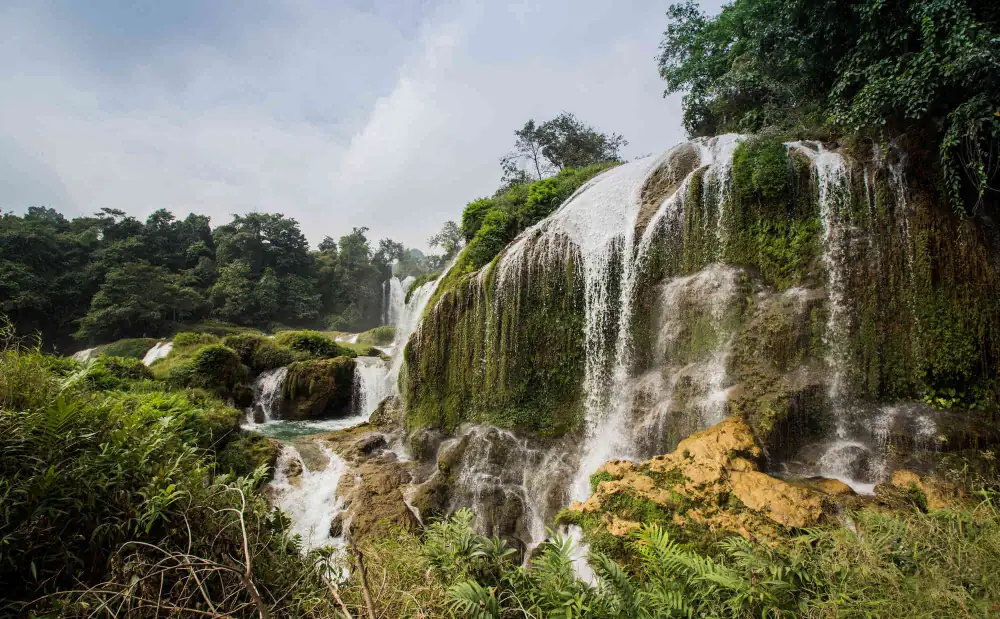
Tucked away in the Qilian Mountains of Qinghai Province, Haiyan County is home to the Baohutu Hot Spring (包忽图温泉, Bāohūtú Wēnquán), known as the “First Spring of the Huangshui River Source.” In Mongolian, “Baohutu” means “place where deer appear,” and this remote geothermal spring offers a truly off-grid experience.
The spring emerges from the earth at a temperature that remains warm year-round, even as snow caps the surrounding peaks. The water is rich in lithium and metasilicic acid, believed to have therapeutic properties. In summer, the surrounding meadows are a carpet of wildflowers; in winter, the contrast of steam rising against a frozen landscape is surreal.
What to Do
- Soak in the hot spring: There are basic pools for bathing; the experience is rustic but rewarding. No fancy facilities — just you, the water, and the vast plateau.
- Hike the surrounding hills: The area is part of the Huangshui River source region, with pristine alpine scenery and opportunities to spot wildlife like blue sheep and Tibetan foxes.
- Visit the Xihai Town (西海镇): The county seat, known as the “Silver City,” was once a key site for China’s nuclear research. The Atomic City Memorial Hall offers a glimpse into this secret history.
Practical Tips
- Getting there: Take a high-speed train to Xining, then a bus to Haiyan County (about 2 hours). From Haiyan town, you’ll need a private car or taxi to reach the hot spring (about 1 hour on a rough road).
- Best time to visit: June to September for mild weather; winter for a dramatic snow-and-steam experience.
- Accommodation: Basic guesthouses in Haiyan town; book ahead in summer.
- Altitude: Haiyan sits at around 3,000 meters. Take it easy on the first day to avoid altitude sickness. Drink plenty of water and avoid alcohol.
- Payment: Mobile payment (Alipay/WeChat Pay) is widely accepted in town, but bring cash for rural areas.
3. Yibao (怡保, Yíbǎo): Malaysia’s Chinese Heritage Town (Bonus Cross-Border Pick)
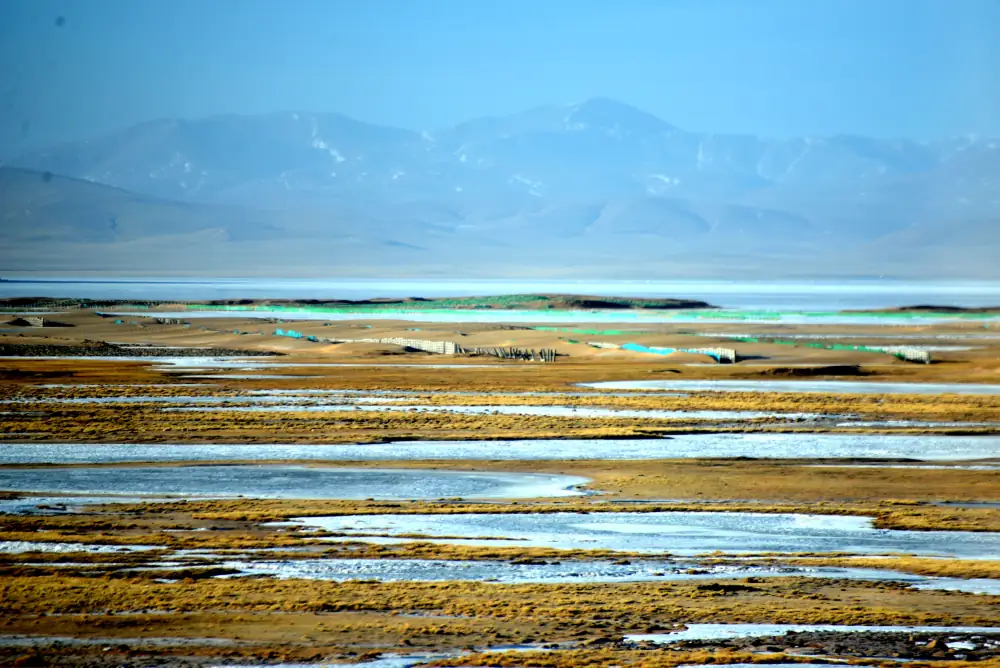
While technically in Malaysia, Ipoh (怡保) is just a short hop from the Chinese border and offers a fascinating glimpse into the overseas Chinese experience. This former tin-mining boomtown, once known as the “World’s Tin Capital,” is now a laid-back city where Cantonese is the lingua franca and white coffee was invented.
Ipoh’s story is deeply tied to Chinese immigration. In the late 19th century, thousands of Chinese laborers arrived to work in the tin mines, shaping the city’s culture and economy. Today, over 70% of Ipoh’s population is of Chinese descent. The city is also the birthplace of celebrities like Michelle Yeoh and singer Michael Wong.
Top Sights
- Ipoh Railway Station: A stunning Moorish-Victorian hybrid building built between 1914-1917, often called the “Taj Mahal of Ipoh.” Across the street, the Birch Memorial Clock Tower features four statues representing Buddhism, Christianity, Islam, and Hinduism — a symbol of the city’s multicultural harmony.
- Concubine Lane (二奶巷): A narrow alley once owned by a tin tycoon for his concubines. Now it’s a touristy but charming street with shops and cafes. For a quieter experience, explore the nearby First and Third Concubine Lanes.
- Kinta River (近打河): The river that made Ipoh. Walk along its banks to see the contrast between the old town (left bank) and new town (right bank).
- Han Chin Pet Soo (闲真别墅): A former gentlemen’s club for tin tycoons, now a museum documenting the history of tin mining and the lives of Chinese laborers.
Food
- White coffee: Ipoh’s signature brew, smooth and slightly sweet. Try it at Sin Yoon Loong (新源隆) in old town.
- Bean sprout chicken (芽菜鸡): Tender poached chicken served with fat, crunchy bean sprouts grown in Ipoh’s mineral-rich water.
- Moonlight river (月光河): A plate of flat rice noodles (hor fun) topped with a fried egg that resembles a full moon. The name is poetic — it has nothing to do with actual moonlight.
Practical Tips
- Getting there: From Kuala Lumpur, take the KTM train (about 2.5 hours) or bus (about 3 hours). Ipoh is also a stop on the North-South Expressway.
- Visa: Chinese citizens need a visa for Malaysia, but Malaysia offers visa-free entry for Chinese tourists until December 2025. Check current regulations.
- Language: Cantonese is widely spoken, but Mandarin and English are also understood in tourist areas.
- Currency: Malaysian Ringgit (MYR). Credit cards are accepted in hotels and larger restaurants, but cash is king for street food.
4. Geleshan (鹅岭, Élǐng): Chongqing’s Layered History
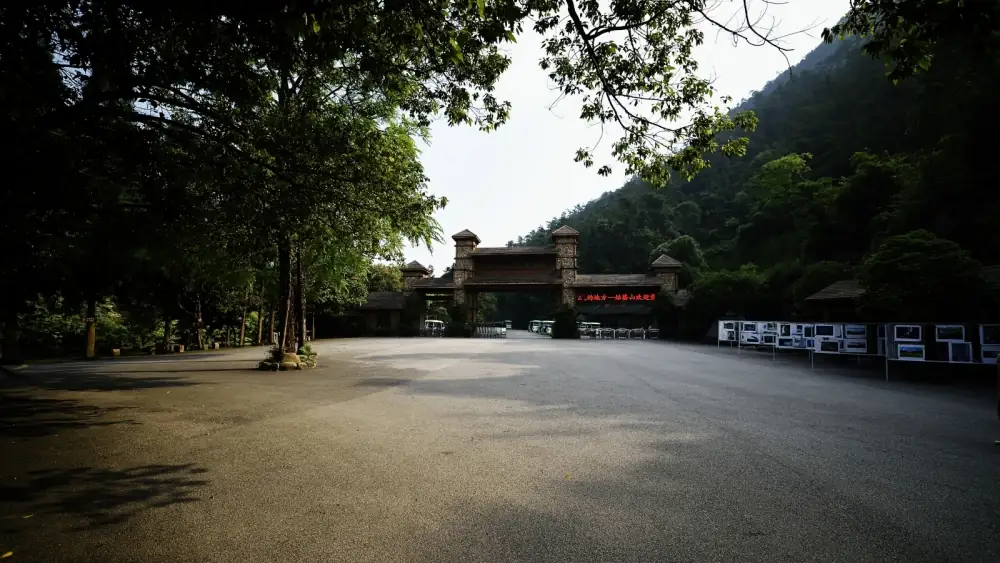
In the heart of Chongqing, Geleshan (Goose Ridge) is a narrow, steep ridge flanked by the Yangtze and Jialing rivers. It’s home to some of the city’s most Instagrammed spots — the Liziba light rail that “eats” a building, the Eling Er Factory (a former printing press turned creative hub), and the Fotoshan Park “flower sea train.” But beneath the viral veneer lies a rich tapestry of history.
Geleshan has been a strategic military point since ancient times, guarding the entrance to Chongqing. During the Second Sino-Japanese War, it housed foreign embassies. The Eling Park, originally a private garden, offers panoramic views of the two rivers. The former National Government Central Bank Printing Plant (now Eling Er Factory) once printed currency and stamps.
Top Sights
- Liziba Light Rail Station: Watch the monorail pass through a residential building — a classic Chongqing moment. The best photo spot is on the observation deck below the track.
- Eling Er Factory (鹅岭贰厂): A revitalized industrial complex with art galleries, cafes, and a rooftop terrace. It’s also a filming location for the movie “From Your Whole World.”
- Eling Park: A peaceful escape with pavilions, a pagoda, and a lotus pond. Climb the two-river pavilion for a stunning view of the confluence.
- Fotoshan Park: In spring, the cherry blossoms and the light rail create a “flower sea” scene that’s become a social media sensation.
Practical Tips
- Getting there: Take Chongqing Rail Transit Line 1 to Eling Station, or Line 2 to Liziba Station. The area is walkable but hilly — wear comfortable shoes.
- Best time to visit: Spring (March-April) for flowers; autumn (October-November) for clear skies.
- Cost: Most attractions are free; Eling Park charges ¥5 entry.
- Mobile payment: Widely accepted everywhere.
5. Pingjiang Road (平江路, Píngjiāng Lù): Suzhou’s Living Song Dynasty Map
Pingjiang Road in Suzhou is often dismissed as just another touristy street lined with milk tea shops and souvenir stores. But look closer, and you’ll discover it’s a living relic of the Song Dynasty (960-1279). The road’s layout — a canal running parallel to a street — matches the “Pingjiang Map” carved on a stone tablet in 1229, now housed in the Suzhou Museum.
This “water and land parallel, river and street adjacent” pattern dates back to the city’s founding in 514 BC. The entire Pingjiang Historical District is a protected area with 20 cultural heritage sites, including the Couple’s Garden (耦园), a UNESCO World Heritage Site. Unlike many ancient streets, over 8,000 residents still live here, maintaining an authentic Suzhou lifestyle.
Top Sights
- Pingjiang Road itself: Walk the main street for shops and snacks, but venture into the side alleys — Niujia Alley, Dingxiang Alley, and others — for a quieter experience.
- Couple’s Garden: A classic Suzhou garden built for a couple in love, with elegant pavilions and a water-facing terrace.
- Kunqu Opera: Catch a performance at the Pingjiang Kunqu Theater for an immersive cultural experience.
- Museum of Suzhou Embroidery: Learn about the city’s silk heritage.
Food
- Suzhou-style mooncakes: Flaky pastries filled with pork or red bean.
- Cherry blossom cake: A seasonal treat in spring.
- Squirrel-shaped mandarin fish: A classic Suzhou dish, sweet and sour.
Practical Tips
- Getting there: Take Suzhou Metro Line 1 to Xiangmen Station, then walk east. The district is also accessible by bus.
- Best time to visit: Spring (March-May) or autumn (September-November) for pleasant weather.
- Etiquette: Respect residents’ privacy — don’t peek into homes or take photos of people without permission.
- Cost: Free entry to the street; Couple’s Garden charges about ¥25.
Final Thoughts
These five destinations prove that China’s most memorable experiences often lie off the beaten path. Whether you’re soaking in a Qinghai hot spring, exploring a Malaysian-Chinese town, or tracing Song Dynasty urban planning in Suzhou, you’ll find that the road less traveled is rich with stories. For more off-the-beaten-path ideas, check out our nature destinations and cultural guides.
Plan your trip with care, embrace the unexpected, and you’ll return home with tales that few travelers can tell.