
Lugu Lake sits at 2,685 meters on the border between Yunnan and Sichuan provinces. The water is the kind of blue-green that makes you question whether you’re looking at a reflection or the sky. But the lake itself is almost secondary to why most visitors come: this is the homeland of the Mosuo people, one of the last matriarchal societies on earth, and a culture that has maintained traditions around gender, family, and partnership that are unlike anything else in China or elsewhere.
Table of contents
Open Table of contents
Understanding the Mosuo People
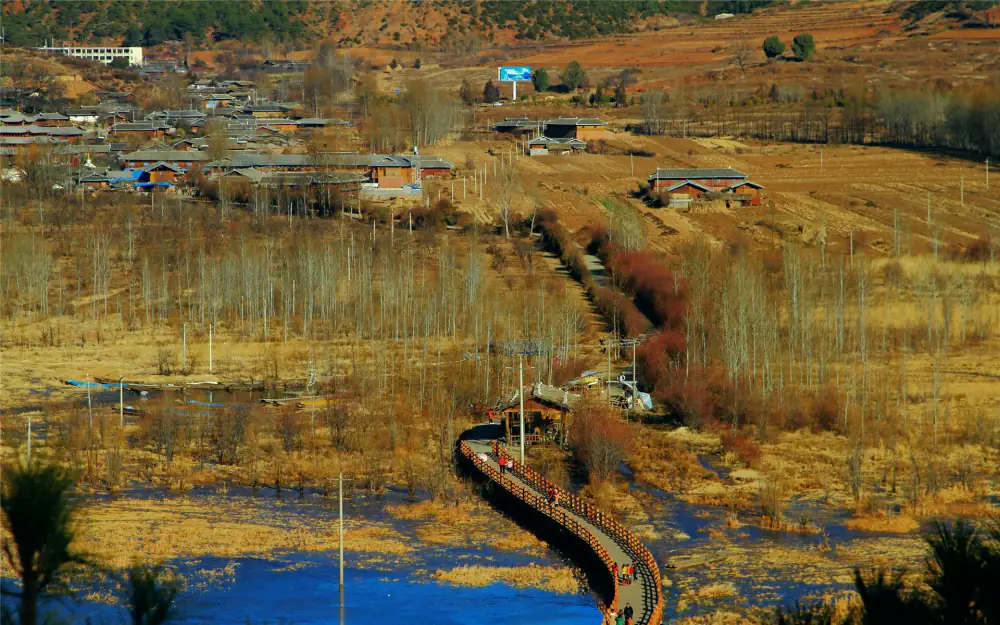
The Mosuo number around 40,000 and have lived around Lugu Lake for centuries. Their society is structured around women — property, family names, and the household all pass through the maternal line. Men live with their mothers and sisters; women head the household. This isn’t just symbolic: Mosuo society genuinely functions this way.
The practice that makes them famous internationally is zou hun, which translates roughly as “walking marriage” — though that translation oversimplifies it. In traditional Mosuo life, men and women in romantic relationships don’t necessarily live together. A man visits his partner at night and returns to his mother’s home in the morning. Children are raised by the mother and her brothers, who serve as the father figure. The biological father has a different role.
In the modern era, this practice has evolved and varies enormously between families and individuals. Many younger Mosuo people live in conventional arrangements. But the cultural framework — matrilineal inheritance, communal family structures, female-headed households — remains.
For visitors: This culture is not a performance or tourist exhibit. The Mosuo people experience constant intrusive curiosity about their family and romantic practices, much of it insensitive. If you’re speaking to Mosuo community members, approach questions with the same respect you’d extend to anyone discussing their private life. Many guesthouse owners are happy to talk about their culture on their own terms.
Getting to Lugu Lake
Lugu Lake is remote. This is part of what has preserved the Mosuo culture, and it’s something to factor into your planning.
From Lijiang (most common route)
- By bus: Regular buses from Lijiang’s Keyun North Bus Station depart in the morning. The journey takes 5–6 hours and costs about ¥90–100. The road is mountain highway — scenic but winding, and rough in sections.
- By chartered car: Hiring a car and driver from Lijiang for the day runs ¥400–600 and gives you flexibility. Many guesthouses in Lijiang can arrange this.
- By tour: Various Lijiang agencies run overnight tours (¥400–600 per person including accommodation, meals, and boat ride). These are efficient but rushed.
From Xichang (Sichuan side)
From Xichang in Sichuan, buses run to the lake in about 4 hours. This is the less-traveled approach and brings you to the Sichuan side of the lake first.
Staying Overnight
Lugu Lake deserves at least two nights — ideally three. The villages of Lige and Luoshui on the Yunnan side have the most accommodation options, ranging from simple guesthouses (¥80–150/night) to more comfortable boutique lodges (¥300–600/night). Staying overnight means you can see the lake at dawn and dusk when the light is extraordinary and most day-trippers have left.
The Lake and Surrounding Area
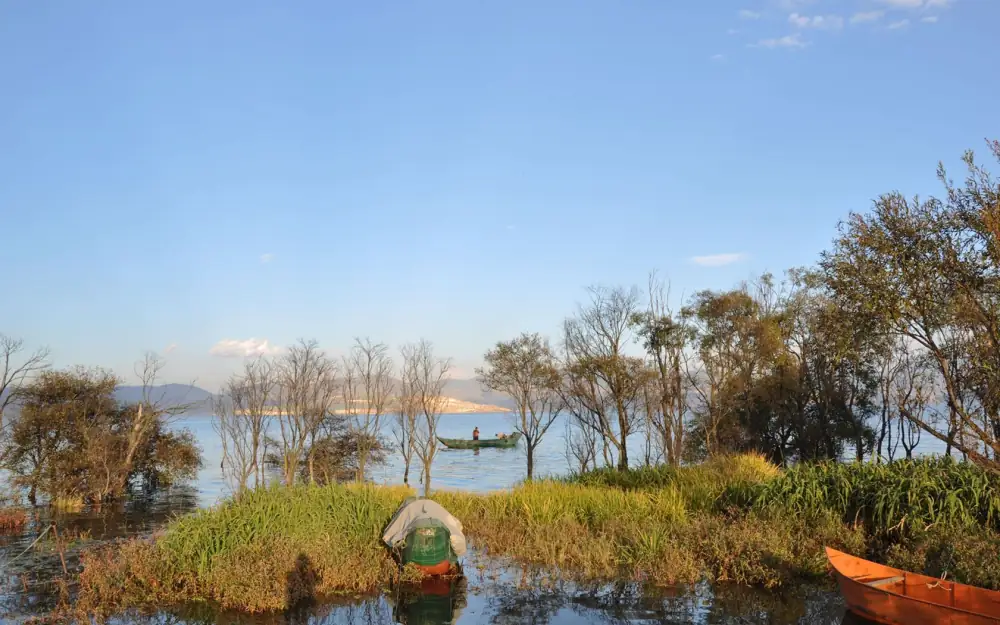
Pig-Trough Canoes (Dugout Boats)
The iconic image of Lugu Lake is the traditional Mosuo dugout boat — hollowed from a single log, pointed at both ends, propelled by standing paddlers with long poles. Boat tours operate from several villages, typically covering a circuit of the lake including the small islands and reed beds. Cost: ¥60–80 per person for a shared boat, or ¥300–400 to charter a private boat. Morning and evening are the best times — the water is calmest and the reflections most dramatic.
Cycling Around the Lake
A paved road circles the lake (total circumference approximately 57km). Bicycle rental is available in Luoshui village for ¥20–40/day. Cycling the full circuit takes 4–6 hours and is a genuinely beautiful way to see the lake and visit villages on the Sichuan side. The terrain is mostly flat with some gentle hills.
Lige Peninsula
Lige is the most photogenic village — a narrow peninsula jutting into the lake with traditional Mosuo log houses and unobstructed views from the hillside above. The sunset view from the hill above Lige across the lake is one of those moments that explains why people travel this far. Arrive by 5pm to claim a spot.
Niru Sea Buckthorn Valley and Grassland
A short drive from the lakeshore, the grassland areas above the lake have horses for rent and walking trails through meadows and forest. Less visited than the lake itself but a good option if you’re spending more than two nights.
Practical Tips for Visiting Respectfully
Photography: Many Mosuo people don’t mind being photographed and some enjoy it — but always ask first. The shorthand rule: would you photograph a stranger’s home interior without asking? Apply that standard here. Paying for a portrait photo is acceptable and appreciated if offered.
Entering homes: Some Mosuo families run guesthouses and welcome visitors into their common rooms. This is an invitation, not an open license to wander. Pay attention to whether you’re in a commercial space or a family’s actual living area.
Cultural performances: There are nightly fire-circle dances in the main tourist villages. These are commercialized performances (¥30–50 to participate), but they’re genuinely enjoyable and the Mosuo participants are often having a good time. Not everything commercial is inauthentic.
Altitude: At 2,685m, some visitors experience mild altitude symptoms — headaches, shortness of breath, disturbed sleep. Drink water, avoid alcohol for the first day, and don’t rush around. If you’ve been at sea level, your body needs a day to adjust.
When to Visit
Best months: April–June and September–November. The lake is clearest in autumn. Summer (July–August) brings Chinese domestic tourists in large numbers and the roads can be congested.
Avoid the January–February period around Chinese New Year if you want a quieter experience — the lake is popular for Chinese tourism then.
The Zhuanshan Festival (usually around August in the lunar calendar) is the main Mosuo cultural festival, involving boat races and cultural performances. Visiting during this time gives you a sense of the living culture beyond the daily tourist performances.
Food and Accommodation
Food around Lugu Lake leans heavily on the local specialty: grilled yak meat, lake fish (the local 裂腹鱼 fissure-belly fish), mushrooms, and barley dishes. Most guesthouses offer meal packages. A typical Mosuo meal at a guesthouse runs ¥40–60 per person and is genuinely good.
The pig’s foot stewed with black bean sauce is a Mosuo specialty worth trying once. Lake fish grilled simply with local herbs is excellent.
Accommodation quality varies. The better boutique guesthouses on the Yunnan side have rooms with lake views, wood-fired rooms (useful in the cool evenings), and owners who can guide you on how to spend your time. Read recent reviews — turnover is high and quality shifts.
Lugu Lake rewards slow travel. The visitors who come for two nights and experience dawn on the water, an afternoon boat ride, and an evening conversation with a guesthouse owner leave with something genuinely different from a standard China tourism experience. The visitors who rush through in a day see a lake and some boats.