
The Stone Forest (石林, Shilin) — 90km east of Kunming — is a 2.7 million-year-old karst limestone formation covering 400 square kilometres, with the densest cluster of pillars in the main scenic area rising 10–30 metres above the forest floor. The formations are the Sani people’s (撒尼人, a branch of the Yi nationality) ancestral homeland — their cultural mythology is embedded in the stone formations, many of which have names from Sani legends.
The Main Scenic Area
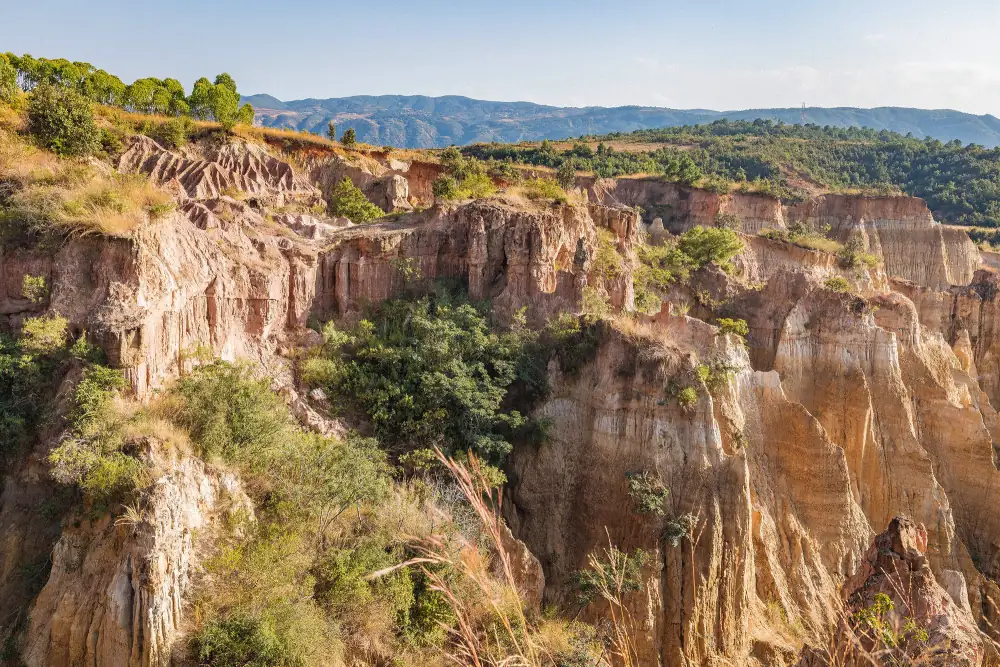
The core scenic area (大石林) covers 80 hectares of densest pillar formations. Paths wind between formations that close overhead in some sections, creating cathedral-like spaces. The most photographed formation is Ashima (阿诗玛) — a natural stone resembling a young Sani woman in profile, named for the folk heroine of the Sani love story sung throughout Yunnan.
Route strategy: Most visitors follow the main guided path circuit (1.5–2 hours). For more exploration, the marked secondary trails extend into less-visited sections — you’ll be largely alone in these areas even when the main circuit is crowded.
Small Stone Forest (小石林): The adjacent smaller formation area is less crowded and has better Sani cultural presentation — traditional performance spaces, Sani embroidery workshops, and more direct contact with Sani community members who still work in the area.
Ticket System
Entry: ¥175 for main scenic area. Combination tickets including secondary sites available. Book online in advance to avoid queues.
The park is large: Allow 3–4 hours minimum for the main scenic area circuit.
Sani Culture at the Stone Forest

The Sani people have inhabited this landscape for centuries and maintain a distinctive cultural tradition — embroidery, music, and the Yi Torch Festival (彝族火把节) are most visible to visitors.
Sani embroidery: The distinctive geometric patterns in bright colours on clothing and decorative pieces. Genuine Sani embroidery is available at stalls in the scenic area; mass-produced souvenirs are also everywhere — the tell is hand vs. machine stitching and price (authentic pieces cost ¥80–300+).
Yi Torch Festival (彝族火把节): Held on the 24th–26th of the sixth lunar month (typically July–August), the Torch Festival is the most significant Yi cultural celebration — three days of torch-carrying processions, fire-jumping, traditional music and dance. The Stone Forest hosts a large annual celebration that is both culturally genuine and accessible to visitors.
Combining with Kunming
From Kunming’s South Bus Station (昆明南部客运站), direct buses to Shilin run every 30–60 minutes (2 hours, ¥30). Tour buses are also available from Kunming’s downtown hotels.
As part of a Kunming day: Morning departure to Stone Forest (arrive 10am), 3–4 hours in the park, return to Kunming by 5pm. Combine with Kunming’s Green Lake (翠湖公园) evening for a full day.
Also see: Kunming City Guide | Yunnan Travel Guide | China Hiking Trekking Guide