
Dali (大理) has two identities. There’s the commercially optimised old town (大理古城) — the preserved Bai minority city that serves as the comfortable base for most visitors — and there’s the landscape that surrounds it: the 4,122m Cangshan Mountain range rising directly behind the city, and the 250 sq km Erhai Lake stretching for 40km in front.
For visitors staying more than 2–3 days, the mountain and lake provide the most rewarding experiences — and they require leaving the old town to access.
Cangshan Mountain (苍山)

Cangshan has 19 peaks above 3,500m; the highest, Malong Peak (马龙峰), reaches 4,122m. The range creates a dramatic backdrop visible from everywhere in the Dali basin and is the source of the 18 mountain streams that flow through the old town and into Erhai Lake.
The Zhonghe Temple Traverse Trail
The most popular hiking route is the mid-mountain traverse trail at approximately 2,500m — accessible by cable car (中和索道, near Dali old town gate) or by hiking up from the town.
The trail: The traverse path runs horizontally along the mountain face for approximately 6km, connecting a sequence of small temples, scenic viewpoints, and the Three Pagodas viewpoint overlooking the old town. Good fitness required; no technical climbing.
Higher routes: Continuing above the traverse toward the Qingbi Brook (清碧溪) waterfalls and the snow line is possible in summer (June–September) for experienced hikers. These higher routes require guides and proper mountain equipment.
Cable Car Options
Three cable car systems access different sections of Cangshan:
- Zhonghe Cable Car (中和索道): Central, nearest old town, accesses the traverse trail
- Gangtong Cable Car (感通索道): Southern section, near Xiaguan
- Xilang Cable Car (喜洲索道): Northern section, near Xizhou village
Practical Notes
- Best season: May–October for hiking. Spring (April–May) for rhododendron bloom on the slopes. Winter (December–February) for snow views, but many trails closed.
- Weather: Mountain weather changes rapidly. Start hikes before 10am; afternoon storms common June–September.
- Altitude: Even the traverse trail at 2,500m can cause mild altitude effects for visitors arriving directly from sea level. Acclimatise one day in Dali before hiking.
Erhai Lake (洱海)
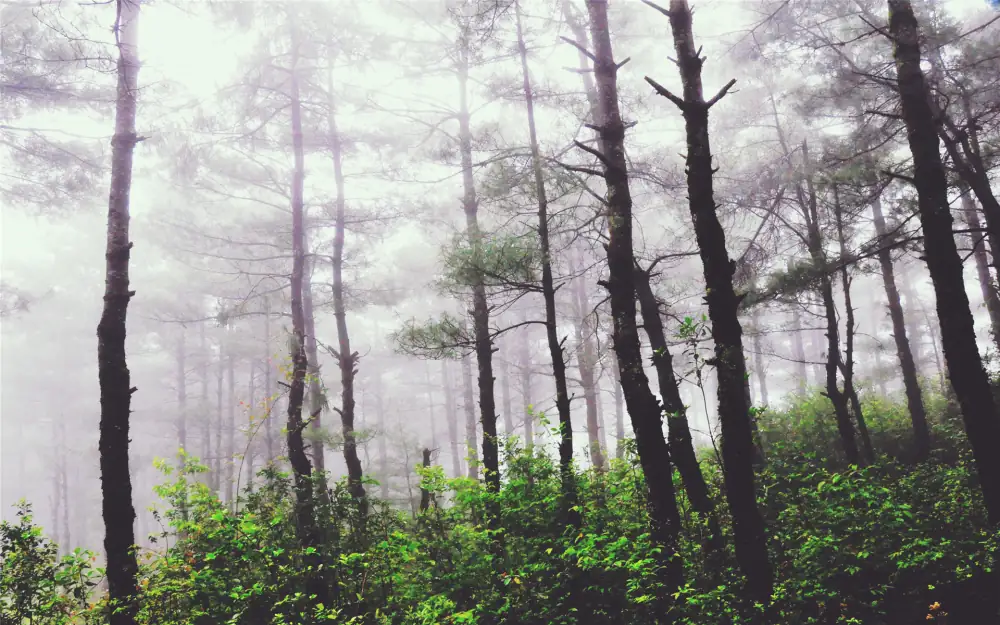
Erhai Lake — “Ear-Shaped Sea” (the lake shape resembles an ear) — is one of Yunnan’s most beautiful highland lakes. The Bai minority (白族) have lived on its shores for 3,000+ years, and dozens of traditional Bai villages still function as fishing and farming communities around the lake perimeter.
Cycling the Lake
A 130km cycling route circles the entire lake, typically completed in 2 days. Bicycles and e-bikes are available for hire throughout Dali; most cyclists do the east shore (less developed, more traditional village access) and return on the west shore highway.
Key stops on the east shore:
- Shuanglang (双廊): An increasingly tourist-developed peninsula village with boutique hotels and art galleries, but the core Bai fishing village architecture is still visible in the older lanes
- Wase (挖色): A less-visited fishing village with an active market and minimal tourist infrastructure
- Haidong (海东): The most genuinely local of the accessible east shore villages
Boat Trips on Erhai
Traditional wooden tourist boats depart from Cai Village (才村码头) near the old town. The 2–3 hour circuit visits the Small Putuo Island (小普陀岛, a tiny temple on a rock in the lake) and the Nanzhao Island (南诏风情岛). More scenic than historically significant; the boat itself is the point — the flat lake with mountains on both sides.
Bai Minority Culture
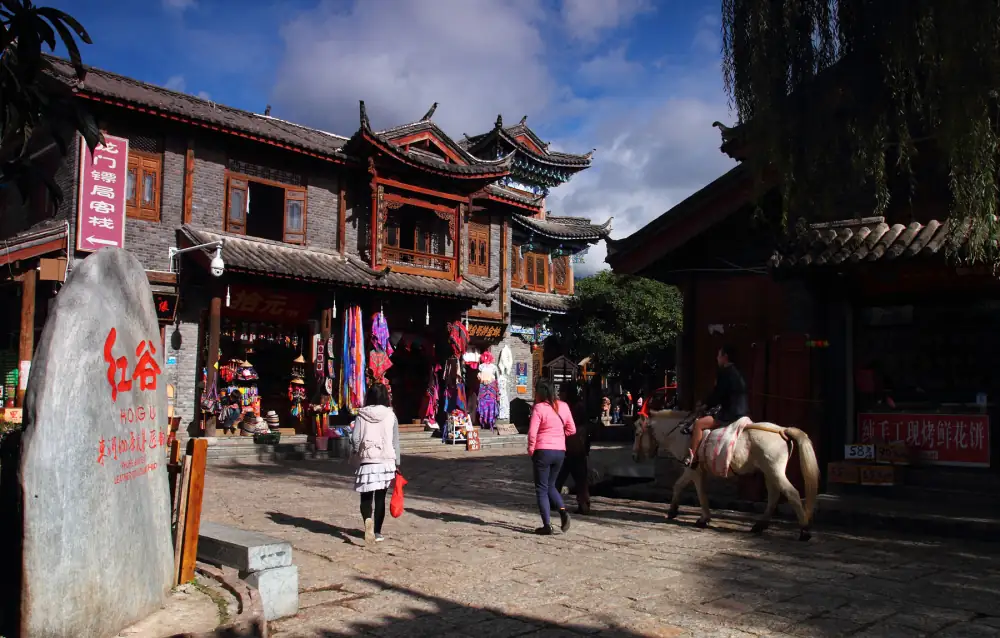
The Bai people are the ethnic majority in the Dali area — their language, architecture (白族民居), food, and festivals are distinct from Han Chinese culture.
Bai architecture: The white walls and grey tile of Bai vernacular housing, with painted decorative panels on gate towers and courtyard walls, define the visual aesthetic of the Dali area.
Three Course Tea Ceremony (三道茶): A traditional Bai hospitality ritual — bitter tea first, sweet tea second, aftertaste tea third — with the philosophical interpretation that life is similarly structured. Offered at traditional guesthouses.
Bai food: Slightly different from mainstream Yunnan food — more dairy products (Yunnan milk cheese, rubing 乳饼), more river fish, and some Central Asian trade route influences in the spice use.
Also see: Yunnan Dali Lijiang Guide | Yunnan Lijiang Shangri-La Route | Yunnan Travel Guide