
Kunming: The City That Never Gets Cold
Kunming (昆明, Kūn Míng) is called the “Spring City” (春城) because it’s one of the few places in China where the climate is genuinely mild year-round. Sitting at 1,900 meters elevation in Yunnan province, Kunming avoids both the sweltering summers of lowland China and the harsh winters of northern regions. Flowers bloom throughout the year. The light is sharp and brilliant.
Most travelers use Kunming as a gateway to the rest of Yunnan — as a transit hub for Lijiang, Dali, Xishuangbanna, or the Tibetan areas of northwest Yunnan. This is perfectly reasonable. But treating Kunming as merely a stopover means missing a genuinely interesting city with its own character, history, and food culture.
Understanding Kunming
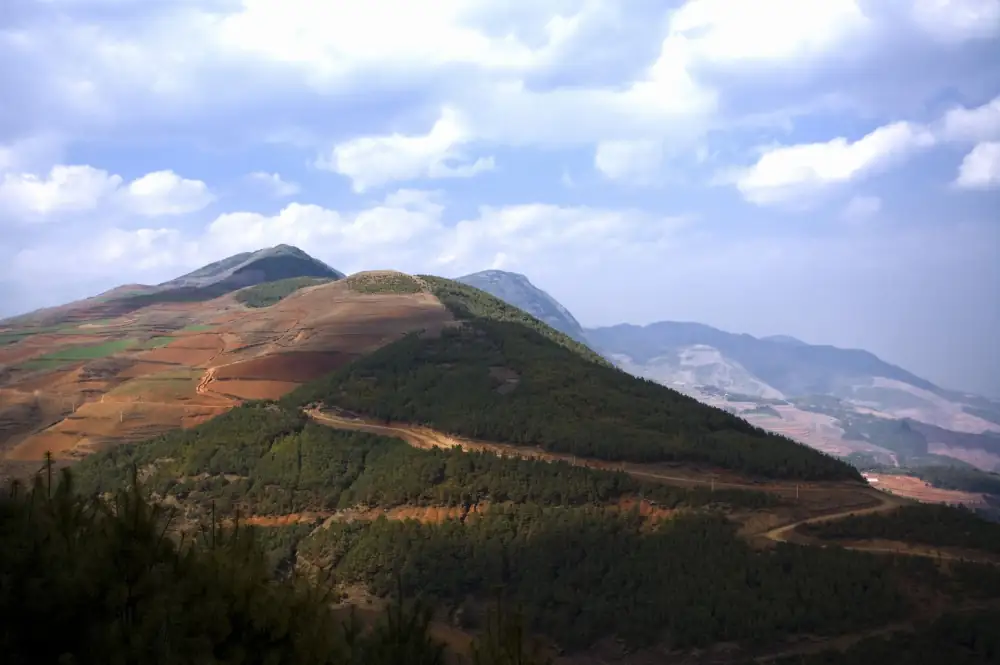
Yunnan province has been one of China’s most ethnically diverse regions throughout history. Kunming sits at the center of this diversity — a hub city where the Yi, Bai, Naxi, Dai, Hani, and dozens of other ethnic groups intersect with Han Chinese and, increasingly, significant populations from Myanmar, Vietnam, and other Southeast Asian countries.
This diversity shows up in the food market (mushroom varieties from the highlands, tropical fruits from Xishuangbanna, fresh flowers from the farms around Dianchi Lake), in the architecture (mosque minarets visible alongside Buddhist temples), and in the general atmosphere of a city that has always been more cosmopolitan than its geography would suggest.
Getting to Kunming
By Air: Kunming Changshui International Airport (KMG) is one of the busiest airports in southwestern China, with direct international connections to much of Southeast Asia, South Asia, and some Middle Eastern hubs. Domestically, Kunming connects to virtually every major Chinese city.
By High-Speed Train: The new Yunnan high-speed rail network has dramatically improved connectivity.
- From Chongqing: approximately 3 hours (new Chengyu HSR connects to Yunnan-Guizhou line)
- From Guiyang: approximately 2.5 hours
- From Lijiang: approximately 3.5 hours (Yunnan internal rail)
- From Dali: approximately 2 hours
By Road: Long-distance buses remain important for reaching towns not yet served by rail.
Kunming as a Base
Kunming’s central position in Yunnan makes it the natural hub for a multi-destination Yunnan itinerary:
- Dali (大理): 2 hours by high-speed train or 3.5 hours by bus
- Lijiang (丽江): 3.5 hours by high-speed train
- Xishuangbanna (西双版纳): 3-hour flight or 8-9 hour bus
- Yuanyang Rice Terraces (元阳梯田): 4-5 hours by bus
- Stone Forest (石林): 1 hour by bus or subway
Most travelers spend 1-2 nights in Kunming at the start and/or end of a Yunnan trip, more if making day trips to the Stone Forest and Dianchi Lake.
Stone Forest (石林)
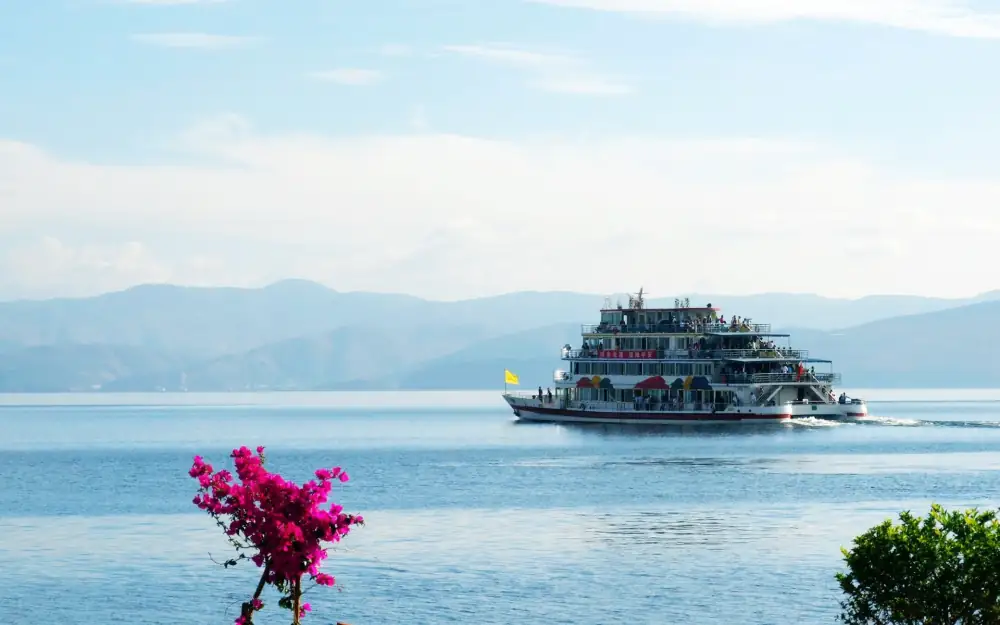
The Stone Forest (石林, Shí Lín) is Kunming’s most significant natural attraction and one of Yunnan’s UNESCO World Heritage sites. Located about 80 km east of the city, the Stone Forest consists of towering limestone karst pillars — some reaching 30 meters — in formations that cover several hundred square kilometers.
The geological process that created the Stone Forest took approximately 270 million years. Limestone dissolved and eroded over geological time to create the distinctive formations, which in some areas resemble figures, animals, or forests of stone trees.
Practical access:
- Subway from Kunming to Stone Forest: approximately 1 hour (Line 1 to Stone Forest Station, then shuttle)
- Bus from South Kunming Bus Station: approximately 1.5 hours
- Guided tours are available and useful for navigating the unmarked paths in the larger scenic area
Entry: ¥120 for the full scenic area (covers multiple sub-areas including the Minor Stone Forest, Major Stone Forest, and some outlying formations)
Time needed: 3-4 hours for the main scenic areas; a full day if you want to explore extensively
Yi Village: Near the Stone Forest, the Sani (a Yi subgroup) village of Suogu Yi offers genuine cultural contact — small restaurants, craft shops, and the possibility of attending local festivals if timing is right.
Dianchi Lake (滇池)
Dianchi Lake (滇池, Diān Chí) is one of the largest freshwater lakes in China’s southwest, visible from Kunming’s hills and historically central to the city’s identity. The lake is surrounded by development on its northern and eastern shores (where it borders urban Kunming) but remains more natural in the south.
Western Hills (西山): On the western shore of Dianchi, the Western Hills are a popular half-day hiking destination with Taoist temples and dramatic views over the lake and city. The “Dragon Gate” (龙门) pathway carved into the cliff face is the highlight — a series of passageways and viewing platforms carved by Taoist monks over 70 years during the Qing dynasty.
Haigeng Park: On the lake’s northern shore, this park is good for lakeside walks and birdwatching. Dianchi hosts large populations of black-headed gulls (红嘴鸥) from Siberia every winter — one of Kunming’s most beloved seasonal spectacles.
Lake Water Quality: Dianchi has suffered significant pollution from urban runoff and agricultural chemicals over the decades. Cleanup efforts since the 2010s have improved conditions substantially, but swimming is not recommended.
City Highlights
Yunnan Provincial Museum (云南省博物馆)
One of China’s better provincial museums, with comprehensive coverage of Yunnan’s extraordinary ethnic diversity and archaeological heritage. The bronze drum collection is exceptional — these ritual instruments from the Dian Kingdom (3rd century BCE–1st century CE) are among the most important Bronze Age artifacts in Southeast Asian archaeology.
Free admission (reservation required on weekends and holidays). Allow 2-3 hours.
Yunnan Nationalities Village (云南民族村)
A park-format cultural village representing Yunnan’s 26 recognized ethnic minorities, with reconstructed traditional buildings and cultural performances. It’s an artificial setting, but the quality of the architecture reconstructions and performance content is decent. Useful as an introduction to Yunnan’s ethnic diversity before visiting the communities themselves.
Entry: ¥80-100.
Green Lake Park (翠湖公园)
The most beautiful urban park in Kunming, centered on a small lake that was historically part of Dianchi’s shoreline. The park is beloved by Kunming residents: elderly people play erhu and mahjong under the trees, couples walk the willow-lined paths, and in winter, the lake fills with migratory gulls.
Gull Season: Black-headed gulls arrive from Siberia each year, typically October-March. The lake becomes extraordinarily active with feeding birds; vendors sell pellets to throw to the gulls, creating a chaotic and joyful scene. Free admission.
Dounan Flower Market (斗南花卉市场)
Kunming is the center of China’s cut-flower industry — over 70% of China’s cut flowers pass through the Yunnan flower markets. The Dounan market in the Chenggong district is the largest flower trading market in Asia, handling millions of flowers daily.
The market’s most active period is from 3-7 AM for wholesale trading. By 8 AM, much of the wholesale activity is complete. A smaller retail section is accessible throughout the day, selling flowers at prices dramatically below what you’d pay in other Chinese cities. A large bunch of fresh roses costs ¥10-20 here.
Yuantong Temple (圆通寺)
The largest and most important Buddhist temple in Kunming, Yuantong Temple dates to the 8th century CE (Tang dynasty). The current structures were rebuilt during the Qing dynasty. The temple complex combines Chinese Buddhism with Theravada Buddhist elements from Southeast Asia, reflecting Yunnan’s cross-cultural position.
Peacocks are kept in the temple grounds — an unusual sight that reflects the influence of Southeast Asian Buddhist traditions where peacocks have symbolic importance. Free admission.
Food in Kunming
Yunnan cuisine is one of China’s most distinctive — less reliant on chili heat than Sichuan, more focused on fresh ingredients, mushrooms, and the region’s extraordinary botanical diversity.
Crossing-the-Bridge Noodles (过桥米线)
Kunming’s most famous dish, and arguably Yunnan’s most globally recognized culinary export. The dish consists of a large bowl of rich, extremely hot broth, accompanied by plates of thin-sliced meat (chicken, pork, fish), vegetables, and rice noodles. The diner adds ingredients to the hot broth in sequence, cooking them in the bowl.
The legendary origin story involves a scholar on an island connected by a bridge, whose wife brought him hot meals by keeping the broth scalding hot under a layer of fat — hence “crossing-the-bridge.” The most famous purveyors (建新园 Jiànxīn Yuán and 桥香园 Qiáoxiāng Yuán) have locations near Green Lake Park.
Prices: Approximately ¥40-80 per person for a full crossing-the-bridge noodle meal, depending on the number and type of accompaniment ingredients ordered.
Yunnan Mushrooms
Yunnan is China’s mushroom capital, producing over 250 commercially significant species. Summer (June-October) is mushroom season when fresh species flood the markets.
What to try:
- Porcini (牛肝菌): Pan-fried with garlic and chilies; available dried year-round
- Matsutake (松茸): Japan-style preparations are popular; expensive (¥100-500/kg depending on quality)
- Various local varieties (鸡枞菌, 干巴菌, 鸡油菌): Each has distinctive flavor
Many restaurants specialize in mushroom-focused menus. Be aware: a few Yunnan mushroom species are toxic if not properly cooked; eat only at established restaurants.
Other Must-Try Items
Erkuai (饵块): Rice cakes unique to Yunnan — denser and chewier than rice cakes elsewhere in China. Available fried, steamed, or in soups.
Steamboat (气锅鸡): Yunnan’s distinctive steam-pot chicken, cooked in a special clay pot with a central chimney. The steam pressure cooks the chicken and creates an extraordinarily clean broth. No added water — all the liquid comes from the chicken’s own steam.
Yunnan Ham (云南火腿): Xuanwei ham (宣威火腿) is China’s most famous cured ham, comparable in quality and complexity to Spanish Ibérico or Italian prosciutto. Available at most food markets and specialty shops.
Yunnan Cheese (乳扇/乳饼): Yunnan is one of the few regions in China with a dairy tradition — particularly among Bai people in the Dali area. Rubing (乳饼, fresh cheese) is fried or added to stir-fries; rushan (乳扇, string cheese) is grilled on skewers with sweet sauce.
Practical Information
Climate: Kunming’s spring city reputation is earned. Temperatures year-round are typically 10-25°C, with the warmest months (May-September) rarely exceeding 28°C and the coolest months (December-February) rarely dropping below 5°C. The rainy season (May-October) brings daily afternoon showers; mornings are typically clear.
Altitude: At 1,900 meters, some visitors from sea level experience mild altitude symptoms (headache, shortness of breath) for the first 1-2 days. This is less pronounced than at Tibetan plateau elevations but worth knowing.
Getting Around: Kunming Metro (4 lines, growing) is efficient. Taxis and DiDi are abundant. DiDi is particularly useful for reaching Dounan flower market or out-of-center destinations.
Language: Yunnan dialect Mandarin — intelligible with standard Mandarin but distinctive in accent.
Safety: Kunming is a generally safe city. Take standard urban precautions in market areas and around bus stations.
Kunming is worth more time than most Yunnan itineraries allow. The weather alone — cool, sunny, fragrant with flowers — justifies lingering. And the food, the market culture, and the ethnic mix give the city a warm, interesting character that serves as a perfect introduction to one of China’s most rewarding provinces.