
Table of contents
Open Table of contents
- Dianchi Lake: Yunnan’s Inland Sea
- Birdwatching at Dianchi Lake
- Cycling Around Dianchi Lake
- Lakeside Villages Worth Visiting
- Western Hills (Xishan): Dianchi’s Mountain Backdrop
- Yunnan University Botanical Reservations
- Eating Around Dianchi Lake
- Getting to Dianchi Lake from Kunming
- Practical Information
Dianchi Lake: Yunnan’s Inland Sea
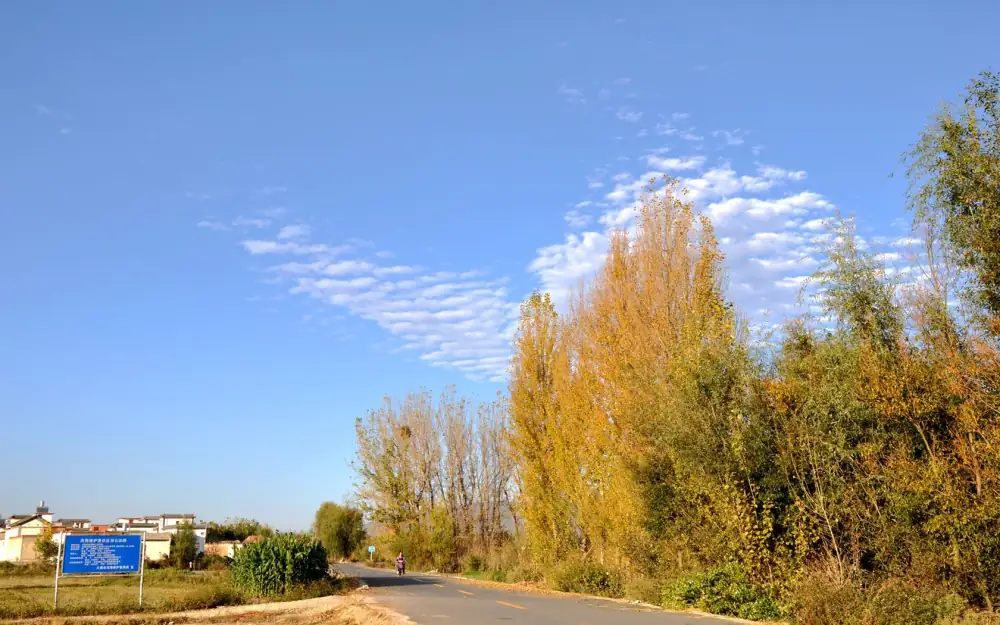
Dianchi Lake (滇池) sits at 1886 metres above sea level on the Yunnan Plateau, spread across 300 square kilometres to the immediate south of Kunming city. On clear days — and Kunming, the “Spring City,” has plenty of those — the lake catches the extraordinary highland light and throws it back as a mirror of blue sky and distant ridgelines.
For much of the 20th century, Dianchi became heavily polluted from industrial and agricultural runoff. The Chinese government invested billions in remediation from the 2000s onward, and the results are visible: water quality has improved substantially, aquatic vegetation has returned, and the bird populations that had dwindled have recovered dramatically.
Today Dianchi Lake is one of the best reasons to spend more than a day in Kunming. Most visitors rush through the city on the way to Lijiang, Dali, or Tiger Leaping Gorge — and they miss something special. The lake is not spectacular in the way Jiuzhaigou or Guilin is spectacular. It’s more quietly rewarding: a place for cycling through lakeside flower fields in the morning, watching thousands of gulls wheel over the water at dusk, and eating fresh-caught fish in a village restaurant as the sun drops behind the western mountains.
Birdwatching at Dianchi Lake
The Black-Headed Gulls: Kunming’s Winter Spectacle
Every year between November and March, tens of thousands of black-headed gulls (Chroicocephalus ridibundus) migrate from Siberia to winter on Dianchi Lake and in Kunming’s central areas. The phenomenon has become one of China’s most famous seasonal wildlife events.
The gulls are not shy. In Haigeng Park (海埂大坝) on the northern lakeshore, they come close enough to take food from your hand — and locals and visitors alike feed them chips, crackers, and small fish. The scene is chaotic, joyous, and unlike any wildlife experience you’ll encounter elsewhere. Thousands of birds fill the air, their calls mixing with the laughter of children and the snap of phone cameras.
Best viewing time: Late December through February. Arrive before 8 AM or after 4 PM for the densest concentrations and best light.
Entry: Haigeng Park is free to enter. The main viewing area is along the Haigeng Dam (海埂大坝) promenade.
Photography tip: Morning light from the eastern shore creates beautiful backlit shots of birds in flight. A long lens (200mm+) helps but isn’t essential.
Black-Necked Cranes and Other Species
The broader Dianchi area and surrounding wetlands host significant populations of migratory waterfowl including:
- Bar-headed geese — arriving from high-altitude Tibetan breeding grounds
- Common cranes — large flocks visible in the morning from the southern lakeshore
- Ruddy shelduck — conspicuous orange-and-buff ducks in large flocks
- Eurasian wigeon and pintail — dabbling ducks by the thousands
The Dongda Wetland Park (东大湿地公园) on the eastern shore has been developed specifically as a bird habitat and observation area. Walking trails lead through reed beds and open water, with observation hides at key points. Best visited in winter mornings. Free entry.
Cycling Around Dianchi Lake
The Dianchi Cycling Circuit
A dedicated cycle path now runs most of the way around the lake’s perimeter — approximately 150km for the full circuit, which most people complete over two days. The path is well-marked, mostly flat or gently rolling, and passes through a varied landscape of urban promenades, fishing villages, wetlands, and flower farms.
Rental options: Multiple bike rental shops operate around Haigeng Park and along the northern lakeshore promenade. Electric bikes (¥60–100 per day) and regular bikes (¥30–50 per day) are available. Helmet inclusion varies — ask specifically.
Recommended Day Routes
Northern and Eastern Shore (40km loop) Starting from Haigeng Park, heading east past Guanshang wetlands to Chenggong, then returning via the eastern expressway cycle lane. Flat, fast, and good for seeing the lake’s scale. Suitable for most fitness levels. Time: 3–4 hours cycling.
Western Shore: Villages and Wetlands (50km one-way) The western shore is the more interesting cycling route, passing through the old fishing villages of Guishan (归山) and Haiyuan (海源), flower cultivation areas, and the ecologically sensitive southern end of the lake. This section requires either returning by the same route or arranging a taxi for the return. Time: full day.
Xishan Mountain Connection (20km) A route connecting the northern shore to Western Hills (西山, Xishan), Kunming’s most dramatic mountain backdrop. The ride to the base of Xishan takes about 1 hour; from there, walking trails lead up through forest to the famous “Dragon Gate” cliff carvings. A full day combining cycling and hiking.
Lakeside Villages Worth Visiting

Haigeng Village (海埂村)
Right beside the gull feeding area, this old fishing community has partially transformed into a clutch of lakeside restaurants and guesthouses, but retains genuine village character in its back streets. The fish here — particularly the local species of small lake carp — are caught in traditional nets at dawn and served for lunch. A bowl of fish soup with rice costs around ¥20.
Liujia Village (刘家村)
A few kilometres south of Haigeng, this village specialises in the cultivation of pu’er tea-scented flowers, particularly chrysanthemum and rose. Flower farms spread over the hillsides above the lake, and from January to April the rose fields (fed with lake water) bloom in extraordinary profusion. Some farms welcome visitors for informal tours (tip ¥10–20).
Guishan (归山镇)
A larger town on the western shore with a weekly market frequented by Bai minority villagers from the surrounding hills. The market (held on the 1st and 15th of each lunar month) sells fresh vegetables, dried fish, minority handicrafts, and medicinal herbs. The town’s own temple complex perched above the lake is rarely visited by tourists and worth the 20-minute walk.
Western Hills (Xishan): Dianchi’s Mountain Backdrop
No visit to Dianchi Lake is complete without spending time on the Western Hills (西山), the dramatic limestone ridge that forms the lake’s western border and one of Kunming’s most iconic skylines.
Dragon Gate (龙门) is the main attraction: a series of Buddhist grottos, pavilions, and tunnels carved directly into the cliff face between 1781 and 1853. The narrow passages and vertiginous viewpoints over the lake are spectacular. Entry: ¥40.
Nie Er Memorial (聂耳墓) — Halfway up the mountain, the grave of Nie Er, composer of China’s national anthem, sits in a garden overlooking the lake. A peaceful spot with good lake views.
Cable car: A gondola runs from near the Dianchi shores to mid-mountain. Single journey ¥60, return ¥100. The walk up (about 2 hours from the lake) is rewarding but strenuous.
Combined itinerary: Cycle along the northern lakeshore in the morning, take the cable car up Xishan, walk the Dragon Gate grottos, then descend on the path through forest and catch a taxi back to your starting point. One excellent day.
Yunnan University Botanical Reservations
The shores of Dianchi have several botanical gardens and nature reserves worth visiting, particularly if you’re interested in Yunnan’s extraordinary floral diversity.
Kunming Botanical Garden (昆明植物园): About 10km north of the lake but worth pairing with a lake visit. Yunnan hosts a disproportionate share of China’s plant species, and this garden attempts to represent them. Rhododendrons bloom from February to April in extraordinary variety. Entry: ¥15.
Dianchi Wetland Natural Area (滇池湿地自然保护区): The southern end of the lake is a formal nature reserve with restricted access in the most sensitive areas. Walking trails run along the periphery, and the scenery of open water fringed with reeds and distant mountains is genuinely beautiful.
Eating Around Dianchi Lake
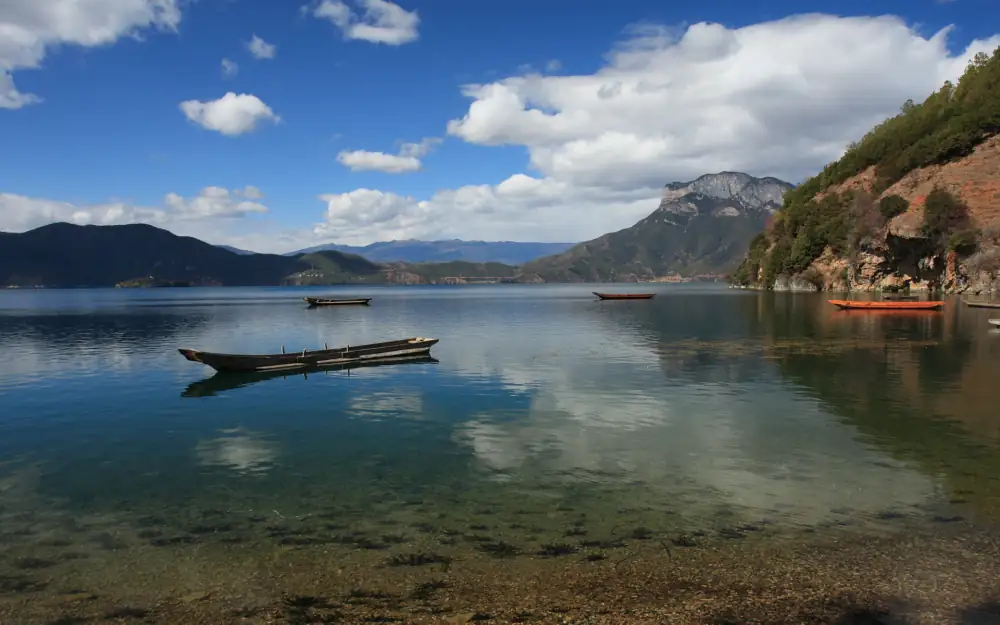
The lake’s culinary speciality is its freshwater fish, though pollution recovery means the most commercially important species are now farmed rather than wild-caught.
Dianchi Carp (滇池鲤鱼): The classic preparation is a simple braise with Yunnan pickled vegetables, ginger, and dried chilli. The white flesh flakes easily and absorbs the sour-spicy sauce beautifully. A whole fish serves 2–3 people. Price: ¥60–120 depending on size and restaurant.
Yunnan Crossing-the-Bridge Noodles (过桥米线): Not a lake-specific dish but ubiquitous in Kunming. You receive a bowl of boiling broth and a tray of raw ingredients — thin-sliced pork, chicken, quail eggs, tofu, greens — which you add to the broth yourself. Named for the Yunnan tradition of carrying noodles across a bridge to a scholar. Price: ¥20–60 for premium versions.
Fried Insects (炸虫子): A Yunnan speciality that adventurous eaters shouldn’t miss. Deep-fried bamboo worms, bee larvae, and grasshoppers are sold at street stalls and specialist restaurants. Crunchy, salty, and surprisingly not unpleasant. ¥15–30 per plate.
Lake Shrimp (湖虾): Tiny freshwater shrimp, flash-fried with salt and Sichuan pepper. Eaten whole — shell, head, and all. Often consumed with draft beer in lakeside restaurants.
Getting to Dianchi Lake from Kunming
Metro
Kunming Metro Line 3 has a station at Haigeng Park (海埂公园), making the northern lakeshore very accessible from the city centre. Journey from the central Kunming Railway Station area takes about 30–40 minutes. Fare: ¥4–6.
Bus
Multiple bus routes connect the city to various lakeshore points. Line 44, 55, 172, and several others serve the Haigeng/Dianchi areas. Fares ¥2.
Taxi/Didi
From central Kunming to Haigeng Park: approximately ¥25–35 by taxi, 20 minutes in light traffic.
Cycling from the City
Dedicated cycle lanes have been developed connecting Kunming city centre to the lake, making a full cycling trip feasible for those staying in the city.
Practical Information
Best season for gulls: November to March Best season for flowers: February to April Best season for cycling: October to April (dry season, mild temperatures) Avoid if possible: The rainy season (June–September) brings humid, frequently wet weather; the lake is still beautiful but cycling and outdoor activities are less comfortable.
Pollution note: Dianchi Lake has recovered significantly but algae blooms still occur in summer on the shallower southern end. The northern shore around Haigeng is consistently cleaner and clearer.
Sunscreen: Kunming’s high altitude means strong UV radiation even on seemingly mild days. Apply liberally before cycling.
Accommodation: Staying in central Kunming (near the train station or Green Lake Park area) gives the best access to both the lake and the city’s other attractions. Airbnb and boutique hotels around Green Lake (翠湖) are particularly popular.