
Table of contents
Open Table of contents
Planning the Erhai Cycling Circuit

Full Circuit vs. Partial
Full circuit (120km): Possible in one long day (10–12 hours on the bike) for fit cyclists. Better as 2 days with a lakeside village overnight. Recommended for cyclists who want the complete experience.
Half circuit (North or South loop, ~60km): A one-day option that covers either the more developed south section or the wilder north section. Best for travelers with limited time.
Specific day trip (30–40km): Cycling from Dali Old Town north to Xizhou and the Butterfly Spring area and back covers the highlights without commitment to the full circuit.
Which Direction?
The standard direction is clockwise (heading north from Dali Old Town, along the western shore past the Cangshan cable car area, around the north end, then down the eastern shore).
This direction has advantages:
- The western shore (under Cangshan) is more scenic and has more interesting villages
- Wind typically blows from the south in the afternoon — going this way means a tailwind home
- Morning light hits the eastern shore of the lake as you head north — good photography
Road Conditions
The lakeside circuit road (环海路, “Circuit Lake Road”) is paved throughout. Traffic is light except near Dali town and Xizhou. The road is flat or gently rolling for most of the circuit — altitude gain is minimal.
Bike Rental in Dali
Dali Old Town bike rental: Multiple rental shops on Huguo Road and side streets near the South Gate. Standard options:
- Standard town bikes: ¥20–30/day — fine for short rides, not ideal for 120km
- Mountain bikes / road bikes: ¥60–100/day — the right choice for the full circuit
- Electric bikes: ¥80–120/day — popular with less sporty riders; allows covering more distance with less effort
What to check before renting:
- Tire condition (check for cracks and adequate pressure)
- Brakes (test before leaving the shop)
- Seat height adjustment
- Whether the shop provides a repair kit or emergency contact
The Route: Key Stops and What to See
Start: Dali Old Town (大理古城)
Exit the Old Town north through the North Gate, join the lakeside road heading north (follow signs for Xizhou or 环海路). The first section passes several of Dali’s upmarket resort developments and the fishing harbor before settling into genuine countryside.
Distance: 0km
Stop 1: Xizhou (喜洲), km 18
Xizhou is Dali’s best-preserved Bai minority town — a compact cluster of traditional Bai architecture (white plaster walls with dark blue painted borders and carved wooden gates) that has retained more authenticity than some of the more commercialized villages.
The Yan Family Compound (严家大院) is the most impressive traditional home open to visitors — entry ¥20, an elaborate multi-courtyard Bai mansion. The morning pancake sellers on the main road make the excellent Xizhou baba (喜洲粑粑), a flaky flatbread with sweet or savory filling. ¥5–8 each.
Don’t miss: The old market square at the center of Xizhou is one of the most authentic town centers in the Dali area. The morning market (6–10am) draws farmers from surrounding villages.
Distance from start: 18km
Stop 2: Butterfly Spring (蝴蝶泉), km 25
A scenic spot (¥42 entry) at the base of the Cangshan mountains known for a spring pool surrounded by a large butterfly tree. The butterfly season (April–May) is when the site is most famous, with clouds of butterflies visible. Outside this season, the spring itself is beautiful but the butterfly element minimal.
Worth a 30-minute visit; skip if budget is a concern or you’re pushing for distance.
Distance from start: 25km
Stop 3: Northern Shore Area, km 40–55
The north end of the lake has the least commercial development and the most authentic fishing village atmosphere. Villages like Shangguanyi (上关) and Mifenshan (米粉山) area are genuinely functional fishing communities.
Erhai Gate (洱源界): At the northern tip, where the river feeding Erhai enters the lake, the landscape opens up into wetland and reed beds. Bird watching here in early morning is rewarding.
This section of road is the quietest and most peaceful — long stretches with no development, just lake, mountains, and the sound of water.
Distance: 40–55km
Stop 4: Shuanglang (双廊), km 65–70
The most picturesque village on the east shore. Shuanglang has become something of an artist colony — cafes, boutique guesthouses, galleries, and a distinctly creative atmosphere that makes it unlike any other lakeside village. The old fishing village architecture is mostly intact, and the view west across the lake to Cangshan Mountain is arguably the finest in the entire circuit.
Shuanglang is the best overnight stop for cyclists doing the 2-day version. Multiple guesthouses from ¥150–400/night.
Best activity: Walk the village lanes at dusk when the light is on Cangshan, then eat fresh fish at one of the lakeside restaurants. The whole fish braised with local herbs (清烤鱼) is the signature dish. ¥80–120 for a whole fish serving two.
Distance from start: 65–70km
Stop 5: Wase Village (挖色), km 85
A traditional fishing and trading village with a Monday market that’s one of the most authentic in the Dali area. If your cycling day falls on a Monday, this is a significant add. The old town market draws Bai farmers from the surrounding hills selling vegetables, livestock, and local goods.
The Wase ferry (挖色渡口) offers a shortcut back to Dali Town across the lake (¥3/person + ¥10 for bicycle, 30 minutes). Useful if you’re short on time or energy for the southern section.
Distance from start: 85km
Stop 6: Southern Shore and Return to Dali (km 85–120)
The southern shore has the most tourist development — several large resort hotels, organized pleasure boat piers, and the main Cangshan-Erhai scenic area management zone. It’s less interesting cycling than the north, but unavoidable for the full circuit.
From Haidong (海东) on the southeast shore, the road curves back west toward Dali town. The final approach through the Cangshan foothills gives views looking back north across the full length of the lake.
Final distance: 120km total circuit
Two-Day Itinerary Recommendation
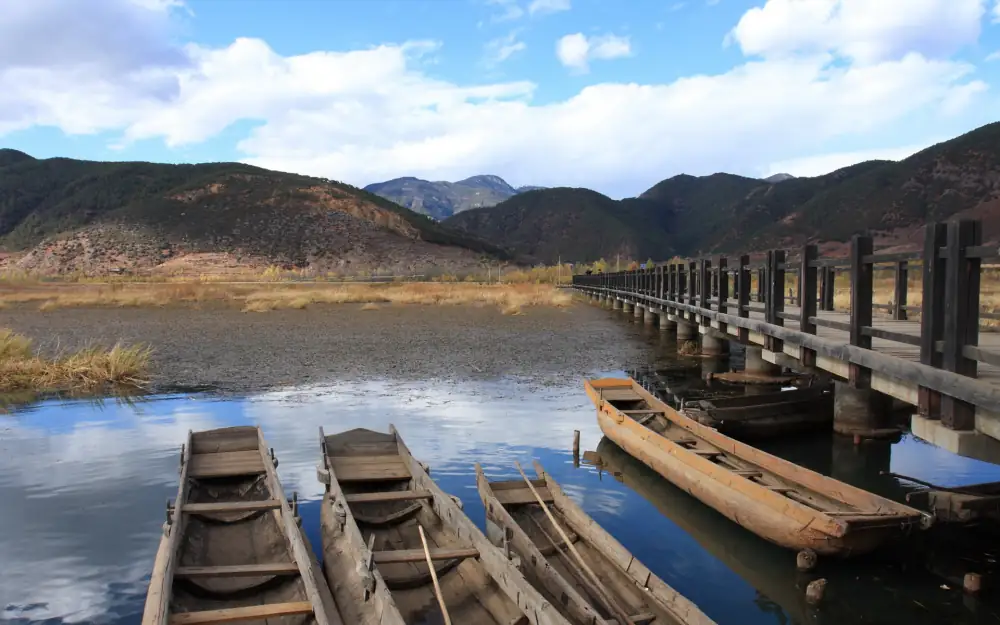
Day 1: Dali Old Town → Xizhou → Butterfly Spring → Northern Shore → Shuanglang (overnight). Total distance: ~70km, 5–7 hours including stops.
Day 2: Shuanglang → Wase (morning market if Monday) → Southern Shore → Dali. Total distance: ~50km, 3–5 hours.
Practical Information
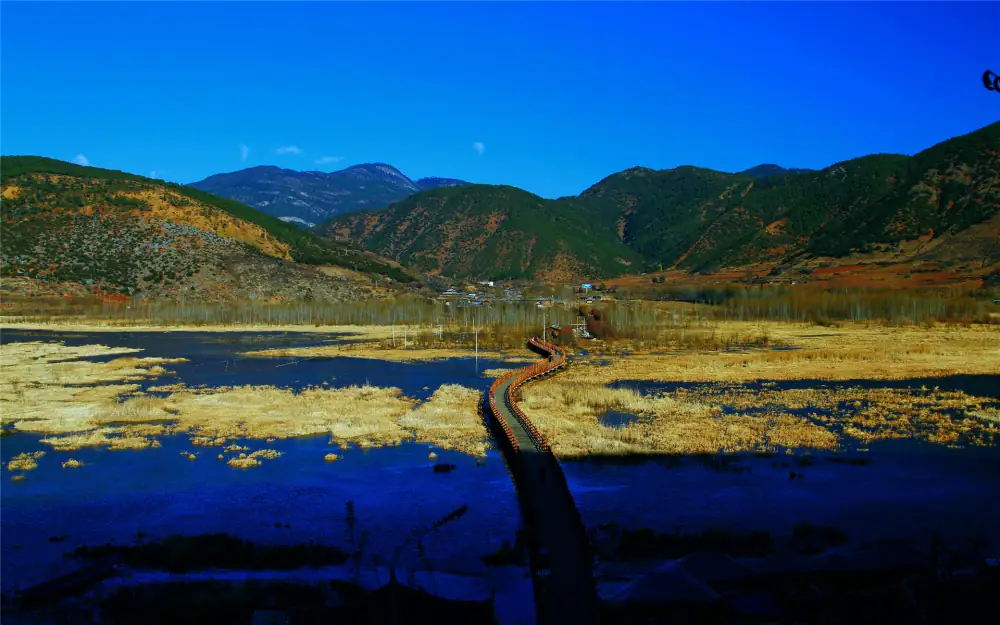
Start time: Leave Dali Old Town by 7:30–8am. Early start gives you the morning light on the water and gets the northern sections before any afternoon headwinds.
Food on the route: Small restaurants and noodle shops are available in every village. Carry some snacks but you won’t go hungry. A full meal at a village restaurant: ¥15–30.
Water: Carry at least 2 liters. Water can be purchased in every village (¥2–3).
Elevation: The circuit is at 1,972m altitude — not extreme, but you’ll feel slightly shorter of breath on any uphill. Pace yourself.
Weather: The best conditions are October–June. July–August is monsoon season with afternoon rain likely. The circuit is possible in rain (road quality is good) but less enjoyable. Winter (November–February) gives very clear skies but cold mornings (5–10°C) — wear layers.
Repair basics: Bring a basic puncture repair kit or ensure your rental shop has a local contacts list for roadside assistance.
Best Time to Visit Dali Overall
March: Camellia flowers bloom against the white Bai architecture — stunning April–May: Butterfly season, wildflowers, excellent cycling conditions July: Local Dali Torch Festival (火把节) — spectacular community event, crowded October: Golden autumn light, clear skies, ideal cycling weather December–January: Clear, cold, quiet — most authentic local atmosphere
Getting to Dali
By train:
- From Kunming to Dali (大理站): High-speed trains run frequently, 2 hours, ¥75–120.
- From Lijiang: No direct train; 2-hour bus or 1.5-hour drive.
By bus:
- From Kunming Bus Terminal: 3.5–4 hours, ¥80–100
By air:
- Dali Airport (大理机场, DLU) has connections from major cities including Beijing, Shanghai, Chengdu, Guangzhou. From the airport, buses and taxis reach Dali Old Town (30 minutes, ¥30 taxi).
Cycling Erhai is the kind of experience that stays with you long after the trip. The combination of landscape scale, cultural immersion in Bai villages, and the simple pleasure of two wheels on a good road makes it one of the best ways to understand what the Yunnan highlands actually feel like beyond the postcard surface.