
Dali offers one of China’s most comfortable and distinctive travel environments — a small old town of Bai minority architecture surrounded by mountains, with Erhai Lake (洱海) stretching to the east and the Cangshan mountains rising to the west. The accommodation decision here is genuinely interesting: the old town’s guesthouses have character and convenience; the lakeside boutique properties have beauty and privacy. Neither is obviously correct, and the right choice depends on what kind of trip you’re making.
Table of contents
Open Table of contents
The Dali Accommodation Divide
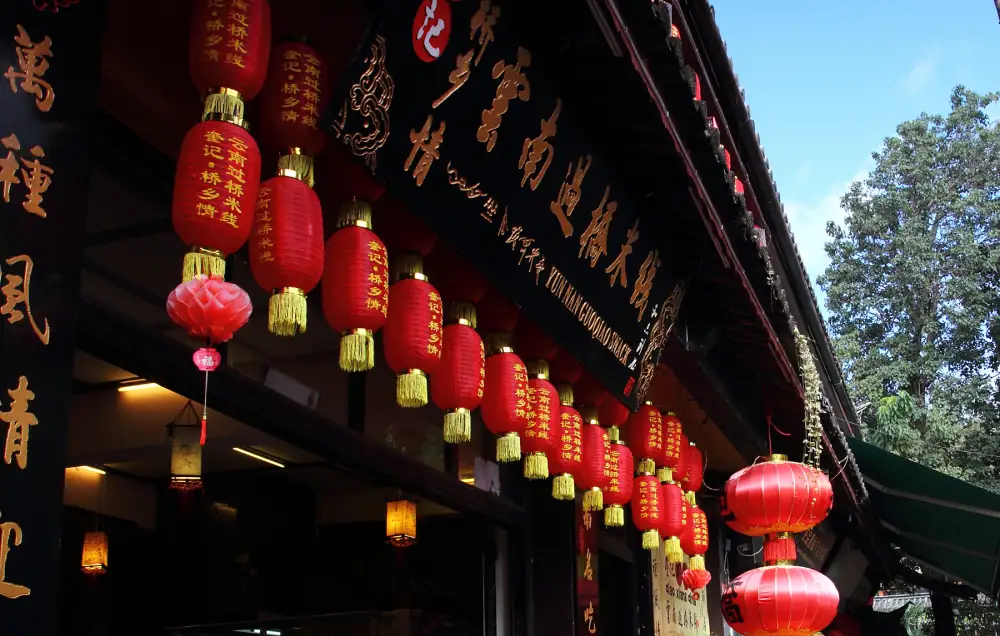
Old Town (古城): Character and Convenience
Dali Old Town (大理古城) is a walled town of traditional Bai architecture — white-and-black painted walls, curved tiled roofs, ornate stone gates — that operates as a lively residential and tourist area simultaneously. Unlike some preserved Chinese towns that feel museumified, Dali’s old town has genuine commercial life: local cafés, Yunnan coffee shops, independent bookshops, restaurants, craft shops, and a significant population of long-term foreign residents who came for a visit and stayed for a year.
The streets within the old town walls are walkable, car traffic is limited, and everything worth doing in Dali is within 15 minutes walk. This convenience is the main argument for staying here.
The character of old town accommodation: The best guesthouses are in converted Bai family homes — open courtyards, stone floors, wooden balconies overlooking garden areas, the characteristic black-and-white Bai colour scheme. The courtyard is the social heart of these properties in good weather, which in Dali (generally sunny) is most of the year.
Erhai Lake: Beauty and Retreat
The Erhai Lake (洱海) shoreline, 2-4km east of the old town, has become one of China’s most fashionable boutique hotel zones over the past decade. Designers and architects have built genuinely innovative properties taking advantage of the extraordinary lake and mountain setting — Cangshan mountains reflected in the lake, clear high-altitude light (Dali is at 1,900m), extraordinary sunsets.
The trade-off: lakeside properties are typically 15-30 minutes by taxi from the old town. You’re choosing a more beautiful and private setting at the cost of spontaneous access to Dali’s restaurants and street life.
Old Town Accommodation Guide
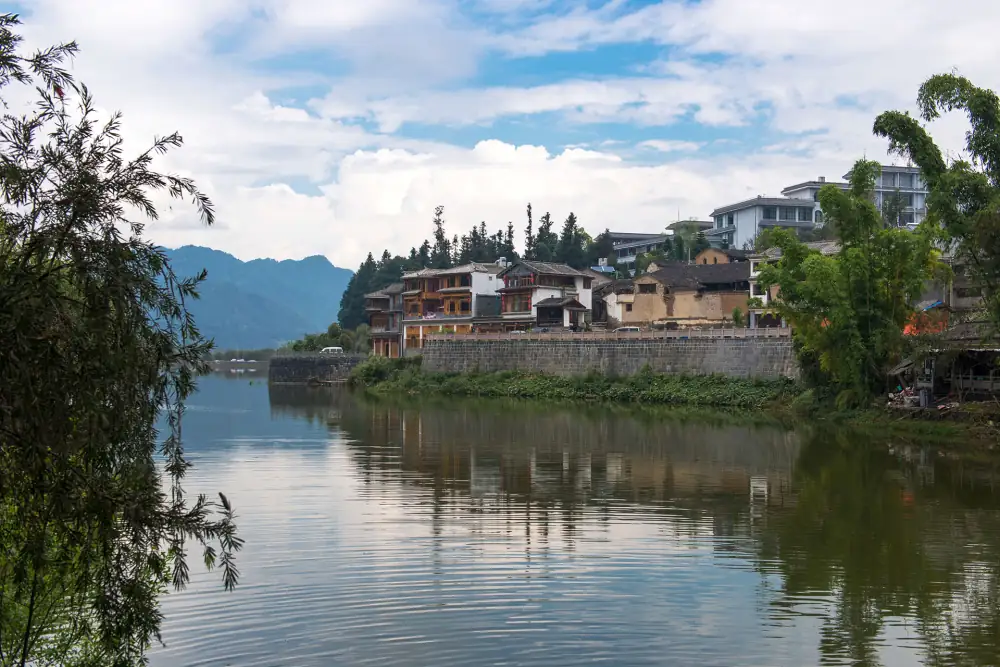
Where Inside the Old Town
The old town is compact enough that any location within the walls is good. Some distinctions:
Near the South Gate (南城门): The main tourist entry point. Convenient but the most commercially dense area, with tourist restaurants and souvenir shops at the highest concentration. Slightly noisier.
Around Renmin Road (人民路) and Huguo Road: The two main commercial streets running east-west through the old town. Properties within a few lanes of these have excellent restaurant and café access.
Northern old town: Quieter, more residential, slightly fewer tourists. Good for people who want genuine atmosphere without the main street commercial density.
The Bai Village area northwest of the old town: Traditional Bai villages immediately outside the northern gate have guesthouses with more space and lower prices, within 10-minute bicycle ride of town.
Price Ranges in Old Town
Budget guesthouses (¥120-280/night): Traditional buildings with the right architecture but smaller rooms, possibly shared bathrooms, more basic facilities. Still often very atmospheric — the courtyard is what you’re paying for.
Mid-range (¥280-600/night): Proper private bathrooms, better room furnishing, well-maintained courtyards with planting. This range gets you genuinely excellent accommodation in old town Dali.
Premium old town (¥600-1,200/night): Carefully restored properties, the largest and most historically significant rooms, professional hospitality staff. Landscape Hotel (景色客栈) and similar names are in this bracket.
Specific Old Town Recommendations
Jim’s Guesthouse (吉姆客栈) — one of the oldest and most established foreign-friendly guesthouses in Dali. Classic courtyard format, helpful English-speaking staff, good information for exploring the region. ¥280-480/night.
The Loft Youth Hostel (阁楼) — the best hostel option in the old town. Rooftop with views of Cangshan and Erhai (on clear days). Dorm beds ¥70-100/night, private rooms ¥220-380/night.
Landscape Hotel (景色精品酒店) — a well-designed boutique property in a restored Bai courtyard building. The public spaces are excellent; rooms are characterful. ¥600-1,000/night.
Erhai Lake Boutique Properties
The Setting Argument
On a clear afternoon, Erhai Lake reflects the Cangshan mountains in a way that’s strikingly beautiful. The boutique properties built on this setting capitalise on it fully — private terraces, floor-to-ceiling glass walls facing the lake, sunset-viewing rooftops.
The new wave of Erhai boutiques (built mainly post-2015) have attracted significant attention from Chinese lifestyle media and high-end travel photography. Several have become destinations in themselves.
Price Ranges at Erhai
Erhai boutiques are more expensive than old town equivalents:
Mid-range (¥600-1,200/night): The smaller boutique properties, some in converted farmhouses, with lake views from terraces.
Premium (¥1,200-3,500/night): The architecturally ambitious properties with the most spectacular lake views. Often includes breakfast and sometimes dinner.
The Transport Reality
Getting from an Erhai boutique to Dali old town:
- Taxi: ¥20-40 depending on exact location
- Bicycle: 15-30 minutes if you’re comfortable with the road
- Electric bicycle (hired from the hotel): Most practical for half-day old town visits
If you’re at an Erhai property for 3+ nights, this isn’t a problem. If you’re only staying 1-2 nights and want to spend evening time in old town restaurants and bars, the commute becomes slightly annoying.
Erhai Lake Hotel Areas
Cai Village (才村) and nearby: The eastern lakeside near the old town. Shortest distance to old town (15 minutes by taxi). More modest properties than the further lake areas.
Xizhou area (喜洲): Further north, traditionally the most beautiful lakeside area with best-preserved Bai villages. The boutique hotels here are the most architecturally interesting. 25-40 minutes from Dali old town. Prices ¥1,000-4,000/night for premium properties.
Shuanglang area (双廊): The furthest developed lakeside village. Used to be the most fashionable location. Still has excellent boutique options but the weekend crowds have increased. ¥800-3,000/night.
Which to Choose: The Decision Framework
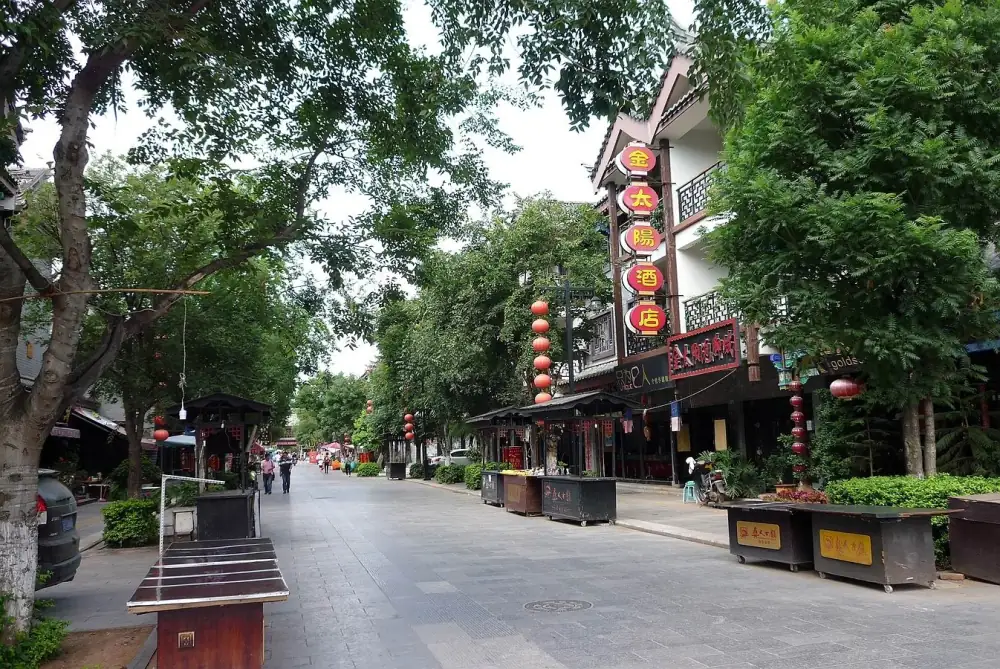
Choose old town if:
- This is a shorter trip (2-3 days) and you want to maximise Dali’s food and culture access
- You’re prioritising walking exploration over scenic setting
- You’re budget to mid-range focused
- You want to be around other travellers and the social scene
Choose Erhai lakeside if:
- You’re staying 4+ nights and want a genuinely beautiful retreat
- You’re travelling as a couple and the romantic setting matters
- Your budget can accommodate ¥1,000+/night
- You have specific interest in the lake (cycling, kayaking, sunset watching)
Split: Many visitors do 2 nights in old town + 2 nights on the lake, which is the most satisfying combination but requires packing twice.
Practical Notes
Climate: Dali has China’s most pleasant climate — mild year-round, sunshine most days, rarely too hot or cold. The high altitude (1,900m) means evenings can be cool even in summer. Pack a light jacket.
Getting to Dali: Dali Airport (DAL) has flights from Kunming, Chengdu, Beijing, and Shanghai. Or take the high-speed train to Dali station, then taxi to old town (¥25-40).
The local food reason to stay in town: Yunnan coffee (云南咖啡) shops are concentrated in the old town. Bai cuisine (cold dishes, sour fish, goat cheese) is best in old town restaurants. The morning market for fresh Yunnan produce is a few streets from the north gate.