
Dalian sits at the tip of the Liaodong Peninsula, surrounded by the Yellow Sea on three sides. It was built first by the Russians (who called it Dalny) at the turn of the 20th century as their warm-water port, then by the Japanese (who renamed it Dairen) after the Russo-Japanese War of 1905, and only became fully Chinese in 1945. The colonial legacy is obvious in the architecture — grand European-style buildings, wide boulevards with roundabouts, and street names that still reference the imperial period.
It’s sometimes compared to a Chinese Marseille: a port city with good seafood, colonial architecture, beaches, and a confident, outward-looking character. The comparison isn’t perfect but captures something true.
Table of contents
Open Table of contents
Colonial Architecture Districts
Zhongshan Square (中山广场)
The centerpiece of Russian urban planning in Dalian. A perfect circular plaza with ten wide avenues radiating outward like a star, surrounded by ten Beaux-Arts and neo-classical buildings from the Russian and Japanese periods. The buildings are still in use — banks, government offices, hotels — and the square is genuinely impressive for its consistency and scale.
The Bank of China building (formerly the Yokohama Specie Bank) and the Dalian Hotel are the finest individual buildings around the square. The square itself is free to walk; the buildings are generally working offices.
Russian Street (俄罗斯风情街)
A somewhat touristy stretch of shops in Russian-style buildings selling Russian goods, nesting dolls, amber, and vodka. More shopping experience than architecture immersion. Worth a walk but not a destination in itself.
Former Japanese-Era Buildings
The area around People’s Square (人民广场) retains several Japanese-period administrative buildings in a European-influenced style. The old Dalian Railway Station (大连火车站) — still in use — is a fine example.
Victory Square Area (胜利广场)
Underground shopping complex with the modern city above, but the streets around it have several preserved Republican-era commercial buildings.
Beaches
Dalian has several public beaches along its southern coast. The water is cleaner and clearer here than at most Chinese coastal cities.
Xinghai Beach (星海广场): The largest beach in the city, in the southwest. Wide, well-maintained, crowded in summer. The adjacent Xinghai Square is one of the largest public squares in the world. Beach entry free; facilities available. Best for a beach day with good infrastructure.
Bangchuidao Beach (棒槌岛): In the eastern suburbs, a premium beach area with clearer water than Xinghai. Historically restricted (former state guesthouse area for senior officials) but now open to the public. Entry ¥10. Quieter and more scenic than the central beaches.
Jinshitan Beach (金石滩): About 40km northeast of the city, this is a “golden stone beach” where the coastal rock formations are remarkable — bizarre geological formations in red, yellow, and grey stone exposed by erosion. Scenic drive along the coast. Entry ¥80 for the main scenic area. Combination with a seafood lunch in the villages nearby.
Fujiazhuang Beach (傅家庄海水浴场): Close to the city centre, popular with locals, good for swimming July–September. Free entry.
Seafood
This is the real reason to visit Dalian. The city sits at the junction of the Yellow Sea and Bohai Sea, and the seafood freshness and variety is exceptional even by Chinese coastal standards.
Sea urchin (海胆): Dalian sea urchin is famous throughout China — sweeter and creamier than most. Available July–August at peak season. Raw in the shell from markets, ¥30–80 each depending on size.
Scallops (扇贝): Dalian is China’s major scallop farming region. Fresh grilled scallops from seafood stalls: ¥8–15 each.
Clams and razor clams (蛤蜊/蛏子): Extremely cheap and very fresh; stir-fried with garlic, ¥15–30 per plate.
Geoduck clams (象拔蚌): Enormous clams, very delicate flavour when fresh; ¥80–200 for a piece at restaurants.
Crabs (梭子蟹): Dalian swimming crabs are excellent in summer; whole crabs ¥20–60 each at markets.
Where to eat seafood:
- Qingniwa Fish Market (青泥洼海鲜市场): Buy fresh seafood and take it to adjacent restaurants for cooking (¥20–40 cooking fee). The freshest and cheapest option.
- Xinghai Seafood Street: Multiple restaurants near Xinghai Beach; slightly more expensive but with terrace seating.
- Shahekou Market Area: The wholesale seafood market; arrive at 7–9am for the freshest selection.
Getting Around Dalian

Dalian has a good metro system (Lines 1–5) and a tram network (有轨电车) — actual trams, not tourist rides — on two routes through the city. The trams are good for seeing the colonial architecture at a slow pace.
Tram Line 201: Runs from the railway station through the old colonial centre to Xinghai Square. ¥2 flat fare.
Taxis: Base fare ¥10 for first 3km. Didi works throughout the city.
Getting to Dalian
From Beijing: Flights, about 1.5 hours. Or high-speed train (not yet direct — requires transfer), about 6+ hours. Flying is strongly recommended.
From Shenyang: High-speed train, about 1.5–2 hours, ¥90–140.
By ferry: Regular ferry services from Dalian to Yantai (Shandong), Tianjin, Yingkou, and occasionally Incheon (South Korea). The Dalian-Yantai ferry is a practical option for crossing between the Shandong and Liaoning coasts — about 8 hours overnight.
Dalian Zhoushuizi International Airport (DLC) handles all domestic and international flights. Metro Line 2 connects the airport to the city centre (30 minutes, ¥5).
Day Trips from Dalian
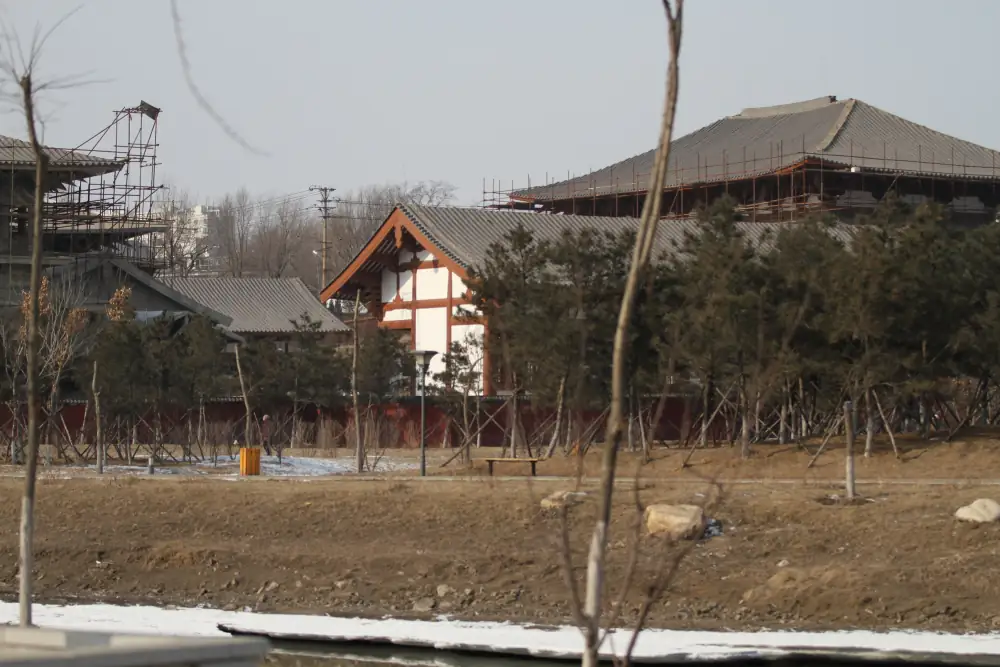
Lüshun (旅顺, formerly Port Arthur): About 45 minutes south, the site of the Russian naval base and the famous Russian-Japanese battles of 1904–1905. The Russian Cemetery, the Japanese memorial, and the Baiyu Mountain fortifications are genuinely moving historical sites. Some areas still require a permit (check current requirements).
Bingyu Valley (冰峪沟): About 100km northeast, a dramatic gorge with boating and hiking. A popular summer day trip.
Where to Stay
Central area (near Zhongshan Square): Most atmospheric; easy access to history, food, and metro. Colonial-era hotels like the Dalian Hotel (大连宾馆) (¥400–700/night, genuinely in a historic building from 1914) or modern chains.
Xinghai Beach area: Better for beach access; 20–30 minutes from the centre by metro. Grand Hyatt Dalian (¥900–1,600/night) and multiple other international hotels.
Budget: Hostels and budget hotels near Zhongshan Square or the university area; ¥150–350/night.
When to Visit
May–June: Best weather — mild (18–26°C), before peak tourist season, good for beach walks without crowds.
July–August: Hot, humid, peak season. Beaches packed with Chinese tourists. Seafood at its best.
September–October: Excellent — warm enough to swim, clearer skies, crabs in season.
Winter (November–March): Cold (0°C to -10°C) but significantly milder than Harbin or Changchun. Good off-season value.