
Dandong (丹东) sits on the Yalu River (鸭绿江) in the southeastern corner of Liaoning Province, separated from North Korea’s Sinuiju (新义州) by only the width of the river. At around 800,000 people, it’s China’s largest border city with the DPRK, and the economic and human geography of that position defines the city’s character in ways that make it one of China’s most unusual urban destinations.
The draw for visitors is primarily experiential rather than strictly aesthetic: the ability to stand on the riverfront promenade and look directly across at North Korean buildings, streets, and — occasionally — people going about their daily lives on the other side. The famous Broken Bridge (断桥, bombed by US forces during the Korean War) reaches halfway across the river and stops, offering a visceral symbol of the suspended state of the Korean conflict.
Beyond the Korea-watching tourism, Dandong has Tiger Mountain Great Wall (虎山长城) — a recently excavated section of the eastern terminus of the Ming Dynasty Great Wall — and a dramatic natural landscape where the Yalu River cuts through mountain terrain.
Table of contents
Open Table of contents
Getting to Dandong
By high-speed train:
- From Shenyang: About 1.5–2 hours by express train; ¥70–130; frequent departures
- From Beijing: About 4 hours by high-speed (via Shenyang); ¥250–350
- From Dalian: About 2.5 hours; ¥100–160
Dandong Railway Station is in the city center, walkable to the main riverfront sights.
By bus:
- From Shenyang: About 3 hours by express bus; ¥80–100
By air:
- Dandong Langtou Airport has flights from Beijing, Shanghai, and Guangzhou; relatively limited schedule; useful for long-haul arrivals
The Broken Bridge (断桥)
The Broken Bridge (also called Yalu River Broken Bridge, 鸭绿江断桥) is Dandong’s most iconic sight and one of the most unusual landmarks in China.
History: Two bridges were built across the Yalu River during the Japanese occupation period to connect Manchuria with Korea. Both were used extensively by Chinese and North Korean forces during the Korean War (1950–1953). US Air Force bombing in November 1950 destroyed both bridges. The Chinese side of one bridge was subsequently repaired and renamed the Friendship Bridge (中朝友谊桥) — it remains the primary cargo and passenger crossing between China and North Korea, carrying trucks loaded with Chinese goods. The other bridge was left as a bombed-out stub extending to mid-river, as a permanent reminder of the war.
Visiting the Broken Bridge:
- Walk out to the end of the stub — approximately 600 meters from the Chinese bank to the bombing point where the bridge stops
- From the bridge end, you’re about 100 meters from North Korean territory; the opposite bank and Sinuiju’s buildings are clearly visible
- The bridge is a short walk from Dandong Railway Station
- Entry: ¥30 per person; open 7:00am–6:00pm daily
What you can see from the bridge:
- Sinuiju’s industrial waterfront; concrete apartment buildings; some industrial facilities
- On clear days, the movement of vehicles and occasionally people on the North Korean side
- The functional Friendship Bridge with occasional vehicles crossing
- North Korean patrol boats sometimes visible
Photography: Photography from the bridge is permitted and widely practiced. The North Korean side can be photographed freely from the bridge.
Yalu River Boat Tours (鸭绿江游船)
The most popular activity in Dandong is taking a small boat tour along the Yalu River, which takes you within 30–50 meters of the North Korean bank — considerably closer than the Broken Bridge viewing.
The standard tour:
- Duration: 30–60 minutes
- The boat travels upstream (east) along the Chinese bank, then crosses to run parallel to the North Korean side, then returns
- From boat level on the North Korean side, you can see residential buildings, industrial plants, people working in riverside fields, and occasionally North Korean patrol boats
- No photography rules are not enforced during boat tours — most tourists photograph freely, though a sign on some boats requests that cameras be put away (inconsistently)
- Cost: ¥80–120 per person for the basic tour; ¥200–350 for a private speedboat tour that gets somewhat closer
Where to board: Multiple operators at the dock area west of the Broken Bridge; the scene is somewhat chaotic with many touts. Prices are negotiable to a degree.
Evening tours: Some operators run illuminated evening tours; the Korean side is largely dark at night (power supply issues) while the Chinese bank is bright — the contrast is itself striking.
Tiger Mountain Great Wall (虎山长城)
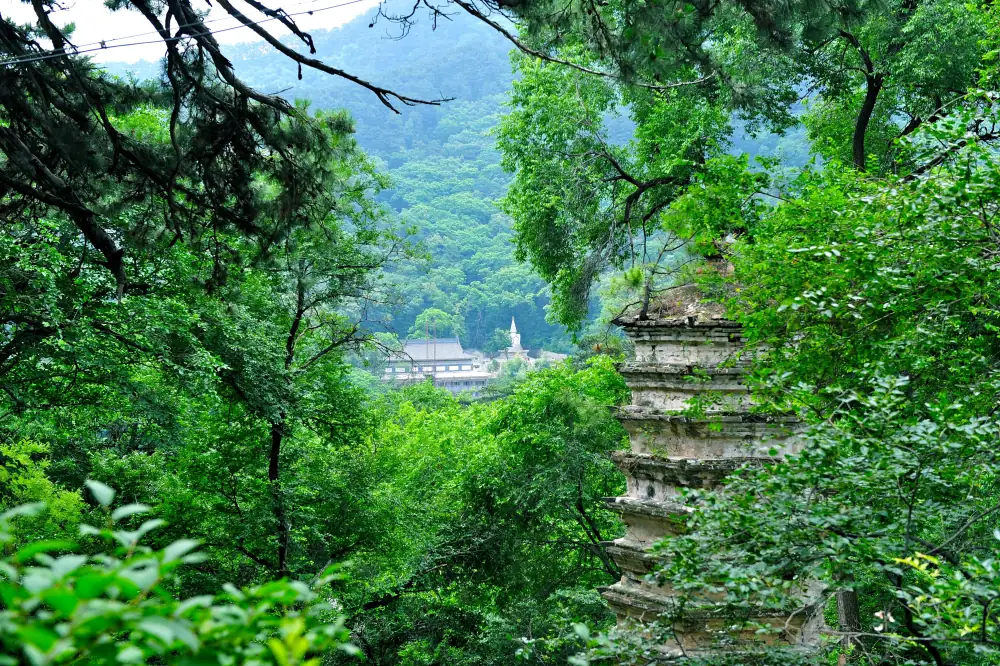
About 20km northeast of Dandong city, Tiger Mountain is the site of the eastern terminus of the Ming Dynasty Great Wall — the endpoint from which the wall begins its 6,000km journey westward to Jiayuguan in Gansu.
Important context: The wall at Tiger Mountain was excavated and reconstructed in the 1990s and 2000s. The original Ming-era wall foundations were identified and restored, but the upper portions of most wall sections are new construction on old foundations. The authenticity is debated — some historians note that the Great Wall’s traditional eastern terminus was at Shanhaiguan (山海关), and the Tiger Mountain claim is relatively recent. Nevertheless, the archaeological evidence of wall foundations at this site is real, and the mountain scenery is excellent regardless of the historiography.
The wall and fortress:
- The main wall section at Tiger Mountain runs about 1,250 meters along a ridge
- The fortress tower at the summit offers views across the Yalu River valley
- The wall literally runs to the river’s edge — the eastern terminus watchtower stands on the riverbank, looking across at North Korea
Entry: ¥60 per person
Opening hours: 8:00am–5:00pm
Getting there: Bus 203 from Dandong city center; about 40 minutes. Taxis about ¥40–60.
The Tiger Mountain area: The mountain and its valley setting are genuinely scenic regardless of the wall controversy — dense forest, river views, and the dramatic ridge terrain of the Yalu River valley. A round trip walk including the wall section takes about 2 hours.
Dandong Korean War Museum (抗美援朝纪念馆)
The museum commemorating China’s participation in the Korean War (which China officially calls “the War to Resist US Aggression and Aid Korea”) is one of the more significant in China from a historical documentation standpoint, even if the framing is naturally one-sided.
The collection:
- Extensive photographic documentation of Chinese People’s Volunteer Army operations
- Military equipment: artillery, aircraft, vehicles
- Personal items of soldiers and commanders
- Maps and operational documentation
- The role of the Yalu River crossing in 1950 is documented in detail
Entry: Free; ID required
Hours: 9:00am–5:00pm (closed Mondays)
Location: On the riverfront, about 1km from the Broken Bridge; walkable
The North Korea Tourism Question
Dandong periodically serves as a transit point for organized tours to North Korea. The status of this tourism is subject to periodic changes and border policy shifts:
Current status (2026): Cross-border tourism to North Korea from Dandong has been intermittent since the COVID-related border closures in 2020. Check the current status through a registered North Korea tour operator (DPRK Info, Young Pioneer Tours, and Koryo Tours are the main English-language operators) before making plans.
If tours are operating:
- Standard options range from 4-day group tours (entering via Dandong) to specialist programs
- All foreign visitors require a North Korean visa arranged through an approved travel agency
- Solo visits without a sanctioned tour are not permitted under any circumstances
The Riverfront Promenade & Night Market
Dandong’s riverside park (江滨公园) extends several kilometers west of the Broken Bridge along the Chinese bank. The evening riverfront walk is a popular local activity:
- Viewing scopes along the railing for closer observation of the North Korean bank
- Illuminated fountain shows at the park’s western end
- Night market with Dandong’s distinctive food specialties
- Cruise boat boarding points
Dandong Food
Dandong’s food scene reflects its border position — Korean cuisine is widely available and excellent:
Naengmyeon (冷面): Korean cold buckwheat noodles in a chilled broth with vinegar, mustard, and pickled vegetables. Dandong cold noodles are considered among the best outside Korea.
Barbecue (烤肉): Korean-style BBQ restaurants are widespread; thinly sliced marinated beef (bulgogi) and pork belly are the staples. Expect to pay ¥80–150 per person for a full meal.
Yellow Croaker (黄花鱼): The Yalu River and nearby Yellow Sea coast produce excellent yellow croaker; the local stewed preparation with soy and ginger is the classic way to eat it.
Seafood: Dandong’s position near the sea means excellent fresh seafood at the riverside restaurants and night market — oysters, clams, shrimp, and crab at relatively low prices (¥80–200/person for a full seafood meal).
Practical Tips
Best time to visit: Spring (April–June) and Autumn (September–November) for most activities. Tiger Mountain is good year-round except in heavy snow. Winter swan viewing in the frozen Yalu River sections is an additional incentive for December–February visits.
Accommodation: Multiple mid-range hotels in the city center (¥150–350/night); book riverside-facing rooms for views of the Korean side from your window (genuinely worthwhile).
Border awareness: All photography and activities are on the Chinese side; do not attempt to approach the river outside designated viewing areas or do anything that could be construed as attempting cross-border contact.
Day trip from Shenyang: Dandong works as a day trip from Shenyang (1.5 hours each way), but an overnight stay allows both the Broken Bridge and Tiger Mountain in a relaxed schedule.