
Xingcheng (兴城) sits on the Bohai Sea coast of southwestern Liaoning, about 80km southwest of Jinzhou and 300km from Beijing. It has something that no other city in China can claim: a Ming Dynasty city wall that is nearly 100% intact. While Pingyao’s walls are more famous, they were substantially rebuilt; Xingcheng’s wall is the original Ming structure, maintained and restored but not reconstructed, and it encircles a living old town rather than a museumified tourist zone.
The city also has a beach on the Bohai Sea, natural hot springs, and a position on the main rail line between Beijing and Shenyang that makes it an easy stop for anyone traveling through the northeast. Despite all of this, Xingcheng receives a fraction of the international visitors that Pingyao attracts — partly because it’s less marketed, partly because northeast China is simply less visited than Shanxi.
Table of contents
Open Table of contents
Getting to Xingcheng
By train:
- From Beijing: About 3.5–4 hours by express train; ¥120–180; multiple daily departures
- From Shenyang: About 2.5 hours; ¥80–120
- From Jinzhou: About 40 minutes; ¥15–25
- From Dalian: About 4 hours; ¥120–180
- Xingcheng Station is about 2km from the old town; taxi ¥10
By bus:
- From Jinzhou: About 1 hour; ¥20–30
- From Huludao (葫芦岛): About 30 minutes; ¥10–15
By car:
- From Beijing via G1 expressway: About 3.5 hours
- From Shenyang: About 3 hours
The Ming Dynasty City Wall (明代古城墙)
Xingcheng’s city wall was built in 1428 AD during the Xuande reign of the Ming Dynasty, as part of the Ming defensive system against Mongol incursions. The wall is rectangular, measuring about 850m × 900m, with four gates (East, West, South, North) and 52 towers along the circuit.
What makes it exceptional:
- The wall is essentially intact — you can walk the entire 3.2km circuit on the rampart top
- The four gates (东南西北四门) are original structures with arched passageways and wooden gate towers
- The wall survives to its original height of about 10 meters, with a width at the top of about 5 meters
- Unlike Pingyao, the interior is a functioning neighborhood, not solely a tourist zone
Walking the wall:
- Access via any of the four gates; staircases lead to the rampart top
- The full circuit takes about 45 minutes at a comfortable walking pace
- Views from the wall top: the old town’s courtyard rooftops inside; the modern city and sea outside
- The south gate tower provides the best overall view
Entry fee: ¥50 per person for the wall circuit (includes gate tower access)
Opening hours: 8:00am–5:30pm
The old town inside the walls: The area within the walls is a living neighborhood with a mix of traditional courtyard homes and more recent structures. Several historical buildings are preserved:
- General Zuyu Temple (祖大寿祠堂): Memorial to a Ming general who defended the city during the Manchu invasions
- Confucian Temple (文庙): A well-preserved Qing Dynasty Confucian academy building; entry ¥15
- The Drum Tower (鼓楼): In the center of the old town; serves as a landmark visible from the wall
Street life: The old town streets are active with daily commerce — produce markets, small restaurants, and barbershops — giving the enclosed city a character that feels authentic rather than curated.
Xingcheng Beach (兴城海滨)
About 3km south of the old town, Xingcheng has a 1.5km stretch of sandy beach on the Bohai Sea. The water is not tropical-clear but the sand is decent, the facilities are adequate, and the beach is significantly less developed and crowded than Dalian’s or Qingdao’s.
Beach season: July–August (water temperature reaches 22–24°C) Beach facilities: Umbrella and chair rentals (¥30–50/day); showers (¥5); food stalls Juhua Island (菊花岛): A small island 15km offshore reachable by boat (¥80 round trip, 40 minutes each way); has beaches, a lighthouse, and a small fishing community; worth a day trip in summer
Off-season: The beach is quiet but pleasant for walking from May–June and September–October; water too cold for swimming but the sea air and views are enjoyable.
Xingcheng Hot Springs (兴城温泉)
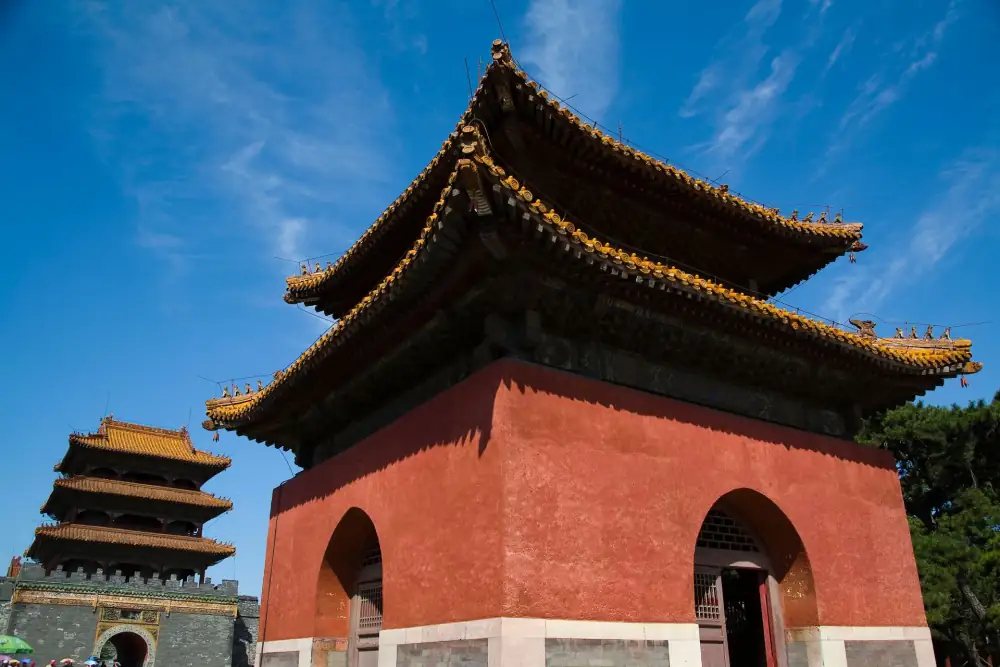
Xingcheng has natural hot springs with water temperatures of 52–58°C, rich in minerals. The springs have been used since the Ming Dynasty and were developed as a resort during the Japanese occupation period.
Where to soak:
- Xingcheng Hot Spring Resort (兴城温泉疗养区): Multiple hotels with hot spring pools; a soak costs ¥50–100 at most facilities; overnight packages available (¥300–600/night including hot spring access)
- Public hot spring pools: Several traditional bathhouses in the hot spring district; ¥20–40 per person; basic facilities but authentic
Water properties: The spring water contains sodium, calcium, and silica; the mineral content is considered therapeutic for skin conditions and joint problems. The water has a slight sulfur smell — characteristic and harmless.
Other Sights
Shoushan Mountain (首山): A 330m hill about 3km north of the old town with a Taoist temple at the summit and panoramic views of the city, wall, and coast. A 1-hour hike each way; free access.
Longhui Temple (龙回寺): A Buddhist temple complex on the hillside north of the city; active with resident monks; the main hall dates to the Qing Dynasty.
Ming Dynasty defensive system: Xingcheng was part of the Ming Great Wall coastal defense line — a series of fortifications along the Bohai Sea coast designed to detect and resist potential seaborne invasions. Remnants of watchtowers and signal stations can be found along the coast south of the city.
Xingcheng Food
The food in Xingcheng reflects the coastal location and northeast Chinese culinary traditions:
Seafood: Fresh Bohai Sea catches — prawns, clams, flatfish, and jellyfish — at prices significantly lower than Dalian or Beijing. The seafood restaurants along the beach road offer simple, fresh preparations.
Northeast dishes:
- Guo Bao Rou (锅包肉): Sweet-and-sour deep-fried pork slices; a northeast classic done well here
- Stewed lamb (炖羊肉): Hearty lamb stew with potatoes and carrots; ideal in cold weather
- Pickled cabbage (酸菜): Fermented napa cabbage, the northeast’s defining food; served with pork or as a hot pot base
Peanut candy (花生糖): A local sweet made from roasted peanuts and sugar; sold at shops throughout the old town.
When to Visit Xingcheng
Best overall: May to June, September to October
Beach season: July–August (peak heat, peak crowds, school holidays)
Autumn: The best season for the wall walk and hot springs — comfortable temperatures, fewer visitors, good light for photography
Winter: Cold (-10 to 0°C) but the hot springs are particularly enjoyable in cold weather; very few tourists
Practical Tips
Accommodation:
- Old town guesthouses inside the wall: ¥100–200/night; atmospheric and convenient
- Beachfront hotels: ¥150–350/night in summer; ¥80–150 in low season
- Hot spring resort hotels: ¥300–600/night
Time required: One day for the wall and old town; two days if including the beach and hot springs. An easy overnight stop between Beijing and Dalian/Shenyang.
Language: Mandarin; limited English. The old town residents are friendly and accustomed to Chinese tourists but not international ones.
Combine with: Jinzhou (40 minutes by train, for the Liao Dynasty Jinzhou Museum and the笔架山 island), Dalian (4 hours), and Chaoyang (for dinosaur fossils) make a good Liaoning circuit.