
Hongya Cave has become one of China’s most shared travel images. A cluster of stilted buildings (diaojiaolou, 吊脚楼) stacked 11 stories down a cliff face, lit in gold and red at night, reflected in the Jialing River below — it’s extraordinary looking, and the comparison to Hayao Miyazaki’s “Spirited Away” and “Howl’s Moving Castle” is obvious enough that Chinese and Japanese tourists have turned it into a meme in its own right.
The visual doesn’t disappoint in person. Chongqing’s riverfront hillside setting is genuinely unlike any other Chinese city, and Hongya Cave captures this vertical urbanism at its most dramatic. But like most viral destinations, the experience requires some management to get the most out of it.
Table of contents
Open Table of contents
- What Hongya Cave Actually Is
- Day vs Night: When to Visit
- What’s Inside Hongya Cave
- The Jialing Riverfront
- Jiefangbei CBD and the Sunken Pedestrian Street (解放碑 and 洪崖洞)
- Getting to Hongya Cave
- Combining Hongya Cave with Other Chongqing Highlights
- Where to Eat in Chongqing (Beyond Hongya Cave)
- Practical Notes
What Hongya Cave Actually Is
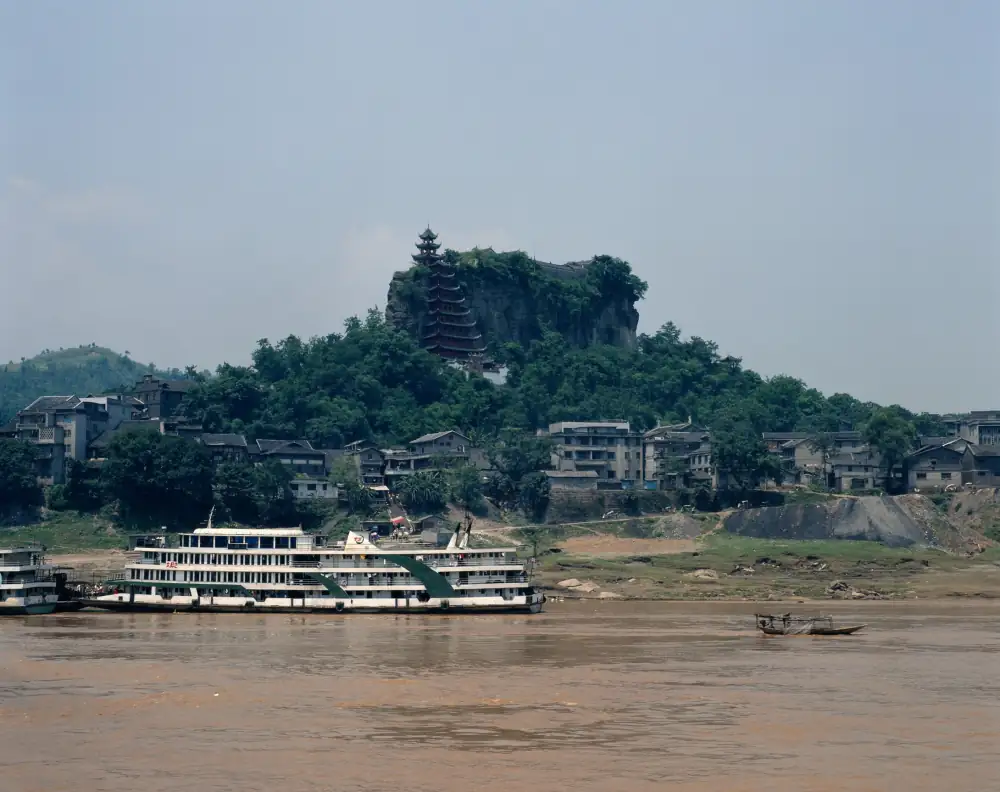
Hongya Cave is a commercial complex built in a traditional stilted-building style in 2006. It’s not an ancient building — it was constructed to replace an older market on the same cliff site. The architecture references the diaojiaolou style that Chongqing’s residents historically built on steep hillsides, overhanging the river below.
The complex has 11 floors, each accessible from different street levels due to Chongqing’s topography — you can enter at the top from street level, or at the bottom from the riverside promenade. The floors contain restaurants, food stalls, souvenir shops, bars, and a traditional teahouse.
Entry: Free (no ticket needed)
Address: 88 Canyin Road, Jiangbei District (江北区沧白路88号)
Opening hours: 10:00am–11:00pm; restaurants may open earlier or close later
Day vs Night: When to Visit
During the day, Hongya Cave is crowded and honestly not that impressive — a busy mall on a cliff. The real version of this place is at night.
From about 7:30pm onward, the building lights up in layers of red, gold, and white — and the reflection in the Jialing River creates the iconic double-building image. The crowds are also heavy at night on weekends, but at least you’re seeing it at its best.
Best for photography: Arrive at the riverside promenade on the south bank of the Jialing River about 30 minutes before dark (roughly 6:30–7:00pm). Watch the transition from dusk to full illumination. Bring a tripod for the best long-exposure river reflections.
Best weekday times: Tuesday–Thursday evenings are significantly quieter than weekends. 9:30pm–10:30pm after the main dinner crowds have thinned out is also good.
What’s Inside Hongya Cave
Food and Dining
The main reason to actually enter the building (rather than just photograph it from the riverside) is the food. The lower floors have street food stalls and casual eateries; upper floors have sit-down restaurants.
Floor B1–2 (riverside base): Snacks and casual food. Stinky tofu (臭豆腐): ¥8–12. Grilled skewers (烤串): ¥3–8 per skewer. Chongqing noodles (小面): ¥12–18.
Floors 3–7 (mid levels): Mix of casual and mid-range restaurants. Try Chongqing hotpot here — most restaurants on these floors specialize in it. Expect ¥80–120 per person for a full hotpot meal.
Floors 8–11 (upper levels): Higher-end restaurants with the best views. River view tables book up at weekends — reserve in advance if this matters to you.
The hotpot at Hongya Cave: The tourist tax is real here — prices are 20–30% higher than equivalent restaurants elsewhere in Chongqing. But the experience of eating Chongqing hotpot in a stilted building overhanging the river is worth the premium for a first visit.
Traditional Teahouse (民俗茶馆)
On one of the upper floors there’s a traditional teahouse with bamboo chairs, mahjong tables, and face-changing (变脸) performances. Tea from ¥30–60 per pot; performances typically at 8pm and 9pm. It’s touristy but gives a sense of old Chongqing social life.
The Jialing Riverfront
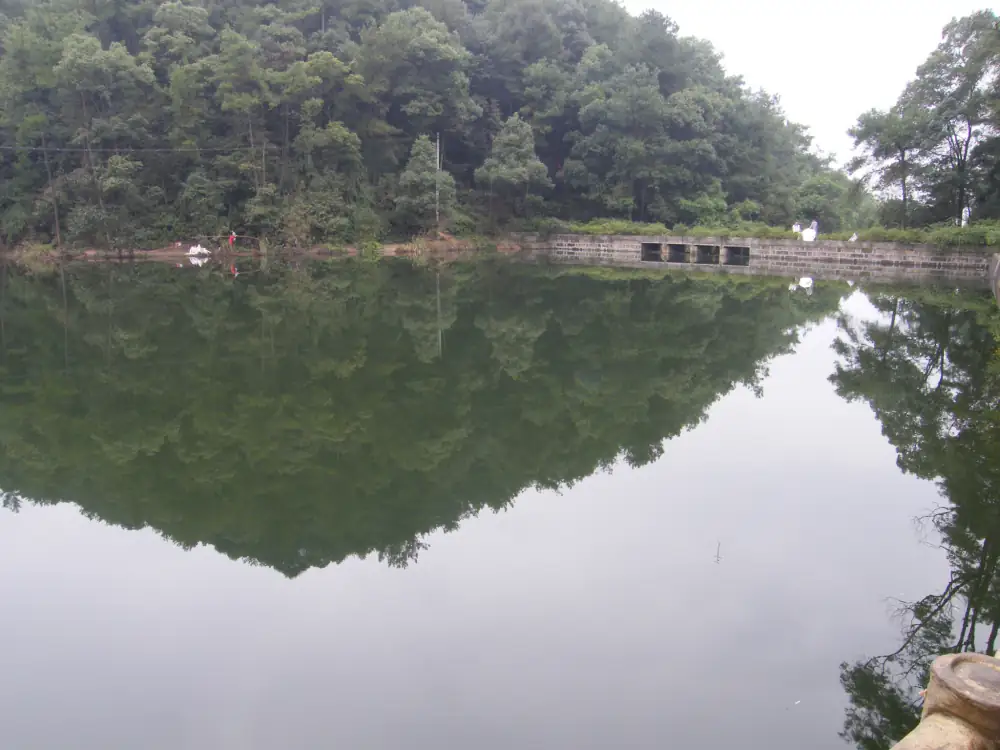
After visiting Hongya Cave, walk the riverside promenade (滨江路) in both directions. This stretch of Chongqing’s waterfront has:
- Towards the east: The 千厮门大桥 (Qiansimen Bridge) — a cable-stayed bridge that lights up at night and is excellent for photography from below
- Towards the west: The Chaotianmen area (朝天门) where the Jialing River meets the Yangtze. From here you can see both rivers, the massive bridge complex, and the opposite hillside city spreading into the distance
The riverside is well-maintained and genuinely pleasant for an evening walk, with good food carts and several bars with terrace seating.
Jiefangbei CBD and the Sunken Pedestrian Street (解放碑 and 洪崖洞)
Jiefangbei (解放碑, “Liberation Monument”) is Chongqing’s main CBD and pedestrian shopping area, about 10 minutes walk from Hongya Cave. The monument itself is a relatively small clock tower surrounded by shopping malls and chain restaurants.
More interesting is the Sunken Pedestrian Street (十八梯, Shíbā Tī) — a recently developed district of renovated traditional “stacked city” buildings descending the hillside from Jiefangbei into the lower city. The architecture is beautiful, the restaurants are good (and less touristically priced than Hongya Cave), and it captures the hill-city character of Chongqing effectively.
18-Step Traditional District (十八梯): Open daily, free entry. Good evening destination after Hongya Cave.
Getting to Hongya Cave
By Metro: Line 1 or Line 6 to Xiaoshizi Station (小什字) — 5-minute walk to Hongya Cave. Or Line 2 to Lin Jiangmen Station (临江门) — 8-minute walk.
By taxi/Didi: Tell the driver “洪崖洞” — it’s well-known. Fare from the train stations: Chongqing North Station ¥25–40 (30 min), Chongqing Railway Station ¥20–30 (20 min).
By walking: From Jiefangbei, it’s a 15-minute walk following the signs.
Combining Hongya Cave with Other Chongqing Highlights
Hongya Cave is the evening centerpiece of a Chongqing visit. Here’s how to structure a 2-day visit:
Day 1:
- Morning: Ciqikou Ancient Town (磁器口) — genuine old town with Ming-Qing architecture, river views, and good food. ¥15 entry. Crowded but worth it.
- Afternoon: Take Monorail Line 2 across the middle of a residential building (Liziba Station, 李子坝 — the train runs through the 6th floor of a building)
- Evening: Hongya Cave and Jialing riverside
Day 2:
- Morning: Dazu Rock Carvings (大足石刻), 1.5 hours from the city — UNESCO World Heritage Buddhist cave sculptures from the Tang and Song Dynasties. Worth a full half-day.
- Afternoon: Hotpot lunch (find a local spot rather than tourist area)
- Evening: Nan’an Riverside area on the south bank for the best views of the full Chongqing skyline at night
Where to Eat in Chongqing (Beyond Hongya Cave)
Chongqing hotpot is the city’s signature and one of China’s great culinary experiences. For better value than the Hongya Cave restaurants:
Zhouji Hotpot (周记火锅) near Jiefangbei: Old-school, local crowd, ¥60–80 per person
Dezhuang Hotpot (德庄火锅): Multiple locations, reliable quality, ¥70–100
Mao’s Hotpot (毛肚火锅 in the local alleys): Look for old residential alley restaurants with plastic stools — the most authentic and cheapest
Practical Notes
- Chongqing is humid year-round; even winter is mild but foggy. Summer (June–September) is extremely hot and humid.
- The city has no grid layout — it’s all hills, bridges, and overpasses. Download offline maps (Amap/高德地图 recommended).
- The metro is excellent and covers most tourist areas.
- Chongqing hotpot uses a seriously spicy broth (mala, 麻辣). Ask for the mild side of the divided pot (鸳鸯锅) if you’re sensitive to spice.