
Chongqing is not Sichuan. Most outsiders — and many travel websites — treat the two as interchangeable, but Chongqing has been a directly administered municipality separate from Sichuan Province since 1997, and the food is distinct in ways that matter. Chongqing food is louder, oilier, more aggressively seasoned, and more anchored to the experiences of a working-class mountain city. The mala flavour exists here, but it’s applied differently.
Table of contents
Open Table of contents
Chongqing Hotpot vs Sichuan Hotpot: What’s Different

Both use the mala (numbing-spicy) broth. But:
Fat base: Chongqing hotpot traditionally uses beef tallow (牛油, niú yóu) as the base fat for the broth. This creates a richer, slightly gamey backdrop that’s heavier and more distinctive than the vegetable oil-based broths common in Chengdu. The tallow-based broth also holds the spice flavours differently — slower to start, longer lasting.
Oil volume: Chongqing hotpot uses more oil. A lot more. The pot at a proper Chongqing hotpot restaurant should look alarmingly oily at the start of the meal.
Spice intensity: The average spice level at a Chongqing hotpot restaurant is higher. Not because Chongqing people are braver — but because the tallow base carries the chilli heat differently and locals have calibrated their tolerance accordingly.
Dipping sauce: In Sichuan, the standard hotpot dip is sesame paste-based. In Chongqing, the traditional dip is just sesame oil and garlic (麻油蒜泥) — minimal, letting the broth flavour speak. This is a real cultural difference.
What to order for your first Chongqing hotpot: Start with the medium spice level (中辣). Order beef tripe (毛肚, máodù) first — it’s the classic Chongqing hotpot ingredient, cooked for 7 seconds in the boiling broth, dipped in sesame oil, eaten immediately. Duck intestines (鸭肠), sliced beef (黄牛肉), tofu skin (豆皮), and mushrooms round out a typical order.
Budget: ¥80-160 per person at mid-range hotpot restaurants. High-end Chongqing hotpot institutions charge ¥200-350+ per person.
Recommended areas: Jiefangbei (解放碑) and Nanbin Road (南滨路) for hotpot restaurants with city views. The oldest hotpot area is Jiangbei District, specifically the Guanyinqiao area.
Xiaomian (小面): Chongqing’s Everyday Food
If hotpot is what Chongqing shows the outside world, xiaomian (小面, small noodles) is what Chongqing actually eats every day. These thin wheat noodles are served in a bowl of bright red chilli oil with garlic water, sesame paste, fermented black beans, Sichuan pepper oil, soy sauce, vinegar, and preserved vegetables.
The bowl is small — it’s a snack or light meal, not a feast. The flavour is incredibly complex for something that costs ¥8-15. The Sichuan pepper gives the familiar numbing sensation, the vinegar brightens everything, and the garlic water gives a raw intensity that distinguishes xiaomian from other spicy noodle styles.
Ordering: You can request your spice level. Bu la (不辣, not spicy) exists but defeats the purpose. Wei la (微辣, slightly spicy) is accessible without watering down the dish. The default is properly hot.
Where to eat xiaomian: This is the street food of Chongqing. Any residential neighbourhood will have xiaomian stalls open from 6am onwards. The most authentic versions are at no-name stalls with plastic tables, not at tourist-facing restaurants charging ¥35 for a “premium” version. Look for shops where every customer is a local and the menu is handwritten.
The 50 Best Xiaomian list: Every year, Chongqing’s municipal government publishes a list of the city’s best xiaomian shops — essentially the Michelin Guide of noodle stalls. The list rotates and shops it features fill up. Ask any local which of the current year’s picks is nearest to your neighbourhood.
Grilled Fish (烤鱼, Kǎo Yú) at Nanbin Road

Chongqing-style grilled fish is a distinct preparation that’s spread across China but still tastes best in Chongqing. The fish (typically grass carp or blackfish) is grilled first until crispy, then placed in a wide pan of simmering spiced oil with vegetables, doubanjiang chilli paste, and various toppings. It’s somewhere between a grilled fish and a hotpot.
Nanbin Road (南滨路) along the south bank of the Yangtze is the most concentrated area for grilled fish restaurants. The setting — elevated above the river, facing the Chongqing skyline — is part of the experience. A whole fish for 2-3 people costs ¥80-150.
Toppings to request: Bean sprouts and tofu (豆腐) are the standard accompaniment. Some restaurants allow hot pot ingredient add-ons (adding more ingredients to the simmering pan as you eat).
Night Food Culture Along the Yangtze
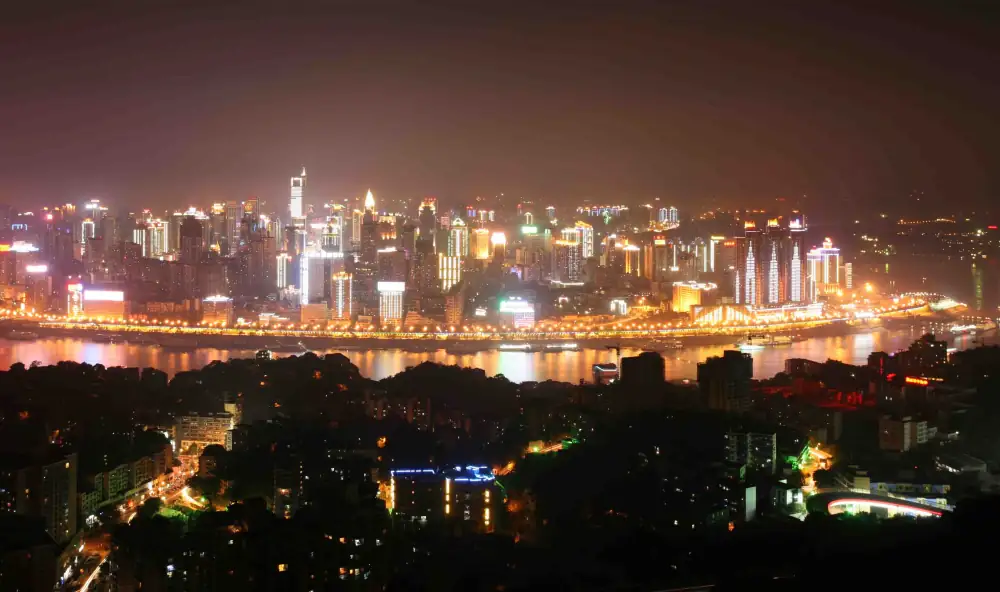
Chongqing is a city that eats late. The mountains mean the city is warmer than similar latitudes, and the evening dining culture extends well past midnight on weekends.
Night food areas:
Jiefangbei area — the central commercial district has food streets that run until 2-3am. Skewer stalls, hotpot, and xiaomian all operating simultaneously.
Hongya Cave area (洪崖洞) — the famous stacked balcony architecture by the river has restaurants on multiple levels. Primarily for the view and atmosphere (it’s stunning at night), not for food value.
Ciqikou Old Town (磁器口) — a preserved Ming dynasty village now entirely given over to food tourism. Good for snacks: pork ribs (腊猪蹄), spiced peanuts (五香花生), mao xue wang (毛血旺, below).
Other Chongqing Dishes Worth Knowing
Mao xue wang (毛血旺) — a spicy simmered dish of duck blood, tripe, spam-style luncheon meat, eel, and vegetables in intensely red Sichuan pepper and chilli oil. It looks alarming and is genuinely excellent. A Chongqing staple that doesn’t get the international recognition of hotpot. ¥35-65 at local restaurants.
Chongqing chicken (辣子鸡, là zǐ jī) — small pieces of fried chicken buried in an almost equal volume of dried red chillies and Sichuan pepper. The ration of chilli to chicken is approximately 3:1 by volume, which looks impossible to eat. You pick out the chicken pieces from the chilli pile; the chillies are flavouring and mostly not eaten. ¥45-80.
Douhua fan (豆花饭) — soft fresh tofu served with a plate of rice and a dipping sauce of chilli oil and preserved vegetables. The everyday cheap eat of Chongqing. ¥8-15.
Jiaoqian zi (椒盐糯米饼) — glutinous rice cake fried and served with cumin and chilli salt. Street snack, ¥8-12.
Practical Notes
Spice tolerance: Chongqing food is genuinely spicier than most other Chinese cuisines. If you have a low tolerance, be honest when ordering — asking for wei la (微辣, very slightly spicy) or bu la (不辣, no chilli) at most places is accommodated. The tallow-based hotpot broth is often available in a divided pot (鸳鸯锅, yuānyāng guō) with one spicy and one clear-broth half.
Best food areas:
- Jiefangbei central district for variety and night eating
- Nanbin Road for grilled fish with river views
- Residential neighbourhoods in Jiangbei for genuine xiaomian
- Ciqikou for snack crawl
Budget: Xiaomian breakfast ¥8-18. Lunch at local restaurant ¥30-60. Hotpot dinner ¥100-200 per person.