
Chongqing defies easy categorisation. It’s one of China’s four direct-controlled municipalities, a city of 34 million people built vertically up cliff faces where two rivers meet — and it produces some of the most cinematic urban landscapes on the planet. At night, it looks like Blade Runner crossed with a Chinese New Year celebration.
Table of contents
Open Table of contents
Why Chongqing is Unlike Any Other Chinese City
Most Chinese cities sprawl horizontally. Chongqing sprawls vertically. The city climbs the steep banks where the Jialing River joins the Yangtze, creating a topography so extreme that many locals don’t own bikes — stairs, escalators, and light rail lines that pass through buildings are how you get around.
The result is a city of perpetual visual drama:
- Cable cars crossing rivers between apartment blocks
- Light rail Line 2 passing directly through a residential building (Liziba Station)
- Hongya Cave — an 11-story structure of stilted wooden buildings hanging off a cliff face
- Chaotianmen — where two rivers merge in a swirl of brown and green water
And then there’s the hotpot. Chongqing’s variety — the original, bone-numbing version — is considered a national treasure. The city has more hotpot restaurants per capita than anywhere in China.
Top Attractions
Hongya Cave (洪崖洞)
The unofficial symbol of Chongqing, Hongya Cave is an 11-story complex of traditional bayu-style stilt buildings cascading down a cliff beside the Jialing River. By day it’s colourful and photogenic; by night it becomes a blaze of lantern light reflected in the water below, earning comparisons to the Spirited Away bathhouse (the director confirmed it as an influence).
Best time: After dark (7–10pm) for the full illuminated effect
Entry: Free
Location: Near Jiefangbei (Liberation Square), easy to walk from the CBD
Liziba Station (鲤鱼池站, Line 2)
This is the internet-famous spot where the Chongqing light rail passes through the 6th and 7th floors of a residential building. It’s a functioning metro station — residents on floors above and below go about their daily lives while trains pass through their building. Arrive from outside the building for the full effect.
Entry: Free (if just watching) or a metro fare if you want to ride through
Location: Shizhongqu district
Chaotianmen Pier (朝天门码头)
The dramatic promontory where the Jialing River meets the Yangtze. From the square, you see two distinct river colours merging — the blue-green Jialing and the muddier Yangtze. On clear days, the Three Gorges cruise ships depart from piers below.
Entry: Free
Best for: Sunsets and watching river traffic
Ciqikou Ancient Town (磁器口古镇)
A Ming and Qing dynasty river port town that feels genuinely old — narrow cobblestone lanes, wooden shophouses, temples, and the aroma of street food. Unlike many restored ancient towns, Ciqikou has real residential character, with teahouses where old men play mahjong and local opera performances.
Entry: Free
Best time: Weekday mornings (weekends can be very crowded)
Eling Park (鹅岭公园) & Eling Erzi Building
A hill park in the middle of the city with extraordinary panoramic views of the river junction. The Eling Erzi building beside it is a striking modernist structure worth photographing. The park also contains the Pigeon Hole — a building whose windows frame perfectly composed city views.
Entry: Small fee for some sections
Three Gorges Museum (重庆中国三峡博物馆)
Excellent free museum documenting the history of the Three Gorges and the massive dam project that reshaped life along the Yangtze. Well-curated, with English captions, and genuinely moving in its documentation of the flooded cities and displaced communities.
Entry: Free
Hours: 9am–5pm, closed Mondays
The Yangtze River Cruise
A river cruise from Chongqing to Yichang through the Three Gorges is one of China’s classic long journeys. The gorges themselves — Qutang, Wu, and Xiling — are dramatic passages of cliff and mist, most dramatic in the early morning or after rain.
Cruise options
Short evening cruise (推荐 for most visitors):
2–3 hour cruises departing in the evenings (7–9pm) from Chaotianmen Pier — the best way to see Chongqing’s legendary night views from the water. Cost: ¥80–200 depending on boat quality.
Full Three Gorges cruise (3–4 nights):
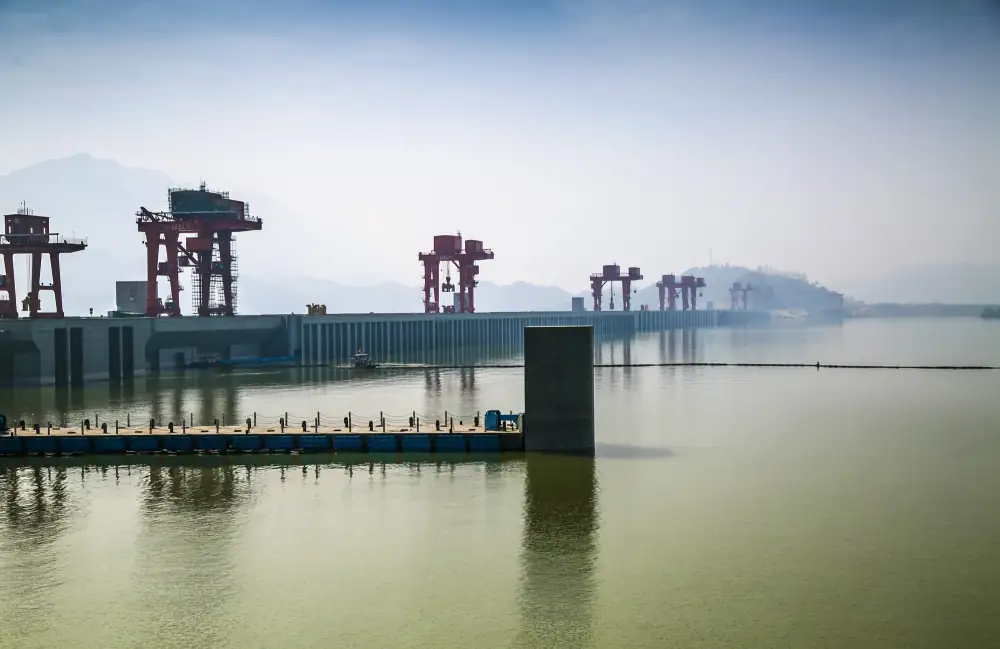
Chongqing → Yichang, passing Qutang Gorge, Wu Gorge, and Xiling Gorge with stops at Three Gorges Dam, Shibaozhai Pagoda, and Little Three Gorges. Costs from ¥800–3,000+ depending on cabin class.
Book through Trip.com or Viking River Cruises (international standard).
Chongqing Hotpot: A Complete Guide
Chongqing hotpot is the original and most intense version — a bubbling cauldron of numbing Sichuan peppercorns (huā jiāo, 花椒) and dried chilies in rich tallow oil. It looks ferocious and is.
What to order
- Meat: Beef tripe (毛肚), thinly sliced beef, duck intestines, pork slices
- Vegetables: Lotus root slices, potato slices, green vegetables
- Brain-calming: Tofu, quail eggs, mushrooms
- The sesame oil dip is non-negotiable — it cools the fire slightly
Spice levels
Ask for “微辣” (wēi là, slightly spicy) or “鸳鸯锅” (yuān yāng guō) — a split pot with mild broth on one half and nuclear red on the other. This is the smart visitor’s choice.
Where to eat
- Lao Mao (老码头火锅) near Chaotianmen — upscale, great river views, excellent quality
- Dezhuang (德庄火锅) — popular chain, reliable quality, affordable
- Any local place with a queue outside — this is almost always a good sign in Chongqing
Chongqing Night Views
The city’s night views are legendary for good reason. The density of neon, the vertical stacking of buildings, and the river reflections create something genuinely stunning.
Best night view spots
| Location | What you see | Best time |
|---|---|---|
| Nanshan Yiding Scenic Area (南山一棵树) | Panoramic city + river junction | 7–10pm |
| Hongya Cave | Illuminated stilt buildings + river reflections | 8–10pm |
| Chaotianmen Square | River junction from close up | Sunset & dusk |
| Raffles City observation floor | City panorama from above | Dusk |
| Jiefangbei at night | Illuminated CBD streets | 9pm+ |
Getting Around
Chongqing has an extensive light rail/metro system (轨道交通) that’s the backbone of navigation. The Line 2 (Liziba Station) and Line 6 are particularly useful for tourists.
Key navigation note: Chongqing addresses use floor numbers creatively. “First floor” on one street might connect to the third floor of another building because of the cliff topography. Embrace the confusion — it’s part of the experience.
- Metro app: Baidu Maps or Amap (高德地图) are essential
- Taxis/DiDi: Cheaper for crossing the hills, but traffic can be terrible
- Cable car (索道): The Yangtze River Cableway (长江索道) is a scenic transit option across the river
Day Trips from Chongqing
Dazu Rock Carvings (大足石刻)
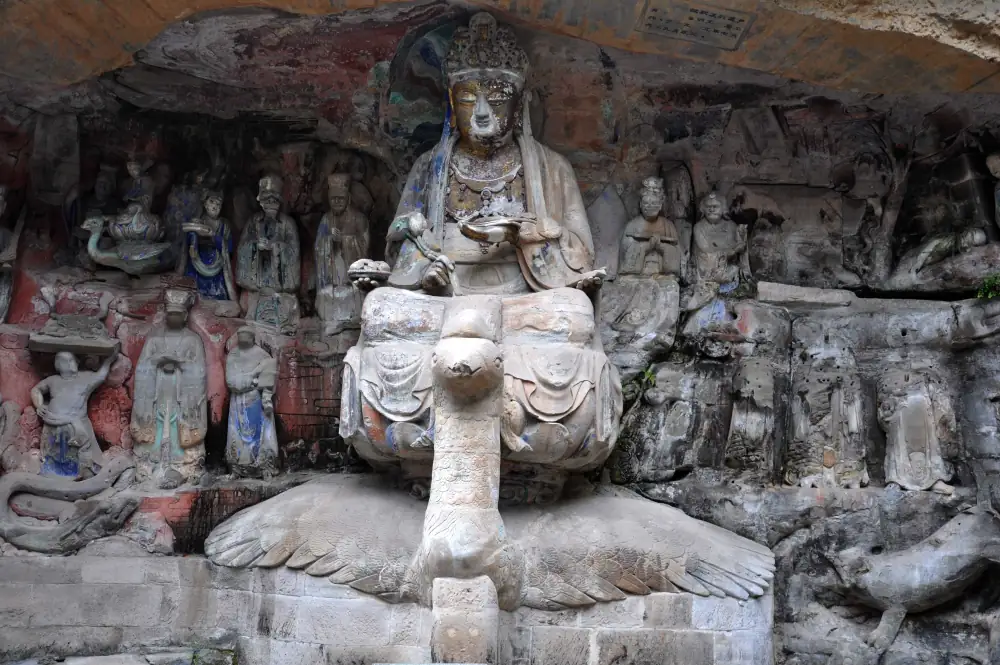
2 hours by bus/train — a UNESCO World Heritage site of Buddhist, Taoist, and Confucian rock carvings carved between the 7th and 13th centuries. Less visited than Dunhuang but extraordinary in quality.
Wulong Karst Geology Park (武隆岩溶)
3 hours by high-speed train — spectacular karst landscapes including Tiansheng Three Natural Bridges, Furong Cave, and Longshui Gorge. Was a filming location for the movie Transformers: Age of Extinction.
Black Mountain Valley (黑山谷)
2.5 hours — dramatic gorge with suspension bridges, waterfalls, and steep cliff paths.
Practical Information
| Topic | Details |
|---|---|
| Visa | Chongqing is included in China’s 144-hour transit visa-free scheme |
| Airport | Jiangbei International Airport (CKG), 40 min by rail to city |
| Best season | Autumn (Sep–Nov) for clear skies; summer is brutally hot and foggy |
| Currency | Alipay/WeChat Pay universal; ATMs at every metro station |
| Language | Chongqing dialect is notoriously distinct, but Mandarin works everywhere |
| Getting there | Direct HSR from Chengdu (1.5 hrs), Xi’an (3.5 hrs), Beijing (6 hrs) |
Itinerary Suggestion
3 Days in Chongqing
Day 1: Arrive → Jiefangbei CBD → Hongya Cave (evening) → night hotpot dinner
Day 2: Ciqikou Ancient Town (morning) → Three Gorges Museum (afternoon) → evening Yangtze River cruise
Day 3: Liziba Station photo stop → Nanshan Yiding night view → day trip to Wulong or Dazu
Combined with Chengdu
Chongqing + Chengdu is a classic 7-day Southwest China itinerary. HSR takes 1.5 hours, so you can easily day-trip between them.