
Weihai (威海) wakes early, because on this coast the sun does. The eastern cape catches first light before anywhere else in the country, and by six on a summer morning there are already swimmers in the shallows, men casting from the rocks, and a fishing fleet drawing lines across a sea that is flat and pale as tin. The city behind is unexpectedly green and orderly, red roofs among trees, and the whole effect is less of a destination than of somewhere people actively want to live.
Table of contents
Open Table of contents
Where you are and why it matters
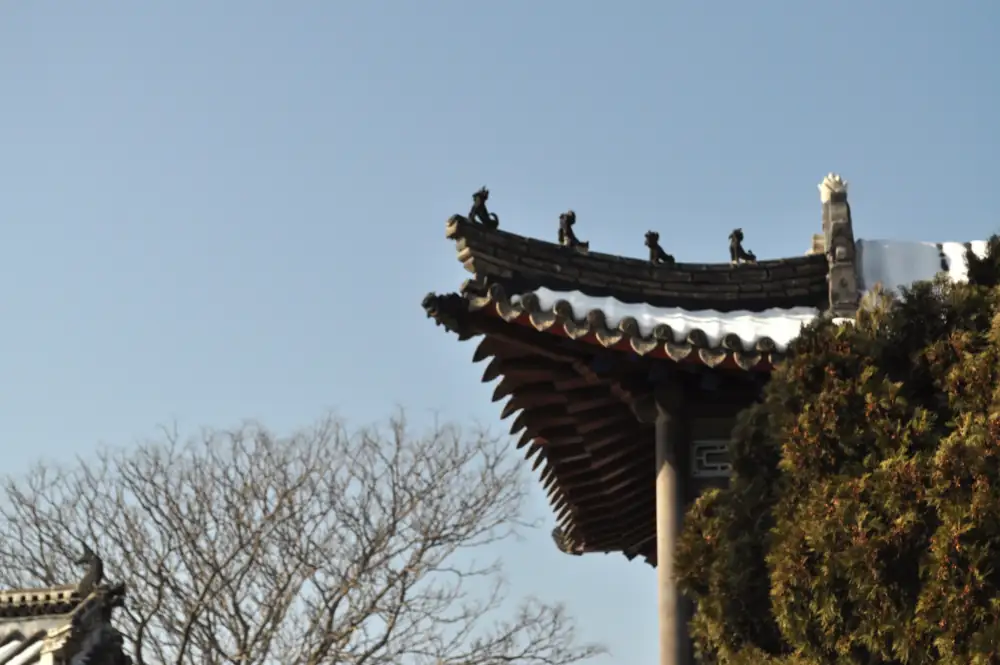
Weihai occupies the extreme eastern tip of the Shandong peninsula, with the Yellow Sea on three sides — north, east and south — Yantai as its neighbour to the west, the Liaodong peninsula facing it across the water, and the Korean peninsula and the Japanese islands beyond that to the east and south-east. It has something over a thousand kilometres of coastline, which is why almost everything worth doing here involves salt water.
Two consequences shape a visit. The first is climate: the sea and the surrounding hills moderate everything, so summers are noticeably cooler than inland Shandong and winters far less severe than the latitude suggests. This is a summer refuge and a place people come to convalesce, and the city has leaned into it with parks, planted verges and an enforced minimum of greenery in new developments.
The second is history. The port was long known as Weihaiwei, a garrison guarding the approach to the capital, and it was here that the late-Qing Beiyang Fleet — the country’s first modern navy — was based. The fleet was destroyed in the war of 1894–95, and the port then spent decades under a British lease. That sequence of ambition, defeat and foreign administration is written across the harbour and its islands, and it gives Weihai a weight that its holiday-town surface does not immediately suggest.
Liugong Island
The island sits directly across the harbour mouth, a short ferry crossing from the city, and it is the single most substantial thing to see here. Its northern shore is a wall of sea-cut cliff, sheer and dark; the southern side shelves into clean sand and clear water; the interior is wooded and quiet.
It was the anchorage and headquarters of the Beiyang Fleet, and the fabric of that period survives in unusual density: the admiralty building where the fleet was commanded, a stone naval pier, gun batteries dug into the high ground and the headland, magazines, barracks and the ruins of more. A large museum sets out the naval war of 1894–95 with salvaged ordnance, ship models and a great deal of documentary material — sober, thorough and, for Chinese visitors, unmistakably emotional. Several dozen separate sites are scattered around the island, and walking between them along the shore is a pleasure in its own right.
Allow the better part of a day. Bring water and a hat; the batteries are on exposed ground. Anyone with an interest in nineteenth-century history will find this the most rewarding stop on the peninsula.
Beaches and the coastal road
The city beaches
Weihai’s main bathing beach lies a short drive from the centre: fine sand, a slope so gentle that children can wade a long way out, and water clear enough that people catch small fish in the shallows by hand. It is large enough to absorb a serious crowd, backed by planted beds, stone sculpture and rows of parasols, with the hills visible behind. Further along the same shore are smaller strands — one named for its golden sand, another below a slope once planted with grapes — that are quieter without being remote.
The drive
The best half-day in Weihai is the coastal road along the northern shore. It runs roughly twenty kilometres from the harbour out past a string of villages and beaches, green hills to one side and open blue to the other, with pull-offs wherever the view justifies one. Drive it, or better, ride it: three connected seafront parks along the city’s waterfront are dead flat, closed to through traffic and made for cycling, and a circuit of them takes about an hour at a pace that involves stopping constantly.
Water sports operate off the main beaches through the summer — sailing dinghies, kayaks, jet skis, banana boats, pedal boats — and deep-water fishing trips run out of the harbours. In early October the city hosts an international angling festival, with sea, rock and freshwater competitions and a tackle fair alongside.
The eastern cape
Chengshantou (成山头), an hour and a half or so east of the city in Rongcheng, is the point where the peninsula ends: a blunt promontory of cliff shoved out into the sea, with waves breaking white against the rock below and nothing beyond but water. Because it is the easternmost land in the country, it is the first place in China to see the sunrise, and coming out here before dawn is a genuine pilgrimage for Chinese travellers — the local name translates roughly as “the end of the sky”.
The historical layer is old. Qin Shi Huang came here twice on his eastern progresses, and a stele was raised on the headland at his instruction declaring this the eastern gate of his empire. The modern site includes a lighthouse, cliff paths and viewing platforms. Go at first light if you can bear the hour; go on a windy day if you like weather.
Rongcheng: fishing villages and swans
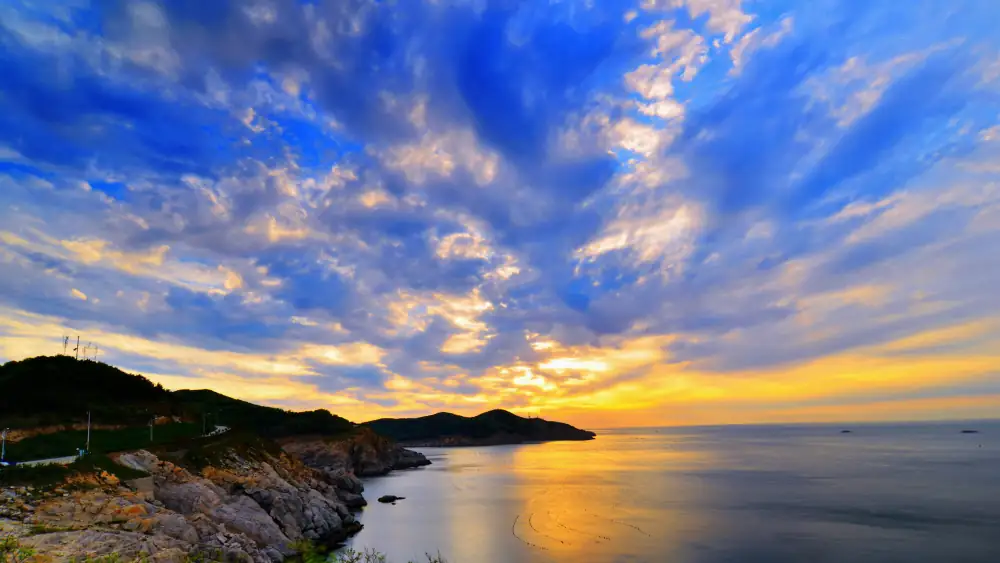
The Rongcheng district east and south of Weihai is where the coast stops being a resort and starts being a working shore, and it is the part of this trip most people underrate.
Shidao Bay holds one of the largest fishing ports in northern China, busy with boats and international cargo, along with a scatter of villages that have each developed a speciality: one known for its fishing customs, one where every household grows flowers so the lanes smell of them year-round, one with an improbable concentration of painters. On the hillside above stands a Buddhist temple with deep historical ties to Japanese and Korean pilgrims who travelled this coast more than a thousand years ago, and which now houses an enormous cast-bronze Buddha.
Swan Lake is the reason to come in winter. A lagoon near the eastern cape is separated from the sea by a broad sand bar, and from November until March several thousand wild whooper swans arrive from Siberia to overwinter on it. They are entirely habituated to people: they feed in the shallows a few metres from villagers on the shingle, and the birds and the fishing community have arrived at a genuine accommodation. It is one of the more remarkable wildlife spectacles in eastern China and a magnet for photographers. If your interest runs to nature, plan the trip around this rather than around the beaches.
Rushan, to the south-west, has a long, extremely white beach with resort development strung along it — golf, marinas, a racing circuit, pine windbreaks — which suits families and does not suit anyone looking for a fishing village.
Getting there and getting around
- By train. High-speed services run out along the peninsula from Jinan through Qingdao and Yantai to Weihai and on towards Rongcheng, which is now much the easiest approach. The station sits in the development zone rather than the old centre, with city buses and taxis waiting.
- By air. The airport lies inland, roughly half an hour from the city, with domestic connections and a coach that runs into town via the bus and railway stations.
- By road. Long-distance coaches leave all day for Qingdao and Yantai — the Qingdao service runs so frequently that a timetable is beside the point — and less often for Jinan and the big northern cities. The peninsula’s expressways are excellent.
- By sea. Ferries cross to Dalian, and passenger routes run from Weihai and the nearby ports to Incheon and Pyeongtaek in South Korea. The Korean connection has shaped the city: there are Korean restaurants everywhere and a whole street given to them.
Locally, a couple of dozen bus routes cover most of the city and reach the beaches and the ferry pier. Taxis are metered and plentiful, with a surcharge after midnight. Bicycles can be hired near the seafront parks, and for the eastern cape and Rongcheng a car — hired or by the day with a driver — saves a great deal of waiting.
For a viewpoint over the whole arrangement, climb the tower in Huancui Park on the hill behind the centre: city, harbour, island and open sea in one sweep.
Seasons
Summer, July into September, is the peak and the point. Water warm enough to swim in, long light, sea breeze, and a city that fills up with people escaping the inland heat. Expect company in August and book rooms early.
Autumn is arguably better for everything except swimming: clear air, calm sea, the angling festival, apples and peaches coming off the orchards, and seafood at its best.
Winter is cold and windy on the coast but not brutal, and it brings the swans, the hot springs and near-empty beaches. The thermal resorts inland at Wendeng, where the water comes out of the ground hot enough to need cooling, are exactly right on a raw January afternoon.
Spring is late here — the sea holds the cold well into May — but it is quiet, green and pleasant for walking and cycling.
What to eat
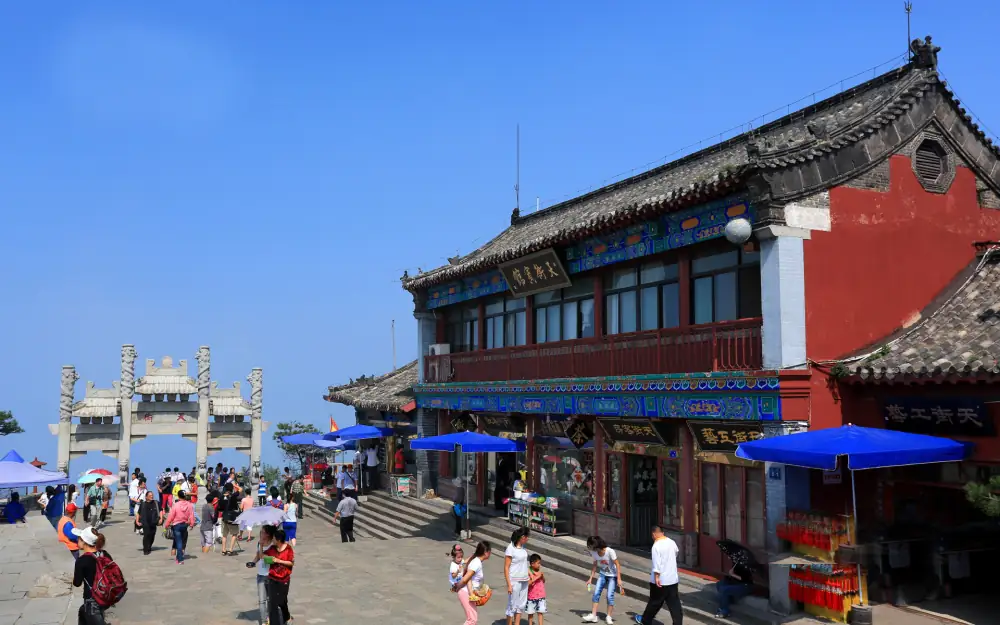
Weihai is one of the cradles of Shandong cooking, and the local style is restrained: knife work, clean flavours, crisp textures and a preference for tasting what the ingredient actually is rather than what a sauce can do to it. Since almost everything comes out of the sea, that restraint is well judged.
The things to eat:
- Sea cucumber braised with scallions. The regional set piece and a genuinely old dish — soft, dark, faintly smoky from the scallions. The spiny sea cucumber harvested off these rocky shores is the prized kind, and a slow-cooked version with free-range chicken, wild mushrooms and cabbage in a clay pot is the homelier and arguably better preparation.
- Mackerel dumplings. Enormous, thin-skinned, filled with nothing but minced fresh mackerel and a little seasoning, so that the first bite releases hot juice. Coastal villages make them best because the fish comes off the boat that morning.
- Hand-rolled seafood noodles. Thick, chewy wheat noodles with shrimp, clams and squid — a fisherman’s lunch that has to be eaten immediately.
- Sea snails, dressed warm, one of the peninsula’s classic cold-ish dishes: sweet, firm, faintly saline.
- Jellyfish with aged vinegar, all crunch and acidity, and hot-and-sour cuttlefish-roe soup, a clear broth that looks like water and tastes like a much richer thing.
- Yellow croaker in a stone pot, scallops grilled in their shells over charcoal, abalone stewed with chicken feet, prawns braised in their own oil, and swimming crab, at its best in spring and autumn when the roe is full.
- Jujube buns. Big white steamed loaves studded with red dates, made everywhere in the peninsula around Lunar New Year and increasingly sold all year. Eaten warm they are soft; cold, they are dense and chewy. A bun that splits open in the steamer is considered a good omen.
Where to eat: the grill houses and small seafood places used by residents rather than the glossy hotel restaurants, and the Korean barbecue street if you want a change. Anywhere near a fishing harbour will do you well.
One small piece of local texture: fishing families here avoid certain words at the table. You do not say “flip” a fish, because of what flipping does to a boat, and chopsticks are never laid across the rim of a bowl, because that is a mast coming down. If someone corrects your phrasing, this is why. For more on regional cooking in this part of the country, see our food and north China writing.
Where to stay
The seafront near the main bathing beach is the obvious choice in summer: guesthouses, art-hostels and one or two large resort hotels with their own stretch of sand, all within walking distance of the water. Rooms with a sea view command a premium and go first.
The city centre is better value, closer to restaurants, markets and the ferry, and no more than a short bus ride from the beach. Backpacker hostels here are sociable and well informed.
Rongcheng and the fishing villages offer simple family-run rooms, and staying out there is the right call for a dawn start at the cape or for the swans.
Honest advice, including what to skip
Two or three days is enough for the city itself, and the pace should be slow — this is not a place with a checklist. If you have longer, spend it in Rongcheng rather than adding attractions in town.
Get up for one sunrise. It is the entire selling point of this coast, and it works.
Take the sun seriously. Sea light is deceptive, cloud is no protection, and the cliffs and batteries offer no shade. Hat, sunglasses, high-factor water-resistant sun cream applied before you leave, plus a cool drink in the middle of the day.
Watch the forecast rather than the sky. Weather on this shore changes fast, and a fine morning can turn into a wind that makes ferries and small boats unpleasant or cancels them.
If you are not used to shellfish, ease into it. The quantity and freshness on offer here defeats a certain number of visitors every summer; carry whatever you normally would for an upset stomach.
What to skip: the film and television theme park with its windmill and mock castles, which is aimed squarely at families with small children and has nothing to do with why this coast is interesting; the imported-goods shopping halls near the port, where the labelling is optimistic and the bargaining tedious; and any attempt to combine the eastern cape, Swan Lake and Shidao Bay in one day from the city. Buy your dried seafood and apples at a produce market instead, and spend the saved time walking the shore.