
Stand on the rampart at Old Dragon’s Head (老龙头) on a clear morning and the Great Wall does something it does nowhere else: it walks off the land and into the water, a spur of dressed stone dissolving into the grey-green shallows of the Bohai Sea. Twenty minutes up the coast, retired cadres are doing tai chi on a beach where warblers rest between continents. Qinhuangdao (秦皇岛) is Hebei’s odd, appealing coastal hybrid — a Ming garrison town, a century-old seaside resort and a stretch of genuine sand desert, all within an easy morning’s travel of one another.
Table of contents
Open Table of contents
What Qinhuangdao actually is
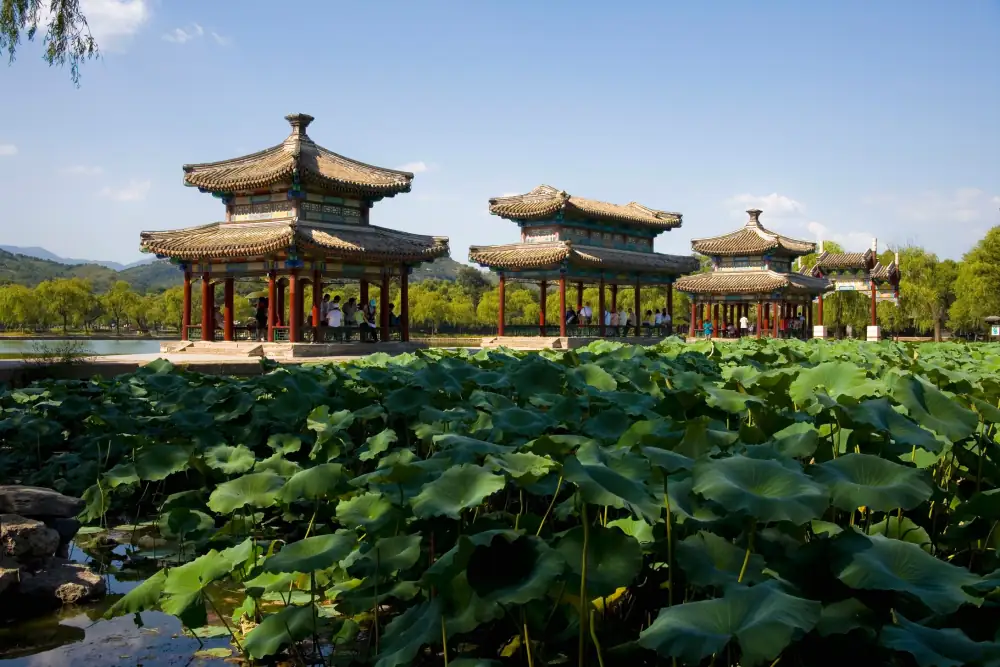
The name covers a city split into three distinct personalities, strung along a coastline of shallow bays, granite reefs and dune fields where the mountains of northern Hebei come down to meet the sea.
Shanhaiguan (山海关) sits at the northern end: a walled Ming fortress guarding the narrow corridor between the Yan mountains and the water, the historical hinge between the North China plain and Manchuria. Beidaihe (北戴河), in the middle, is the resort — laid out as a summer retreat in the late Qing and early Republican decades, when foreign residents and Chinese officials built villas among the pines, and later adopted as the summer working quarters of the country’s leadership. Nandaihe (南戴河) and the Golden Coast strand to the south are newer, brasher and sandier, with the strange dune landscape of Jadeite Island (翡翠岛) at their far end.
What makes the city worth a trip is the range packed into so little distance: a morning tracing military architecture that shaped Chinese history, an afternoon watching shorebirds work a tidal flat, an evening eating shellfish bought that day off a boat.
Shanhaiguan and the Wall
Give Shanhaiguan a full day. It rewards patience and it needs walking.
The First Pass Under Heaven
The eastern gate of the walled town carries the calligraphy that gives it its name — the First Pass Under Heaven (天下第一关). The gate tower is the postcard, but the pleasure is in climbing to the upper storey and looking out: the grid of the old town on one side, open farmland and the line of the Wall running north on the other. You can walk a decent length of rampart from here, past the flanking towers, the brickwork worn into shallow dishes by five centuries of boots and weather. Restored streets inside the walls are commercial and uneven in quality; the drum tower and the old administrative compounds are worth a look, the souvenir arcades are not.
Old Dragon’s Head
South of the town, the Wall reaches the sea. Old Dragon’s Head is where a Ming general drove a stone spur out into the water — the head of the dragon, dipping to drink. Chenghai Tower (澄海楼) stands above it, and from the upper level on a windy day you get the whole point of the place at once: masonry, surf, haze, and the sense of an empire’s edge. Come early; midday tour groups are dense here.
Beyond the fortress
Two short excursions from Shanhaiguan reward anyone with an extra half-day. Jiaoshan (角山) carries the Wall steeply up the first serious ridge north of town — a proper climb up stone steps, with the sea and the plain laid out behind you and ruined watchtowers strung along the crest. It is the best short hiking on this coast, and hardly anyone does it. Changshou Mountain (长寿山), further out, is a valley of granite clefts, a grotto that catches the low sun, and stele carvings. Both hill sites close during the dry spring fire-risk weeks, so ask before committing a morning to them.
Meng Jiangnü Temple (孟姜女庙), east of town on a low hill, honours the woman of the folk tale whose husband died building the Wall and whose weeping brought a section of it down. The shrine is modest — two halls, a worn stone said to bear her footprints, imperial inscriptions on the side walls. It matters for what it represents: the countervailing story to all that triumphal masonry. Half an hour is enough.
Beidaihe: headlands, pines and birds
Beidaihe is low-rise, green and slightly faded in a way that suits it. Villa architecture from the resort’s early decades survives among the pines along its inland roads, and the shoreline alternates between soft sand and granite outcrops.
Pigeon’s Nest Park (鸽子窝公园) occupies the eastern headland, where a layered cliff ends in a crag shaped roughly like an eagle’s head. This is the sunrise spot, and it deserves the cliché — the ground drops away, the tidal flats below catch the first light, and on the right morning the sun comes up out of the water rather than out of haze. Those flats are also the best accessible feeding ground for waders in the whole city.
Tiger Rocks (老虎石) marks the middle of the resort beach: weathered granite boulders in shallow water, children swarming over them, kites overhead, surf breaking white on the seaward faces. It is not a wilderness beach and does not pretend to be. Lianfeng Mountain (联峰山) rises behind the town — a wooded hill with easy paths, temples and a lookout, and the best woodland birding in Beidaihe. On the eastern shore stands the Bilouta (碧螺塔), a spiral tower built to resemble a sea snail, now the hub of a beach bar operation. Views from the top are fine; the entertainment programme is not why you came to Hebei.
Nandaihe, the Golden Coast and the dunes
South of Beidaihe the coast turns to unbroken sand. Nandaihe’s beaches shelve gently and carry fewer reefs, which makes them better for actually swimming, and the district is organised around activity rather than scenery: sand sledding, grass sledding, boat trips to a small offshore island, and a large amusement complex.
The genuine attraction down here is Jadeite Island, a sand peninsula wrapped on three sides by sea and the Qilihai lagoon (七里海). High dunes back onto pine woods and open water — an authentic desert landscape improbably parked on a temperate shoreline, and one of the strangest pieces of nature in northern China. Walk out along the dune crests in the late afternoon when the sand goes orange and the wind drops. The island is also a major breeding site for the rare black-billed gull.
Comparing the three districts
| Shanhaiguan | Beidaihe | Nandaihe & Golden Coast | |
|---|---|---|---|
| Character | Walled Ming garrison town | Wooded villa resort | Open sand, activity parks |
| Best for | History, Wall walking | Sunrise, birds, easy beach days | Swimming, dunes, families with teenagers |
| Beaches | Minimal | Sand broken by granite reefs | Long, gentle, mostly reef-free |
| Rooms | Fewer; small hotels near the station | Widest range, from villas to guesthouses | Courtyard resorts, quiet off-season |
| Time needed | A full day | One to two days | Half a day upward |
Getting there and moving around
Frequent high-speed services run from Beijing along this coast, and several stop at more than one Qinhuangdao station — the central city station, Beidaihe and Shanhaiguan among them. Journey time is short enough that the trip feels like an extension of a Beijing stay rather than a separate expedition. Trains continue north-east towards Shenyang, which makes the city a natural stopover on a longer north China route. There is also a small airport between the central district and Shanhaiguan, with a thin domestic schedule.
Locally, distances are modest. Public buses connect the three districts and most major sights, and taxis are plentiful; drivers know every headland and market by name. Hiring a car with a driver makes sense if you want to combine the Golden Coast dunes with anything else. Cycling works well within Beidaihe, where the roads are flat and shaded.
The four seasons
Spring is the season serious birdwatchers come for. From the middle of March into late May, this coastline is a bottleneck on the East Asian flyway, and the wetland reserve, Lianfeng Mountain and the flats below Pigeon’s Nest fill with cranes, raptors, waders and passerines moving north. The sea stays cold and the hill sites may be closed for fire risk. Fewer visitors, excellent light.
Summer is what most Chinese visitors mean by Qinhuangdao. From July into August the water is warm enough for long swims, the beaches are packed, seafood is at its best and the whole coast runs at holiday pitch. Book well ahead and accept the crowds as part of the texture. Sun and mosquito protection both matter.
Autumn may be the best all-round window. September still allows a swim on a warm day, the crowds thin from mid-month, and the second migration wave runs from early September into the middle of November — shorebirds first, then raptors and geese.
Winter brings hard cold off the sea and near-empty streets. Swimming is out of the question and the resort infrastructure largely shuts. What you get instead is Shanhaiguan’s ramparts to yourself, sharp visibility across the water, ice along the tideline, and hotpot weather.
Where to stay
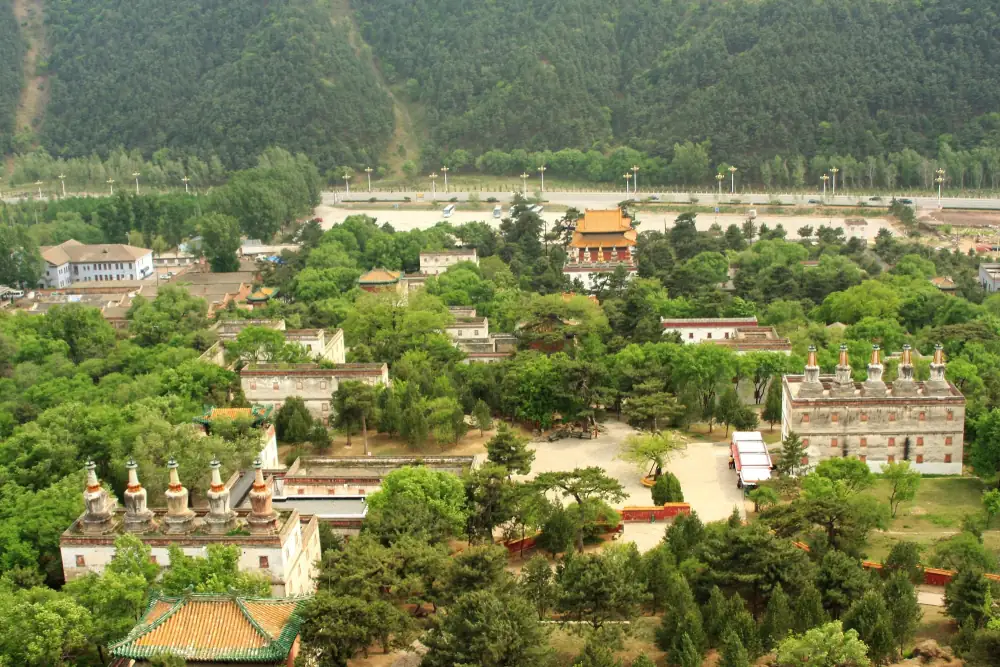
Base yourself in Beidaihe if you want beach access, the widest choice of rooms and a pleasant place to walk in the evening — it suits couples, families and birders equally. Choose Shanhaiguan if the Wall is your main interest and you want to be at the gate before the coaches arrive; the room stock is thinner and plainer, but the convenience is worth it. Stay in Nandaihe or along the Golden Coast for swimming and the dunes. The central harbour district is the compromise: unglamorous, well connected to both ends of the city, and a sensible perch if you are moving around a lot.
What to eat
Seafood is the reason to eat here, and the local method is refreshingly direct: buy it live at a market, then have a small restaurant or your guesthouse cook it. Shitanglu market (石塘路市场) in Beidaihe is the big one, with a sideline in shells and trinkets; smaller neighbourhood markets aimed at residents are less varied but often more straightforward. Go in the morning, pick your own creatures, check that everything is still moving, and if you pay a kitchen to cook your haul, stay and watch it go into the pan.
Things to look for:
- Grilled prawns, the local signature — plump, sweet, barely dressed.
- Mantis shrimp and scallops, abundant and best simply steamed or grilled over charcoal.
- Iron-plate crab (铁板蟹), a small slender crab that burrows in the sand, braised and full of roe.
- Dried scallop, sun-cured and salt-boiled, sold everywhere as a gift item.
- Boluo leaf cakes (饽椤饼), a Wall-country speciality: starch and savoury filling steamed in fresh oak leaves, faintly translucent and grassy.
- Sesame paste flatbread from the old town bakeries, best alongside mutton soup.
- Green bean cakes from Shanhaiguan’s Muslim confectioners, and fat steamed buns from the fortress’s long-established bun shops.
Barbecue is the other local habit. Beach grills and city skewer houses turn out shellfish, oysters, wings and lamb ribs late into the summer night, and the small mixed fish that only work over flame are the ones to order.
Honest practical advice
Skip the manufactured attractions. The Golden Coast amusement complex, the sand-sledding operations, the offshore pleasure island, the mock-mystery house in Beidaihe and the sea-snail tower’s variety shows exist to fill afternoons and separate you from the coast’s actual character. Travelling with restless teenagers, they may earn their keep; otherwise your time is better spent on the Jiaoshan ramparts or the Jadeite Island dunes.
A few other things worth knowing. The sea here is shallow and murky rather than tropical-clear — come for the coastline and the light, not for turquoise water. Reefs off Beidaihe make footwear sensible. Swimming outside high summer is unwise even when you see people doing it, because the water stays cold well into June and drops fast in October. Sunrise plans need checking against the tide as well as the clock, since the flats below Pigeon’s Nest are far more interesting at low water. Weekend crowds from Beijing are heavy year-round, so build your itinerary around midweek days if you can. And leave the fortress town for last or first, not squeezed into the middle — it deserves an unhurried morning, and it is the thing you will still be thinking about on the train home.