
Two hours out of Beijing the North China Plain gives up. The land buckles, the road starts following a river instead of crossing it, and limestone walls close in until the sky is a bright strip overhead. This is Yesanpo (野三坡), a stretch of Hebei’s Laishui County where the Taihang and Yan mountain ranges collide, and where several million Beijingers go every summer to stand in cold water and eat mutton off a spit.
Table of contents
Open Table of contents
What Yesanpo Actually Is
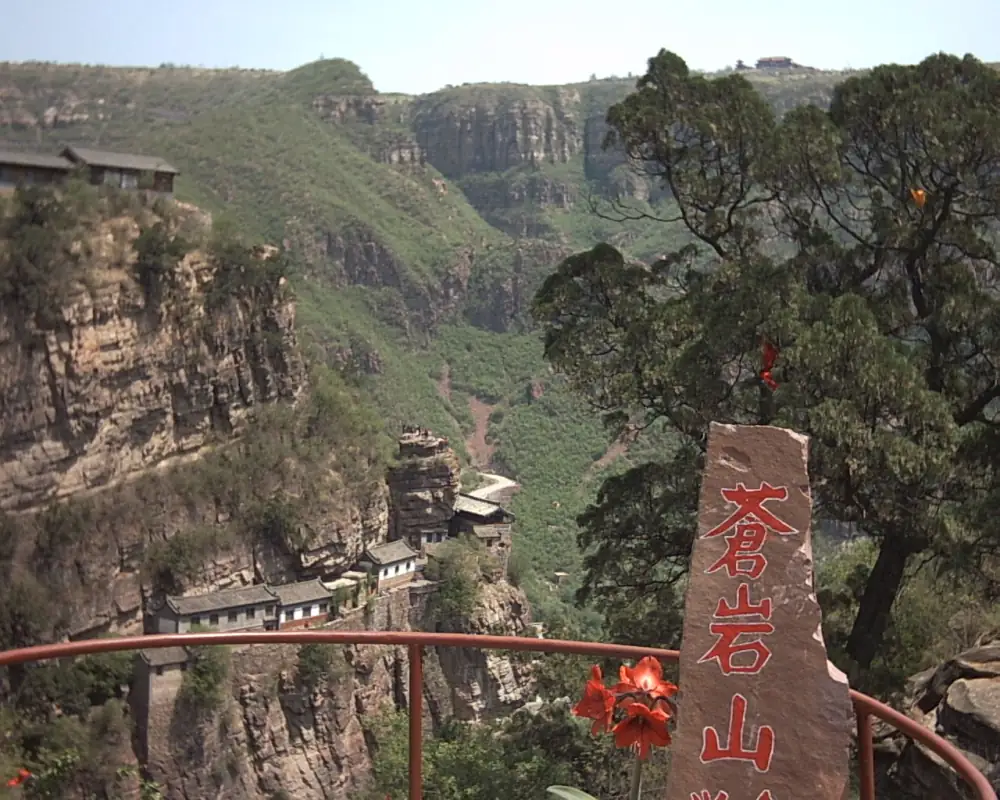
Yesanpo is not a single mountain or a single park. It’s a loose district of villages, gorges, caves and river frontage spread across dozens of kilometres, marketed as one destination because everything in it shares the same geology and the same purpose: getting people out of Beijing.
The bones of the place are sedimentary rock, tilted and cut by water into narrow gorges with near-vertical walls. Locals borrowed a compliment from the south and called it the little Guilin of the north, which oversells the resemblance — there are no karst towers rising out of paddy fields here — but captures something true about the way the cliffs stand in the water.
Four areas are properly developed and signposted. Baili Gorge is the headline. Yugu Cave handles the underground. Baicaopan is the high forest at the district’s western edge. Longmen Tianguan combines waterfalls with an unusually good collection of Ming and Qing cliff inscriptions. Between and below them runs the Juma River, which is where most of the swimming, rafting and horse riding happens.
What makes Yesanpo worth a trip is not that any one of these is world class. It’s the combination, and the temperature. In July the plain around Beijing is a furnace; the gorge floor here sits in permanent shade with cold water running through it, and the difference is physical. Add farmhouse food that has nothing to do with restaurant Chinese cooking, and you have the most reliable summer weekend in reach of the capital.
Baili Gorge: The One You Cannot Skip
Baili Gorge is three parallel valleys arranged like the tines of a fork, joined at the entrance settlement and diverging into the mountain. Together they run well past fifty kilometres, which is where the name — a hundred li — comes from, though nobody walks anything like the whole thing.
Haitangyu
The eastern valley is the busiest and the best. It is also the one with the named set pieces: a rock overhang that genuinely does look like a tiger’s open mouth, a slot so narrow the sky reduces to a bright seam, and a curved cliff face that locals read as a figure glancing back over her shoulder. The path is paved, almost flat, and follows a stream past small waterfalls the whole way. Two to three hours gets you in and out at a normal pace.
The reason to walk it slowly is the light. The walls here are close enough that direct sun only reaches the floor for an hour or two around midday, and the rest of the time the gorge is lit indirectly, everything green and grey and cool. Wild crab apple flowers along the valley in early summer.
Shixuanxia
The middle valley is quieter and structurally stranger. Not far in, the walls open into a cylindrical bowl of rock like the inside of an enormous jar, with a spring falling into it from the rim. Below that sits a dark pool that nobody has convincingly measured.
Xiezigou
The third valley is the wild one — less path, fewer railings, more of the character the district’s name refers to. It’s named for a stinging plant that grows thick along the streambed; brush it and the burn is sharp and brief. Six hundred metres in there’s a pool that catches the moon, and beyond that a run of unrestored cliffs. If you’ve been to Baili Gorge before and found it too tidy, this is where to go.
Choosing a Route
Three sensible options, in ascending order of effort:
- One valley, in and back. Haitangyu only. Half a day, no stairs, suits families and anyone with a bad knee.
- The small loop. Up Haitangyu to the natural bridge, then a staircase of a few thousand steps over the ridge into Shixuanxia and back to the entrance. Around four hours and hard on the descent.
- The big loop. Both valleys plus the highest point on the ridge. A full day of walking with real elevation and no shortcuts once committed.
Most people should do the first or second. The big loop is for walkers who came specifically to walk — see /tags/hiking for how it compares with other options in the north.
The River, and What Happens On It
The Juma River threads through the whole district, shallow and fast, with gravel bars and willow-lined banks. In midsummer the water sits at a temperature that makes standing in it a relief rather than a shock.
Rafting is the main event. The best-known run starts upstream and covers several kilometres of alternating rapids and flat water in inflatable rafts. It is not whitewater in any serious sense — nobody is running grade IV here — but there are enough drops to soak everyone thoroughly, and water fights between boats are effectively compulsory. Bring a full change of clothes, wear sandals rather than shoes, and leave phones and cameras in the car unless you have a genuinely waterproof case. Keep the life jacket on and stay seated.
Bamboo rafts are the gentler alternative: flat poled platforms on calm stretches, which you can either be punted along on or attempt to pole yourself, badly.
Horse riding happens at a scattering of paddocks along the road and river. Two formats exist — enclosed rings where you go round a track, and longer excursions that head up a side valley or along the riverbank. The excursions are far more interesting. If you have never ridden, take a handler; approach the horse from the front and mount from the left, and keep the balls of your feet in the stirrups rather than pushing your heels through.
There’s also a cliff-edge bungee platform above the river, plus go-kart tracks and airsoft battlegrounds, all of which exist because Beijing office workers arrive on Saturdays needing something to do.
Underground and Uphill
Yugu Cave runs nearly two kilometres into the hillside across several levels, with the usual inventory of flowstone, straws and cloud-basins, plus a spring in the deepest chamber. Its local fame rests on a peculiarity of the spring at the entrance: for a short window each spring, fish come out of it. The cave interior sits in the low teens year-round, so carry a layer even in August — walking from a thirty-degree valley into a twelve-degree cave in a wet t-shirt is how people ruin the rest of their trip.
Baicaopan is the high ground, a forest park on a peak approaching two thousand metres. The air here is the selling point, and the vertical banding of the vegetation is genuinely striking: spring is well advanced at the base while patches of ice can still be lying near the top. Rhododendron flowers in early summer. A cable car cuts out the worst of the climb; the shorter circuit at the top takes a couple of hours, the longer one most of a day. It is cold and windy up there in any season, and it is the furthest of the four areas from the villages, so it works best as a dedicated day rather than an afternoon add-on.
Longmen Tianguan is the one visitors skip and probably shouldn’t, if history interests you. A Ming frontier fortress and stretch of wall sit at the mouth of a pass that mattered militarily for centuries, and the gorge above holds the largest concentration of carved cliff inscriptions in north China — mostly the work of officers garrisoned here, cut straight into the rock face. Behind it, a valley of nine waterfalls climbs through old growth forest on boardwalks. Worth half a day for anyone who reads /tags/history as part of a landscape rather than a separate subject.
Getting There and Getting Around
By train. The slow line from Beijing West runs down to stations at Yesanpo and Baili Gorge, and it’s the pleasant way to arrive — a few hours, cheap, with the last stretch running through the gorges themselves. Extra seasonal tourist services are added between spring and autumn. Book ahead on summer weekends; these trains sell out.
By car. Two to three hours from central Beijing depending on which expressway you take and how badly the exit is backed up. Driving is the flexible choice, since the four scenic areas are genuinely far apart. The mountain roads to Baicaopan are steep and narrow, so use a low gear on the climbs and engine braking on the descents rather than riding the brake pedal.
By bus. Seasonal direct coaches run from Beijing during the main months, and there are connections via Laishui from Baoding and other cities in the region. Services thin out sharply outside the season.
Locally, shuttle buses connect the four scenic areas — and you will need them, because the gaps are real. There are no metered taxis, only private cars whose drivers charge broadly consistent rates that everyone in the villages knows. The other option is a donkey cart, which is slow, loud, entirely genuine and only useful for short hops between a station and a guesthouse. Plan your route before you arrive; improvising between areas eats hours.
Where to Stay
The villages along the Juma River near Baili Gorge are where almost everyone sleeps, and they’re the right choice. Family-run guesthouses dominate — a courtyard, a handful of rooms, a kitchen, the owner’s mobile number as the booking system. Standards vary enormously and the pictures rarely help, so if you arrive without a reservation midweek it’s entirely normal to look at two or three before committing.
A few larger hotels exist for anyone who wants a lift and a proper shower. They’re comfortable and characterless; the trade-off is that you eat in a hotel restaurant instead of at a family table.
The important decision is location, not category. Pick the village nearest whatever you plan to do most, because moving between areas in the evening is a nuisance. And book ahead for summer weekends and holidays — rooms genuinely run out. Ignore the people who approach you on the train and at the station offering to arrange everything.
Eating in the Villages
This is a serious part of the appeal, and it runs on wild greens and a wood fire.
Roast whole lamb is the local set piece, a young animal cooked slowly over a fixed pit for a couple of hours. It has to be ordered well in advance — tell your guesthouse when you book, not when you sit down — and it’s food for a group rather than a couple. The meat comes off the bone with almost no resistance. It arrives with a spread of cold dishes and stir fries alongside, and the seasoning is restrained enough that the pots of cumin and chilli on the table often go untouched.
Wild greens are the everyday version of the same idea: river greens from the Juma, water celery, magnolia shoots, mountain mushrooms. Some are served cold and dressed, some folded into steamed buns, some just stir fried. Fried prickly ash shoots — picked that morning, crisp, faintly numbing — are the one to order if you see it.
Rainbow trout is farmed in the cold streams and appears grilled, steamed or raw; grilled is the local preference, since the fish has no small bones and takes well to a hot fire.
Cornmeal cakes pressed against the side of a wood-fired iron pot come out scorched and crisp on one face, soft on the other, and are meant to be eaten with a pot of stewed small fish or coarse corn porridge. For the adventurous there are deep-fried scorpions — crisp, not remotely unpleasant, and entirely safe once cooked.
Walnuts, apricot kernels and prickly ash are the three things people take home. See /tags/food for how this cooking sits within the wider northern tradition.
The Seasons
Spring is windy and dusty on the plain but pleasant in the gorges, with crab apple and rhododendron flowering at different altitudes through May. The water is too cold for rafting early on.
Summer is the point. Cool gorge floors, high water, everything operating, and the largest crowds of the year on weekends. Rain comes in bursts and can close the higher routes for a day; it also makes the waterfalls worth watching.
Autumn is the best light and the best walking weather, with the water dropping and the river activities winding down through October. Clear enough for the long ridge views that summer haze denies.
Winter strips the district down. Most river operations stop, guesthouses run at low occupancy or shut, and the gorges are frozen and quiet — a trip for people who want emptiness, not activity.
Honest Advice
Do Baili Gorge. Everything else is optional and should be chosen, not accumulated. The single most common mistake here is trying to hit all four scenic areas in two days: you’ll spend the trip in a car, arriving at each entrance tired and leaving before you’ve seen anything.
Skip the evening variety show unless someone in your group actively wants a large-cast dance spectacle; it’s competently produced and completely detachable from the reason you came. Skip the campfire evenings too, unless you’re travelling with a group big enough to generate its own atmosphere. The mock-castle attraction with mirrors and sound effects is for children under ten.
Two days is the right length: gorge and river on day one, one of cave, forest or fortress on day two, then home. Bring more clothes than you think you need — you will get wet, deliberately or otherwise — plus proper shoes for the staircases and sandals for the water. And go midweek if your schedule permits. The same gorge with a tenth of the people in it is a different place. For a broader look at what pairs with this corner of the country, /tags/north-china covers the wider region.