
Push out from the pier at Anxin (安新) and the horizon disappears within minutes. Reeds close over the channel on both sides, taller than the boat, taller than the boatman at the stern, and the only sounds are water slapping the hull and coots complaining out of sight. Baiyangdian (白洋淀) is not a lake in the way visitors expect a lake to be — it is a shifting mosaic of open water, reed walls, lotus beds and villages built on mud islands, spread across the flat farmland of central Hebei (河北). On the dry North China Plain, that makes it close to improbable.
Table of contents
Open Table of contents
What Baiyangdian actually is
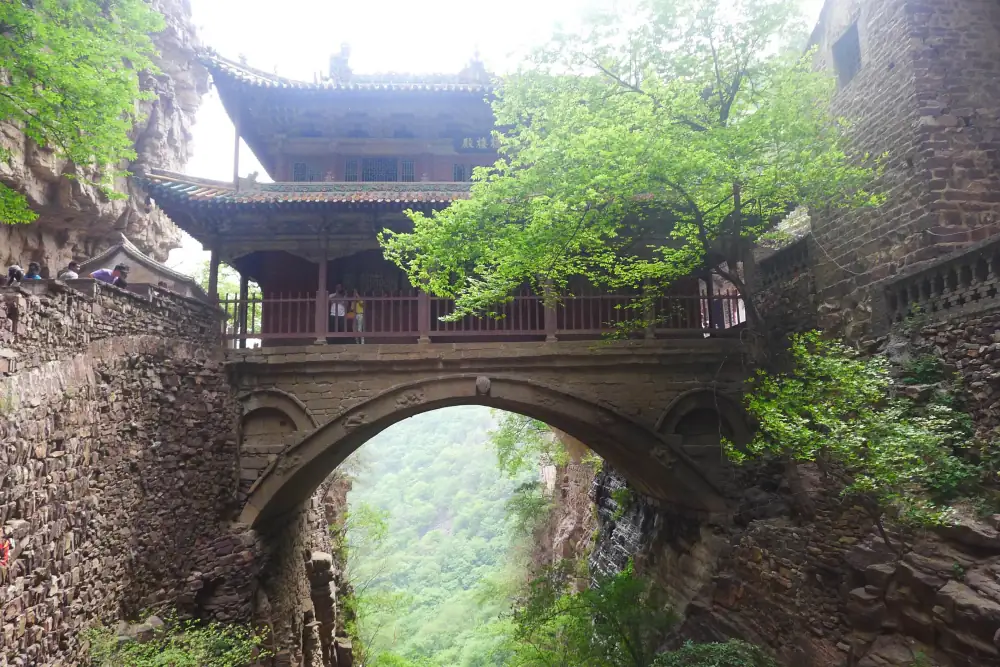
Baiyangdian is the largest freshwater wetland in northern China: a shallow basin fed by several rivers, subdivided by earth dykes and reed banks into dozens of connected pools, each with its own name. Nothing here is deep. In places you can see the bottom, and the boatman’s pole finds mud without effort. What gives the place its character is enclosure rather than scale — reed beds turn open water into a maze of corridors, and travel between two points a short distance apart can involve a long, blind, pleasantly disorienting curve through vegetation.
People have lived on the water for centuries. Villages sit on raised islands reachable only by boat, with lanes barely wide enough for a bicycle, fishing nets drying against brick walls, and ducks patrolling the edges. Reed cutting is a real trade, not a demonstration: bundles stand stacked at the water’s edge in winter, and the woven mats, screens and pressed reed pictures made from them are a genuine local craft.
The marsh also carries weight in modern Chinese memory. During the war against Japan, a local guerrilla unit used the reed channels as cover, ambushing patrol boats and vanishing into vegetation outsiders could not navigate. That campaign produced a body of fiction and film that most Chinese travellers know by heart, and it is the reason a wetland in an unglamorous province draws visitors from across the country. Foreign travellers arrive without that literary baggage, which is no obstacle. If anything it clarifies the appeal: this is a landscape trip with a strong seam of history running through it.
The boat, and how a day on the water works
Almost everything at Baiyangdian happens by boat, and choosing your boat is the single decision that shapes your visit.
Wooden punts, poled or rowed by a boatman, are slow, quiet and by far the better experience. You sit low, close to the surface, and the reeds pass at walking pace. Motor launches cover more water in less time, but the engine flattens the atmosphere and the wake tears at the lotus beds. If you have half a day, take the wooden boat and see less.
Piers ring the marsh, and the practical rule is that the further your pier sits from the island sights, the longer you spend in transit — which can be the best part of the day, or a slog under a midday sun, depending on your temperament. Boatmen work from official pier offices and also freelance along the shore. The official route is duller and safer; freelance arrangements are where travellers most often come unstuck, especially those who cannot negotiate in Chinese.
Agree three things before you set off: which islands you want, roughly how long you will spend ashore at each, and what time you expect to be back. Take the boatman’s contact details and keep them. Boats bunch up at popular landings in summer, and the return leg has a habit of being forgotten in the arithmetic of a hot afternoon.
The sights worth your time
Lotus gardens
The great lotus garden is the headline attraction and deserves the billing between midsummer and early autumn. Cultivated beds hold an enormous range of varieties, from small white cups to heavy pink blooms the size of a face, threaded by causeways, arched bridges and boardwalks that let you walk into the middle of the flowers rather than admire them from a rail. Go early: lotus flowers open at dawn and look tired by late morning, and so do the crowds’ manners. Buy a seed head from one of the stalls and eat the raw kernels as you walk — faintly sweet, slightly green, the definitive taste of the place in August.
The cultural garden and the war museum
A large complex on the eastern side gathers the marsh’s history into one walkable site: a museum devoted to the reed-marsh guerrillas, with flat-bottomed boats, home-made weapons and photographs of impossibly young faces; a reconstructed imperial hunting lodge from the days when Qing emperors came to shoot waterfowl and escape the heat; a temple; and mocked-up water-village streets. Some of it is stagey. The museum is not, and it explains the landscape you have just crossed better than any board on the water.
Village islands
The waterborne villages are the reason to come. Wander a lane or two, look at the boats, watch someone mending a net or splitting reeds, and buy something to eat. The larger villages have organised folk-culture displays; the unorganised parts are more interesting. Here Baiyangdian stops being a scenic area and becomes a place where people live.
Open water and the small pools
Ask your boatman to take you out to a quieter pool away from the main circuit. No ticket gates, no landing stages, nothing to photograph but reeds, water, fishing platforms and sky, which is the point. Half an hour of that does more for you than another garden.
Islands built for entertainment
Several islands have been developed as amusement parks with animal shows, imported revues and fairground rides. They are noisy, unconnected to the wetland and easily skipped.
Getting there and moving around

Baiyangdian sits in the triangle between Beijing, Tianjin and Shijiazhuang, in Anxin County within Baoding (保定) prefecture, which makes it one of China’s more accessible wetlands.
- By rail. Frequent trains connect Beijing with Baoding and with the newer stations serving the Xiong’an (雄安) area, and the ride is short. From the station, continue by local coach or taxi to Anxin county town, which is walking distance from the main pier area. Trains from Shijiazhuang, Tianjin and further south also serve Baoding.
- By coach. Regular services run to Anxin and to Xiongxian (雄县) from the main long-distance stations in Beijing and Baoding. Morning departures fill first, and the last buses back leave earlier than you would like, so confirm the return before you commit to a late afternoon on the water.
- By car. Driving is easy — expressways run close to the marsh from all three big cities, and the final approach is flat and well signposted. A car and driver hired for the day suits anyone combining Baiyangdian with somewhere else in north China.
Locally you need nothing beyond boats and your feet. Taxis and three-wheelers cover the hop between Anxin town and the piers. If you are staying in a village guesthouse, the owner will usually meet you at a pier by boat, which is the simplest arrangement going and worth asking about when you book.
The four seasons
Spring is the marsh at its most austere. Winds sweep the plain, old reeds have been cut and new growth is still low, so sightlines run long and the water looks bigger than it is. Migrating birds pass through, and the first lotus-root shoots reach kitchens, a delicacy you will not get later. Bring a windproof layer and expect dust.
Summer is the main event and the hardest work. Lotus beds flower, reeds reach full height and close the channels into green tunnels, and the whole marsh smells of warm water and vegetation. It is hot, humid and thundery, the mosquitoes are serious, and weekends bring domestic crowds. Sun protection is not optional in an open boat.
Autumn is the connoisseur’s season. Skies clear, humidity drops, reed plumes turn silver and rattle in the wind, and freshwater crab arrives at its fattest. Fewer visitors, better light, easier boats. If you can choose freely, choose early autumn.
Winter empties the place. Cold and dry with little snow, the shallow water freezes hard enough to walk on in the coldest weeks, reeds are cut and stacked, and villages retreat around hot stoves. Boat operations largely stop. Not a conventional sightseeing season, but memorable for anyone drawn to bleak northern landscapes.
Where to stay
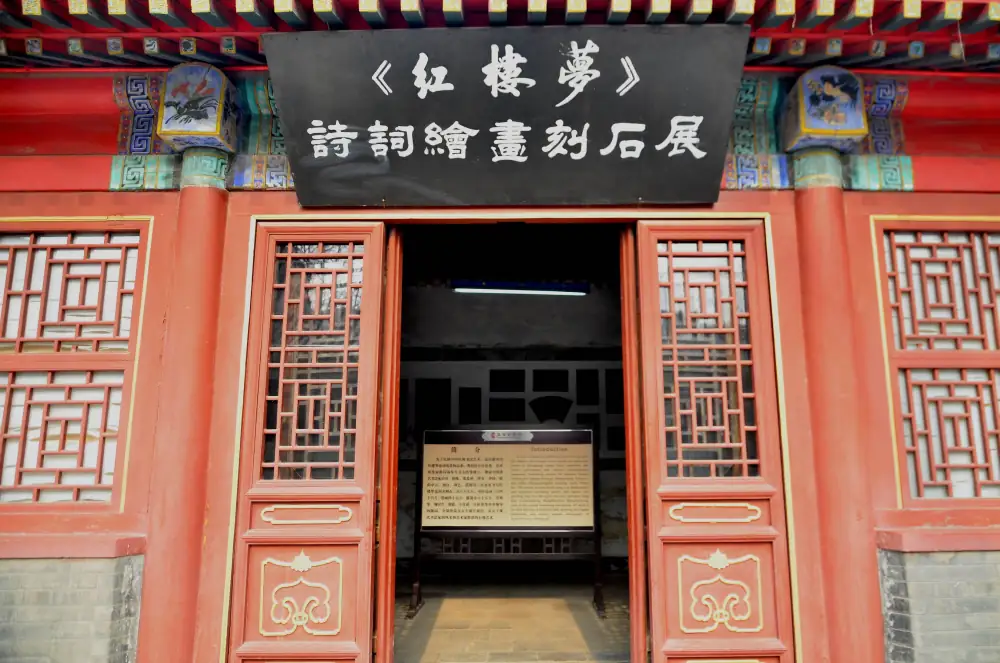
Three options, and they are genuinely different trips.
| Where | What it’s like | Suits |
|---|---|---|
| Village guesthouse on the water | Simple rooms in a family house on an island or the shore, meals cooked by the owners, boats at the door | Travellers who want sunrise, quiet and home cooking |
| Hotels in Anxin county town | Ordinary, comfortable, near shops, banks and transport | Short stays, late arrivals, early departures |
| Resort complexes near the piers | Larger, more facilities, more coach groups | Families and anyone who wants a pool and predictability |
The village guesthouses are the reason to stay overnight. Rooms are plain, plumbing is basic and walls are thin, but you wake with reeds outside the window and eat fish that was in the water that morning. Bring cash and your passport — registration is required everywhere, and card payment is not universal on the islands.
What to eat
Baiyangdian cooks what it catches, and the food is a legitimate reason to come. Hebei seasoning runs salty and savoury rather than spicy, and village kitchens do little to disguise their ingredients.
- Griddle cakes with stewed small fish. The signature dish: a pan of tiny whole fish simmered slowly with cornmeal cakes stuck around the rim so they steam on one side and crisp on the other. Rustic, salty and deeply good.
- The whole-fish spread. A sequence of cold and hot dishes built entirely from fish and shellfish: rolled fillets in egg skin, slippery poached slices, crisp fried chunks. Ordered by the table.
- Lotus root. Crisp, sweet and almost fibreless, served cold and lightly dressed. In spring, ask for young shoots.
- Freshwater crab. Late summer into autumn, steamed plain. Do not over-order; they are richer than they look.
- Smoked fish and salted duck eggs. Sold along the shore. The eggs are the local boast, with orange yolks that run oil when split; buy from a fixed stall, not a wandering seller.
Village guesthouses will cook all of this if you tell them in the morning, and their version usually beats the restaurants clustered around the piers. For more on regional eating, see our wider food coverage.
Practical advice, and what to skip
Skip the amusement islands. The animal shows, imported revues and fairground rides have nothing to do with the wetland, and they eat time better spent on the water.
Skip the motor launch unless you are short of hours. Speed is the enemy of this landscape.
Don’t cram in every ticketed island. Two, well seen, beat five glimpsed from a landing stage. Choose one garden and one village, then spend the surplus on quiet channels.
Ignore the touts. Anyone approaching you on the road with an urgent story about boats or rooms selling out is telling you the one thing that is rarely true. Book through your guesthouse or an official pier office.
Carry cash. Facilities on the islands are thin, and the nearest reliable banking is in the county town.
Bring your own small pharmacy. Sunscreen, insect repellent, motion-sickness tablets if you are sensitive, and a light long-sleeved shirt. There is no shade in an open boat and no chemist on a reed island.
Start early and finish before dark. The marsh is rural, return legs run longer than you expect, and channels are no place to be feeling your way at dusk.
Groups win here. Boats and rooms go by the unit rather than the head, so four or six travellers arrange things far more easily than one. Solo visitors should plan on joining others at a pier.
Two unhurried days is the right shape: arrive, settle into a village, eat well and watch the sun go down behind the reeds; then take a wooden boat out at first light, see a lotus garden before the coaches, and let the afternoon drift. Add the wooded hills and wartime memorials west of Baoding if you want a second act. For more ways to build this into a longer route, browse our itinerary collection.