
Fog comes off the Bohai on a spring morning and the headland disappears, then the villas on it, then the pines. An hour later it lifts and the whole Shandong coast is back — sea walls, fishing boats, and a hillside of grey-roofed European houses left behind by consuls who are long gone. Yantai does this trick often. It is a city that keeps arriving out of the weather.
Table of contents
Open Table of contents
What Yantai is
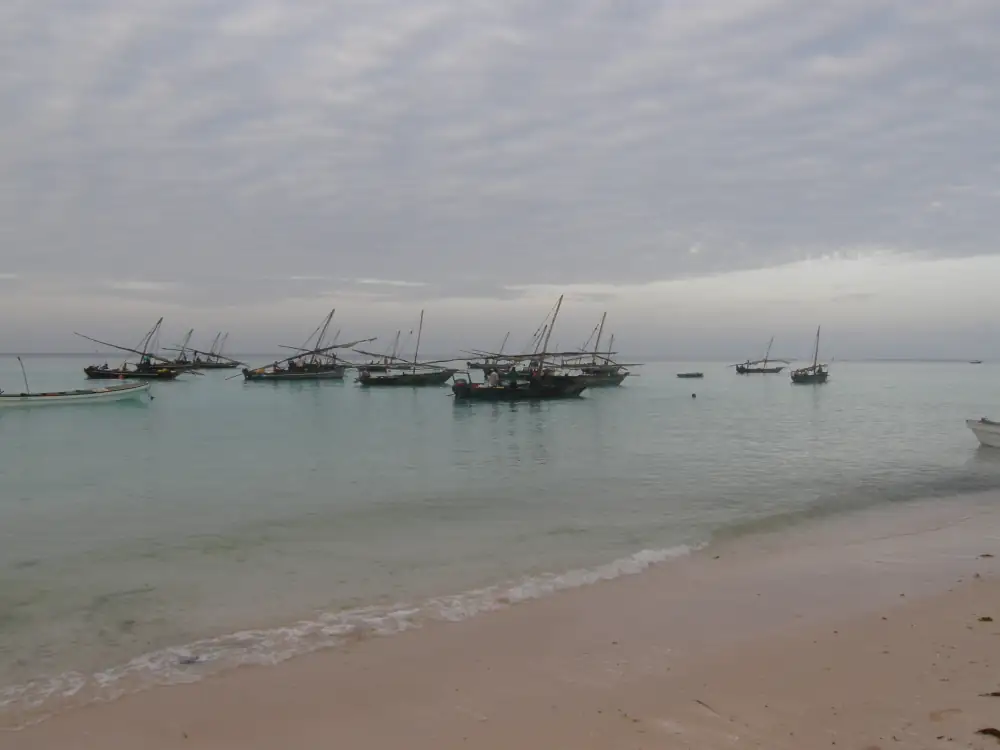
Yantai (烟台) sits on the northern shore of the Shandong peninsula, facing the Bohai on one side and the Yellow Sea on the other, with Weihai to the east, Qingdao to the southwest, and the Liaodong peninsula and Dalian across open water to the north. In antiquity it was called Zhifu. In the nineteenth century it became a treaty port, which is why the headland at the top of downtown carries a cluster of foreign villas and consulates. In the modern imagination it is a summer city: mild, breezy, heavy on seafood, and — a genuine distinction — the birthplace of the Chinese wine industry.
It is not a place with a single overwhelming sight, and travellers who arrive expecting Qingdao’s density of set-piece attractions can be underwhelmed. Yantai works differently. Its appeal is a coastline with several distinct characters strung along it: a mythic temple headland at Penglai, a scattering of low green islands offshore, a pastoral horse island, wine cellars downtown, and a forested inland range. Treat it as a base for a coastal circuit rather than a city to tick off, and it makes much more sense.
Yantai Hill and the old city
Start at Yantai Hill (烟台山), the low wooded headland at the northern edge of the centre with sea on three sides. The path loops past a lighthouse, an old signal point and a series of consular buildings and merchant villas in a jumble of European styles, now largely museum spaces. It takes an hour and a half and it is the most efficient way to understand how the city came to exist in its current shape. Come late in the day when the light works on the water.
Nearby, the Changyu Wine Culture Museum (张裕酒文化博物馆) occupies the original site of the company that started Chinese industrial winemaking more than a century ago. The underground cellars are the real attraction — vaulted brick, cool, dug below the water table and still functioning — and there is tasting at the end. It is one of very few museums anywhere devoted specifically to wine, and it is worth an hour even if you do not care much about the subject.
Around these two, the city offers Tashan Park with a syncretic hilltop nunnery and a pear-blossom temple fair in spring, the East Battery seaside park with its Qing-era gun position, and a coastal sightseeing corridor of bathing beaches, a sea trestle bridge and Moon Bay. Zhifu Island (芝罘岛) just north is described locally as China’s largest land-tied island; it makes a pleasant drive and is the first thing to cut if time is short.
Penglai
The pavilion
Penglai Pavilion (蓬莱阁) is the reason most people come to this stretch of coast, and it earns the reputation. The complex stands on the Danya cliff above the sea at the northern edge of Penglai town, and it is not a single building but a tight cluster of temples and halls that grew over centuries: a Buddhist temple at the entrance, a Dragon King palace, a hall to the Empress of Heaven who protects sailors, a Daoist Three Purities hall, an old theatre building, wave-watching and wind-shelter pavilions, and a stone bridge named for the immortals. It is counted among China’s four great pavilions.
The mythology is the point. This is the shore from which the Eight Immortals were said to have crossed the sea, and the place from which the first emperor’s envoys sailed in search of the elixir of immortality and the three sacred isles. It is also the classic site for the Shandong sea mirage — the “sea market”, a fog-and-refraction effect that produces phantom coastlines and towers on the horizon. It happens rarely and unpredictably, most often at the turn of spring into summer. Do not build a trip around it; be pleased if it happens.
Below the pavilion sits the old water city, one of the earliest purpose-built naval harbours in China, with surviving walls and batteries, and beyond it Tianheng Hill. In the town itself, the former residence of Qi Jiguang — the Ming general who cleared the coast of pirates — preserves imperial arches and an ancestral hall, and slots neatly into the same day.
What to skip in Penglai
Two large modern complexes sit near the pavilion: an Eight Immortals theme area on the waterfront and a replica classical-garden compound of jade halls next door. The craftsmanship in both is genuinely impressive and neither is old. If you have limited hours, the pavilion and the water city are the priority. The polar aquarium is for families with young children and nobody else. Read more historical context in our history archive.
Changdao
The Changdao (长岛) archipelago lies in the strait between the Shandong and Liaodong peninsulas, exactly where the Bohai meets the Yellow Sea, and it is the best full day in the region. Ferries run frequently from Penglai harbour and the crossing is short.
The islands are low, green, wind-scoured and thoroughly maritime — fishing villages, drying nets, sea-cliff paths. The highlights:
- Half Moon Bay (半月湾). A crescent beach made not of sand but of smooth coloured pebbles, sorted by the swell into bands. The signature image of the archipelago.
- Nine-Fathom Cliff (九丈崖). A sheer sea cliff with a walkway beneath it, best at a falling tide.
- The Mazu temple (妈祖庙). Northern China’s oldest and largest temple to the sea goddess, which gave the island its old name of Temple Island.
- Wangfu Reef, Fengshan and Linhai Park. Lookouts, pine woods and coastal paths, plus a seal reef and a bird island offshore.
Admission works as a single combined pass covering the loop rather than site by site, which reinforces the obvious plan: give Changdao a whole day, take the earliest ferry, and do not attempt to combine it with Penglai Pavilion in the same twenty-four hours.
The warning is weather. From late autumn to early spring, wind and swell in the strait suspend the ferries regularly. In summer the crossing is dependable but the boats are full.
Further out
Yangma Island (养马岛) in Muping district is a low, pastoral island of grassy hills where horses were once bred for the imperial army — hence the name — and where racing and riding still happen at weekends. The surrounding water produces the region’s most prized sea cucumber, scallop and abalone. Half a day, mostly for the eating.
Kunyu Mountain (昆嵛山) inland is the highest range on this part of the peninsula, straddling the Yantai and Weihai boundary: deep forest, springs, waterfalls, and a claim to being a cradle of organised Daoism. The best option in the region for anyone who wants a proper walk rather than a coastal stroll — see our hiking coverage for what that involves in northern China.
Mu Family Manor (牟氏庄园) at Qixia is northern China’s largest and best-preserved landlord estate, a warren of courtyards and granaries that explains rural power in a way no palace can. Worth the detour for anyone interested in social history.
Nanshan at Longkou is a large built religious park with a colossal Buddha. Skippable unless monumental statuary appeals.
Getting there and around
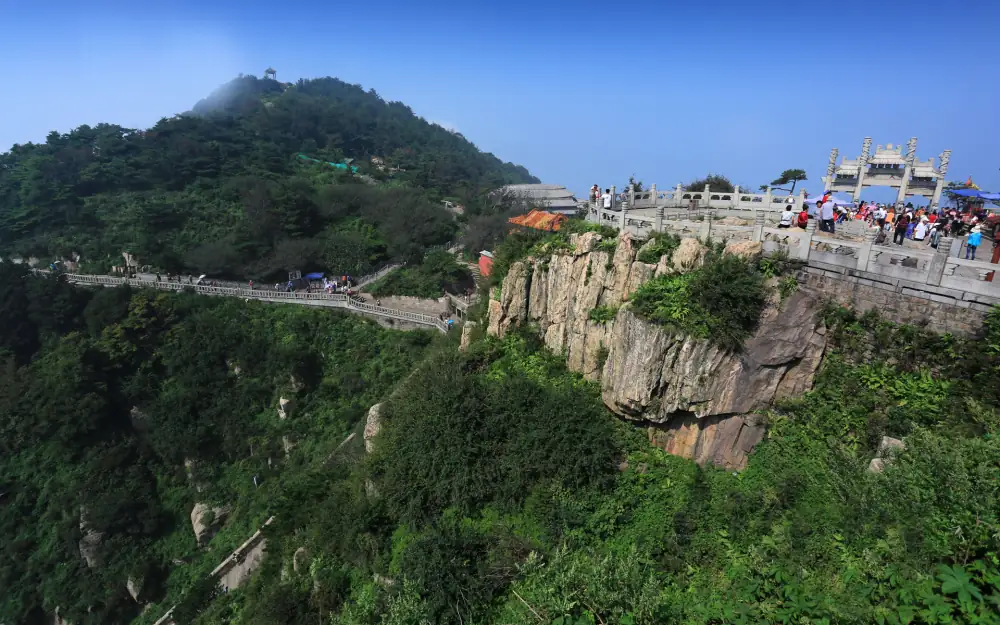
- Air. Laishan International Airport south of the city, with domestic flights plus Hong Kong and Korean routes. Shuttle buses and taxis into town.
- Rail. Yantai is the terminus of the line up the peninsula, connected onward to the main Shandong network, with through services to Beijing, Jinan, Qingdao and further afield.
- Coach. The practical way to reach Weihai, Qingdao and Penglai — frequent, and faster door to door than the train for these short hops.
- Sea. Passenger wharves in the Zhifu district serve Dalian, Tianjin and the islands, and Penglai’s ports run car ferries across to the Liaodong side. For Dalian, take the boat; for Qingdao, take the bus or train.
Within the city, several bus routes function as coastal sightseeing lines strung along the waterfront, taxis are easy, and public bicycles are available with ID registration. One local quirk worth planning around: Penglai’s town buses reach neither the ferry piers nor the pavilion, so allow for taxis or the scenic-area shuttles at that end.
Seasons
Yantai has a temperate monsoon climate moderated unusually by having sea to its north, which means drier, cooler summers and milder, damper winters than inland Shandong.
Spring is the marquee season: mass pear blossom across the orchard country, rape flower in the fields, and the sea fog that occasionally delivers a mirage. Cool mornings.
Summer is peak: swimming, sea breeze, seafood at its best, sand-sculpture festivals on the beaches, and the largest crowds of the year. Comfortable rather than sweltering by Chinese summer standards.
Autumn is arguably the best all-round choice — apples and table grapes coming in, clear air, warm sea, thinner crowds, and the wine harvest.
Winter is windy, grey and hard on the ferry timetable. The city is still walkable and the food is still excellent, but the islands effectively close.
Day-to-night temperature swings are large in every season. Carry a jacket for the sea breeze even in July.
Where to stay
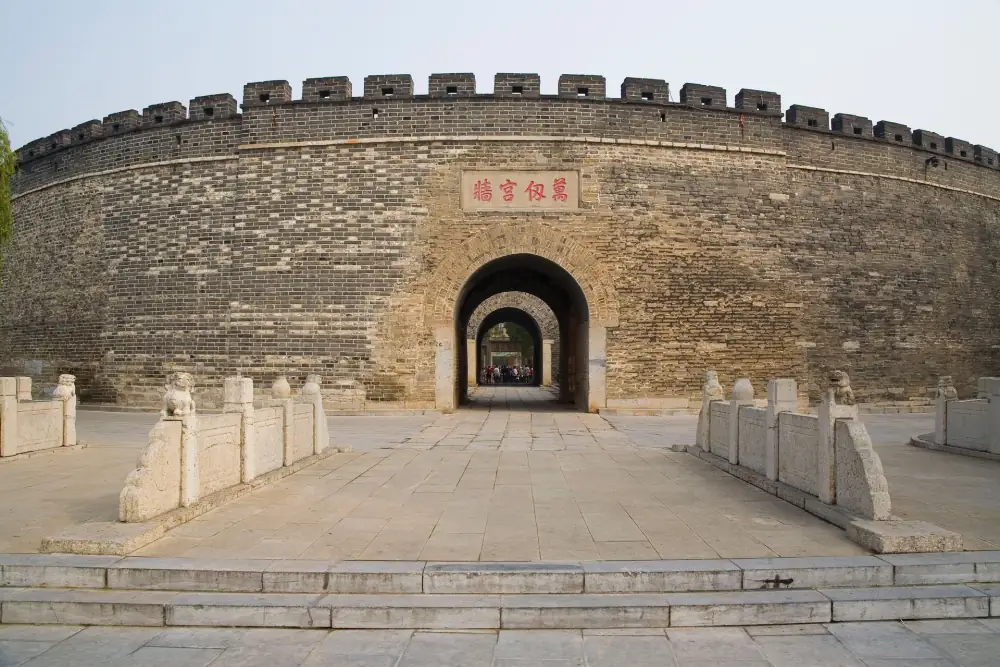
- Downtown Zhifu district. Closest to Yantai Hill, the wine museum, the food streets and the older bathing beaches. Best for a short trip.
- The development zone and Golden Sand Beach. Beachfront properties and the hostel, quiet, orchards behind, weaker transport links into the centre.
- Laishan district. Newer, near the university and its cheap seafood market.
- Muping and Yangma Island. Resort-flavoured, for the horses and the sea-cucumber coast.
- Penglai town. Hotels near the coach station within walking distance of the sea. The obvious base if you want the pavilion at dawn and the island ferry the next morning.
On Penglai and Changdao, fisherman guesthouses are the characteristic option — plain, clean rooms with all meals included, cooked from whatever came in that morning. Book ahead in summer.
Eating
Yantai’s Fushan cooking (福山菜) is one of the three pillars of Jiaodong cuisine, itself the coastal branch of Shandong’s Lu tradition. The style is clean and restrained: fresh ingredients handled quickly, crisp textures, no heavy masking sauces.
- Braised prawns (红烧大虾) — large local prawns, shells on, in a light sauce. The regional signature.
- Fresh fish dumplings (鲜鱼水饺) — mackerel or flounder minced with garlic chives. Order these somewhere unglamorous.
- Oil-blasted double crisp (油爆双脆) — pork stomach tip and chicken gizzard, flash-fried. A technical showpiece.
- Penglai xiaomian (蓬莱小面) — hand-slapped thin noodles in a fish broth thickened with mung-bean starch, eaten at breakfast in Penglai town and nowhere better.
- Yantai menzi (烟台焖子) — sweet-potato starch jelly griddled until crusted, then dressed with shrimp oil, sesame paste and garlic. Street food, and excellent.
- Braised donkey meat (蓬莱卤驴肉) — a Penglai speciality that visitors either take to immediately or not at all.
- Sea cucumber, scallop, abalone and oyster — the Yangma Island coast produces the most sought-after of these on the peninsula.
Local wine is the drink, and it is worth ordering domestically here rather than reaching for an import. For fruit, Yantai apples are nationally famous, the Laiyang pear is ugly and superb, and cherries arrive in late spring.
For cheap and honest eating, the market opposite the university sells seafood at student prices, and the food street on Shangkuang West Road handles the rest. More regional context sits in our food archive.
Three days, sequenced
Day one, the city. Yantai Hill and the villa quarter in the morning. Changyu’s cellars and tasting after lunch. The coastal corridor and a bathing beach in the late afternoon, then a seafood dinner near the water.
Day two, Penglai. Early coach up the coast. Penglai Pavilion first while the sea light is good, then the water city and Tianheng Hill, then Qi Jiguang’s residence in the afternoon. Stay overnight in town and eat xiaomian for breakfast.
Day three, Changdao. First ferry from Penglai harbour, the island loop across a full day, and the late boat back — or a fisherman’s guesthouse on the island if you can spare the night.
Extend by adding Yangma Island for a weekend of horses and shellfish, Kunyu Mountain for a forest day, or continuing east to Weihai and south to Qingdao for a full peninsula circuit.
Honest advice
Do not chase the mirage. Do not attempt Penglai and Changdao in one day. Do not skip the wine cellars because a wine museum sounds dull; the underground vaults are the single most atmospheric interior in the city.
If you must cut something: Zhifu Island, then the Penglai theme complexes, then Nanshan. If the ferry is cancelled and Changdao is out, substitute Yangma Island and Kunyu Mountain rather than trying to fill the day in town, which will not take it.
Bring sunglasses and a windproof layer whatever the forecast says, and accept that on this coast the weather makes at least one decision for you.