
Stand on the suspension bridge above the Fish Mouth on a summer afternoon and you can feel the whole thing working through the deck. The Min River comes out of the mountains grey with silt, hits a low stone snout, and splits. One half goes left, down the flood channel. The other half turns right into a channel cut through solid rock and goes on to water a plain the size of a small country. Nobody built a dam. Nobody has built one since. Dujiangyan (都江堰) has been doing this, more or less continuously, since the third century BC.
Table of contents
Open Table of contents
Why This Is Not Just Another Old Monument
Most ancient engineering in China survives as ruin or as heritage exhibit. Dujiangyan survives as infrastructure. The system still irrigates the Chengdu plain, still supplies water to cities, still gets maintained every year, and the design principles it was built on have not been superseded — they have been reinforced in concrete.
The problem it solved was specific. The plain west of Chengdu was fertile but subject to violent alternation: the Min River flooded catastrophically in the wet season and left the fields dry the rest of the year, and the old poetry about the region is full of drowned villages. A Qin-appointed governor of the Shu commandery and his son took on the job of fixing it permanently, and rather than blocking the river they divided it and then regulated the division.
The result turned a disaster zone into what Chinese writing has called the Land of Abundance ever since. That is the reason Dujiangyan matters, and the reason a visit here is a different sort of experience from a temple or a palace: you are looking at a machine, and it is running.
The Three Works, and How to Read Them
Understand the three main components before you arrive and the site opens up. Miss this and it is a pretty river walk.
The Fish Mouth
A long, low levee shaped like a blunt snout points upstream into the current, dividing the river in two. The outer channel is the Min’s natural course and takes the bulk of the flood; the inner channel is artificial and feeds the irrigation network.
The clever part is that the split is not fixed. The levee is sited on a bend, and because the deeper inner channel sits on the inside of the curve, low water is drawn preferentially into it while high water — riding higher and faster — overshoots into the outer channel. The proportions therefore reverse between dry season and flood, automatically, with no gates and no operator. Read it as a piece of applied hydraulics rather than a wall and it becomes genuinely impressive.
The Flying Sand Weir
Downstream of the split, a low spillway connects the inner channel back to the outer one. When the inner channel carries more water than the intake below can take, the surplus simply goes over the top and returns to the river.
Its second function is the one it is named for. The river arrives loaded with sand, gravel and boulders off the mountains, and if that load reached the irrigation canals it would silt them solid within a few seasons. Because the water is forced to turn at this point, centrifugal action throws the heavy material outward and over the weir, back into the flood channel. Sediment management by geometry. The original structure was bamboo baskets packed with cobbles, replaced and rebuilt every year; it is concrete now, which is less charming and much less work.
The Bottle-Neck
The last element is a channel cut clean through the ridge of Yulei Mountain (玉垒山) — a hard notch that acts as a throttle on how much water the inner system can accept, no matter what the river is doing upstream. Cutting it through rock without iron tools took years of heating and quenching the stone. The piece of hill left stranded on the far side is called the Detached Heap, and there is a temple on top of it with an early stone statue of the system’s builder inside.
Look down into the notch from the temple terrace. In flood the water goes through it like something under pressure. In winter it is nearly gentle, and you can see the tool marks.
What Else to See on Site
The Anlan suspension bridge crosses the river above the Fish Mouth on cables, with a plank deck that moves under you. It is the best vantage point on the whole headworks and mildly alarming in a crowd.
The Two Kings Temple on the slope above honours the governor and his son, who were deified for the work. The buildings are late imperial and early twentieth century, with calligraphy by a Republican-era general over the gate and stone carvings after two famous modern painters at the back. The Wenchuan earthquake did severe damage here and the restoration took years; it is worth knowing what you are looking at.
The Songmao Ancient Road was the only route from the plain to the Tibetan and Qiang areas upstream, a branch of the trade network that moved tea north and silk west. Only a short section survives, inside the scenic area, and walking it takes minutes — but it is the actual road, cut into the hillside, and it explains the town’s historic function better than any museum panel. See our history archive for more on these trade routes.
Yulei Pavilion on the hilltop is a modern tower and the single best view: the whole system laid out below with the split visible, the temple roofs, the bridges, and the city beyond. A long covered escalator gallery climbs to it from near the temple, which is a slightly absurd piece of infrastructure and a genuine kindness on a hot day. Walking up through the pines is better if your legs are willing.
The Detached Heap garden at the south gate is a bonsai and ancient-tree garden, and this region is the birthplace of the Sichuan school of miniature landscape. Ten quiet minutes on the way in or out.
The Old Town and the River at Night
Walk out of the scenic area at the south end and you cross the South Bridge, a heavily ornamented covered bridge with painted beams and a ceiling worth looking up at. On the far side is Guanxian Old Town.
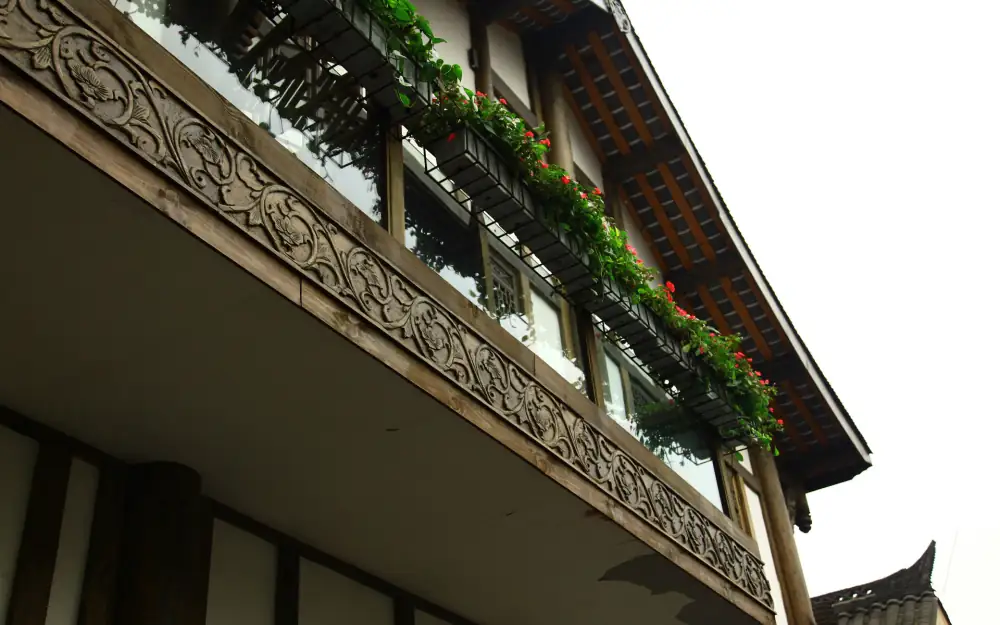
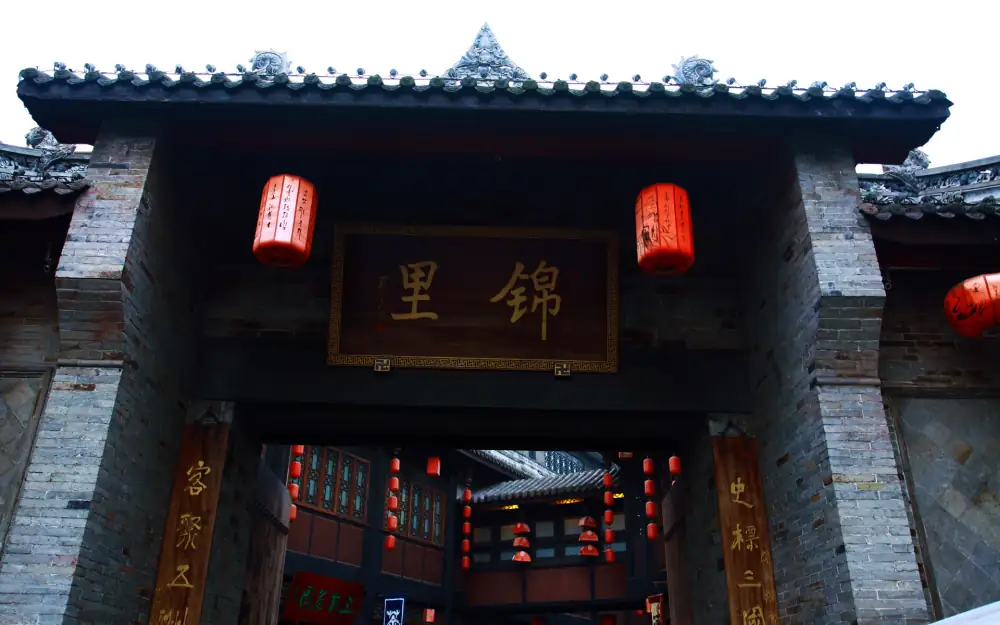
The town was rebuilt in west Sichuan style — timber shopfronts, grey tile, a restored gate tower, a Confucian temple street, an old county office, a city god temple up the hill. It is a reconstruction and makes no secret of it. What is real is the function it once had: this was the last major depot on the plain before the mountains, the starting point of the road north, and prosperous enough to be nicknamed little Chengdu.
Stay into the evening. The river-front strip below the bridge is where Dujiangyan does its best work — long rows of tables set out beside the water, and a supper culture that locals refer to as “night beer” and which in practice means several hours of small dishes, cold bottles and conversation while the river goes past in the dark. It runs through the warmer months and it is one of the more relaxed evenings you can have in Sichuan. Note that the run of tables closest to the bridge and the scenic gate is the touristed one; the strip that locals actually favour is a short ride away near the flower and bird market.
Getting There and Around
Chengdu is the base for essentially everyone. The intercity rail line runs out to Dujiangyan and continues to the station for Mount Qingcheng, and it is the obvious choice: short, frequent, and it drops you close enough to the scenic area to finish by local bus or taxi. Buses to Dujiangyan leave from several Chengdu stations throughout the day, and a shuttle links the airport directly if you are arriving and going straight out.
Drivers have a choice of several routes across the plain, some tolled and some not, all of them ending at the car parks by the south gate. Local buses in Dujiangyan connect the rail station, the coach centre and the scenic area gate; taxis are plentiful and journeys within the city are short.
Practically, the tidiest plan is: rail out early, enter at the south gate, work upstream through the Bottle-Neck and the weir to the Fish Mouth, cross the suspension bridge, climb to the temple and the pavilion, come down, cross the South Bridge into the old town, eat, and take a late train back — or stay the night and do Mount Qingcheng in the morning. See our Sichuan itineraries for how this fits a longer trip.
Mount Qingcheng and Other Additions
Mount Qingcheng (青城山) sits a short distance southwest and is treated locally as the other half of the same excursion. It is one of the founding sites of Taoism as an organised religion — a teacher established his community here in the second century — and its reputation is for seclusion rather than drama. Dense forest, mist, stepped paths, and a scatter of halls: a front mountain with the main temples and a cable car, and a back mountain that is wilder, wetter and better for walking. It deserves most of a day.
Hongkou, north of the city, is the nearest area of genuinely wild forest to Chengdu and is where locals go rafting in summer or set up mahjong tables in the shallows of a stream. Add it only if you have a spare day.
Two large staged performances operate in the city, one an outdoor landscape spectacle by the river and the other an indoor production. They are competently done and entirely skippable.
Seasons
Spring brings the water-releasing festival at Qingming, when the inner channel is ceremonially opened for the growing season. It is on the national intangible heritage list, it is genuinely old, and it is crowded — plan around it deliberately in either direction.
Summer is when the system is most impressive to watch, with the river high and the weir working hard, and it is also when locals come up from Chengdu to escape the basin heat. This is peak season for the night-beer strip and for rafting. Expect rain and expect company.
Autumn is the best for views. Clear air, comfortable temperatures, ginkgo colour in the old town, and the long prospect from the hilltop pavilion actually visible rather than lost in haze.
Winter is the connoisseur’s choice. Water levels drop, the structures stand exposed, and you can see the shape of the levees, the weir and the rock cut in a way that summer’s full river hides completely. It is grey, damp and quiet. If you came for the engineering rather than the scenery, come now.
Where to Stay
Most visitors do not stay, and that is a defensible choice. If you do, the old town is the best base — small hotels and guesthouses within walking distance of the scenic area gate and the river-front tables, which is exactly where you want to be at nine in the evening.
The newer part of the city has more mid-range and business hotels, better value in rooms and worse in atmosphere, with the compensation of being close to the rail station. A handful of places sit right against the scenic area itself; convenient in the early morning and dead at night. Nearer Mount Qingcheng there are guesthouses at both the front and back approaches, worth considering if you intend to be on the mountain at dawn.
What to Eat
Dujiangyan eats like a Sichuan county town with a tea-house pace, and the local specialities are worth planning around.
Look first for the local noodles topped with a crumbly, deep-fried minced pork that has been cooked down until it is crisp — dry, savoury, and much better than its unpromising appearance. Then trotter soup, simmered until the meat collapses, served with snow peas and a dipping sauce, and available very late at night, which tells you what it is really for. Roast rabbit sold by the whole animal is a regional habit that surprises visitors and converts most of them.
Beyond that: skewered dry tofu in chilli, cold wheat-starch noodles with dumplings, hand-rolled spring rolls from a stall with one table and three chairs, and beef with soft bean curd. On the river front, the food is freshwater — stir-fried prawns, coiled eel, crayfish, snail meat, edamame, boiled peanuts and enough chilli to justify the beer. Our food guides cover the wider Sichuan repertoire.
For taking home, the Mount Qingcheng area sells a cluster of specialities including a kiwi-based milk wine, a tribute tea, Taoist-style pickles and a ginkgo-and-chicken stew. The plain around Dujiangyan is also a major producer of two medicinal herbs, sold in every market here, and the town has a long tradition of carving root wood into figures.
Honest Advice
Learn the three works before you go. Without that, the site is a river with paths. With it, you will spend two hours happily working out what each structure does.
Go early. Tour groups from Chengdu arrive mid-morning and concentrate on the temple and the suspension bridge.
Do not try to do Dujiangyan and Mount Qingcheng in one day. People do, and they see neither properly. If you only have one day, choose the waterworks — the mountain rewards time in a way that cannot be rushed.
Skip the shows and the souvenir arcades. Skip Hongkou unless rafting is the point of your trip.
Bring rain gear rather than an umbrella. This is a wet corner of Sichuan and the riverside paths are exposed.