
When summer heat grips much of China, Guizhou (贵州, Guìzhōu) emerges as a cool oasis with its high-altitude plateaus, misty mountains, and vibrant ethnic cultures. With average summer temperatures hovering around 16-25°C, this southwestern province is a natural air conditioner. But Guizhou offers more than just respite from the heat: it’s a land of dramatic karst landscapes, ancient Miao and Dong villages, and a fiery sour cuisine that will awaken your taste buds. From hiking through the world’s largest wild leek flower sea to sipping rice wine in a hidden village, here’s your ultimate guide to a Guizhou summer escape.
Table of contents
Open Table of contents
Why Guizhou for Summer?
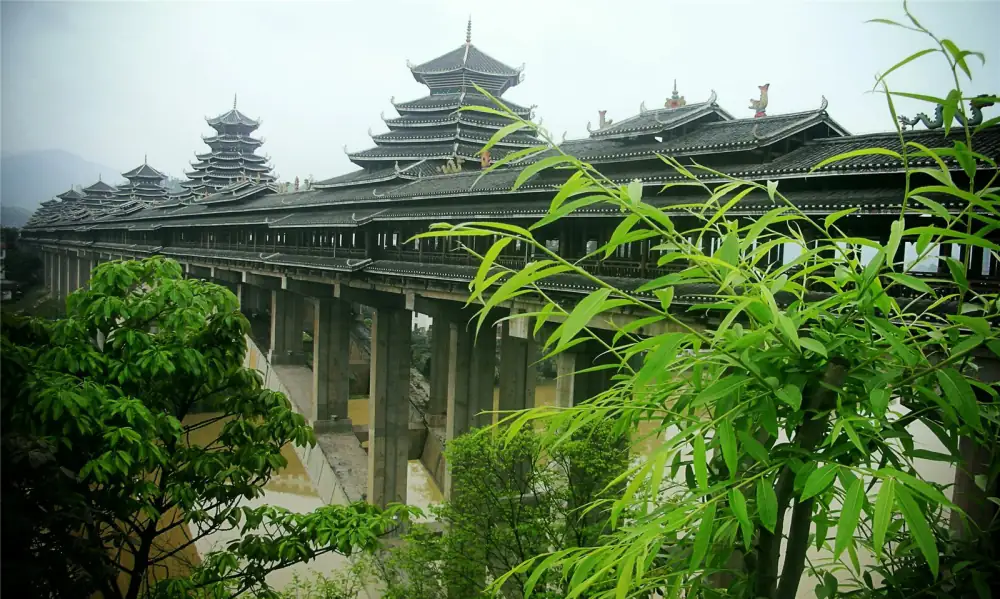
Guizhou’s geography is its secret weapon. The province sits on the Yunnan-Guizhou Plateau, with an average elevation of about 1,100 meters. The combination of altitude, lush forests (over 60% coverage), and monsoon climate keeps temperatures pleasant even in July and August. The “cool capital” Liupanshui is famous, but lesser-known spots like Bijie (毕节, Bìjié) and the “Roof of Guizhou” at Caocaiping (韭菜坪, Jiǔcài Píng) offer even cooler escapes, with summer averages around 16-18°C. Nights are genuinely cool—you’ll likely need a light jacket or sweater.
Beyond the climate, Guizhou’s summer is a feast for the senses: purple flower seas on mountain tops, ancient villages where time seems to stand still, and a cuisine that balances sour, spicy, and savory in every bite.
Top Summer Destinations in Guizhou
1. Caocaiping (韭菜坪): The Purple Flower Sea
Located in Hezhang County (赫章县, Hèzhāng Xiàn), Bijie, Caocaiping is the highest point in Guizhou at 2,900.6 meters. It’s divided into two areas: Big Caocaiping (大韭菜坪, Dà Jiǔcài Píng) at 2,777 meters, famous for its 10,000 mu (about 667 hectares) of wild leek flowers that bloom in August and September, and Small Caocaiping (小韭菜坪, Xiǎo Jiǔcài Píng), the true summit. The sea of purple blossoms, often called the “Oriental Provence,” is a sight to behold, especially when combined with rolling clouds and wind turbines on the ridges.
2. Huangguoshu Waterfall (黄果树瀑布)
China’s largest waterfall is a must-see in summer when water flow is at its peak. The thunderous roar and misty spray are refreshing on a hot day. Walk behind the waterfall for a unique perspective, and explore the nearby Tianxingqiao and Doupotang areas.
3. Xijiang Qianhu Miao Village (西江千户苗寨)
The largest Miao village in China, with over 1,000 stilted wooden houses cascading down a hillside. Summer evenings are magical as thousands of lights twinkle like stars. Experience Miao hospitality, try sour fish soup, and watch the grand evening performance.
4. Libo Small Seven Arch Bridge (荔波小七孔)
A UNESCO World Heritage site, this scenic area is known for its emerald-green water, karst peaks, and 68-level waterfall. The “Seven Arch Bridge” itself is a picturesque Ming dynasty structure. The water is particularly vibrant in summer, and the lush vegetation provides ample shade.
5. Fanjingshan (梵净山)
A sacred Buddhist mountain and UNESCO site, Fanjingshan is cool year-round. The hike to the “Red Clouds Golden Summit” is challenging but rewarding with views of sea clouds and ancient temples. Summer is the best time to see the rare Guizhou golden monkey.
Suggested Itinerary: 5 Days in Guizhou
Day 1: Arrive in Guiyang (贵阳)
Explore the city’s relaxed vibe. Visit Jiaxiu Tower (甲秀楼) and Qianling Park (黔灵山公园). In the evening, head to Erqi Road Snack Street (二七路小吃街) for local street food like sour soup noodles and grilled tofu.
Day 2: Guiyang to Huangguoshu (2h drive)
Spend the morning at Huangguoshu Waterfall. After lunch, drive to Xijiang Qianhu Miao Village (3h). Check into a stilted guesthouse and enjoy the night view.
Day 3: Xijiang to Kaili (凯里) and the Southeast
Morning at leisure in Xijiang. Then drive to Kaili (1h), the capital of Qiandongnan Miao and Dong Autonomous Prefecture. Visit the Kaili Ethnic Museum and the Embroidery Market (绣里淘) on Friday. Continue to Danzhai (丹寨) for a batik workshop.
Day 4: Danhai to Libo (3h drive)
Explore Dong Village in Danhai, then drive south to Libo Small Seven Arch Bridge. Spend the afternoon hiking the scenic trails. Stay overnight at a hotel near the park.
Day 5: Libo to Guiyang (3h drive)
Return to Guiyang for departure. If time allows, visit the Guizhou Provincial Museum.
Getting There & Around
- By Air: Guiyang Longdongbao International Airport (KWE) has direct flights from major Asian cities. From the airport, take the metro (Line 1) or taxi to the city center.
- By Train: High-speed trains connect Guiyang to Beijing (8h), Shanghai (9h), Guangzhou (4h), and Chengdu (3h). The Guiyang North Railway Station is the main hub.
- Getting Around: For flexibility, rent a car with a driver (about ¥500-800/day). Alternatively, use the extensive bus network between cities and scenic spots. Didi (Chinese Uber) works well in cities.
Where to Stay
Guizhou has a growing number of boutique hotels and homestays. For a unique experience, stay in a Miao stilted house in Xijiang or a Dong village guesthouse. In Guiyang, consider the Guiyang Pullman or Howard Johnson Plaza for comfort. For luxury, the Huangguoshu Bailian Hotel offers waterfall views.
Food: The Sour and Spicy Soul of Guizhou
Guizhou cuisine is defined by its sour soup (酸汤, suān tāng), a fermented tomato and chili base that’s both refreshing and addictive. The Red Sour Soup (红酸汤) from Kaili is legendary—perfect for hotpot with beef, fish, or vegetables. Don’t miss Sour Fish Soup (酸汤鱼), a local specialty.
Other must-tries:
- Luoguo (烙锅): A DIY griddle where you cook meats and vegetables on a convex pan, dipping them in spicy dry rub.
- Hulu Chili (糊辣椒): Smoked chili flakes used as a condiment or in dipping sauces.
- Zhe’ergen (折耳根): Fish mint root, an acquired taste but a local staple.
- Sour and Spicy Rice Noodles (酸辣粉): A street food classic.
For more on local flavors, see our Guizhou food guide.
Best Time to Visit
July to September is ideal for summer escapes. August is peak for the Caocaiping flower bloom and Huangguoshu’s water volume. September offers cooler temperatures and fewer crowds. Avoid Chinese national holidays (October 1-7) when domestic tourism surges.
Practical Tips for International Travelers
- Visa: Most visitors need a tourist visa (L). The 144-hour transit visa is available for select nationalities at Guiyang airport—check with your local embassy.
- Mobile Payment: Alipay and WeChat Pay are widely accepted. Set up these apps before your trip and link a foreign credit card. Carry some cash for remote villages.
- Language: Mandarin is the official language. In rural areas, Miao and Dong languages are spoken. Learn a few phrases: “Thank you” (谢谢, xièxiè), “How much?” (多少钱, duōshao qián).
- Etiquette: When visiting ethnic villages, ask before taking photos of people. Dress modestly. Remove shoes before entering homes.
- Health: Altitude sickness is rare below 3,000m, but stay hydrated. The sun can be strong—bring sunscreen and a hat.
- Connectivity: A local SIM card (China Mobile or Unicom) is cheap and easy to buy at the airport. VPNs may not work reliably; download offline maps and translation apps.
Costs
- Budget: ¥300-500/day (hostels, street food, public transport)
- Mid-range: ¥800-1,200/day (3-star hotels, restaurant meals, private car)
- Luxury: ¥1,500+/day (5-star hotels, fine dining, guided tours)
FAQ
Q: Is Guizhou safe for solo travelers? A: Yes, Guizhou is generally very safe. Violent crime is rare. Take normal precautions like safeguarding valuables and avoiding poorly lit areas at night.
Q: Do I need to speak Chinese to travel in Guizhou? A: In cities and major tourist spots, some English is spoken. In rural areas, very little. A translation app like Google Translate (with offline packs) is essential.
Q: What should I pack for a summer trip? A: Light layers for warm days, a jacket for cool evenings, sturdy walking shoes, rain gear (sudden showers are common), sunscreen, insect repellent, and a reusable water bottle.
Q: Can I use credit cards in Guizhou? A: International credit cards are accepted in large hotels and some restaurants in cities, but for most transactions, mobile payment or cash (RMB) is needed.
Q: Are there any cultural taboos I should know? A: In Miao and Dong villages, avoid touching people’s heads (considered sacred), and never point at sacred objects or altars. Always ask before photographing people.
For more travel inspiration, check out our southwest China itineraries and nature guides.