
Longmen Fengxian Temple — the masterpiece of Tang Dynasty Buddhist sculpture, carved by order of Empress Wu Zetian, one of the great works of world art
Henan (河南) was the geographic and cultural centre of Chinese civilisation for 3,000 years. More Chinese capitals have been located in Henan than any other province — Shang, Zhou, Han, Tang, Song dynasties all established their power here. The Yellow River valley soil that enabled those civilisations is still visible in the cliffs and gorges around the cities; the heritage they left is among the most significant in China.
Table of contents
Open Table of contents
Luoyang (洛阳)
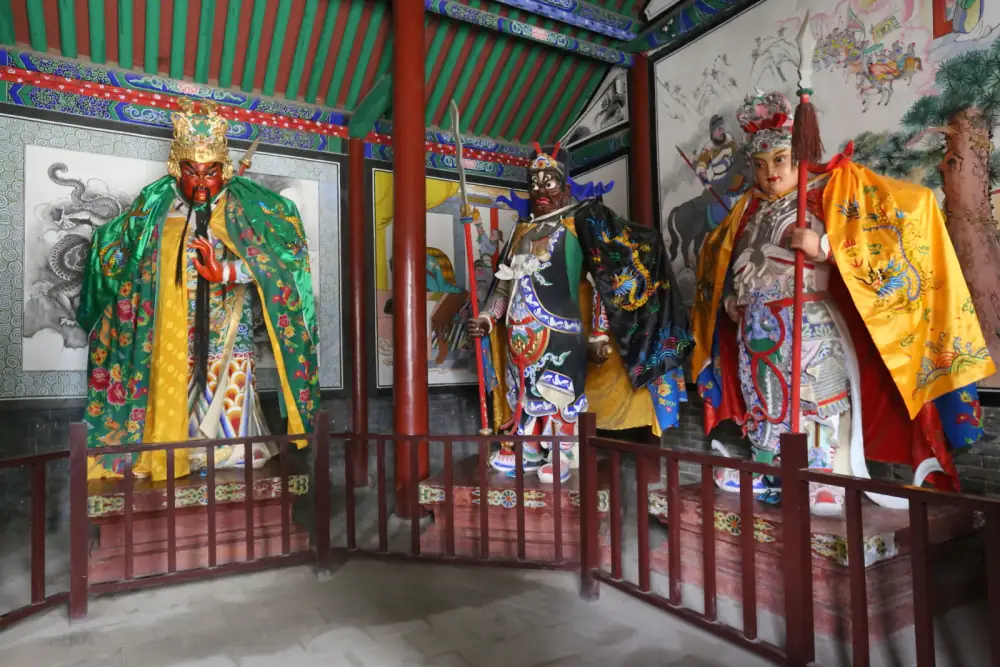
China’s ancient capital — capital of China for a total of 1,500 years across nine dynasties. Today most famous for two things: the Longmen Grottoes and peonies.
Longmen Grottoes (龙门石窟)
A UNESCO World Heritage Site — 2,300 caves and niches carved into limestone cliffs along the Yi River over 400 years (493–907 AD), containing over 110,000 Buddhist statues ranging from 2 cm to 17 metres.
The scale: The cliffs run for 1 km on both sides of the river; the carvings are so dense that the stone is more decoration than cliff. The approach along the riverside path, looking across at both cliff faces simultaneously, gives the scale most clearly.
Fengxian Temple (奉先寺): The masterpiece. Built by the Tang Emperor Gaozong and Empress Wu Zetian in 672–675 AD — the central seated Buddha (Lushena Buddha, 卢舍那大佛) is 17.14 metres high, with a face of extraordinary calm. The attendant figures — arhats, guardians, celestial beings — are carved with individual personality and movement. One of the great works of world art.
Thousand Buddha Cave (万佛洞): Over 15,000 small carved Buddhas covering every surface — a complete and overwhelming visual statement about devotion.
Ticket: ¥90. Open 7:30 AM – 7:00 PM (summer). Allow 3 hours minimum.
Longmen Grottoes from the river — 110,000 Buddhist statues carved into 1 km of cliff face between 493 and 907 AD
Luoyang Peonies (洛阳牡丹)
Luoyang has been China’s peony cultivation centre since the Tang Dynasty — the imperial court’s demand for rare peony varieties drove the development of hundreds of cultivars. Today the National Peony Garden (国家牡丹园) and several other parks display over 1,000 varieties, with the main bloom occurring in April (typically April 5–25).
During the Luoyang Peony Festival (洛阳牡丹文化节) the city essentially becomes a flower festival — peonies in every park, in temporary displays in public squares, and planted along the central avenues.
Luolong Ancient City (洛邑古城)
A recently-restored historical zone preserving Luoyang’s old city fabric — Tang-era street layouts, traditional architecture, and themed food streets. More curated than purely historical, but genuinely attractive and a good way to understand the scale of the old capital.
Luoyang Peony Festival — over 1,000 cultivated varieties blooming in April, continuing the Tang Dynasty imperial tradition of peony cultivation
Shaolin Temple (少林寺)
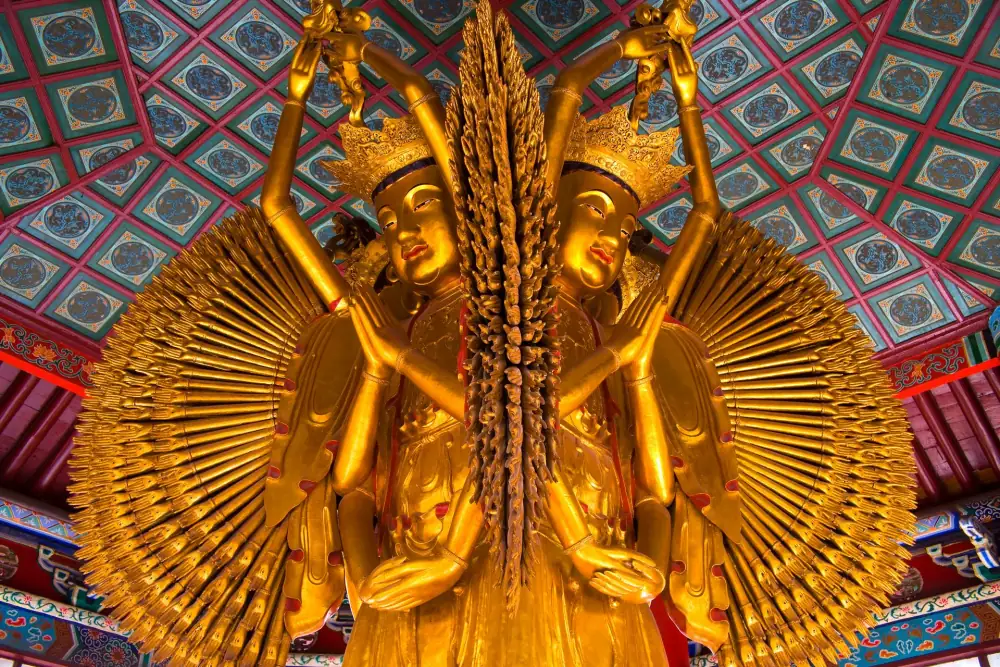
70 km southwest of Zhengzhou (郑州) on Mount Song (嵩山) — the most famous Buddhist temple in China by international reputation, birthplace of Zen Buddhism (Chan in Chinese), and the legendary origin of Chinese martial arts.
History: Founded in 495 AD; a visiting Indian monk (Bodhidharma/达摩) meditated here and developed the teaching method that became Chan Buddhism. The physical training the monks developed to support long meditation sessions became the foundation of the Shaolin martial arts tradition.
Today: Shaolin is both a functioning Buddhist monastery and a major commercial/cultural institution — the monks perform martial arts demonstrations several times daily; multiple martial arts schools occupy the area. The commercial development is visible but doesn’t completely overwhelm the genuine temple complex.
What to see:
- Pagoda Forest (塔林): 246 brick and stone pagodas built between the 8th and 20th centuries — each commemorating a significant monk. The density of forms across the hillside is extraordinary.
- The temple itself: Multiple halls rebuilt after destruction during the 1928 Warlord Period, now in good condition. The training yard where monks practice is visible to visitors.
- Martial arts demonstrations: Daily in the Shaolin temple plaza — impressive regardless of whether you find the commercial context jarring.
Ticket: ¥100 (temple + pagoda forest). Getting there: Bus or taxi from Zhengzhou (90 min) or Luoyang (60 min).
Practical Tips
Getting to Luoyang: Luoyang Beijiao Airport (LYA) or high-speed rail from Zhengzhou (45 min), Xi’an (1.5 hrs), Beijing (3 hrs).
Getting to Zhengzhou: Zhengzhou Xinzheng Airport (CGO) — major hub; High-speed rail junction connecting all directions.
Combined itinerary: Zhengzhou (Shaolin day trip) → Luoyang (Longmen Grottoes + peonies) → Xi’an (Terracotta Warriors) is a natural 5-day ancient China circuit.
Last updated: May 2026