
Yuanyang rice terraces at sunrise — 1,300-year-old Hani irrigation terraces reflecting the sky like shattered mirrors, UNESCO-listed for cultural and natural significance
Yunnan Province reaches into the tropics at its southern tip — Xishuangbanna (西双版纳) borders Myanmar and Laos, sharing climate and culture with Southeast Asia. Five hours north by car, the Hani people of Yuanyang have carved the most beautiful rice terrace landscape in China over 1,300 years of continuous farming. These two destinations represent Yunnan’s most unique contributions to Chinese travel.
Table of contents
Open Table of contents
Xishuangbanna (西双版纳)
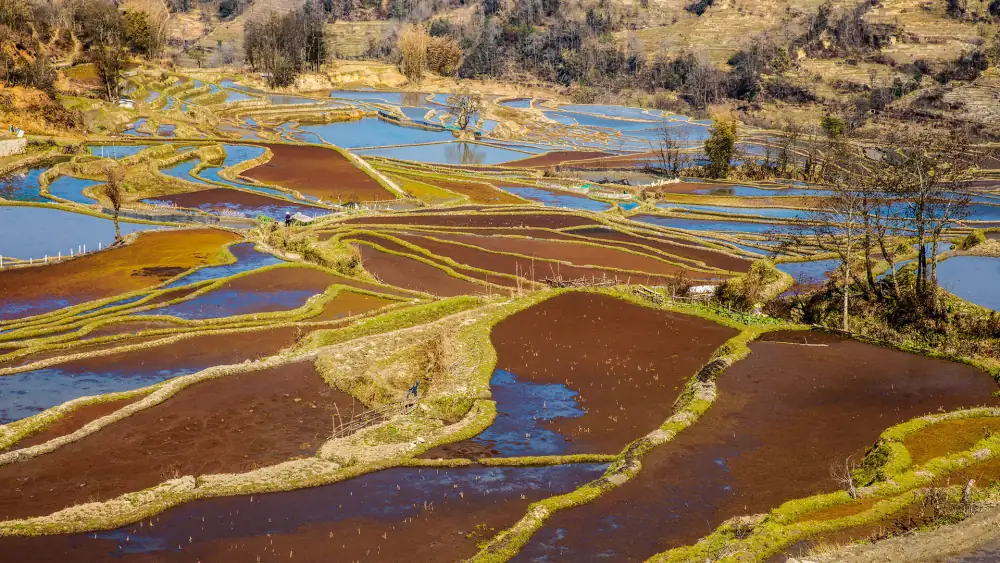
China’s only tropical rainforest zone — on the same latitude as Myanmar, Laos, and northern Thailand. The Dai ethnic minority people here are closely related to the Thai people of Thailand and follow Theravada Buddhism (the southern Buddhist tradition), making the temples and ceremonies here look Southeast Asian rather than Chinese.
Jinghong (景洪): The City Base
The Xishuangbanna capital — a subtropical city of 400,000 on the Mekong River (澜沧江 in Chinese). The Mekong here is already a significant river, and the evening waterfront is a social hub.
What to do in Jinghong:
- Manting Temple (曼听公园): A Theravada Buddhist temple with white spired pagodas in the Thai style — the most atmospheric in the city
- Traditional Dai Village (傣族园): A managed presentation of Dai village life with genuine resident families and the best easily-accessible context for Dai Buddhist architecture and daily rhythms
- Morning market: The Manting Road market (5 AM–8 AM) is a genuine daily market where Dai, Hani, and Akha minority people sell produce and forest products
Jinuo Mountain (基诺山)
30 km east of Jinghong — home of the Jinuo people, one of China’s smallest recognised minority groups (approximately 24,000 people). The Jinuo are animist with ancient traditions of forest management and medicine. The village visits here feel less staged than the more-visited sites.
Mengla (勐腊) Tropical Rainforest Reserve
Near the Laos border — the Nabanhe Watershed National Nature Reserve and Bubeng Conservation Area contain genuinely pristine tropical forest with wild Asian elephants (野象), gibbons, and rare bird species. The Wild Elephant Valley (野象谷) north of Jinghong offers reliable Asian elephant viewing from elevated walkways.
Water Splashing Festival (泼水节)
The Dai New Year — celebrated in mid-April (same as Thai Songkran) with three days of water splashing, traditional boat racing on the Mekong, and temple ceremonies. This is the most significant Dai cultural event and an extraordinary experience, but also the most crowded tourist period.
Xishuangbanna — China’s only tropical rainforest, shared latitude with Myanmar, Laos, and Thailand, with wild Asian elephants and 5,000 plant species
Yuanyang Rice Terraces (元阳哈尼梯田)
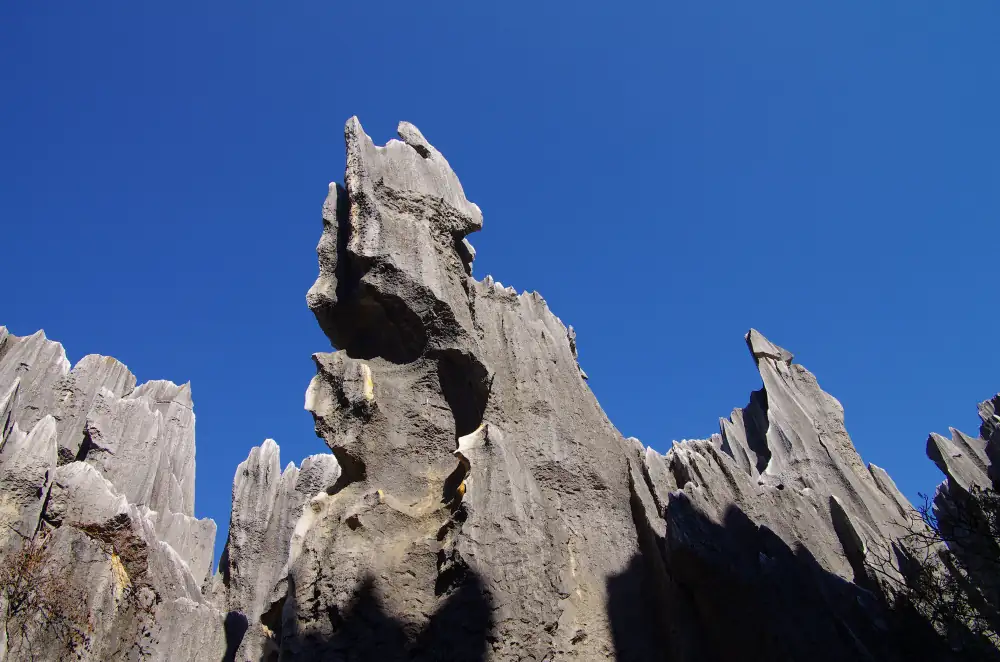
In the Ailao Mountains of southern Yunnan — the most beautiful rice terrace landscape in China, and one of the most extraordinary agricultural landscapes in the world. A UNESCO World Heritage Site since 2013.
The Landscape
The Hani people have carved these terraces into the Ailao Mountains over 1,300+ years — some individual terraces are 600+ years old. The system covers 16,603 hectares of mountain slopes, from the valley floor at 200m to the cloud forest at 2,000m.
What makes it spectacular: The terraces are flooded with water from October to April — during this period they function as mirrors, reflecting the sky, clouds, and sunrise colours in thousands of individual water panels across the mountainside. The early morning mist rises from the valley and the terraces alternate between visible and cloud-obscured — a constantly changing landscape.
Sunrise Photography Locations
Duoyishu (多依树): The largest terrace viewpoint — accessible by a short walk from the car park. Faces southeast; best for sunrise. Arrive 30–45 minutes before sunrise to secure position.
Bada (坝达): Lower altitude, different angle. The combination of terraces, Hani mushroom-roof houses in the foreground, and the lit terrace mirrors makes this the most compositionally rich viewpoint.
Laohuzui (老虎嘴): “Tiger’s Mouth” viewpoint — a cliff edge overlooking a dramatic terrace bowl. Smaller crowds than Duoyishu; better for afternoon golden hour.
Hani Village Life
The Hani people (哈尼族) live in the terraces — in mushroom-shaped straw-roofed houses (蘑菇房) at the terrace edge. Several villages (Qingkou, 箐口, is the most developed for visitors) offer guesthouses directly on the terrace edge.
Staying in Yuanyang: There are two town areas — Nansha (南沙, the administrative centre in the valley) and Xinjie (新街, the hill town above the main terraces). Stay in Xinjie for direct access to terrace viewpoints.
Practical Tips
Getting to Xishuangbanna: Jinghong Xishuangbanna Airport (JHG) — flights from Kunming (1 hr), Chengdu (2 hrs), Shanghai (3.5 hrs).
Getting to Yuanyang: No airport; high-speed rail to Jianshui (建水), then 2-hour bus to Yuanyang Xinjie. Or bus directly from Kunming (5 hrs). The journey is part of the experience.
Best season for Yuanyang: November–April for flooded terraces; the absolute peak is January–February when sunrise and morning mist combine. May–September is green terraces — less spectacular but not without beauty.
Last updated: May 2026