
Longmen Grottoes: Where Tang Dynasty Buddhist Art Reached Its Zenith
Between two limestone cliffs flanking the Yi River south of Luoyang, a miracle of human devotion is carved into the rock. Over the course of roughly 400 years (Northern Wei through Tang dynasty, approximately 493–900 CE), an estimated 2,345 caves, 43 pagodas, 2,800 inscriptions, and 100,000 Buddhist figures were carved into the soft limestone at Longmen — a concentration of religious art that UNESCO described as “an outstanding manifestation of human artistic creativity.”
The highlight is the Fengxian Si Temple and its colossal Vairocana Buddha — a 17.14-metre seated figure commissioned by the Empress Wu Zetian and completed in 675 CE, which remains one of the most powerful pieces of sculpture in Asia.
The Historical Context
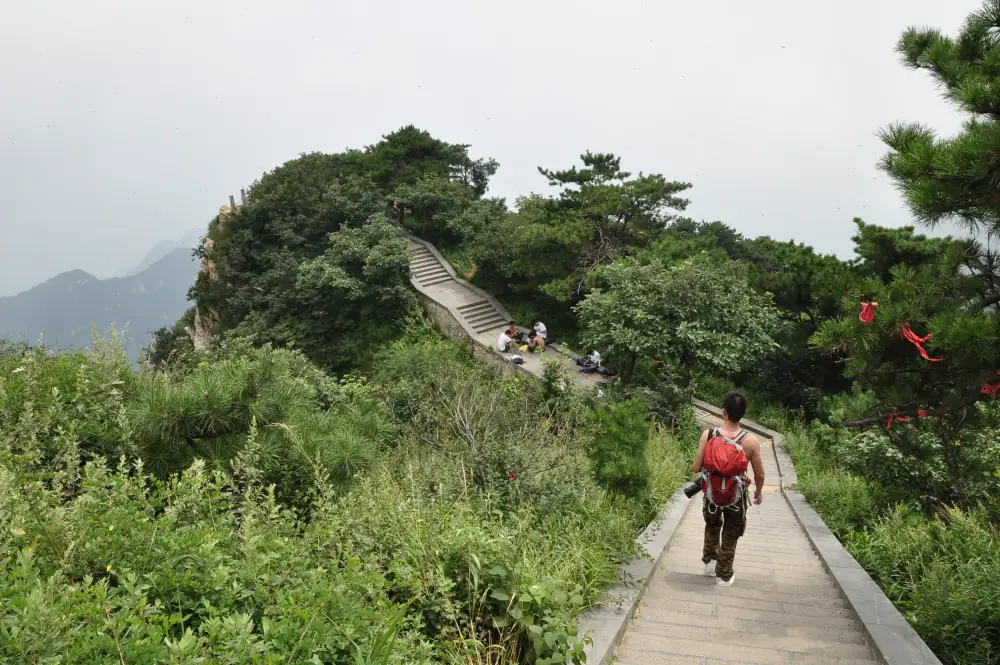
Longmen (龙门) means Dragon Gate — named for the gap in the limestone cliffs that the Yi River passes through, which resembles the gateway of a legendary dragon’s residence.
The grottoes were begun when Emperor Xuanwu of the Northern Wei dynasty moved his capital from Datong (where the Yungang Grottoes had been the major Buddhist project) to Luoyang in 493 CE. The move required relocating the royal patronage of Buddhist art; Longmen was selected for its proximity to the new capital and the softness of its limestone.
The carving continued sporadically under subsequent dynasties but reached its greatest intensity under the Tang dynasty (618–907 CE) — particularly under the reign of Emperor Gaozong and his wife, Empress Wu Zetian (later China’s only female emperor). The Fengxian Si complex is her most enduring contribution.
The Key Caves and Sculptures
Fengxian Si (奉先寺): The Supreme Masterwork
The largest carved alcove at Longmen contains nine colossal figures in a carefully calculated hierarchical arrangement:
Vairocana Buddha (卢舍那大佛): The central figure, 17.14 metres seated — the largest sculpture at Longmen. The face combines classical Indian-origin features with unmistakable Tang Chinese refinement: full cheeks, half-closed eyes that suggest meditative awareness, and a serene authority that has been photographed billions of times.
The Buddha’s face is widely believed to be modeled on Empress Wu Zetian herself — a claim that cannot be definitively proven but is consistent with her active patronage of the project. The combination of feminine facial features and divine authority, carved at the height of the only female reign in Chinese imperial history, makes the figure politically as well as spiritually significant.
Flanking bodhisattvas and guardians: Two bodhisattvas flank the central Buddha (approximately 12 metres each); four guardian figures in dynamic postures stand at the outer positions. The guardians’ expressions range from serene benevolence to fierce protection — the full range of Buddhist supernatural personality condensed into nine figures.
Admission: Included in the Longmen scenic area ticket.
Guyang Cave (古阳洞): The Earliest Carvings
The oldest completed cave at Longmen, begun in 493 CE under Emperor Xuanwu. Three large niches on the main wall contain a central Buddha and attendant bodhisattvas from the Northern Wei style — more elongated and severe than Tang figures, reflecting the Central Asian artistic influences that preceded the Tang synthesis.
The walls are covered with hundreds of smaller votive niches carved by individual donors — wealthy merchants, military officers, aristocratic women — each representing a personal act of merit-making. The inscriptions beside many niches form one of the most important collections of Northern Wei calligraphy in existence.
Wan Fo Cave (万佛洞): The Ten Thousand Buddhas
Completed in 680 CE, this cave contains exactly 15,000 tiny Buddha niches covering every interior surface — the name is a rounding toward the sacred number of perfection. The cave’s ceiling has a dense lotus pattern; its main wall holds three large Buddhas in the mature Tang style.
Binyang Three Caves (宾阳三洞)
Three linked caves commissioned by Emperor Xuanwu as a memorial to his parents. Begun in 500 CE, they took 24 years and (according to Tang period accounts) the labour of 802,366 workers. The central cave’s main Buddha is particularly elegant — the elongated, austere Northern Wei style in its most refined expression.
Several reliefs originally in these caves depicting imperial processions were removed in the 1930s by antique dealers acting for American museums; the main sections now reside in the Metropolitan Museum of Art in New York and the Nelson-Atkins Museum in Kansas City.
Walking the Site
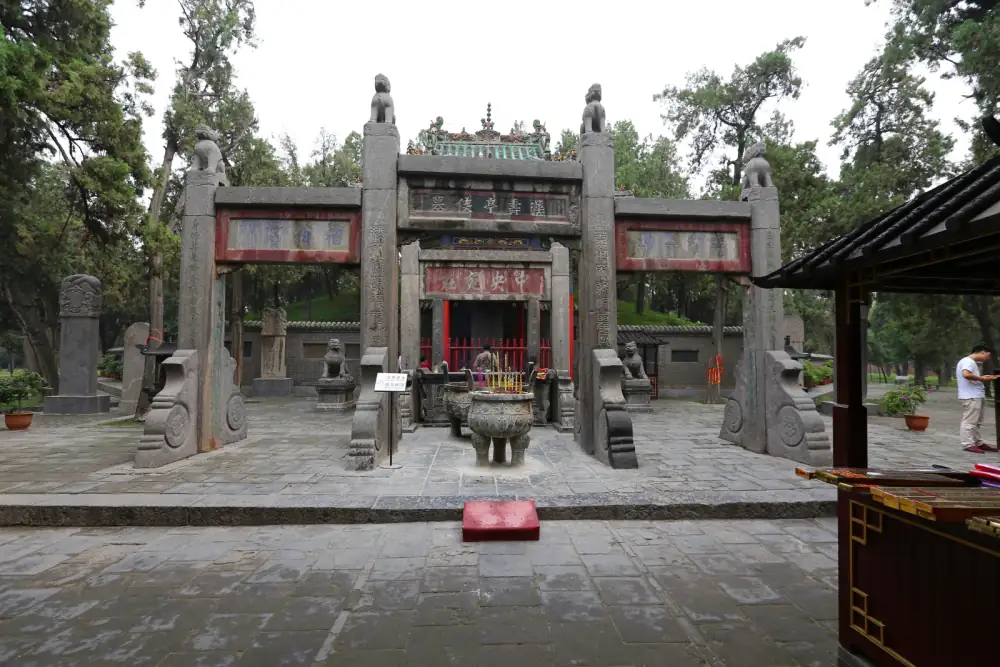
The main tourist route follows the west bank of the Yi River from south to north — a 1.5 km path past the caves at cliff level, with the river to the right and the cave entrances and staircases to the left. The route then crosses the river on a bridge and returns along the east bank path, which offers the best panoramic views of the entire west cliff face.
Allow: 2.5–3.5 hours for a thorough visit including the main caves.
Crowds: The Fengxian Si platform can be very crowded on weekends and holidays, making photography difficult. Arrive at opening time (8:00 AM) for the most manageable conditions.
Practical Information
Getting There
Luoyang is well-connected by high-speed rail:
- From Zhengzhou: 35 minutes (G-class, ¥50).
- From Xi’an: 1.5 hours (G-class, ¥140).
- From Beijing West: 3 hours (G-class, ¥270).
From Luoyang Longmen Railway Station, bus 71 or a 20-minute taxi (¥20) reaches the scenic area directly.
Admission
¥90 (includes all major caves and the east bank path). Online advance booking available; no same-day visit limit typically enforced except on major national holidays.
Hours: 7:30–17:00 (summer); 7:30–18:00 (winter).
Night Visits
From May to October, evening visit tickets (¥60) allow entry from 18:30–21:00. Artificial lighting illuminates the Fengxian Si figures dramatically; the crowds are dramatically smaller than daytime. The Vairocana Buddha at night, lit from below, is a genuinely different aesthetic experience from the daytime visit.
Combining with Luoyang
Luoyang offers an excellent 2-day itinerary:
- Day 1: Longmen Grottoes (full day); evening in the Laojun Mountain area or city centre.
- Day 2: Shaolin Temple and Songshan (45 minutes from Luoyang); or White Horse Temple (白马寺) — China’s first Buddhist temple, founded 68 CE.
The Luoyang Peony Festival (April 7–26 annually) brings extraordinary crowds but also the spectacular bloom of the city’s civic flower — Luoyang has been China’s peony cultivation centre since the Tang dynasty.
The Vairocana Buddha at Longmen has been looking at the Yi River for 1,350 years. The dynasties that carved him, the dynasties that prayed to him, the tourists who photograph him — all of these are shorter stories than the calm gaze of that face suggests.