
Hong Kong Special Administrative Region occupies the southern tip of the Pearl River Delta — a dense concentration of skyscrapers, traditional markets, colonial heritage, and surprisingly wild country parks on 263 islands. It’s both China and not China, and remains one of Asia’s most exciting and cosmopolitan cities.
Table of contents
Open Table of contents
Practical Entry Information
Visa-Free Access
Most passport holders can visit Hong Kong visa-free for 14–90 days (varies by nationality), independently of China visa requirements. Hong Kong and Macau have their own immigration systems.
Tip: Arriving in Hong Kong before mainland China means you don’t need a China visa before landing in HK, and can use HK as a base for short mainland China trips via the border crossings.
Border Crossings from Mainland China
- West Kowloon Station — High-speed train from Guangzhou (48 min), Shenzhen (14 min), Beijing (9 hours overnight)
- Lo Wu / Lok Ma Chau — Metro connection from Shenzhen
- Macau Ferry — 1-hour ferry from Macau to Hong Kong Macau Ferry Terminal
Hong Kong Island
Victoria Harbour and the Skyline
The world’s most famous urban harbour view — Kowloon looking at Hong Kong Island’s skyscraper wall, or the reverse. Best from:
The Peak (太平山頂): Cable tram (山頂纜車, ¥65–¥90 return) ascends to 396m above sea level — panoramic views of harbour and both skylines. Evening is spectacular but crowded. Alternatively, hike the Peak Circle Walk (2 hours) for varying perspectives.
Tsim Sha Tsui Promenade, Kowloon: The Avenue of Stars on the Kowloon waterfront directly faces the Hong Kong Island skyline across the harbour. The Symphony of Lights laser show (8pm nightly, except bad weather) is overdone but visually impressive.
Sheung Wan and Hollywood Road
The most atmospheric historical neighbourhood on Hong Kong Island — Hollywood Road runs through a district of antique shops, temples, and traditional medicine dealers. Man Mo Temple (文武廟) (1847 AD) on Hollywood Road is perpetually wreathed in incense smoke from enormous hanging coils.
PMQ — a historic 1950s police married quarters converted to a design and artisan hub; independent fashion, homeware, and food. Free.
Aberdeen and Stanley
Aberdeen Typhoon Shelter (香港仔避風塘) — hundreds of traditional fishing junks and houseboats moored in a protected bay; some residents still live permanently aboard. Sampan tours from the waterfront.
Stanley — Former colonial market town on the south side of Hong Kong Island; excellent weekend market for clothing, artwork, and Southeast Asian goods. The war cemetery gives context to the 1941–1945 Japanese occupation.
Kowloon
Temple Street Night Market (廟街)
Hong Kong’s most atmospheric night market — hundreds of stalls selling clothing, electronics, fake watches, and souvenirs alongside fortune tellers and dai pai dong (large cooked-food stalls). Goes from 4pm to midnight. Free.
Mong Kok (旺角)
One of the world’s most densely populated neighbourhoods — a grid of specialist markets: Ladies’ Market (clothing), Goldfish Market (tropical fish in plastic bags), Flower Market (wholesale blooms at 5am), Bird Garden (singing birds in traditional cages).
Chi Lin Nunnery and Nan Lian Garden
A Tang Dynasty-style Buddhist nunnery complex (built 1998–2000 but in authentic period construction without nails) adjacent to a formal Chinese garden — an oasis of calm in the midst of Kowloon’s density. Free.
Outlying Islands
Lantau Island (大嶼山)
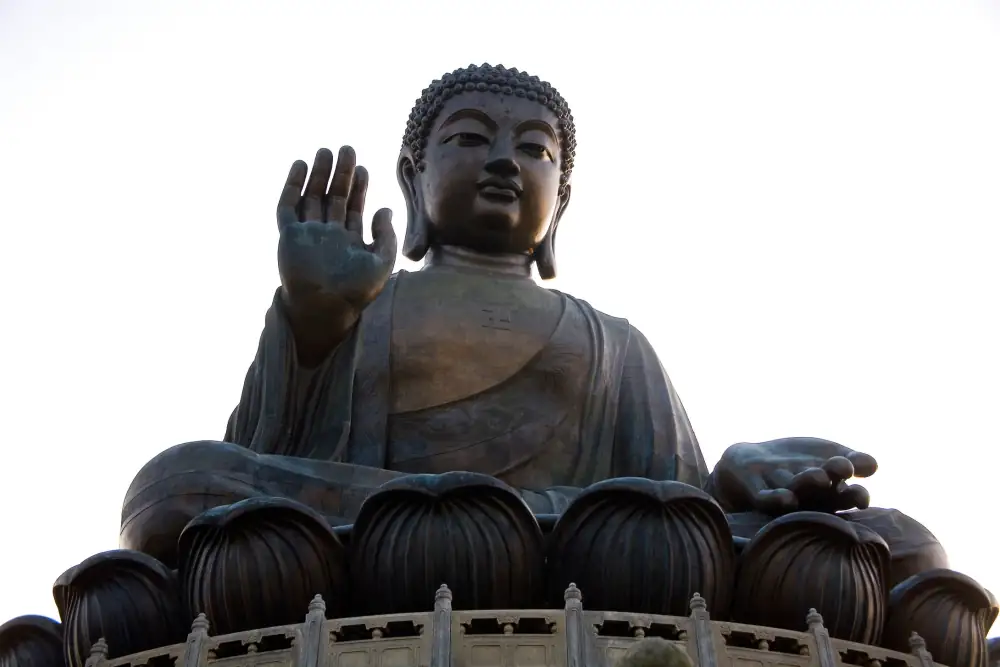
- Big Buddha (天壇大佛) — a 34-metre bronze Buddha on Ngong Ping Plateau; Ngong Ping cable car provides an exceptional 25-minute approach over forests and harbour
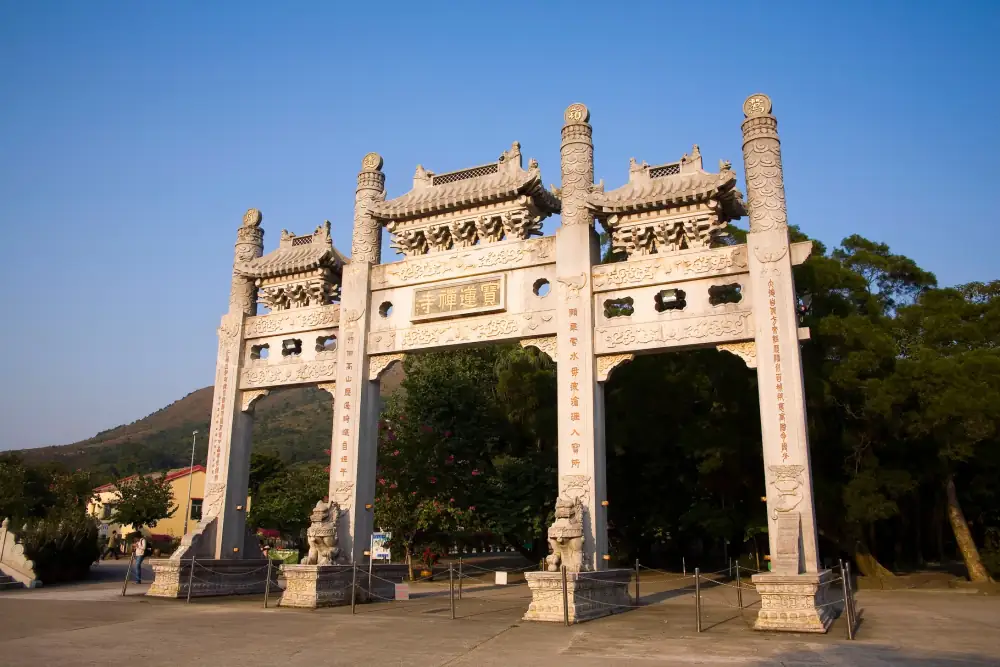
- Po Lin Monastery — large active Buddhist monastery beside the Buddha statue
- Tai O Fishing Village — a traditional stilt village on Lantau’s western tip; the most authentic remaining glimpse of Hong Kong’s pre-development fishing culture
Cheung Chau (長洲)
A small island (no cars!) of alleyways, temples, and beaches — the Bun Festival (打醮) in May is one of Hong Kong’s most spectacular traditional events (bamboo towers covered in sweet buns; acrobats and parade). Take the 1-hour ferry from Central Pier.
Hiking
Hong Kong’s country parks cover 40% of its territory. Trails are world-class:
Dragon’s Back (龍脊) — the “best urban hike in Asia” (Time magazine) — 8.5km ridge walk on Hong Kong Island with harbour views throughout. Grade: Easy-Moderate.
MacLehose Trail (麥理浩徑) — 100km across the New Territories; can be done in sections (Stage 2 along Sai Kung Peninsula is particularly beautiful).
Lion Rock (獅子山) — an iconic 495m peak above Kowloon; the view over the city from the summit is extraordinary. Moderate; 3 hours return.
Food
Dim Sum (點心)
- Tim Ho Wan (添好運) — the world’s cheapest Michelin-starred restaurant; queues expected; extraordinarily good value (¥150–¥300 per person for a very full meal)
- Lin Heung Tea House (蓮香樓) — the oldest dim sum restaurant in Hong Kong; traditional trolley service; goes quickly, arrive early
Cantonese Roast Meat (燒味)
- Yat Lok (一樂燒鵝) — Michelin-starred roast goose shop in Central; ¥120–¥200 per person
- Char siu (叉燒, BBQ pork) is Hong Kong’s other great speciality — honey-glazed, caramelised, intensely flavoured
Egg Tarts and Pineapple Buns
The Hong Kong pineapple bun (菠蘿包) — fluffy white bread with cracked sugar topping, no actual pineapple — is best eaten freshly baked with a thick slab of cold butter from any Hong Kong cha chaan teng (茶餐廳, local diner).
Practical Info
Currency: Hong Kong Dollar (HKD). 1 RMB ≈ 1.1 HKD. Both accepted in many places near the border.
Language: Cantonese primarily; English widely spoken; Mandarin understood in tourist areas.
Getting around: MTR (metro) is world-class; Octopus Card covers all public transport.
Best time: October–December (clear skies, 22–28°C, low humidity)
Avoid: June–September (typhoon season; also extremely hot and humid)