
Harbin (哈尔滨) occupies a special place in China’s geography and imagination. This northeastern city sits further north than Moscow and gets cold enough to freeze rivers solid — facts the city has turned into a spectacular annual winter festival that draws visitors from around the world.
Table of contents
Open Table of contents
Why Visit Harbin
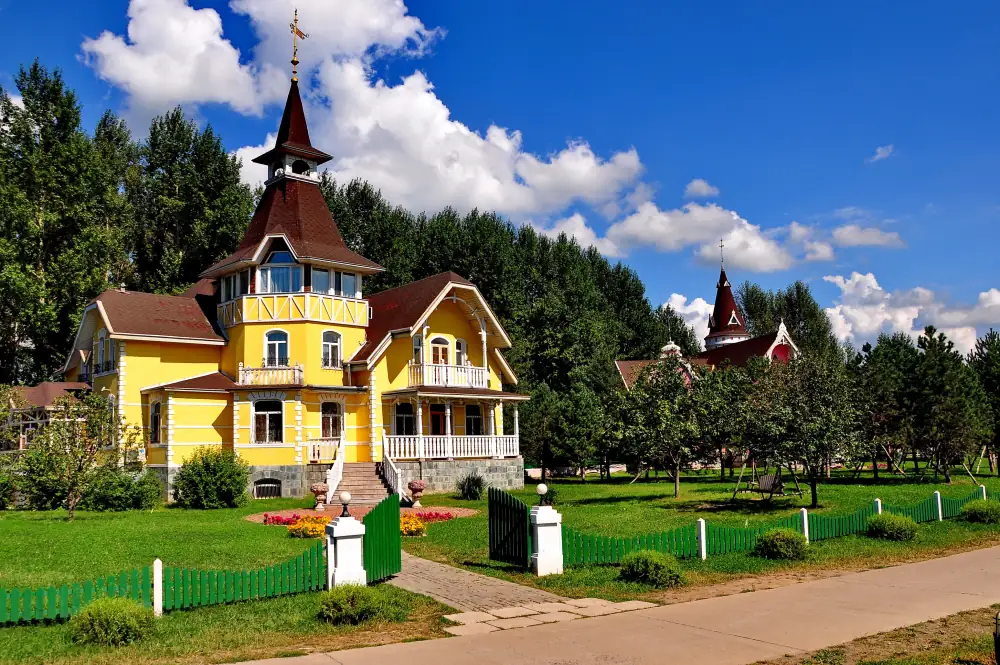
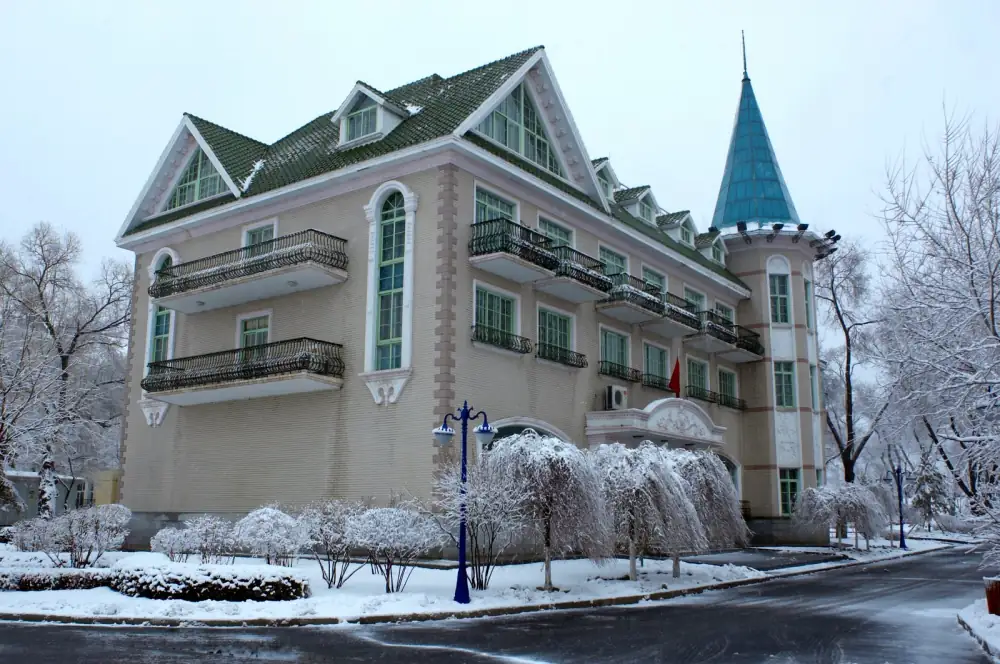
Harbin has two distinct personalities:
Winter (December–February): Ice and Snow World transforms the city into a luminous fantasyland of ice sculpture cities the size of real neighbourhoods. Temperatures plunge to -30°C, and every breath becomes visible. Absolute magic.
Summer (June–August): Warm, green, and surprisingly lush. The surrounding Manchurian wilderness offers world-class hiking, wildflower meadows, and one of China’s most pristine natural environments.
Top Attractions
Ice and Snow World (冰雪大世界) — Winter Only
China’s most spectacular seasonal event. Enormous illuminated ice castles, towers, and architectural replicas are built from blocks carved from the frozen Songhua River. The centrepiece structures reach 20+ metres in height.
Opening dates: Typically December 25–February 28 (varies by year)
Entry: ¥330 (evening) or ¥230 (daytime)
Best time: 6–10pm when illuminated; arrive around sunset
Essential gear: Minimum -25°C rated coat, thermal base layers, face mask, waterproof boots with traction
Zhaolin Park Ice Lantern Festival (兆麟公园冰灯游园会)
A more intimate, traditional ice lantern display in central Harbin — ice sculptures illuminated from within, first held in 1963. More manageable than Ice and Snow World; excellent for photography.
Central Street (中央大街)
Harbin’s famous pedestrian street lined with Russian-influenced art nouveau and baroque buildings from the early 20th century. When Harbin was a hub of the Chinese Eastern Railway (built by Russia), tens of thousands of Russians lived here. The architecture survives remarkably intact.
Must eat on Central Street:
- Harbin sausage (哈尔滨红肠) — Russian-influenced smoked pork sausage; buy at the original 1909 shop
- Madie’er ice cream (马迪尔冰淇淋) — sold year-round including in -20°C winter; an Harbin tradition
Saint Sophia Cathedral (圣索菲亚教堂)
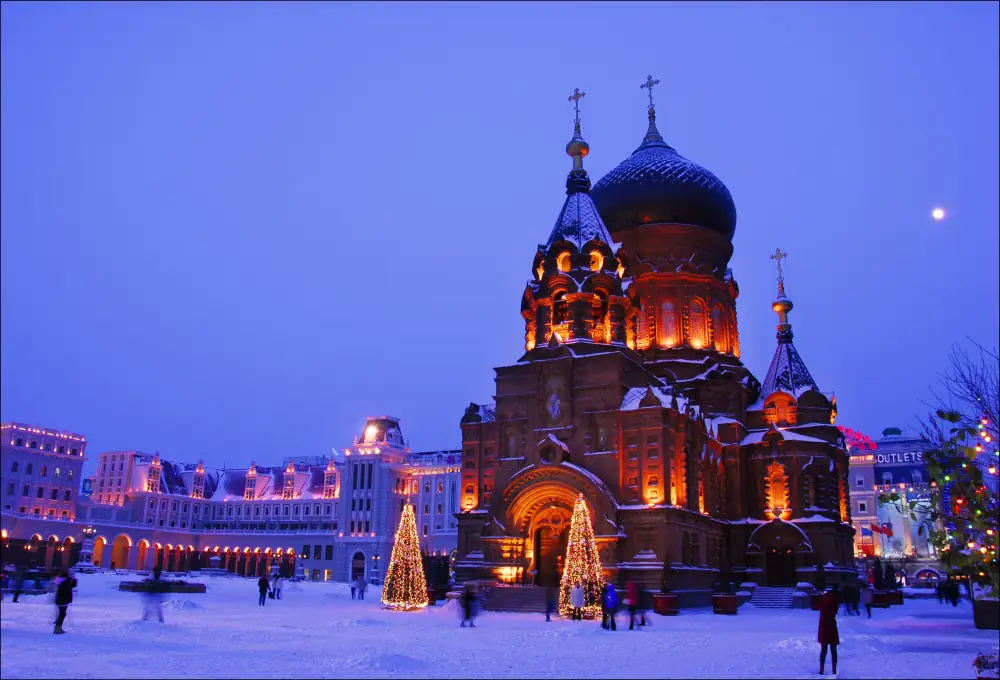
A Russian Orthodox cathedral completed in 1932 — the largest in the Far East at the time. Now a museum of Harbin’s multicultural architectural history. The onion dome against winter snow or summer blue sky is quintessentially Harbin.
Siberian Tiger Park (东北虎林园)
The world’s largest Siberian tiger conservation centre — approximately 100 tigers in large enclosures. Bus tours through the main enclosure (¥100 for bus entry, tigers can approach quite close). Controversial but educational for understanding Siberian tiger conservation challenges.
Summer Northeast China
Mudanjiang and Mirror Lake (镜泊湖)
A vast caldera lake formed 10,000 years ago by volcanic eruption. The Underground Forest (地下森林) — a 100-metre-deep volcanic crater that filled with old-growth forest over millennia — is extraordinary. Mirror Lake’s summer camping and hiking is spectacular. Best July–September.
Changbai Mountain (长白山)
China’s most sacred volcanic mountain on the North Korean border. The Heavenly Lake (天池) crater lake at 2,189m elevation is surrounded by 16 peaks and holds mythological significance in both Chinese and Korean traditions.
Best access: Baihe town (bus or train from Yanji or Changchun)
Season: Late June–September (road access); the lake is frozen November–May
Entry: ¥225 + mandatory park bus (¥85)
Hulunbuir Grasslands (呼伦贝尔草原)
Though administratively Inner Mongolia, Hulunbuir is most accessible from Harbin. China’s most pristine grassland — endless horizon of grass, wildflowers, and meandering rivers.
Best time: July–August when grass is tallest and wildflowers bloom
Naadam Festival: Late July–early August; horse racing, wrestling, archery
Practical Information
Getting to Harbin: Flights from Beijing (2 hours), Shanghai (3 hours); high-speed train from Beijing (5–8 hours depending on route).
What to wear in winter: Layer system critical — thermal base (wool or synthetic), mid-layer fleece, -25°C rated down coat, face mask covering nose and cheeks, insulated waterproof boots, hand warmers. Do not underestimate the cold.
Russian food: Harbin has genuine Russian restaurants serving borscht, Beef Stroganoff, and dark bread. Huamei Western Restaurant (华梅西餐厅) on Central Street has operated since 1925.