
Harbin gets cold. We mean this genuinely: January temperatures regularly reach -25°C to -30°C in the city, and it’s felt as a physical force the moment you step outside from the airport terminal. The air burns slightly. Exposed skin stings within minutes. Every breath produces visible vapour clouds.
This is also, paradoxically, why several million visitors come to Harbin every winter — to experience real cold, see the extraordinary ice and snow festival, and walk through a city that was built largely by Russian settlers in the early 20th century and still carries that architectural heritage. It’s one of the most distinctive cities in China.
Table of contents
Open Table of contents
The Ice and Snow Festival (冰雪节)
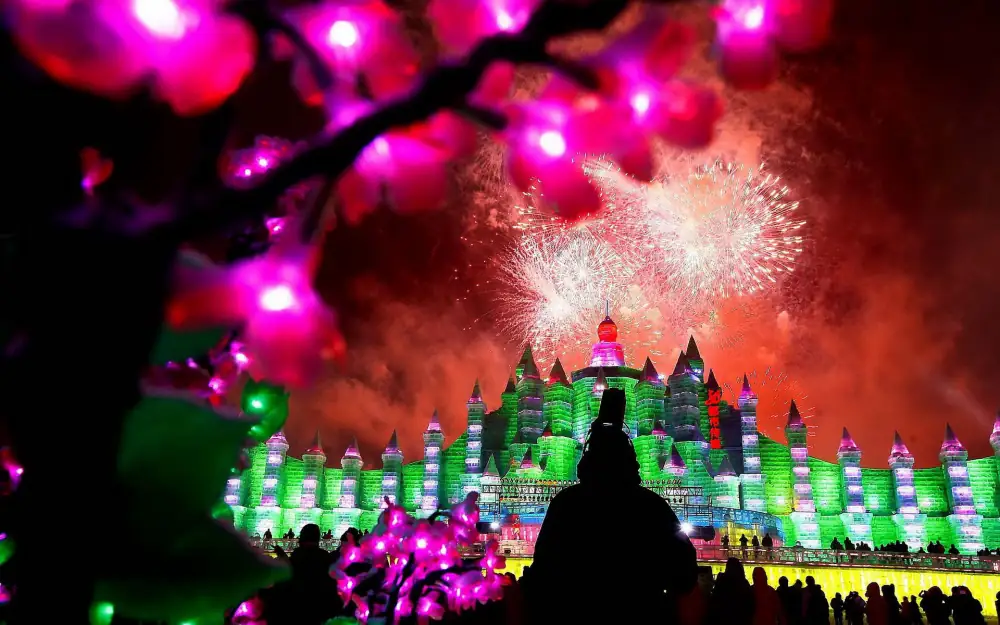
The Harbin International Ice and Snow Festival is one of the largest ice festivals in the world. It runs annually from late December through February, centered on two main sites:
Ice and Snow World (冰雪大世界)
The main venue, built from blocks of ice cut from the frozen Songhua River. The scale is extraordinary: multi-story buildings, castles, arches, and towers constructed entirely from ice, illuminated at night by LED lights in every colour. The structures are genuinely architectural — some ice “buildings” are 30+ metres tall.
Opening hours: 9:00am–10:00pm (winter only, December–February)
Entry fee: ¥330 per person (can fluctuate; check current pricing)
Best time to visit: Evening, when the LED illumination is fully active; arrive around 5:30pm for the transition from dusk to full night lighting
Activities include ice slides (from high platforms into banks of snow), ice sculpture competitions, and ice sports demonstrations.
Sun Island International Snow Sculpture Art Expo (太阳岛雪博会)
On Sun Island across the Songhua River, this exhibition focuses on snow sculptures — enormous white structures carved with incredible detail. Quieter than Ice and Snow World and artistically more refined.
Entry fee: ¥200 per person
Getting there: Across the Songhua River from the central city; taxi or shuttle bus
Zhaolin Park Ice Lanterns (兆麟公园冰灯)
The original Harbin ice lantern tradition, dating to the 1960s. Smaller scale than Ice and Snow World but more intimate — lanterns made from ice blocks lit from within, in traditional Chinese festival designs. This is the oldest and historically most significant ice event.
Entry fee: ¥100–150 per person
Location: Zhaolin Park, central Harbin
Saint Sophia Cathedral (圣索菲亚教堂)
Harbin’s most recognizable building is a Russian Orthodox church with a green onion dome, built in 1907 and completed in its current form in 1932. It stands in the centre of Harbin surrounded by a cobblestone square, and looks genuinely incongruous among the surrounding Chinese city — which is entirely the point.
The cathedral was built by and for the Russian community that flooded into Harbin when the Chinese Eastern Railway brought them east in the early 1900s. At its peak, Harbin’s Russian population numbered over 100,000 — it was simultaneously the largest Russian city outside Russia and a major Chinese city.
Opening hours: 8:30am–5:30pm
Entry fee: ¥20 per person (access to interior museum)
Location: Central Harbin, walkable from Central Street
The interior has been converted to an architectural museum displaying Harbin’s Russian heritage. The dome is impressive from both inside and out.
Central Street (中央大街)
Central Street is Harbin’s main pedestrian boulevard — a 1,450-metre-long street of European-style buildings dating from the 1900s to the 1930s. Russian Baroque, neo-classical, and modernist buildings line both sides, and the street is paved with the original small stone cobbles (方石路).
In winter, food vendors line both sides selling:
- Hot red bean paste pancakes (豆沙饼): ¥5–8, essential winter street food
- Grilled skewers (烤串): ¥3–8 per skewer
- Candied hawthorn on a stick (冰糖葫芦): ¥5–10, the classic Chinese winter street food
- Harbin red sausage (哈尔滨红肠): Sold at stalls for ¥15–30 per link — a genuine Harbin specialty, sausage in the European style developed by Russian influence
The street connects to Flood Control Monument (防洪纪念塔) at its north end and the Central Street Commercial Area at its south.
Siberian Tiger Park (东北虎林园)
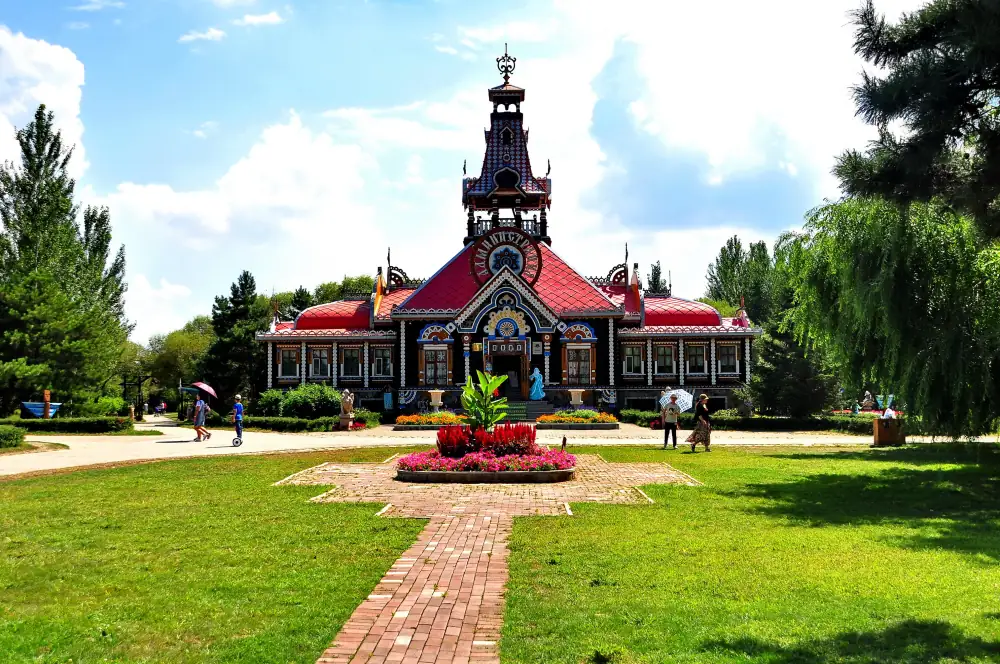
A large open-plan safari-style park outside the city where Siberian tigers roam in large enclosures. Visitors ride caged buses through tiger zones and can buy live chickens to throw to the tigers (controversial but still practiced). About 500 tigers in residence — the largest captive breeding centre for Siberian tigers in the world.
Opening hours: 9:00am–4:00pm (winter); 8:30am–5:00pm (summer)
Entry fee: ¥120 per person; ¥80 for the bus ride through the main tiger area
Getting there: Taxi from central Harbin, about 30 minutes, ¥30–50
Note: This attraction is ethically contested — the captive conditions and live feeding practices draw criticism. Make an informed decision.
Cold-Weather Survival Guide
What to Wear
At -20°C and below, standard “winter coats” from temperate climates are inadequate. You need:
Base layer: Thermal underwear top and bottom — merino wool or expedition-weight synthetic
Mid layer: Fleece or down jacket
Outer layer: Down coat rated to -30°C (available for rent/purchase throughout Harbin)
Extremities:
- Gloves rated to -20°C; mittens are warmer than gloves
- Hat covering ears; a balaclava is ideal
- Wool or fleece socks inside good winter boots (no canvas shoes, no fashion sneakers)
- Face mask or neck gaiter — frostbite on cheeks and nose happens faster than you think
Purchasing in Harbin: Central Street and the Guilin Street/Zhongyang Dajie area have many shops selling winter gear. Expect ¥100–300 for adequate gloves, ¥80–150 for warm hats, ¥300–800 for down coats (or rent at some hotels for ¥30–80/day).
Managing the Cold
- Use heated malls as rest points: Harbin’s heated shopping malls are lifesavers — stop every 30–45 minutes when temperatures are very low
- Indoor vs outdoor timing: Plan outdoor sightseeing in 1–1.5 hour blocks with warm-up breaks
- Hot food and drink: Harbin’s street stalls sell hot drinks everywhere; a bowl of soup (miso-style broth) or hot soybean milk warms you from inside
- Camera batteries: Cold kills batteries fast — keep your camera warm in a pocket until needed
Harbin’s Food
Harbin cuisine blends Chinese northeastern cooking with Russian-influenced preparations. Don’t miss:
- Harbin red sausage (哈尔滨红肠): The city’s signature food; sold everywhere, often eaten sliced on its own or with black bread
- Siberian cold dish platter (东北大拉皮): Glass noodle salad with vegetables and chili oil; a northeastern table staple
- Hot pot with lamb and mushrooms: The northeastern style uses a brass pot with burning charcoal inside — more warming than the electric versions
- Beer with local produce: Harbin Beer (哈尔滨啤酒), founded 1900, is one of China’s oldest beer brands — light lager, good with the salty northeastern dishes
Restaurant recommendation: Huamei Western Restaurant (华梅西餐厅) on Central Street — Russia-influenced European food in a heritage dining room. Founded 1925. Borscht, black bread, and schnitzel. Around ¥100–150 per person.
Getting to Harbin
From Beijing: Flights 1.5 hours (most practical); high-speed train about 5.5 hours, ¥350–450
From Shenyang: High-speed train, about 1.5 hours, ¥100–150
From Changchun (Jilin): High-speed train, about 1 hour, ¥55–80
Harbin’s Taiping International Airport (HRB) handles international and domestic flights. The Harbin West High-Speed Station is about 25km from the city centre — take the city rail or airport bus (¥10–25) to the central area.
When to Visit
January–February: Peak winter season; best ice festival, coldest temperatures (-20 to -30°C), highest prices.
December: Festival starts, slightly warmer, slightly cheaper.
July–August: Summer visits are possible — the city is pleasant and green, temperatures around 25–30°C. No ice festival, completely different city.