
The Qing Dynasty emperors had a problem. Summer in Beijing was punishingly hot, the grassland tribes of Mongolia needed careful diplomatic management, and the court required a place where emperors could simultaneously relax, hunt, and receive foreign dignitaries from Central Asia and beyond. Their solution was Chengde — a mountain valley 250km north of Beijing where they built the largest imperial garden complex in China, then surrounded it with eight temples designed to flatter every ethnic group in the empire. The result is one of China’s most underappreciated UNESCO World Heritage Sites.
Table of contents
Open Table of contents
The Mountain Resort
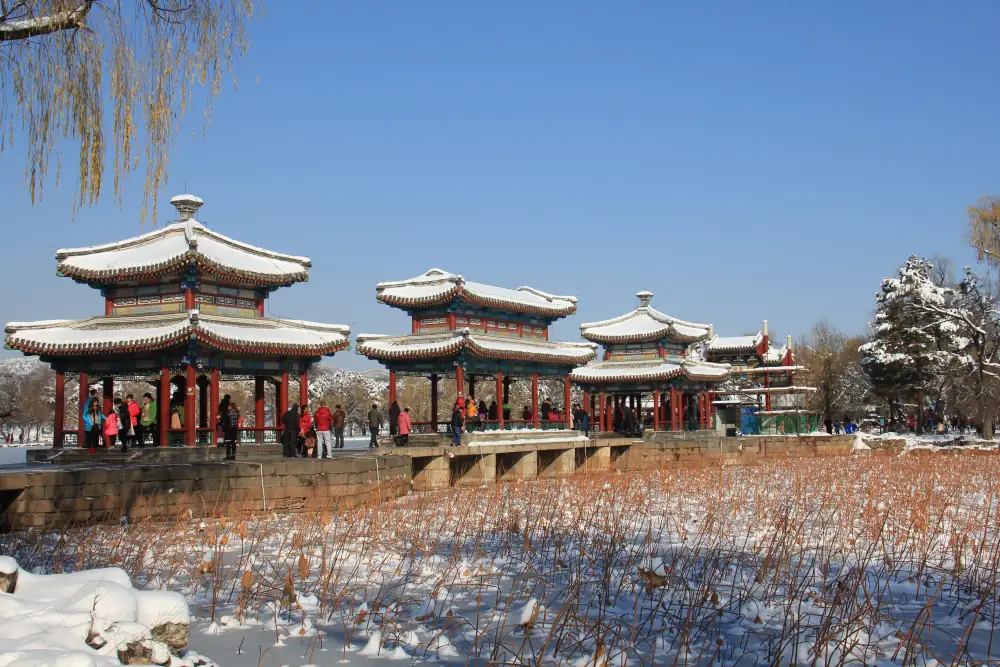
The Bishu Shanzhuang (避暑山庄, literally “Mountain Resort to Escape the Heat”) covers 5.64 square kilometres — roughly the size of the Summer Palace in Beijing plus Beihai Park combined. Emperor Kangxi began construction in 1703, and it took a further 89 years of construction under Qianlong to complete. For most of the 18th century this was effectively the real capital of China, where emperors spent five months a year receiving ambassadors, conducting military reviews, and hunting in the vast forests of the surrounding Mulan Hunting Grounds.
The resort divides into three zones. The palace zone at the southern entrance contains the formal audience halls where the Qianlong Emperor received the Panchen Lama in 1780 and where, in 1793, Lord Macartney arrived on behalf of King George III with a boatload of British industrial goods — and was famously rebuffed. The palace buildings are relatively modest by imperial standards; the Qing emperors deliberately kept them simpler than the Forbidden City to signal that this was a hunting retreat, not the seat of formal power.
Behind the palaces, the lake zone opens up dramatically — a series of connected lakes dotted with islands, bridges, and small pavilions that recreate famous southern Chinese scenes. The emperors who rarely had time to travel south brought southern China to them: the Misty Rain Tower is based on a pavilion at Jiaxing in Zhejiang; the Golden Hill Island copies a Yangtze scene; the small pleasure boats available for hire continue the tradition of scenic lake boating that the emperors enjoyed.
The northern forest zone is less visited but covers the largest area. In summer it’s genuinely cool and fragrant with pine — exactly what attracted the emperors here. Walking trails extend for kilometres. Horse riding is available near the northern forest gates (¥60-100 for 30 minutes).
Admission: ¥90 for the Mountain Resort. Allow a full day to cover the main sights properly.
The Eight Outer Temples
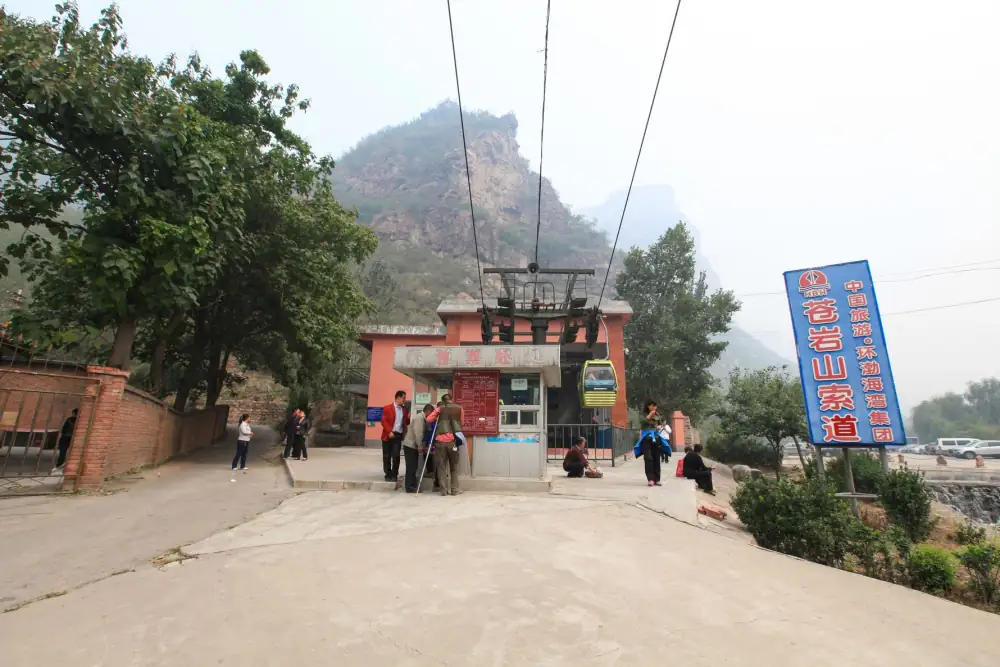
The temples are honestly the most architecturally fascinating part of Chengde. Built between 1713 and 1780, they were designed to reflect the Buddhist architecture of the ethnic groups the Qing emperors needed to keep on side — Tibetans, Mongols, and the various Central Asian Buddhist peoples. Eight temples were built, of which five are accessible today.
The most spectacular is the Putuozongcheng Temple (普陀宗乘之庙), built in 1767 to mark Qianlong’s 60th birthday and modelled directly on the Potala Palace in Lhasa. It’s smaller than the original but the resemblance is striking — the same red-walled main building rising above lower white structures on a hillside, with golden rooftops catching the morning light. The effort to replicate Tibetan architecture here in Hebei was entirely political: the Qianlong Emperor was signalling to Tibetan Buddhists that their traditions were honoured and protected within the Qing empire.
The Puning Temple (普宁寺) is architecturally different — it combines Han Chinese architectural forms at the front with a Tibetan mandala structure at the rear, symbolising the fusion of cultures the Qing managed. Its main hall houses a magnificent 22-metre wooden Guanyin statue, one of the largest wooden Buddhist sculptures in the world. This temple is still active, with monks resident and ceremonies conducted daily — it feels more alive than many of Chengde’s more museum-like sights.
The Xumifushou Temple (须弥福寿之庙) was built specifically to house the Panchen Lama during his 1780 visit, modelled on his home monastery at Tashilhunpo in Shigatse. He died here before returning to Tibet, and the temple remains a memorial to his visit.
Admission: ¥30-50 per temple. A combined ticket covering multiple temples offers better value.
Day Trip vs Overnight Stay
Chengde is 250km from Beijing, which sounds manageable but the road journey takes 3-4 hours. The high-speed train from Beijing North station takes about 2 hours (¥100-150). The question is whether to do it as a day trip or overnight.
Day trip: Just about workable if you take the first train (departing around 7am) and focus on either the Mountain Resort or the two main outer temples. You won’t be able to do both properly. The last sensible train back departs around 5pm.
Overnight stay: Much more satisfying. Two nights is ideal — day one for the Mountain Resort with a thorough exploration of the lake and forest zones, day two for the outer temples. The town of Chengde itself has decent accommodation (¥300-600 for a comfortable hotel) and good local food, particularly the lamb dishes that reflect the area’s proximity to Inner Mongolia.
Practical Tips
Best season: Late spring and autumn. Summer is the traditional visiting season (the whole point was escaping Beijing summer heat) but July-August brings crowds. The autumn foliage in the Mountain Resort’s forest zone is exceptional — mid-October sees the leaves turning in the hills behind the temples.
Photography: The Putuozongcheng Temple photographs best from the road below in the late afternoon when the light hits the red walls. For the Mountain Resort, the lake areas are best in morning light.
Getting around: Chengde’s main sights are spread over a few kilometres. Taxis are cheap (¥10-20 between sites), or you can hire an electric cart within the Mountain Resort grounds (¥30 for a circuit).
Chengde rewards visitors who know a little of the Qing Dynasty history before arriving. The layers of political calculation embedded in every temple’s architecture, the grand project of empire management expressed through stones and gardens, make this one of the most intellectually rich heritage sites in northern China.