
Beijing is one of the world’s great capital cities — 3,000 years of continuous habitation, the seat of five dynasties, and home to six UNESCO World Heritage Sites within city limits. It’s also a thoroughly modern metropolis with extraordinary restaurants, cutting-edge galleries, and a creative energy that constantly surprises first-time visitors.
Table of contents
Open Table of contents
Top Attractions
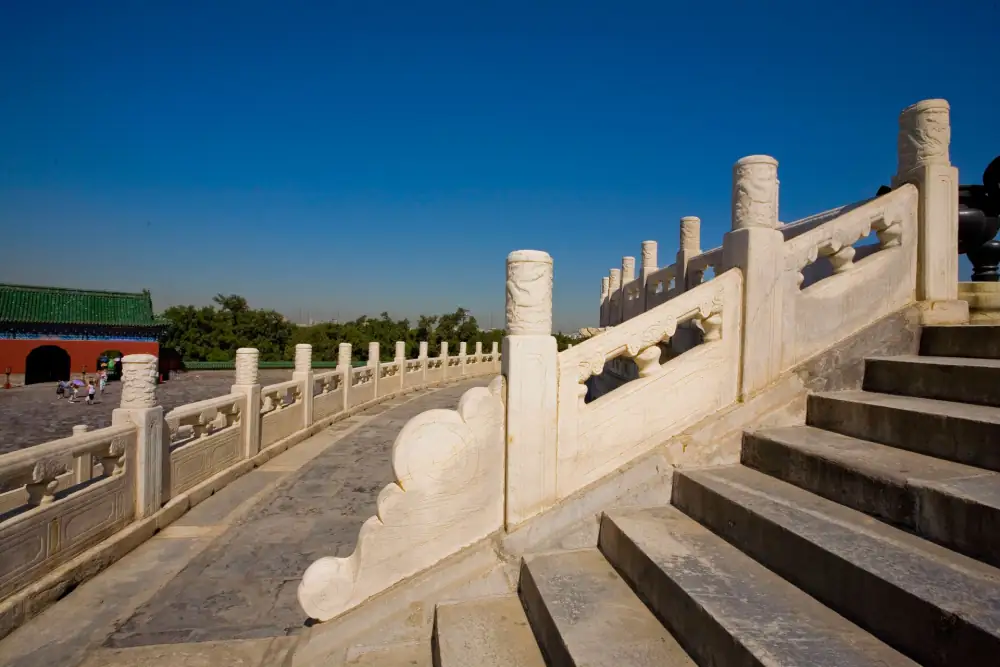
The Forbidden City (故宫)
The world’s largest imperial palace complex — 980 buildings, 8,728 rooms, and 72 hectares of vermilion walls and golden rooftops. Built between 1406–1420, it was the administrative and ceremonial centre of the Chinese Empire for nearly 500 years.
Essential routes:
- South to North axis (1.5 hours): The ceremonial spine from Meridian Gate through the three main throne halls to the Imperial Garden
- Western residential quarters: The Empress’s apartments, treasure galleries, and quiet courtyards away from the main crowds
- Palace of Accumulated Elegance: Restored to its 1884 appearance with extraordinarily ornate decoration
Practical info: Entry ¥60; timed-slot booking required online (on-day tickets often sold out — book 1–2 days ahead). Open Tuesday–Sunday, closed Monday. Allow 3–5 hours minimum.
Best time: Arrive at opening (8:30am) to beat crowds. Early October light is spectacular.
Temple of Heaven (天坛)
The Ming Dynasty ritual complex where emperors performed Heaven-worship ceremonies is China’s finest example of religious architecture — circular Hall of Prayer for Good Harvests sitting on a triple-tier marble terrace. The symmetry and spatial planning are extraordinary.
Don’t miss: The Echo Wall (where whispers travel around the circular wall) and the Imperial Vault of Heaven. The surrounding parkland is also one of Beijing’s great morning social spaces — locals practise taichi, ballroom dancing, badminton, and opera singing.
Entry: ¥15 (park) + ¥28 (inner complex). Open 6am daily.
Summer Palace (颐和园)
Beijing’s imperial pleasure garden — a vast lakeside park centered on Kunming Lake, with the Long Corridor (a 728-metre painted gallery), Marble Boat, and hilltop Buddhist temples.
Best approach: Enter from East Gate, walk the Long Corridor, climb to the Tower of Buddhist Incense (佛香阁) for lake views, then take the dragon boat back across the lake to the North Gate area.
Entry: ¥30 (park) + additional for buildings. Allow 3–4 hours.
Great Wall at Mutianyu (慕田峪)
Of the four major accessible Great Wall sections near Beijing, Mutianyu (70km northeast) offers the best combination of restoration quality, scenery, and manageable crowds. The section is 2.2km long with 22 watchtowers; a cable car ascends from the valley, and a toboggan run descends.
Best for: Families and first-time visitors wanting impressive scenery without extreme hiking.
For the adventurous: Jiankou (箭扣) section is the most dramatic unrestored section — crumbling towers on knife-edge ridges, extremely photogenic but challenging hiking. No crowds.
Entry Mutianyu: ¥65; cable car up ¥100, toboggan down ¥55.
798 Art District (798艺术区)
A former state electronics factory complex converted to Beijing’s contemporary art hub. World-class galleries (Pace, White Cube, and dozens of Chinese galleries), design studios, concept stores, street food, and industrial architecture.
Best for: Contemporary Chinese art, architecture photography, gallery hopping. Mostly free.
Nanluoguxiang Hutong (南锣鼓巷)
Beijing’s most famous hutong (traditional alley) area — a 786-metre pedestrian street and 8 crossing alleys. Yes, it’s touristy, but the side alleys contain genuine neighbourhood life: courtyard entrances, corner shops, elderly residents.
Better hutong experience: The Baitasi (白塔寺) neighbourhood hutongs and the alleys around Guozijian Street (国子监街) are quieter and more authentic.
Neighbourhoods to Explore
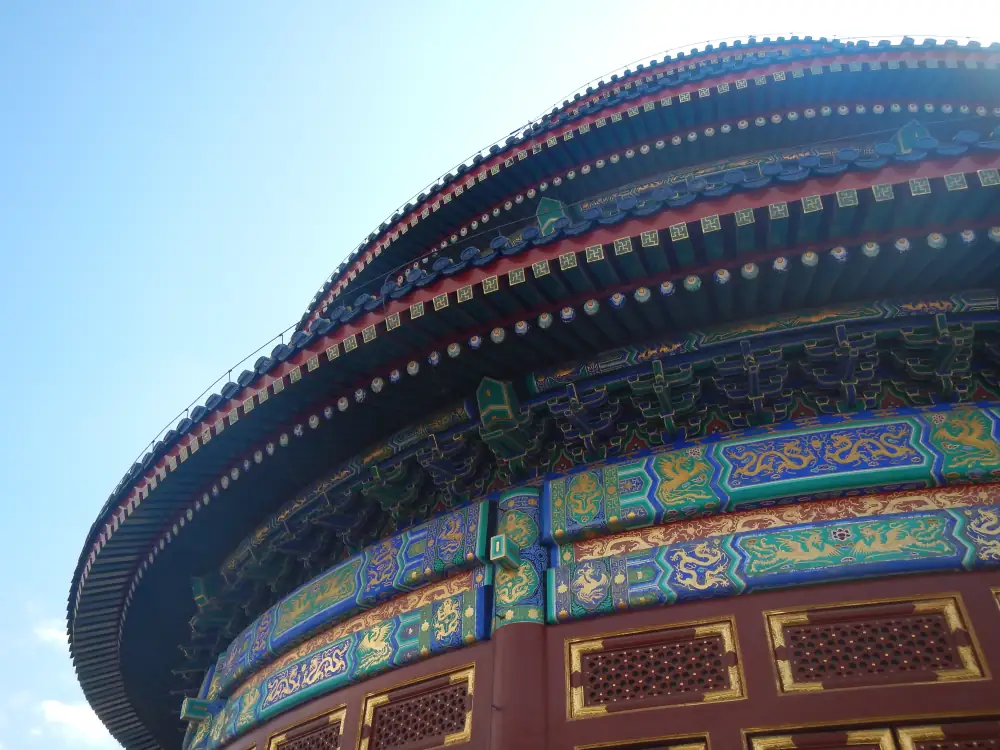
Sanlitun (三里屯)
Beijing’s nightlife and shopping hub — Taikoo Li open-air mall (Apple Store, flagship boutiques), rooftop bars, and the city’s densest concentration of restaurants and clubs. The nearby Sanlitun Village area has Beijing’s best international dining.
Wudaokou (五道口)
University district with Peking University and Tsinghua University nearby. Young, international, bookish atmosphere. Excellent Korean food (large Korean student population), cheap ramen, bookshops.
Dashilar (大栅栏)
The area southwest of Tiananmen has been partially gentrified into an arts and design district while retaining traditional commercial character. Old shops selling silk, shoes, and traditional medicines sit alongside architecture studios.
Food
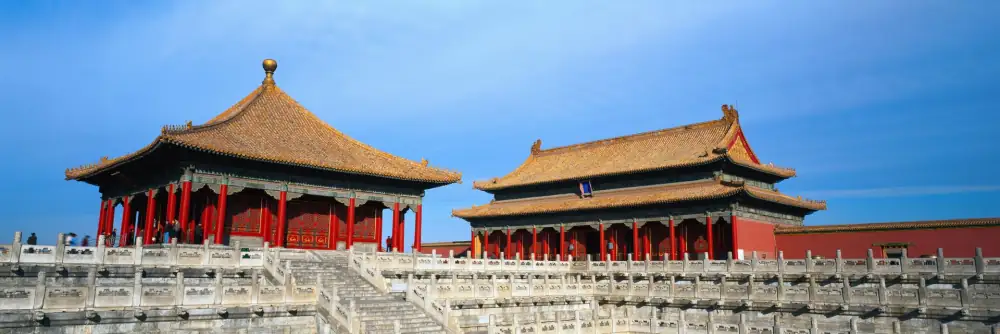
Peking Duck
- Da Dong (大董) — modern interpretation, innovative presentation, arguably Beijing’s best. Reserve ahead. ¥150–¥300 per person.
- Quanjude (全聚德) — the historic institution (since 1864); more conventional, tourist-friendly. ¥100–¥200.
- Siji Minfu (四季民福) — excellent quality-to-price ratio; queue or book ahead. ¥80–¥150.
Street Food and Snacks
- Jianbing (煎饼) — savory crepe with egg, crispy wonton, hoisin sauce; the classic Beijing breakfast (¥10–¥15)
- Douzhi (豆汁) — fermented mung bean drink; an acquired taste considered a Beijing identity test
- Roubing (肉饼) — meat-filled flatbread; excellent from hutong bakeries
- Kaoya (烤鸭) takeaway — roasted duck from neighbourhood shops, far cheaper than restaurants
Local Restaurant Recommendations
- Beijing Noodle King (北京炸酱面) — authentic zhajiangmian noodles with pork sauce, cucumber, and bean sprouts
- Huguosi (护国寺小吃) — old Beijing snack restaurant with traditional breakfast items
- Siji Minfu near the Forbidden City — one-stop for main Beijing dishes
Practical Information
Getting around: Beijing’s metro system is extensive and efficient. Line 1 (east-west) and Line 2 (ring road) cover most tourist sites. Didi (滴滴) for taxis — far easier than hailing street cabs.
Best times: April–May (spring blossom, manageable temperatures) and September–October (clear skies, less humidity). Avoid late July–August (very hot and humid) and January–February (very cold, -10°C to -15°C).
Air quality: Beijing can experience significant smog in winter. Check AQI (Air Quality Index) before outdoor activities.
Language: Hotel staff at international hotels and most tourist sites have English support. Street-level English is limited — download Amap and Microsoft Translator offline packs.